
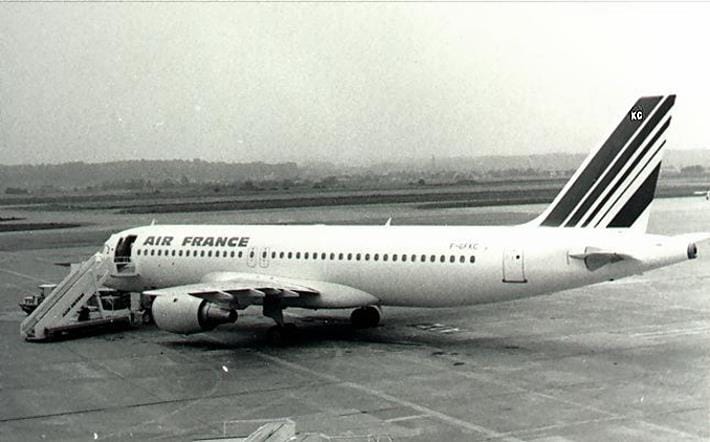
On a June afternoon in 1988, in front of thousands of airshow spectators, a brand-new Airbus A320 — the most advanced airliner in the world, on its very first passenger flight — flew a slow, low pass over a small French airfield, sank gently into the trees at the far end, and caught fire. Three people died.
It was the first fatal crash of a fly-by-wire airliner, and it triggered one of aviation’s most bitter and enduring arguments — one that is really about a single question: who flies a modern jet, the pilot or the computer?
Kurzinfo
- Flug: Air France 296Q, a promotional airshow flypast
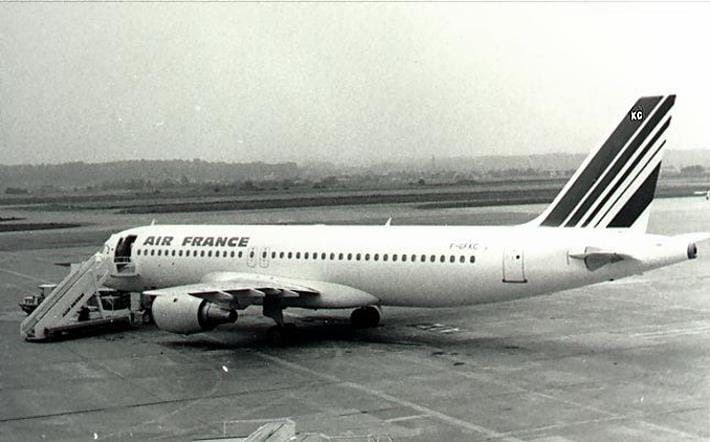
- Flugzeug: Airbus A320-111, F-GFKC — days old, first passenger flight
- Datum und Ort: June 26, 1988, Mulhouse-Habsheim, France
- Was ist passiert: low pass at ~30 ft instead of 100 ft; flew into forest
- Verluste: 3 of 136 aboard died
- Bedeutung: first fatal fly-by-wire airliner crash
A showpiece flight
Air France Flight 296Q was meant to be a celebration. The A320 had been delivered only days earlier, and the cabin was full of journalists and members of the public who had won their seats in a local promotion. The plan was a gentle flypast at 100 feet, landing gear down, over the little airfield at Mulhouse-Habsheim.
Instead the jet came in at around 30 feet, slower than intended, heading toward a belt of forest beyond the runway that had not been marked on the chart the pilots were given.
Too low, too slow
Realising the danger, the crew called for go-around power. But the engines were near idle and needed several seconds to spool up. The A320’s flight-envelope protection kept the jet from stalling, yet it could not conjure thrust that was not yet there. The aircraft mushed into the treetops and settled into the woods. Most on board escaped; a woman and two children died of smoke inhalation, unable to release their seatbelts.
Pilot, or computer?
The official verdict placed the blame on the crew: too low, too slow, and too late with the throttles. Captain Michel Asseline never accepted it. He argued the engines had responded too slowly and — most controversially — alleged that the flight recorders had been altered before analysis, a claim the authorities firmly rejected. He was convicted and served a sentence, and he spent decades insisting he had been made a scapegoat.
The trust question
Habsheim landed at the exact moment fly-by-wire was taking over commercial aviation. The A320 gave a computer partial authority over the controls, and the crash became a lightning rod for a deeper anxiety: how much should pilots trust the machine, and how much should the machine trust the pilots? Thousands of A320-family jets later, fly-by-wire is simply how airliners are built — but the Habsheim dispute helped shape how it is certified, explained and taught.
The footage still circulates today: a beautiful new jet, gear down, drifting into the trees in slow motion. Whatever the true cause, Habsheim was the moment the world began arguing about who really flies a modern airliner — the person, or the code.
Sources: BEA accident report; Simple Flying; code7700; Wikipedia.
Ähnliche Beiträge
0 Kommentare