
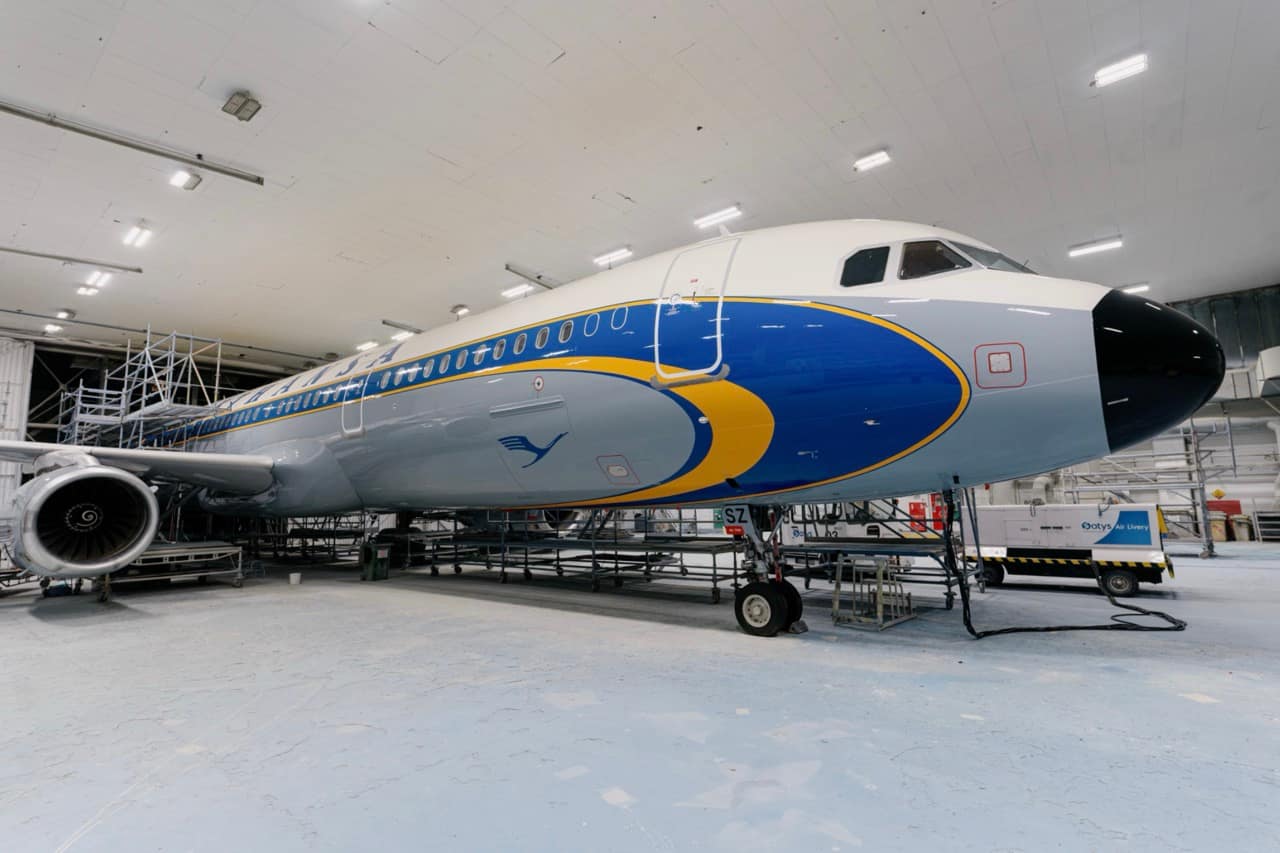
Step onto a Lufthansa A321 at Frankfurt this year and you might find yourself aboard a flying time machine. One aircraft in the fleet, registration D-AISZ, wears a design no airline has flown in earnest for half a century: a deep blue cheatline trimmed in yellow that sweeps along the windows and then curls downward in a great parabola toward the nose, finished with a glossy black radome. It is 1957, rendered on a jet built in the 21st century.
The repaint marks Lufthansa’s 100th birthday. Founded as Deutsche Luft Hansa on 6 January 1926, the airline is treating 2026 as a year-long celebration of its own design history — and it has chosen one of its most elegant past identities to put back into the sky.
Kurzinfo
| Occasion | Lufthansa’s 100th anniversary (founded 6 January 1926) |
| Der Jet | Airbus A321-200, registration D-AISZ |
| Livery | The 1950s “parable” scheme of the Lockheed Super Star |
| Public debut | Flew into Frankfurt as flight LH9898 in early 2026 |
| Inspiration | Lockheed L-1649A Super Star, in Lufthansa service from 1957 |
| Anniversary fleet | Plus an “XXL crane” A350, 787 and A320neo, with more to follow |
A 1950s idea on a 21st-century jet
The scheme is known as the “parable” livery. Lufthansa introduced it in the mid-1950s, drawing on the streamlined design language of the 1930s to project speed, optimism and a forward-looking confidence. Those curved lines turned up everywhere: on tail fins and timetables, on baggage tags and business papers, even on the paper bands around cigars. It was branding before the word existed.
Recreating it on a modern narrowbody is more than nostalgia. By using a current Airbus as the canvas, Lufthansa links a century of design directly to the aircraft passengers actually fly today — the same crane on the tail, the same sweeping line, a hundred years apart.
The Super Star that started it
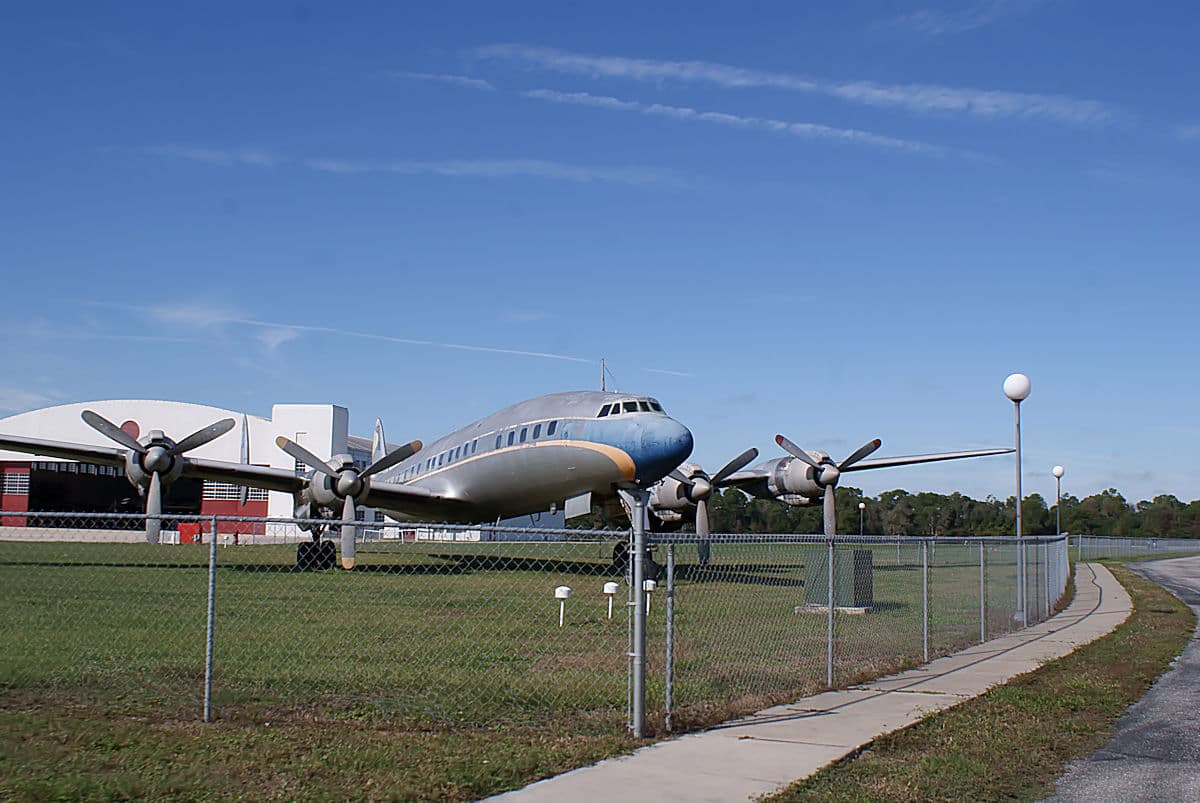
The livery’s spiritual home is the Lockheed L-1649A Starliner — the aircraft Lufthansa called the “Super Star.” It joined the fleet in 1957, the last and finest of the great piston-engined airliners, and it was the first Lufthansa aircraft to offer Senator Class, the most exclusive cabin of its day. Its speciality was the prestige run: nonstop across the Atlantic to New York, in the final years before jets made such elegance obsolete.
That very aircraft has been lovingly restored. Lufthansa plans to display it — alongside a vintage Junkers Ju 52 — in its new “Hangar One” visitor and conference centre at Frankfurt Airport, turning the company’s own history into something passengers can walk around and touch.
A flying museum
The parable A321 is the showpiece of a wider centenary fleet. Lufthansa has also rolled out an “XXL crane” anniversary design — an oversized version of its famous bird emblem — on an Airbus A350, a Boeing 787 and an A320neo, with an A380, a Boeing 747-8 and an A350-1000 expected to join. For one year, some of the most-photographed jets in Europe will double as billboards for a hundred years of brand history.
It is a clever piece of storytelling. Airlines rarely get to be a century old, and fewer still can reach back to a design as graceful as the parable. For 2026 at least, a piece of 1950s Germany will keep climbing out of Frankfurt several times a day — proof that good design, like a good airline, can outlast the era that made it.
Sources: Lufthansa Group newsroom; Aerospace Global News; Airways.
Verwandte Fragen
What is Lufthansa’s parable livery?
The “parable” livery is a heritage design Lufthansa first introduced in the mid-1950s, built around sweeping, curved lines that signalled speed and modernity. In 2026 the airline revived it on an Airbus A321, recreating the look of its 1950s Lockheed Super Star fleet to mark its 100th anniversary.
Which aircraft wears the Lufthansa retro livery?
An Airbus A321-200 registered D-AISZ carries the retro parable scheme. It flies ordinary short- and medium-haul European routes from Lufthansa’s Frankfurt hub, so passengers can find themselves boarding a piece of design history on a regular scheduled flight.
What was the Lockheed Super Star?
The Lockheed L-1649A Starliner, which Lufthansa called the Super Star, was a piston-engined airliner that joined the fleet in 1957. It was the first Lufthansa aircraft to offer the exclusive Senator Class and flew prestige nonstop transatlantic services to New York before the jet age overtook it.
When was Lufthansa founded?
The original Deutsche Luft Hansa was founded on 6 January 1926, with its first scheduled flight on 6 April 1926. The airline treats 2026 as its centenary year, anchoring a wave of special liveries and events around those dates.
Where can I see Lufthansa’s restored Super Star?
Lufthansa has restored a Lockheed L-1649A Super Star and plans to display it, alongside a Junkers Ju 52, in its new Lufthansa Group “Hangar One” visitor and conference centre at Frankfurt Airport, due to open in 2026.
What other special liveries is Lufthansa flying for its centenary?
Beyond the parable A321, Lufthansa created an “XXL crane” anniversary scheme featuring an oversized version of its famous crane emblem. It has appeared on an Airbus A350, a Boeing 787 and an A320neo, with an A380, a Boeing 747-8 and an A350-1000 expected to follow.
0 Kommentare