
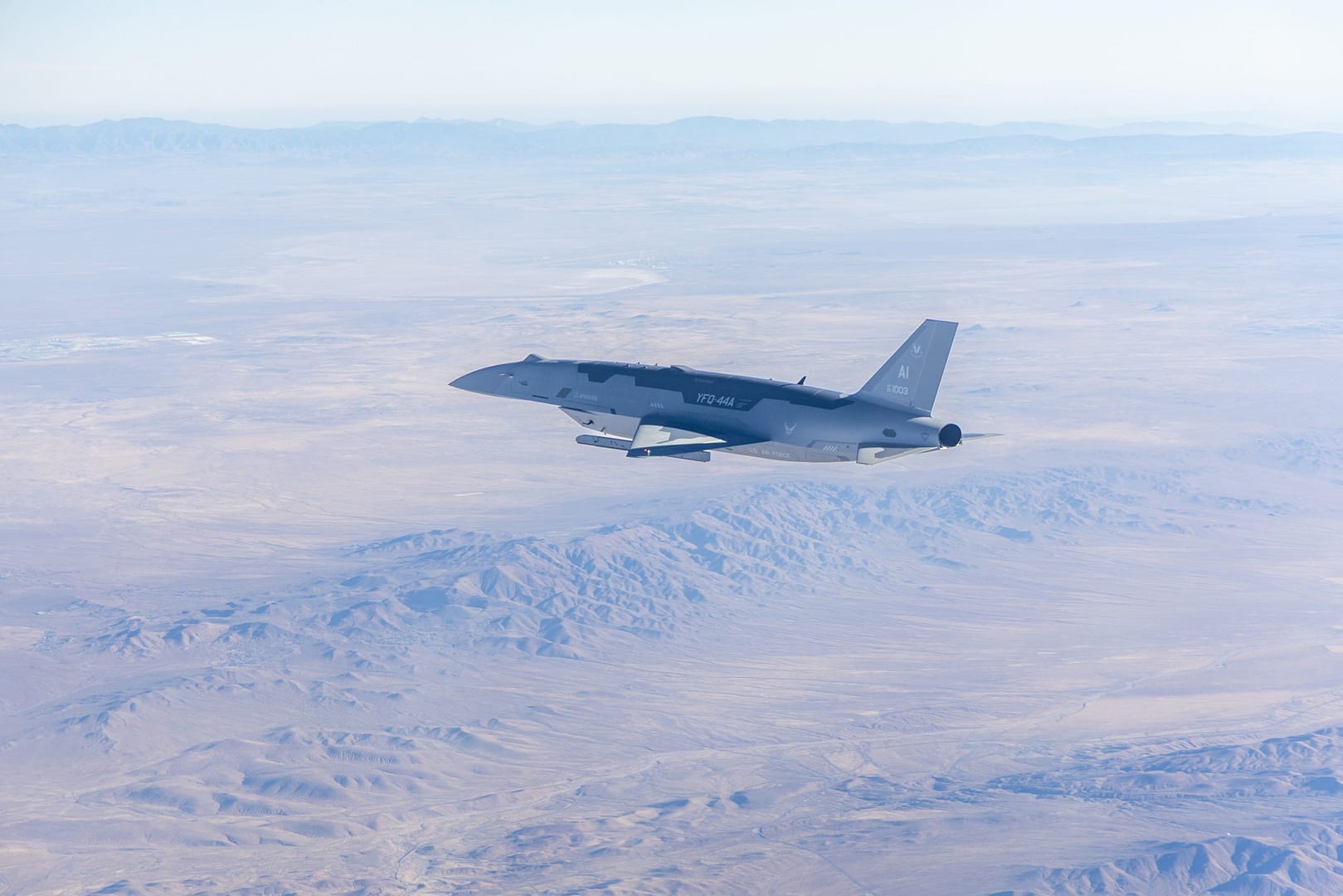
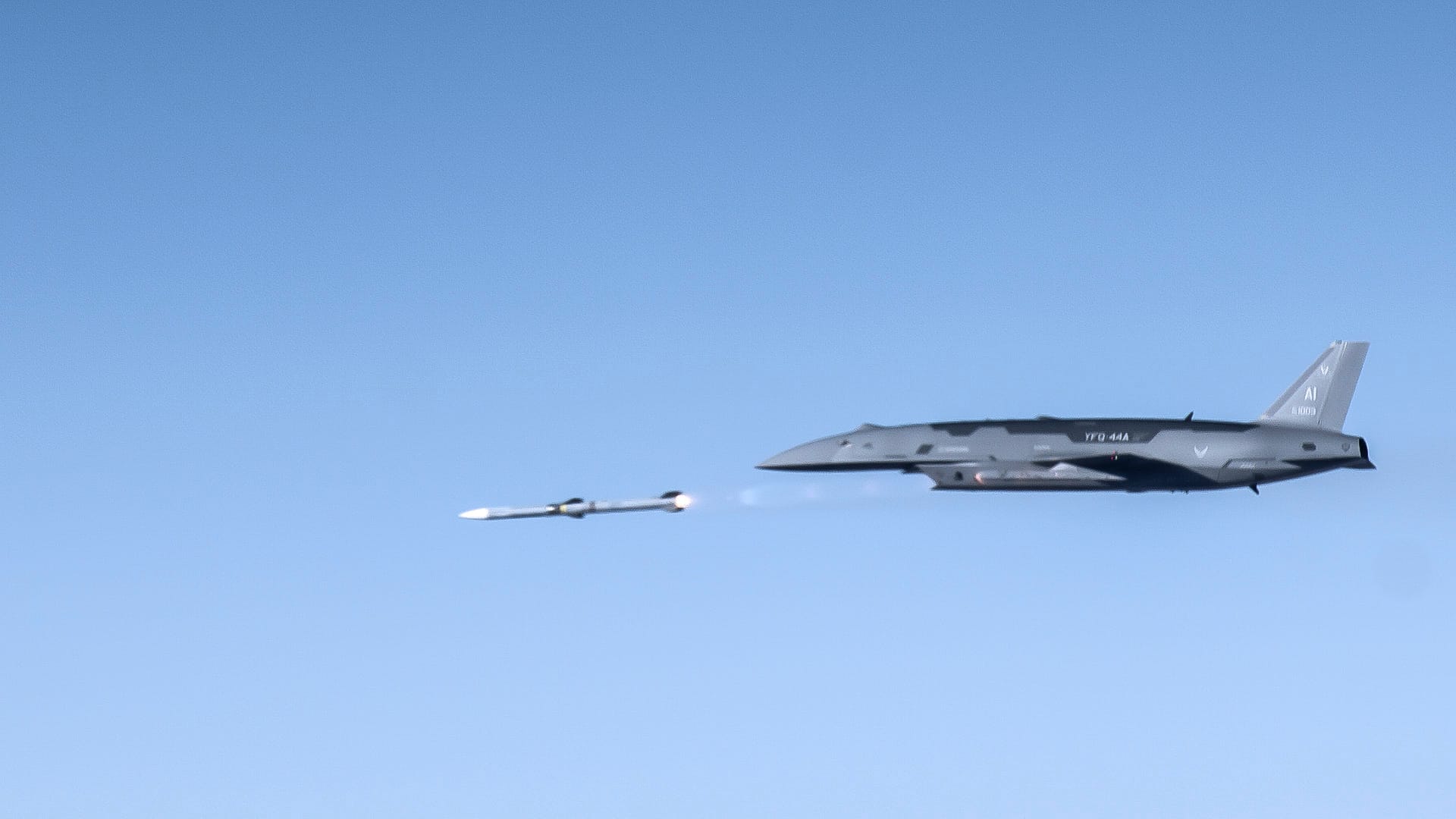
Somewhere over the Mojave Desert this month, an aircraft with no pilot, no ejection seat and no name stenciled under a canopy did something no American drone had ever done. It fired an air-to-air missile at a target. The jet was Anduril’s YFQ-44A Fury. The weapon was an AIM-120 AMRAAM. And the moment marks the day the U.S. Air Force’s robot wingman stopped looking like a science project and started looking like a fighter.
The Air Force revealed the live-fire test on July 15. It was the first time any American Collaborative Combat Aircraft — the semi-autonomous drones being built to fly alongside crewed F-35s and F-22s — has ever launched a live air-to-air weapon. Until now the Fury had flown, taxied and hauled inert shapes. Now it has pulled the trigger.
Kurzinfo
- Flugzeug: Anduril YFQ-44A “Fury” — an uncrewed, semi-autonomous Collaborative Combat Aircraft (CCA)
- Milestone: First live air-to-air missile ever fired by a U.S. CCA
- Weapon: AIM-120 AMRAAM, launched at a digital target
- Wo: Secluded airspace over the Mojave Desert
- Who ran it: 412th Test Wing’s Air Dominance Combined Test Force
- Angekündigt: U.S. Air Force, July 15, 2026
- The catch: A human operator keeps sole authority to release any weapon
One Missile, One Very Big Milestone
According to the Air Force, the YFQ-44A fired the AMRAAM at a digital target in secluded airspace over the Mojave. The shot capped a deliberately unglamorous, step-by-step campaign that began earlier this year with inert captive-carry flights — the kind that check whether the aircraft even handles nicely with a missile bolted on — before moving to data-link trials that confirmed the drone did exactly what its operators commanded.
The work was run by the 412th Test Wing’s Air Dominance Combined Test Force, a mix of active-duty aircrew, government civilians and contractors whose whole job was to make sure the first live shot was a controlled milestone and not a headline for the wrong reasons.
The Human Still Pulls the Trigger
For all the noise about autonomous killer drones, the Air Force went out of its way to draw a line. A foundational principle of the CCA program, the service says, is that these aircraft will not choose to fire on their own. The decision to release a weapon stays with a human operator, who keeps command and control of the drone at all times. The Fury flew the intercept and squeezed off the missile — but only because a person told it to.
Warum das wichtig ist
The Fury and its rival, General Atomics’ YFQ-42A, are the first two aircraft in a program built on a simple bet: that the Air Force can field uncrewed jets in large numbers, at a fraction of the price of a crewed fighter, to carry extra missiles, jam enemy radars and absorb the risk of flying into contested airspace. A live AMRAAM shot moves that bet off the briefing slides and onto the range.
There is still a long road between one scripted test over the Mojave and a drone that can hold its own in a real fight. But every fighter that ever mattered had a first missile shot. On July 15, the Fury got its own.
Sources: U.S. Air Force (af.mil); The Aviationist; The War Zone; Air & Space Forces Magazine.
0 Kommentare