
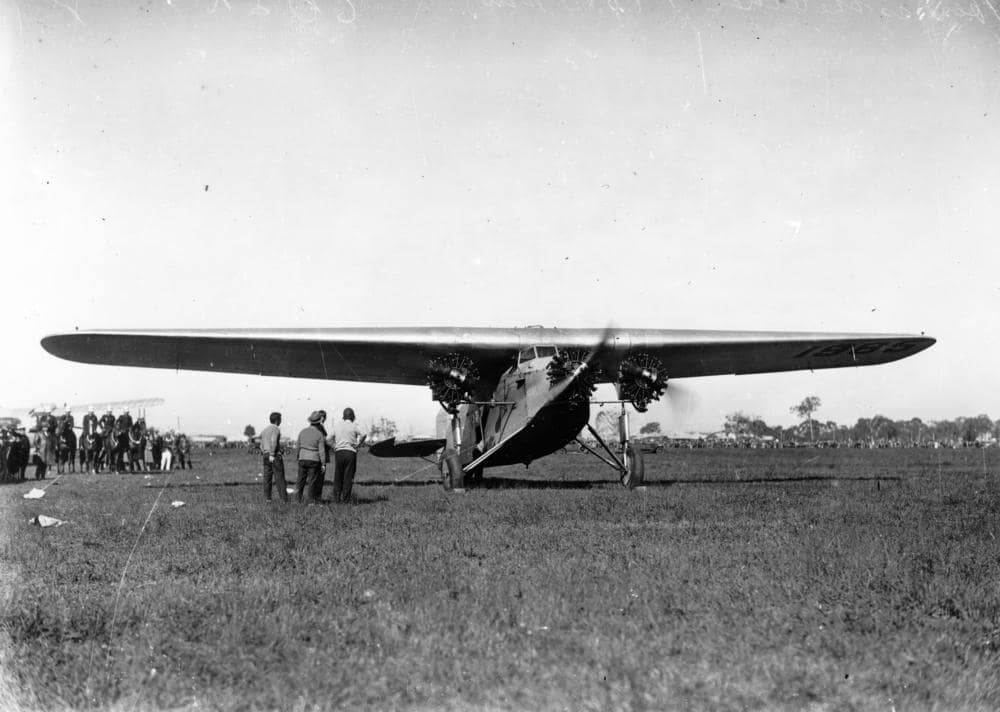
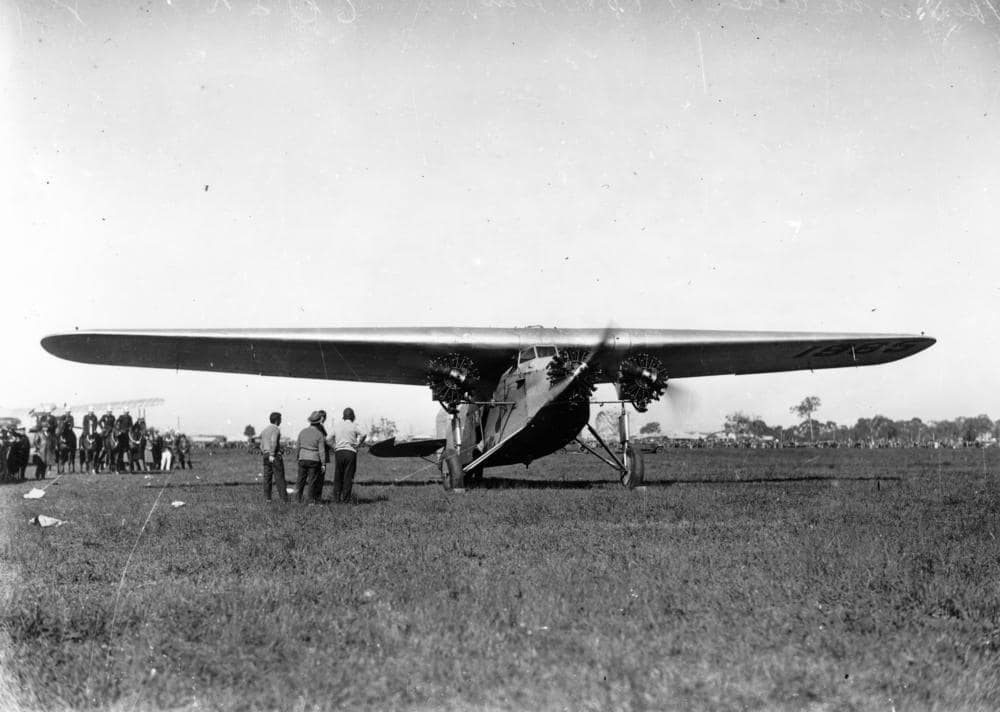
In the spring of 1928 the Pacific Ocean was still, in aviation terms, a blank. No one had ever flown an aircraft across it. The distances were monstrous, the weather unknowable, and the navigation — over thousands of miles of empty water with no landmarks — bordered on guesswork. Then a stocky, grinning Australian named Charles Kingsford Smith pointed a Dutch-built trimotor called Southern Cross out over the water at Oakland, California, and flew it all the way to Brisbane. It would be the first trans-Pacific flight in history.
It took eighty-three hours in the air, three exhausting legs, and a violent storm that nearly finished them off. When it was over, “Smithy” and his crew had done something no one had managed before: they had made the first trans-Pacific flight and crossed the world’s largest ocean by air.
Quick Facts: The First Trans-Pacific Flight
- Flugzeug: Fokker F.VIIb/3m Southern Cross, three Wright J-5 Whirlwind engines
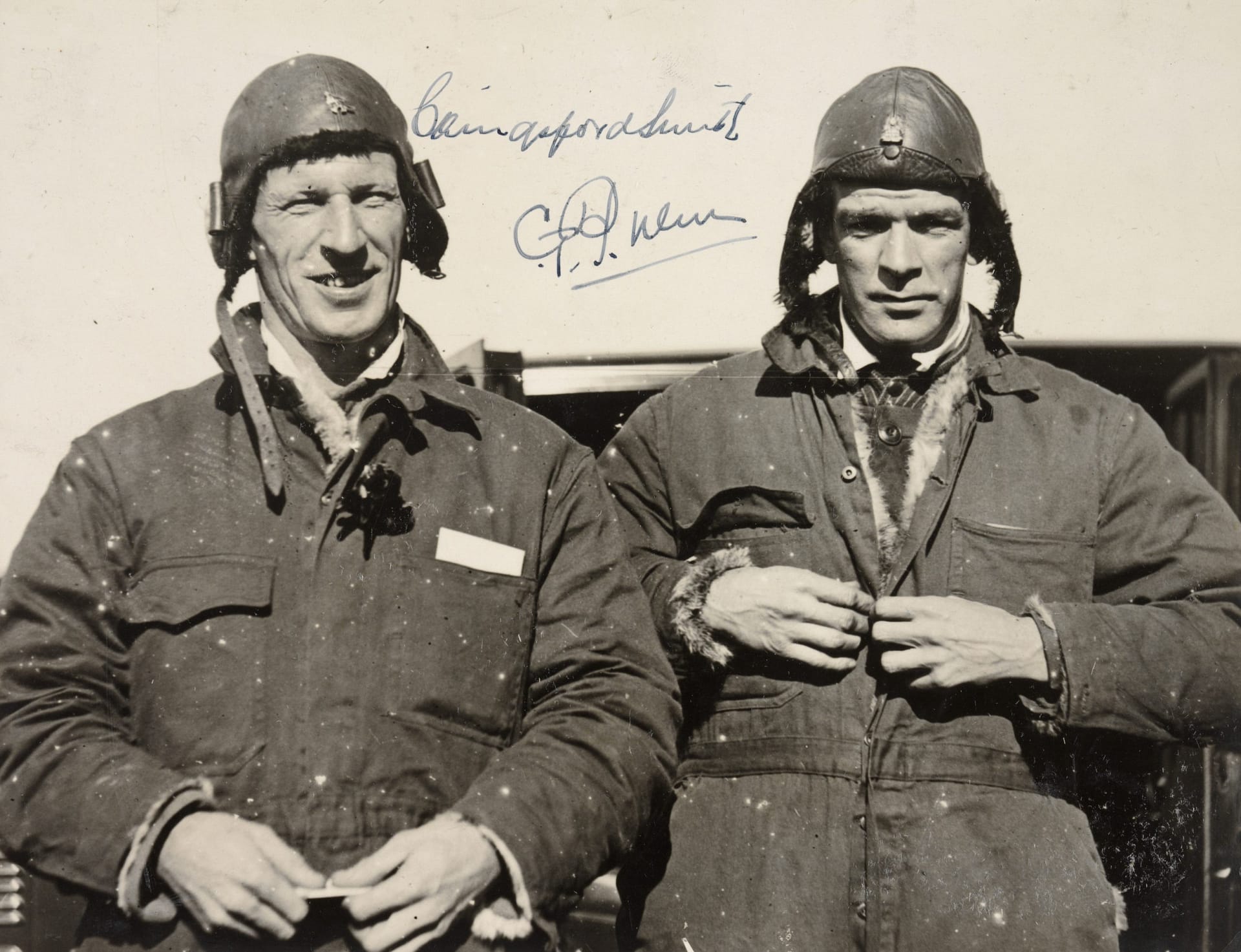
- Crew: Charles Kingsford Smith (pilot), Charles Ulm (co-pilot), Harry Lyon (navigator, US), James Warner (radio, US)
- Route: Oakland • Hawaii • Fiji • Brisbane
- Distanz: ~7,400 miles (11,900 km) in about 83 flying hours
- Termine: Departed 31 May 1928; landed Brisbane 9 June 1928
- Reception: ~25,000 at Brisbane; 300,000 in Sydney the next day
A secondhand plane and other people’s money
Der Southern Cross had a complicated past before Smithy ever flew it. The Fokker trimotor had been built for the polar explorer Sir Hubert Wilkins, damaged, rebuilt, and eventually sold to Kingsford Smith. Repairs swallowed his money, so the aircraft was bought by Californian oil man George Allan Hancock, who then loaned it back to the crew for the crossing. Kingsford Smith fitted it with three reliable Wright J-5 Whirlwind radials and enough fuel tankage to attempt the impossible.
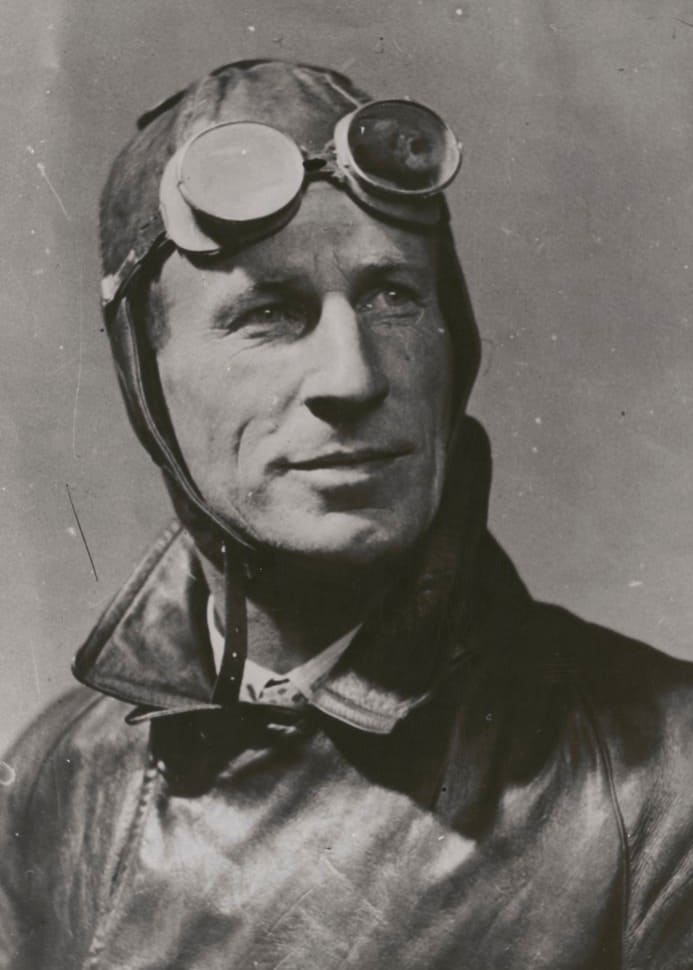
Kingsford Smith was not a novice adventurer. A Gallipoli veteran and former Royal Flying Corps pilot, he had barnstormed, flown airmail, and chased records for years. The Pacific was simply the biggest prize left.
“Hello, Aussies!”
Charles Kingsford Smith — Pilot and commander, Southern Cross
That cheerful greeting — called out as he stepped from the cockpit at Brisbane’s Eagle Farm — became one of the most famous lines in Australian history. But getting there had been anything but cheerful.
Three legs across an empty ocean
The first leg, Oakland to Wheeler Field in Hawaii, ran 2,406 miles and took over 27 hours. The second — Hawaii to Suva, Fiji — was the killer: 3,167 miles of open Pacific, the longest over-water flight yet attempted, ending at the first airplane landing ever made in Fiji. The crew flew for more than 34 hours, much of it blind, hand-flying through rain with the radio failing and the instruments their only guide.
British Pathé newsreel marking the Southern Cross and Kingsford Smith’s record-breaking flights.
The final leg from Fiji to Brisbane brought the worst of it: a violent tropical storm, lightning throwing the compass into chaos, the trimotor pitched around and forced down to just a few feet above the waves. Kingsford Smith later described the fury of that weather in blunt terms.
“The best indication I can give you of the fierceness of the storm is the fact that half an inch was sheared off our propellers.”
Charles Kingsford Smith — Recalling the storm of the Pacific crossing
They flew out of it, found the Australian coast, and put down at Eagle Farm at 10:50 in the morning on 9 June 1928. The crowd was enormous. The next day they flew on to Sydney and landed in front of some 300,000 people.
Knight of the sky
The flight made Kingsford Smith a national hero and an international celebrity. He was made an honorary Air Commodore of the Royal Australian Air Force, awarded the Air Force Cross, and later knighted. With Ulm he founded Australian National Airways, and he kept breaking records — the first trans-Tasman flight to New Zealand, an England–Australia dash, and more.
His luck ran out in November 1935. Flying the Lockheed Altair Lady Southern Cross from India toward Singapore on a night leg, Kingsford Smith and co-pilot Tommy Pethybridge vanished over the Andaman Sea. He was 38. The original Southern Cross survived him and is preserved today in a purpose-built memorial at the Brisbane airport that bears his name.
The preserved Southern Cross on display at the Kingsford Smith Memorial, Brisbane Airport.
A closer look at the Southern Cross and the memorial that houses the aircraft that crossed the Pacific.
Sources: This Day in Aviation; National Museum of Australia; State Library of Queensland; Aces Flying High. Distances and times per contemporary records.
0 Kommentare