
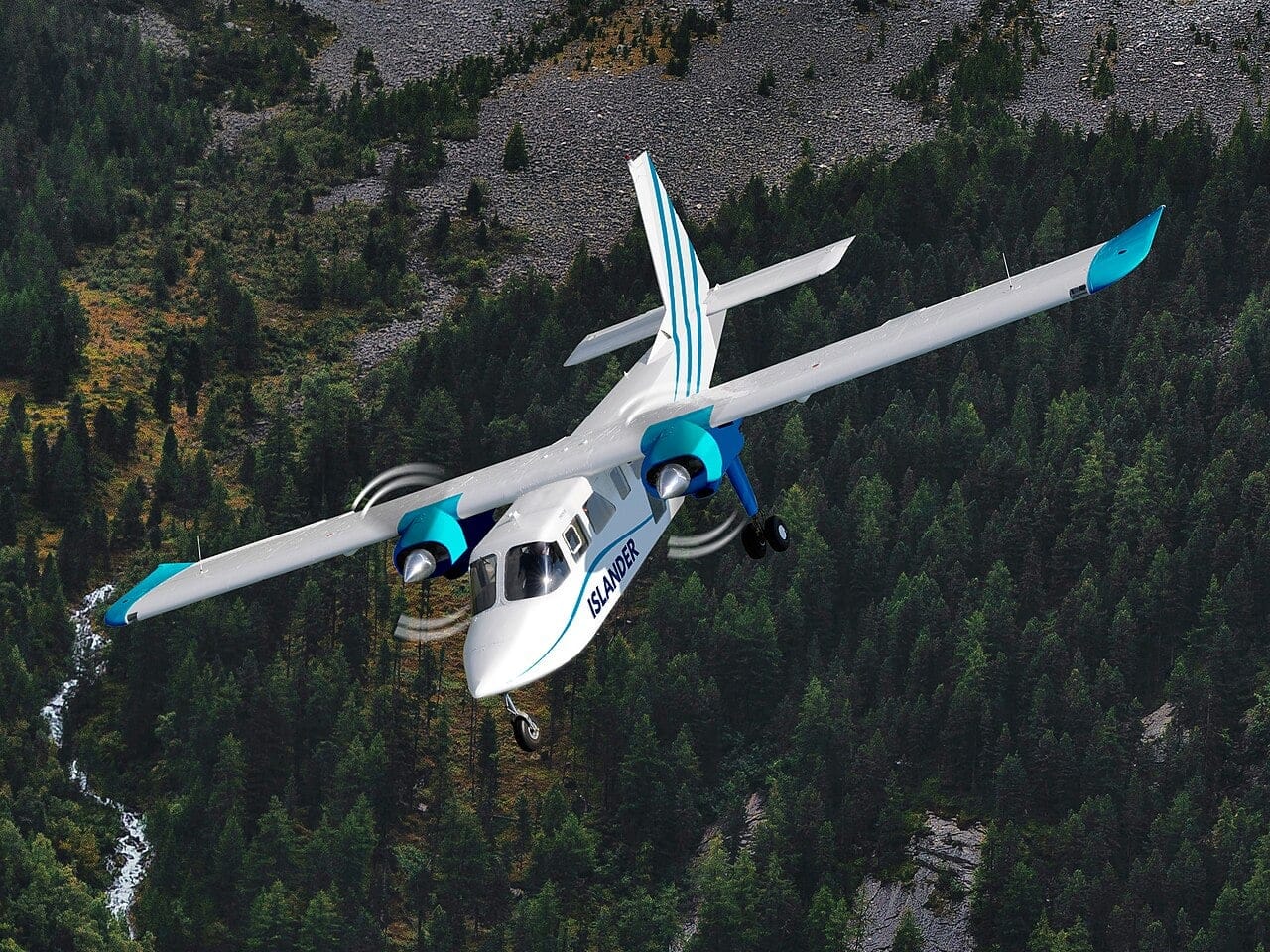
It is one of the least glamorous aircraft in the sky and one of the most useful: a boxy, high-wing twin that lands in under a thousand feet, seats nine, and turns up wearing airline colours, army camouflage and even spy fits. Now, for the first time in almost sixty years, the Britten-Norman Islander is being built where it was born — in Britain.
At the end of July 2026, the first Islander manufactured in the United Kingdom since 1968 rolled out of Britten-Norman’s factory at Bembridge on the Isle of Wight. Serial number 2317, registered G-FRZT, is now being prepared for ground testing, and it already has a home to go to: the Falkland Islands Government Air Service, which will fly it between the archipelago’s scattered settlements.
Kurzinfo
- Flugzeug: Britten-Norman BN-2 Islander, serial 2317 (G-FRZT)
- Meilenstein: first Islander built in the UK since 1968
- Wo: Bembridge, Isle of Wight
- First customer: Falkland Islands Government Air Service (FIGAS)
- First flew: BN-2 prototype, 1968
- Built to date: over 1,200 Islanders, Defenders and Trislanders
- Partytrick: ground roll under 1,000 ft — a true STOL workhorse
Home, after a long detour
Britten-Norman flew the first BN-2 Islander in 1968 — the aircraft that put the little firm founded by John Britten and Desmond Norman on the map. Orders arrived faster than the Bembridge line could fill them, so the company contracted the Romanian manufacturer IRMA, today known as Romaero, to build airframes at scale. Over the decades Romania became the sole production site, and final assembly returned to the UK only at the very end.
Bringing the whole line home was confirmed in 2023. Since then Britten-Norman has poured money into modern computer-controlled machine tools and grown its workforce by more than 40 percent — a quiet but real vote of confidence in British aerospace manufacturing.
The plane that never went out of fashion
More than 1,200 Islanders, militarised Defenders and three-engined Trislanders have been built to essentially the same 1960s design. Piston engines have given way to turboprops in many airframes — the turboprop version is the BN-2T — but the recipe is unchanged: rugged, cheap to run, and able to operate from strips that would defeat almost anything else.
That STOL talent is why the Islander flies the shortest scheduled airline route on Earth, the 1.7-mile hop between Westray and Papa Westray in Orkney, which takes roughly 90 seconds in the air. On the other side of Britain it links the Isles of Scilly to the mainland with Skybus, alongside the DHC-6 Twin Otter.
Airliner, soldier, spy
The type has never been purely civilian. A militarised Defender appeared in 1970, and standard Islanders turned up in uniform around the world. British forces flew the Islander and Defender for decades in the liaison and intelligence, surveillance and reconnaissance role — heavily over Northern Ireland and with the RAF Northolt Station Flight — before the last example retired in 2021. Discreet ISR-configured aircraft, nicknamed “Spylanders”, still work over the UK under civilian contracts.
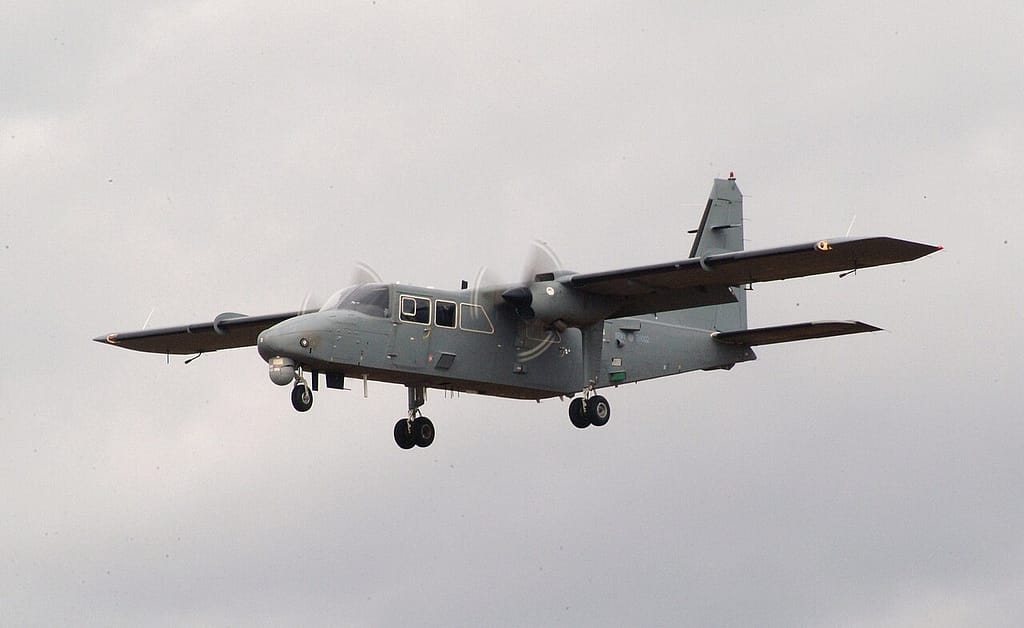
The airframe has even carried genuinely cutting-edge kit. Britain’s battlefield-radar programme that led to the Sentinel R1 began with a modified Islander under the CASTOR project, and in recent years the type has served as a testbed for new communications systems and hydrogen-electric propulsion.
A sixty-year-old that isn’t finished yet
The new Bembridge aircraft is no museum piece. It comes with a full IFR glass cockpit, all-window seating, enlarged baggage access and a higher all-up weight than earlier variants, with a choice of Lycoming piston or Rolls-Royce turboprop engines. Reopening the line is a bet that the world still needs a simple, tough short-field twin — and six decades of orders suggest Britten-Norman is right.
Sources: Britten-Norman; The Manufacturer; Aviation Week; The Aviationist; LARA; avitrader.
0 Kommentare