
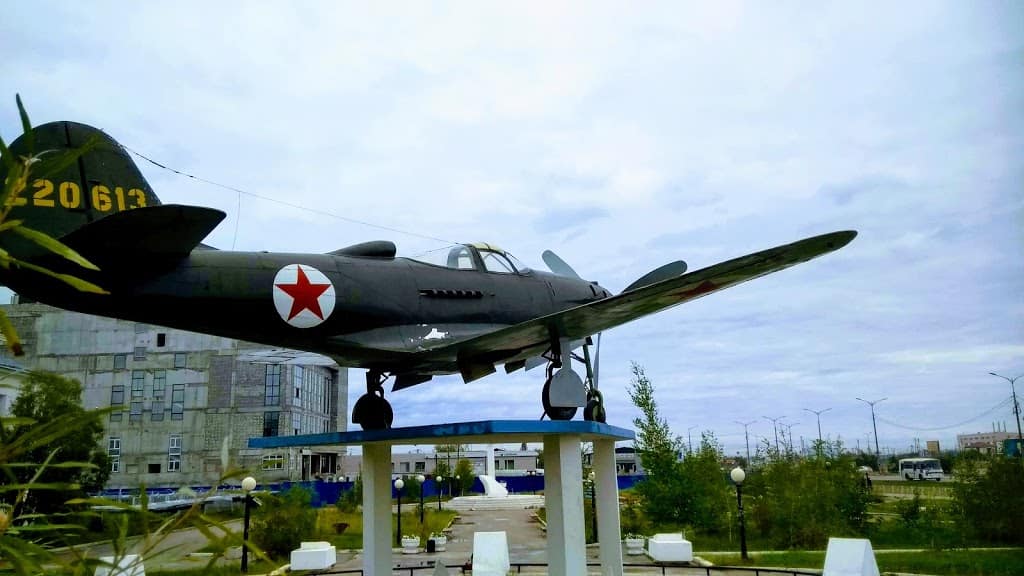
The Bell P-39 Airacobra was, by common American opinion, a disappointment. Underpowered at altitude, saddled with a fearsome reputation, it was the fighter U.S. airmen sang rude songs about. And yet it enabled a single pilot to shoot down more enemy aircraft than any other American fighter type in history. The catch: he was Soviet.
Few aircraft split opinion as cleanly as the Airacobra. Where the West saw a flawed compromise, the Soviet Union saw a low-altitude killer perfectly suited to the war it was actually fighting. The truth, as usual, lay in the engineering.
Kurzinfo
- Flugzeug: Bell P-39 Airacobra, first flown 6 April 1938; 9,588 built
- Layout: Allison V-1710 engine mounted amidships, behind the pilot, driving the nose propeller through a long shaft
- Firsts: among the first American fighters with a nosewheel (tricycle) undercarriage; car-style cockpit doors
- Rüstung: a 37 mm cannon firing through the propeller hub, plus machine guns
- Weakness: no effective turbo-supercharger, so it faded badly at high altitude
- To the USSR: roughly 4,700 — nearly half of all built — delivered under Lend-Lease
An Engine in the Wrong Place, on Purpose
The Airacobra’s defining feature was its layout. Bell put the Allison V-1710 not in the nose but in the centre of the fuselage, directly behind the pilot, and ran a driveshaft forward — beneath the pilot’s seat — to turn the propeller. The reasoning was sound: it freed the nose for a heavy 37 mm cannon firing through the hub, and it concentrated mass near the centre of gravity. Bell even gave the aircraft car-style side doors instead of a sliding canopy.
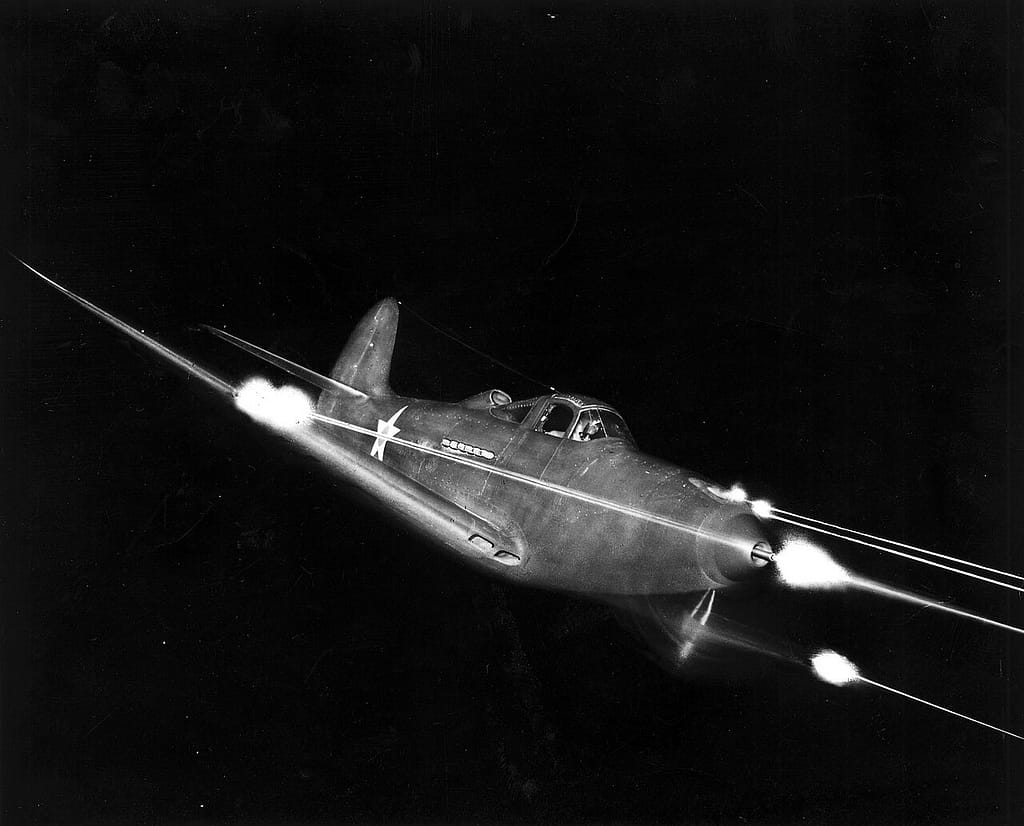
The idea was clever. The execution had one fatal gap. The design counted on a turbo-supercharger to keep the engine breathing at altitude, and when that system was deleted from production aircraft, the P-39 lost its high-altitude punch. Over the high-flying air war of Western Europe, that was disqualifying, and the RAF quickly handed its Airacobras back. American crews, meanwhile, inherited the legend of a fighter that would “tumble” end over end.
That reputation was largely a myth. In 1943 the USAAF deliberately spun a P-39 roughly a thousand times and could not reproduce the fabled tumble; the Army concluded the aircraft had entirely normal spin behaviour, recoverable in about two and a half turns with the correct technique. The pilots who feared it most, one famous aviator later noted, were usually the ones who had never flown it.
The Fighter Stalin Asked For By Name
On the Eastern Front, the picture inverted. Air combat against the Bf 109 and its comrades was fought largely at low and medium altitude, exactly where the Airacobra was strong: fast, well-armed, sturdy, and hitting with a cannon that could shred an airframe in a single pass. The Soviets took to it immediately, nicknamed it the “Kobra,” and flew it hard. Stalin personally wrote to Roosevelt asking for more.
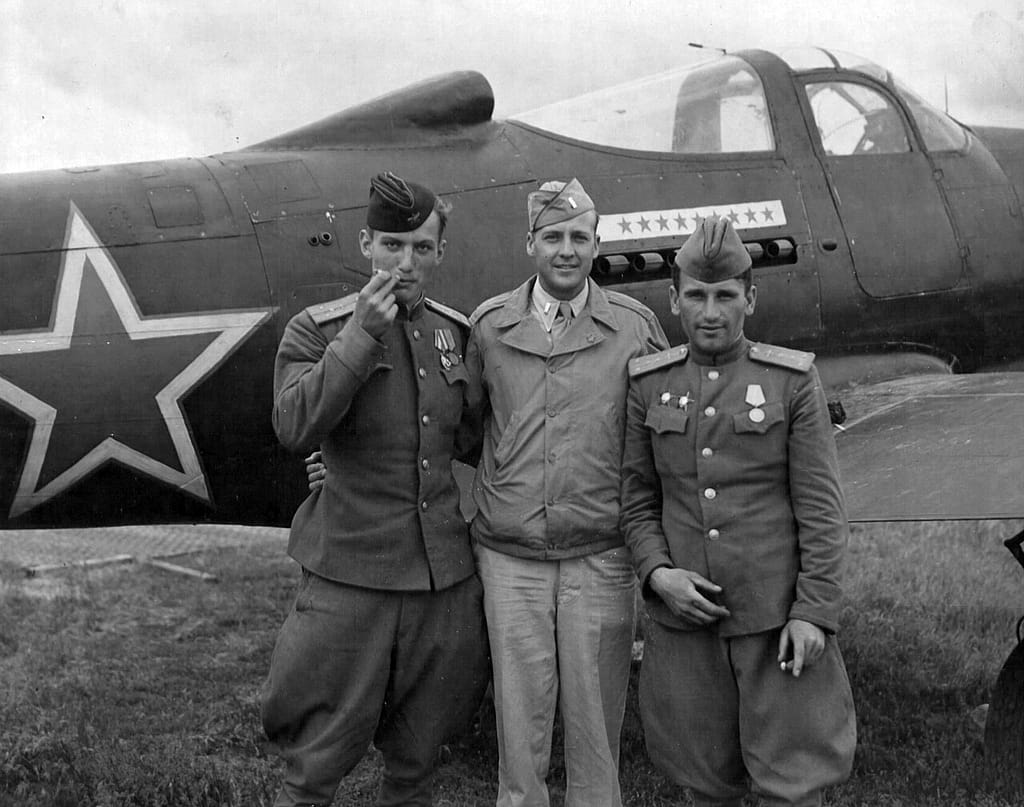
The numbers make the case. In its first two months in Soviet hands, the elite 153rd Guards Fighter Regiment claimed 18 bombers and 45 fighters for the loss of eight Airacobras. And the great ace Alexander Pokryshkin scored the vast majority of his 59 victories in the P-39 — making him the highest-scoring Airacobra pilot of any nation, and the highest-scoring Allied pilot ever to fly an American fighter.
The Verdict
The Airacobra is the great lesson in matching a machine to its mission. Judged by the standards of the Western high-altitude war, it failed. Judged by the standards of the Eastern Front, it was a war-winner. Same aircraft, same specification — two completely different verdicts, decided entirely by the altitude at which the fighting happened.
Nearly half of all Airacobras ended up under the red star, ferried across the Bering Strait and through Siberia to the front. The fighter America could not wait to be rid of became, in Soviet hands, one of the deadliest aircraft of the entire war.
Sources: Wikipedia; Chuck Yeager, Yeager: An Autobiography; The National Interest; War History Online; Russia Beyond.
0 Kommentare