
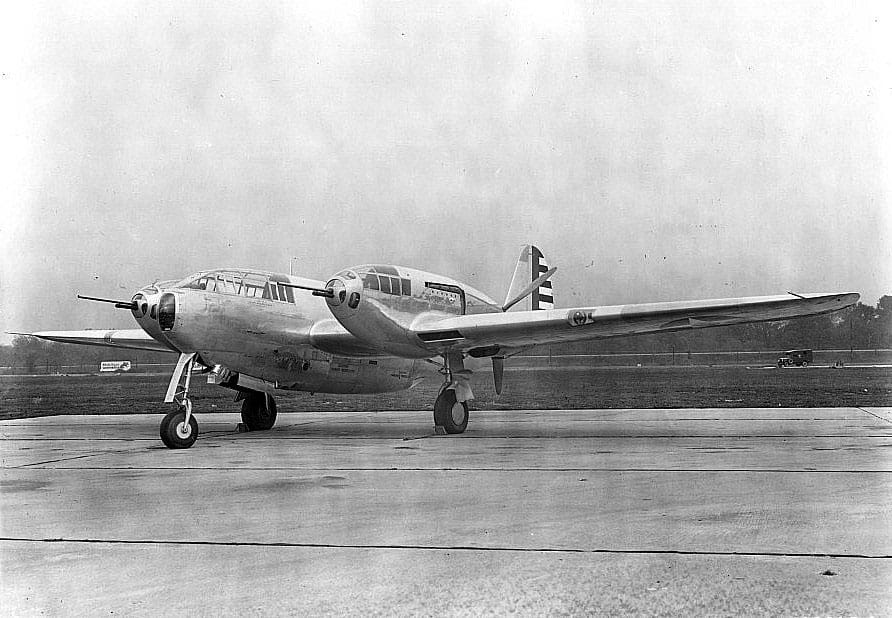
In the late 1930s, Bell Aircraft set out to build a fighter so ambitious that it needed gunners riding inside the engines. The result, the Bell YFM-1 Airacuda, was sleek, futuristic, bristling with cannon — and one of the most gloriously misguided warplanes the United States ever put into the air.
It was Bell’s very first military aircraft. It should perhaps have been a warning of how hard this business is.
| Aircraft | Bell YFM-1 Airacuda — “bomber destroyer” |
| First flight | 1 September 1937 |
| Layout | Twin pusher engines; a cannon & gunner in each nacelle |
| Built | About 13 aircraft in total |
| Fate | Stricken from inventory by early 1942 |
A gunner in the engine
The idea behind the Airacuda was fashionable in the 1930s: the “bomber destroyer,” a heavy fighter that would intercept enemy bombers far out, beyond the reach of little single-seat interceptors, and blow them apart with big guns. Bell’s take was radical even by the standards of the era.
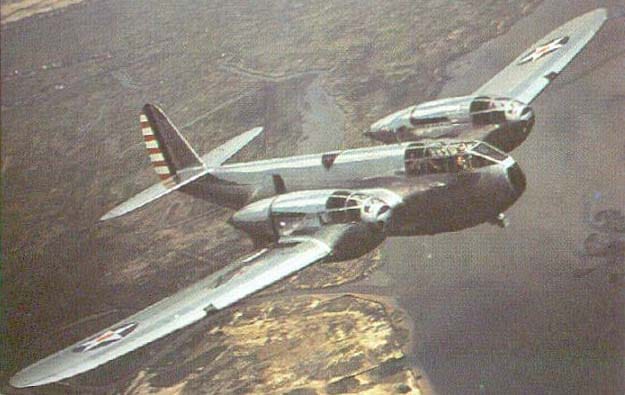
Two Allison V-1710 engines were mounted as pushers, their propellers facing backwards. And in the front of each engine nacelle, ahead of the propeller, sat a crewman with a 37 mm cannon. Two more machine guns lived in the nose and two at waist positions. It looked like the future. It flew like a cautionary tale.
Everything that could go wrong
Start with the gunners. When the cannon fired, smoke filled the cramped nacelle. Worse, if a gunner ever had to bail out, the propeller was spinning right behind him — so the design included explosive bolts to blow the propellers clear first. Then there was the electrical system: so much of the aircraft depended on an auxiliary power unit that if the little generator failed, systems — guns included — could die with it.
And the engines never breathed properly. Because the propellers pushed rather than pulled, they drew too little air over the radiators at low speed. The Airacuda tended to overheat simply sitting on the ground, which meant it often had to be towed to the runway rather than taxi under its own power — not an encouraging trait for an interceptor meant to scramble.
Beaten by physics
For all its menace, the Airacuda could not do the one thing it was built for. It was heavy, and at around 277 mph it was actually slower than many of the bombers it was supposed to hunt. It could not dogfight the fighters that would escort those bombers, and the vaunted 37 mm cannon proved less devastating than promised. Only about thirteen were ever built, and by early 1942 — just as the war the Airacuda had been imagined for arrived in earnest — they were quietly struck from the inventory. Not one survives.
And yet it is impossible not to admire the nerve of it. The Airacuda was a beautiful, brave, thoroughly logical machine that ran headlong into aerodynamics and lost. Aviation history is full of triumphs; it is the magnificent failures like this one that are the most fun to remember.
Sources: National Museum of the U.S. Air Force; Steve Ginter, Bell XFM/YFM-1 Airacuda; Wikipedia.
Related Questions
What was the Bell YFM-1 Airacuda?
The Bell YFM-1 Airacuda was an experimental American heavy fighter of the late 1930s, conceived as a 'bomber destroyer' to intercept enemy bombers with heavy cannon. Bell's first military aircraft, it used twin pusher engines with a gunner riding in each nacelle. Sleek and futuristic, it proved one of the most gloriously misguided warplanes the United States ever built.
When did the Bell Airacuda first fly?
The Bell YFM-1 Airacuda first flew on 1 September 1937. Only about thirteen were ever built, and the type was stricken from the U.S. inventory by early 1942, having failed to do the one job it was designed for. It never entered meaningful service or saw combat.
What was a 'bomber destroyer'?
A 'bomber destroyer' was a 1930s concept for a heavy fighter that would intercept enemy bombers far from their targets, beyond the reach of small single-seat interceptors, and destroy them with large-calibre guns. The Bell Airacuda was a radical take on the idea, but such heavily armed heavy fighters generally proved too slow and unwieldy to fight the escorting fighters.
Why did the Bell Airacuda fail?
The Airacuda was beaten by physics. At around 277 mph it was actually slower than many of the bombers it was meant to hunt, could not dogfight escorting fighters, and its 37 mm cannon proved less devastating than promised. Its pusher engines drew too little cooling air at low speed, so it overheated on the ground and often had to be towed to the runway.
Why did the Airacuda's gunners sit inside the engine nacelles?
The Airacuda mounted its two Allison V-1710 engines as pushers, with a gunner stationed in the front of each nacelle to work the cannon. The layout was so unusual that the design included explosive bolts to blow the propellers clear before a gunner could bail out, a safety fix echoing the push-pull Dornier Do 335, which jettisoned its rear propeller the same way.
What other unusual twin-engined fighters came from this era?
The 1930s and 1940s produced many bold twin-engined fighter experiments, from the Airacuda's pusher layout to the elegant Lockheed P-38 Lightning, which succeeded where the Airacuda failed. Designers were still learning which radical ideas worked and which, like Bell's gunner-in-the-engine concept, were doomed by weight, drag and cooling problems.
0 Comments