
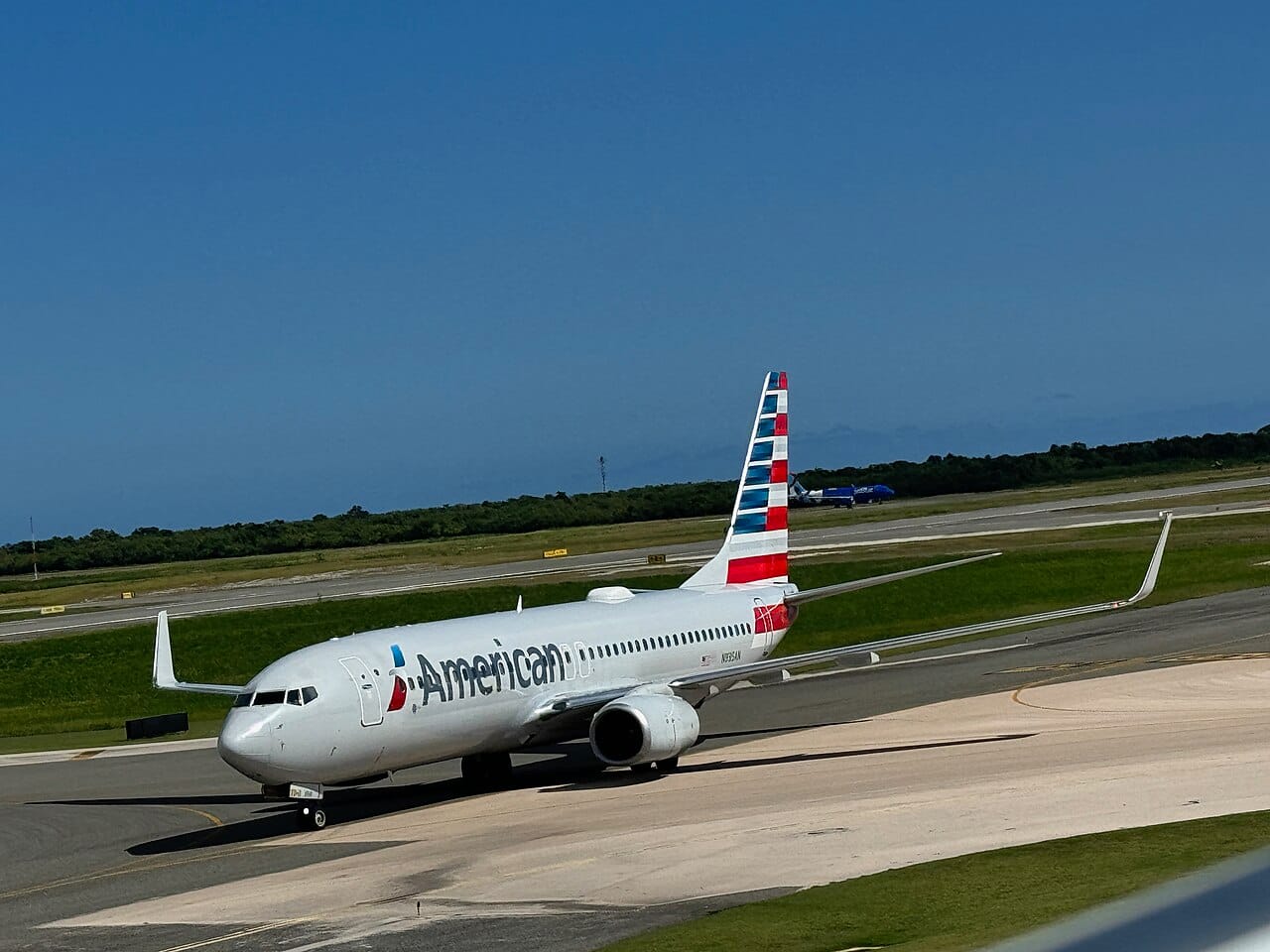
A short domestic hop between Corpus Christi and Dallas/Fort Worth is about as routine as flying gets. But one American Airlines flight this month quietly made history — it was the first commercial passenger service in the United States powered by eSAF, a synthetic jet fuel built, in effect, out of waste carbon dioxide and electricity.
American and its partner, the clean-fuels company Infinium, announced the milestone on 6 August 2026. Just as important as the flight itself was how ordinary it looked: the fuel travelled through a normal airport fuel network and into a normal jet, with no modifications to the aircraft and no special handling at the gate.
It is a small volume of a very rare fuel. But it is also a glimpse of what low-carbon flying might eventually look like — if the industry can ever make enough of it.
Kurzinfo
- Meilenstein: first US commercial passenger flight powered by eSAF (electro-SAF)
- Route: Corpus Christi (CRP) to Dallas/Fort Worth (DFW)
- Partner: American Airlines and Infinium
- Fuel source: Infinium's Pathfinder plant, Corpus Christi - the world's first commercial-scale power-to-liquids eFuels site (operating since 2023)
- How it's made: waste CO₂ + renewable-powered hydrogen, via reverse water-gas shift and Fischer-Tropsch synthesis
- Claimed benefit: more than 90% lower lifecycle greenhouse-gas emissions vs conventional jet fuel
Jet fuel made (almost) out of thin air
Most sustainable aviation fuel today is made from waste fats, oils and greases. eSAF — the “e” is for electro — is something stranger and, in principle, far more scalable. It starts with captured carbon dioxide and hydrogen split from water using renewable electricity. A reverse water-gas shift reaction turns those into syngas, and a Fischer-Tropsch reactor assembles that syngas into long-chain liquid hydrocarbons that are chemically almost identical to ordinary kerosene.
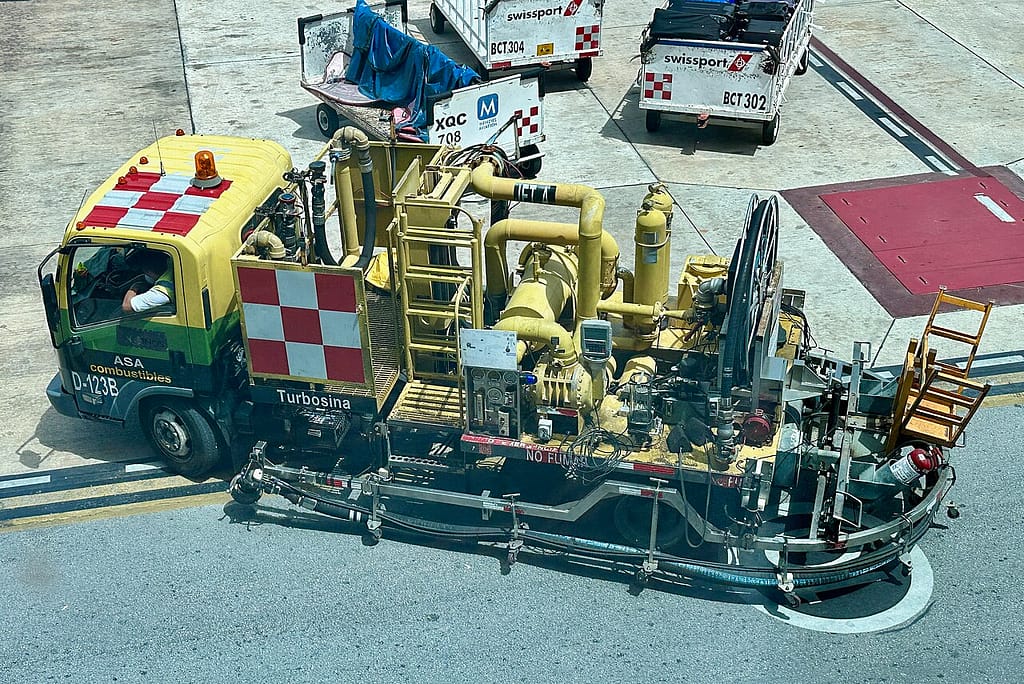
Because the end product behaves just like conventional Jet A, it is a “drop-in” fuel: it can be blended, pumped and burned using today's infrastructure and today's engines. That is exactly what American and Infinium set out to prove. The eSAF was produced and blended at Infinium's Pathfinder facility in Corpus Christi — billed as the world's first commercial-scale power-to-liquids plant, running since 2023 — then trucked into the airport fuel system and loaded like any other batch.
Infinium says the process can cut lifecycle greenhouse-gas emissions by more than 90% compared with petroleum-based jet fuel, and produces no sulphur. For an industry that is fiendishly hard to decarbonise — batteries are far too heavy for long-haul flight — a genuine drop-in replacement for kerosene is close to a holy grail.
A milestone measured in gallons, not tanker-loads
The catch is scale. eSAF remains one of the rarest and most expensive fuels in the world, produced in tiny quantities relative to the roughly 100 billion gallons of jet fuel the industry burns each year. A single milestone flight does not change that arithmetic.
What sustainable aviation fuel is, and how “drop-in” synthetic jet fuel works.
What it does is prove the pathway. American has an offtake agreement for commercial volumes of eSAF from Infinium's forthcoming Project Roadrunner, an initiative supported in part by a separate arrangement with Citi. Production and deliveries are expected to begin in 2027, and at full capacity Roadrunner is projected to turn out more than five million gallons of eSAF a year.
That is still a rounding error against global demand — but every fuel that is now commonplace was once a laboratory curiosity. The Corpus Christi flight was a reminder that the hardest part of decarbonising aviation is not inventing the fuel. It is making enough of it, cheaply enough, for the plane you actually board to run on it.
Sources: American Airlines Newsroom, Infinium, AirlineGeeks, Aerospace Global News, Interesting Engineering, Passenger Terminal Today. Emissions and capacity figures as stated by American Airlines and Infinium.


0 Kommentare