
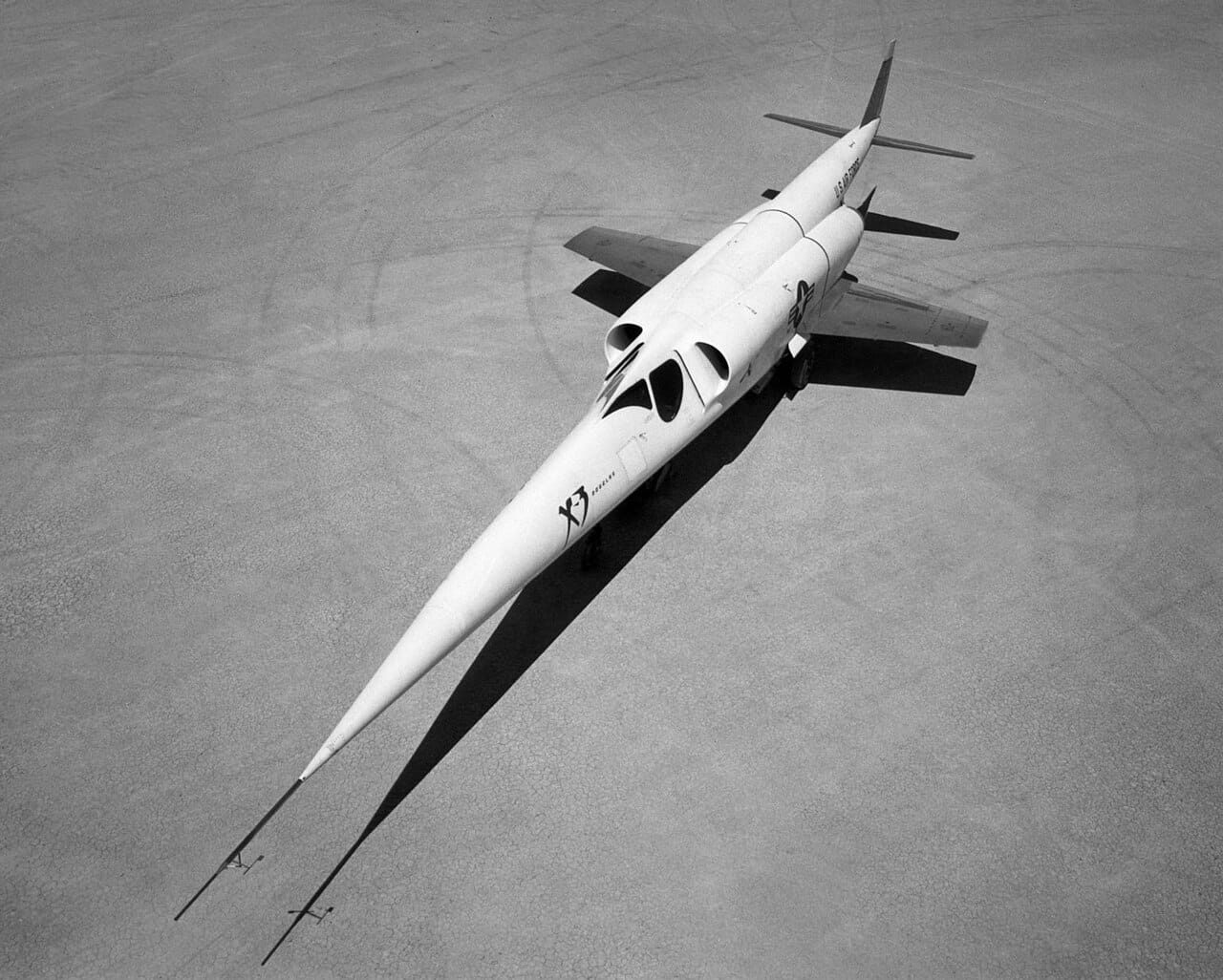
It looked like the future had landed on a dry lakebed in California: a needle-nosed, stiletto-slim jet built entirely for speed, sheathed in titanium, designed to cruise at twice the speed of sound. The Douglas X-3 Stiletto was the sleekest research aircraft of its age. It was also one of the slowest disappointments in the history of flight testing.
The X-3 was meant to explore sustained Mach 2 flight. It never managed Mach 1 in level flight even once. And yet, in failing, it handed American engineers two of the most valuable lessons of the jet age.
Kurzinfo
| Rolle | Supersonic research aircraft |
| Erster Flug | 20 October 1952 |
| Kraftwerk | 2 × Westinghouse J34 afterburning turbojets (~4,900 lbf each) |
| Höchstgeschwindigkeit | Mach 0.987 level; max Mach 1.208 in a dive |
| Anzahl gebaut | 1 (a second was cancelled for spares) |
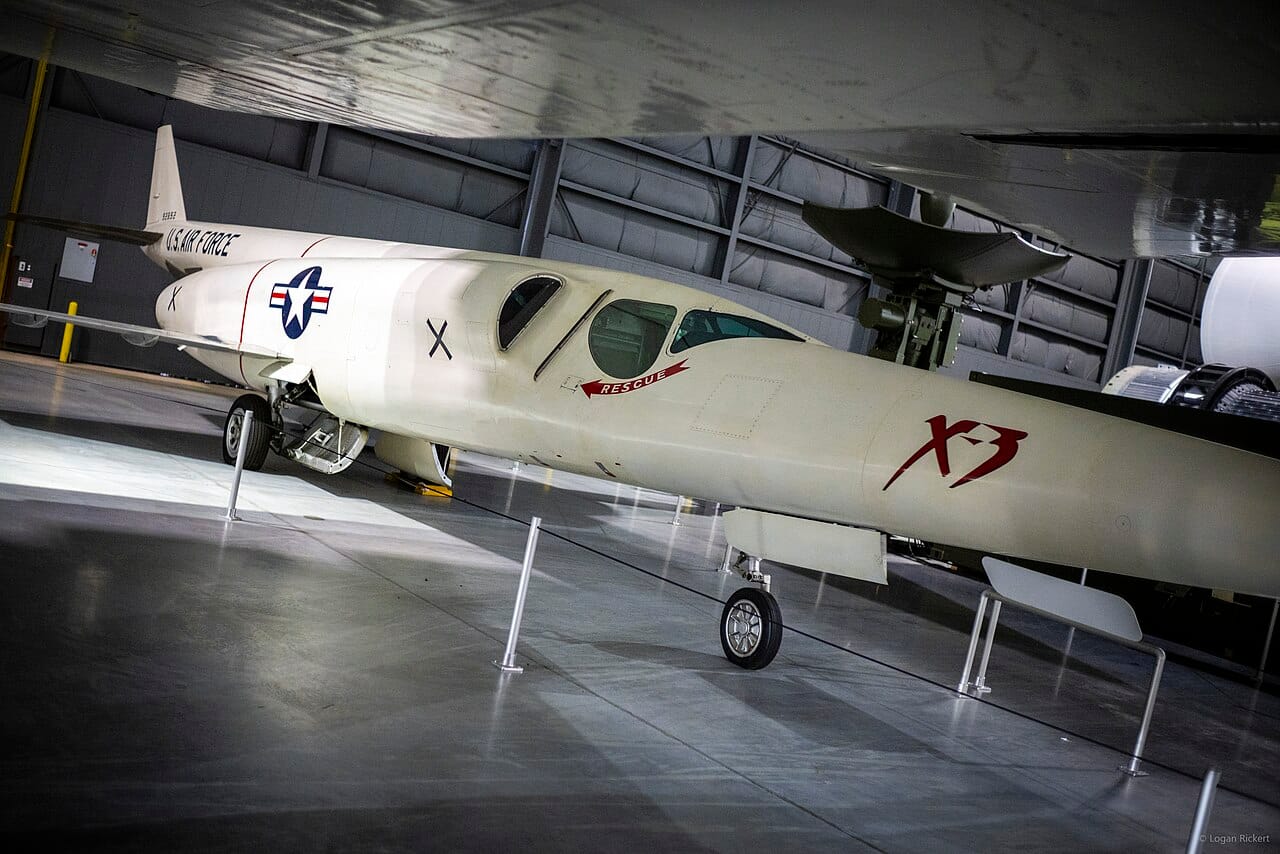
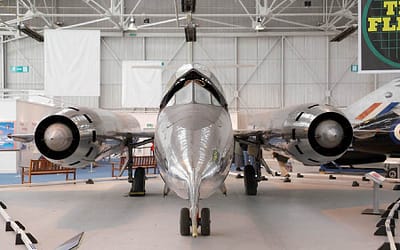
| Schicksal | Retired 1956; now at the National Museum of the USAF |
Built for Mach 2, powered for much less
The design was radical. Its stubby, razor-thin trapezoidal wings and long titanium fuselage were shaped for a world beyond the sound barrier — the X-3 was the first aircraft to use titanium for major structural components, a metal so difficult to work that Douglas had to invent new techniques to build it.
Then came the fatal compromise. The powerful Westinghouse J46 engines it was designed around were not ready and, worse, would not fit the slim fuselage. Douglas substituted much weaker J34s, delivering barely two-thirds of the planned thrust into an airframe that was already overweight. The Stiletto was, in effect, a Mach 2 body with a Mach 1 heart.
The very first official flight told the story. As Douglas test pilot Bill Bridgeman wrestled the sluggish jet into the air on 20 October 1952, he radioed his chase pilot — a certain Chuck Yeager — with a verdict that would define the whole programme.
The failure that paid off twice
Underpowered, hard to land, and demanding a takeoff speed of around 260 mph, the Stiletto flew just 51 times. Test pilot Frank Everest, no stranger to difficult machines, was blunt about it.
But two things saved the X-3 from being a total loss. First, on 27 October 1954, NACA pilot Joseph Walker threw the jet into an abrupt roll and nearly lost it to violent "inertia coupling" — the airframe tumbling out of control as its mass fought its aerodynamics. That terrifying moment gave engineers priceless early data on a phenomenon then killing pilots in the new F-100 Super Sabre.
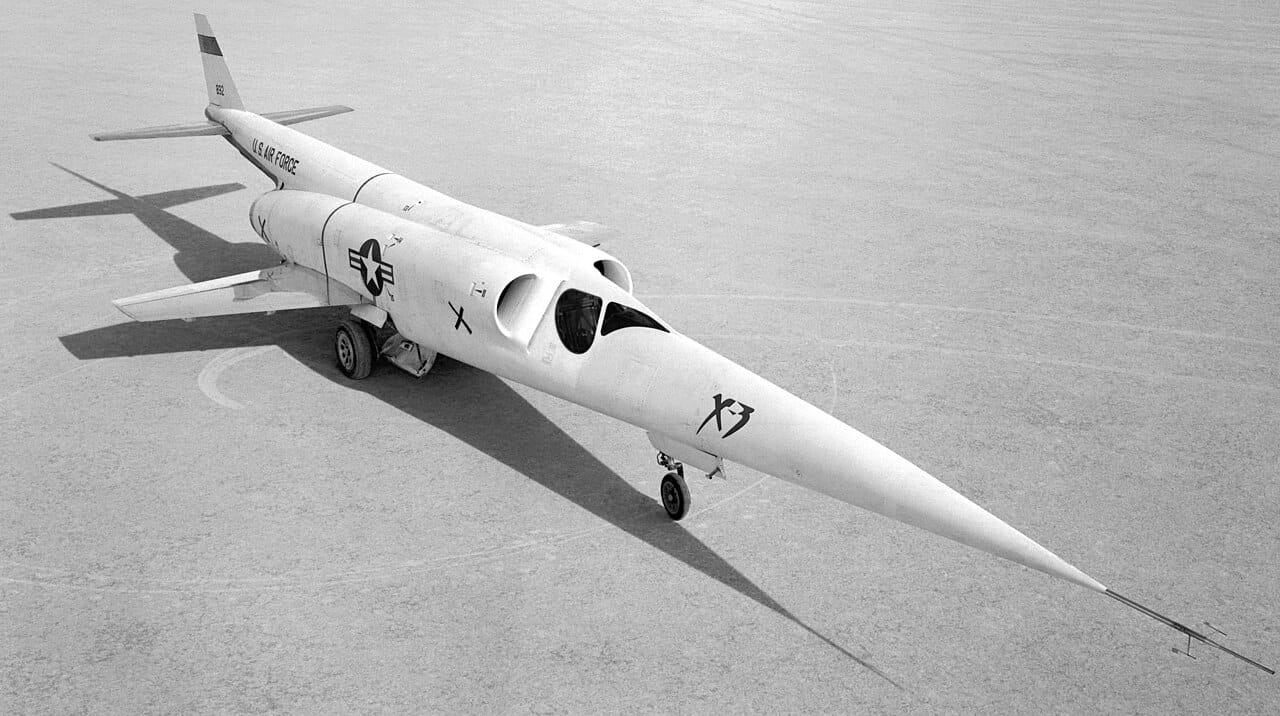
Second, that stubby little wing. Too small to make the X-3 fast, its shape and loading pointed straight at the design of one of the most iconic fighters ever built: Lockheed’s F-104 Starfighter, the "missile with a man in it." The Stiletto never reached Mach 2. The jet it inspired did it for a living.
Today the single X-3 rests in the National Museum of the US Air Force — a beautiful failure that flew slower than it looked, and taught more than it ever achieved.
Sources: Jon Guttman, "The Douglas X-3 Stiletto," HistoryNet; NASA; National Museum of the USAF; Wikipedia.
0 Kommentare