
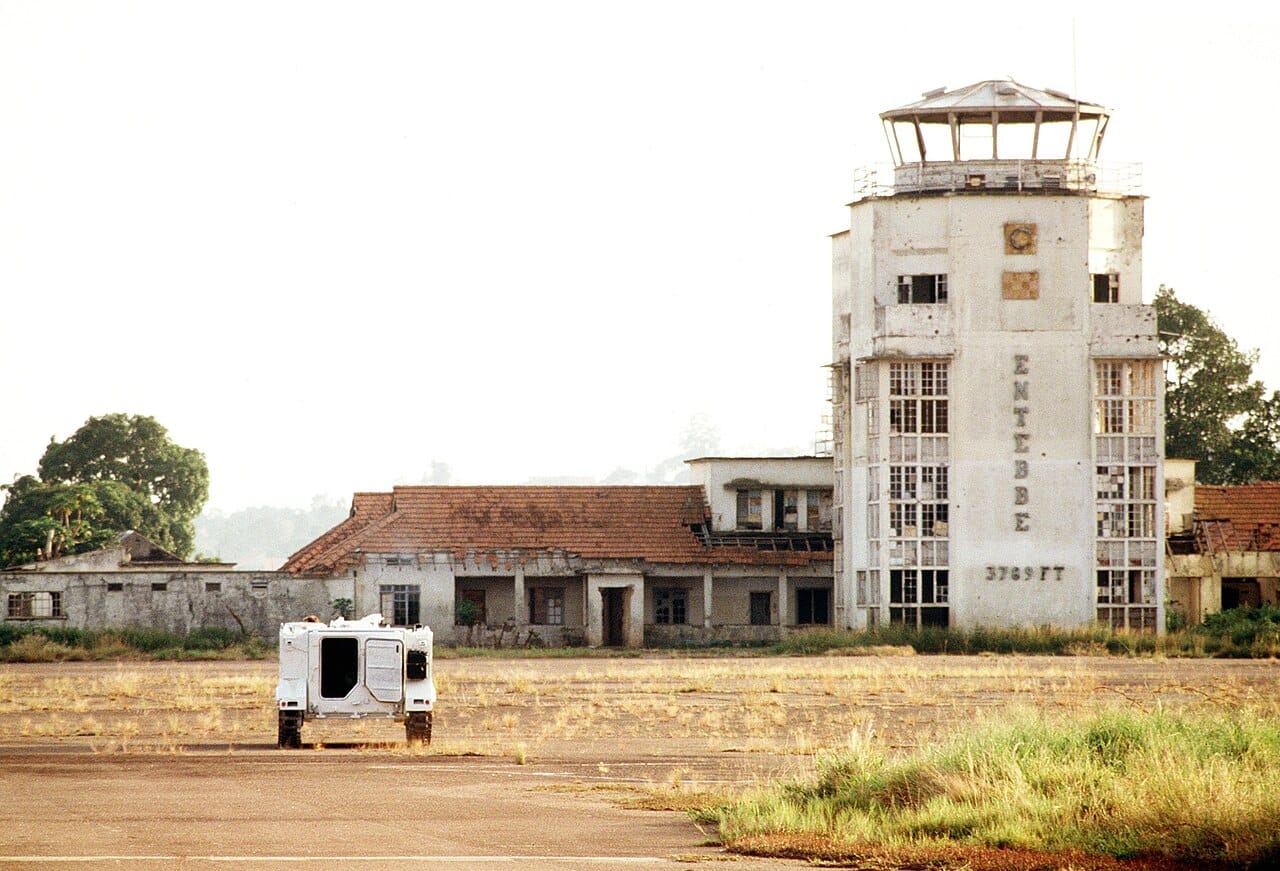
For a week in the summer of 1976, more than a hundred people sat on the floor of a disused airport terminal in the heart of Africa, four thousand kilometres from home, and waited to find out whether they would be murdered. They had been separated — Israelis and Jews to one side, everyone else told they could go. The arithmetic of that selection told them exactly what was coming.
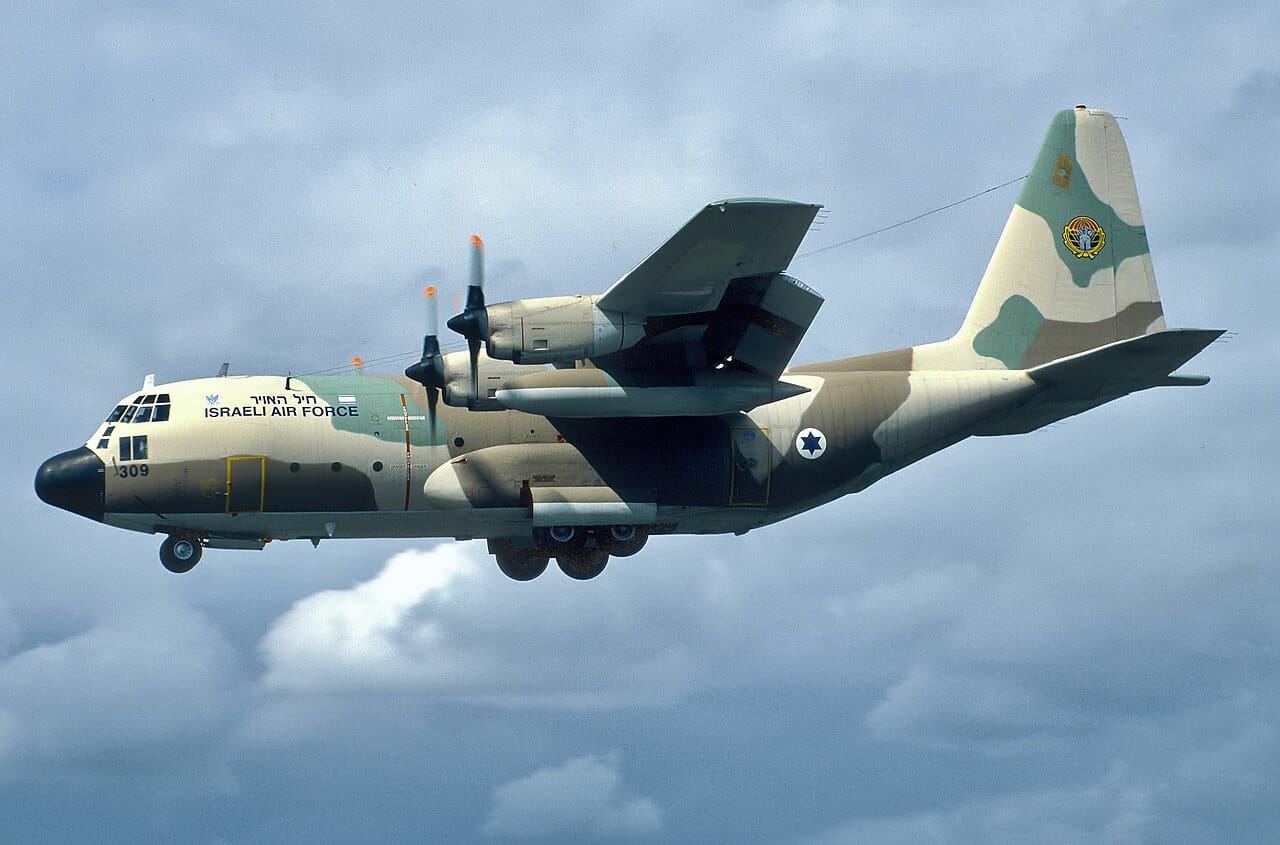
What they did not know was that, on the night of 3 July, four Israeli Hercules transports were already flying south through the dark towards them.
Kurzinfo
| Betrieb | Thunderbolt — the rescue at Entebbe, Uganda |
| Nacht der | 3–4 July 1976 |
| Trigger | Hijacking of Air France Flight 139 by PFLP and German Revolutionary Cells terrorists, aided by Idi Amin |
| Der Flug | Four C-130 Hercules flew roughly 4,000 km each way, largely at low level |
| Ergebnis | Over 100 hostages rescued; the assault took about 53 minutes on the ground |
| Kosten | Three hostages killed in the raid and a fourth, Dora Bloch, murdered afterward; one Israeli soldier killed — the commander, Yoni Netanyahu |
One Hundred Hostages, Four Thousand Kilometres
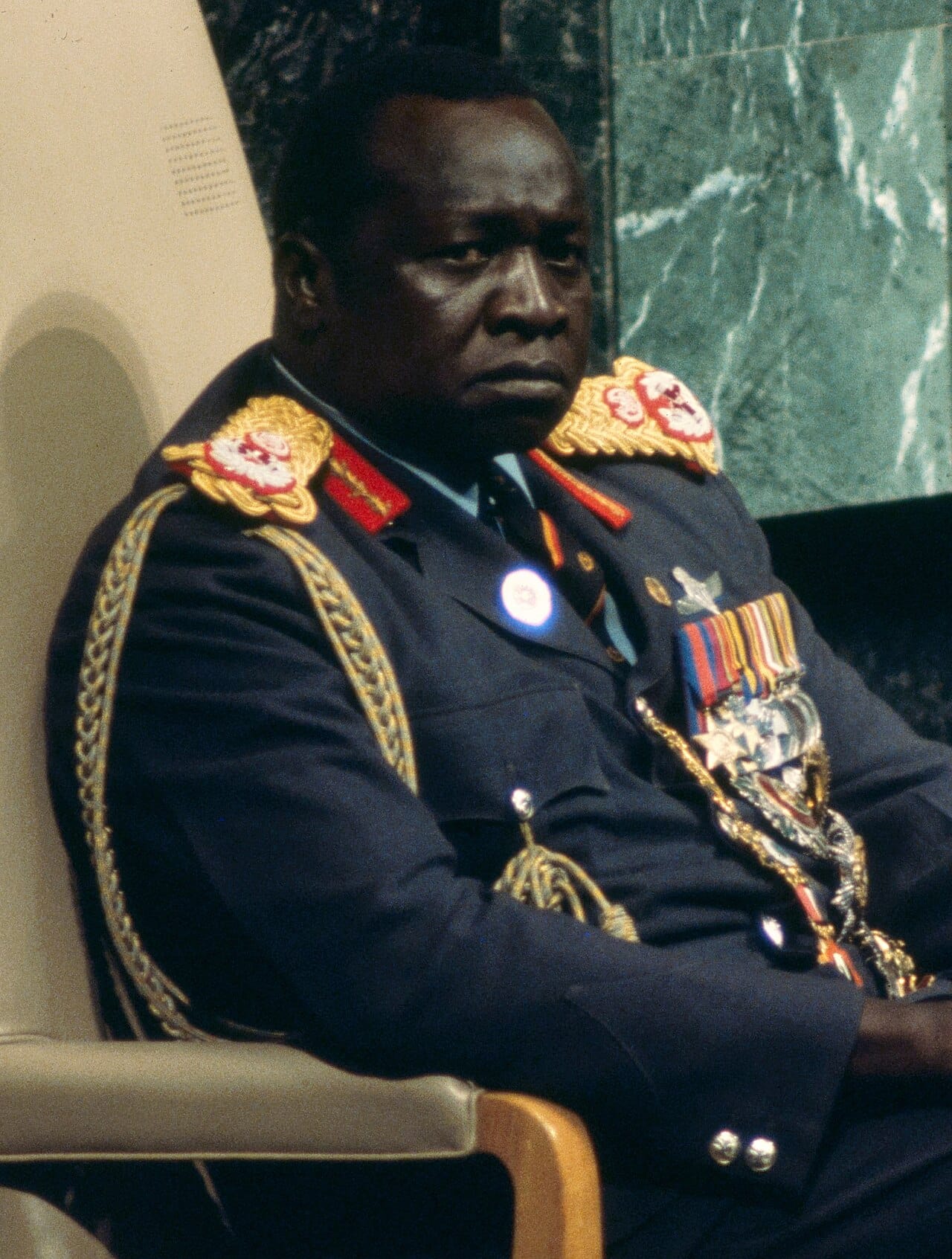
The Air France Airbus had been hijacked after a stop in Athens and flown, via Benghazi, to Entebbe — a deliberate choice, because Uganda’s dictator Idi Amin welcomed the hijackers and lent them his soldiers. In the old terminal building the captors made their fatal error: they released the non-Jewish passengers and held the Israelis and Jews, a selection that echoed a darker history and hardened Israel’s resolve to act.
The problem was distance. Entebbe sat far beyond the reach of any conventional rescue, in hostile territory, guarded by Ugandan troops and a squadron of MiG fighters. Every planner who looked at the map concluded it could not be done. Israel decided to do it anyway.
The Longest Night Flight
Four C-130 Hercules lifted off from Israel and flew the length of the Red Sea and down over Africa, hugging the terrain to stay beneath radar, navigating the old-fashioned way. In the belly of the lead aircraft sat a black Mercedes and Land Rovers — a decoy motorcade meant to mimic Amin’s own, to buy the assault force a few unchallenged seconds after landing.
Leading the ground force was Lt. Col. Yonatan “Yoni” Netanyahu. A commando who was there remembered how Netanyahu framed the stakes before they left.
Iddo Netanyahu, the commander’s brother, recounts the planning and execution of the raid.
Fifty-Three Minutes on the Ground
The Hercules touched down in darkness and the assault teams moved instantly on the terminal. For the hostages, the first sign of rescue was not a flag or an announcement but a language.
Inside minutes the commandos had killed the hijackers and secured the hall. Outside, other teams destroyed roughly a dozen Ugandan MiGs on the ground to prevent pursuit and held off Ugandan soldiers. It was during that firefight, near the terminal, that Yoni Netanyahu was shot and killed — the only member of the assault force to die.
A revisiting of the rescue at Entebbe Airport and how the operation unfolded.
The Cost and the Legend
The raid was not bloodless. Three hostages were killed in the crossfire, and a fourth — Dora Bloch, an elderly woman taken to a Kampala hospital before the raid — was murdered on Amin’s orders in revenge. But more than a hundred people who had been counting down to their own execution walked back onto Israeli aircraft and flew home.
Entebbe rewrote the rules. It proved that a democracy could reach across a continent to pull its citizens out of a dictator’s hands, and it became the template every special-operations force has studied since. For Israelis it carried a private grief folded inside a national triumph: the one man they lost was the man who led them in. The mission is still remembered by the name it later took — Operation Yonatan, for the commander who did not come home.
A dramatisation of the raid produced in 1977, a year after the events.
Sources: St. Louis Jewish Light; The Times of Israel; Jewish Virtual Library; Imperial War Museums.
Verwandte Fragen
What was the Entebbe raid?
Operation Thunderbolt was Israel's rescue of hostages held at Entebbe airport in Uganda on the night of 3–4 July 1976. Four C-130 Hercules flew about 4,000 km each way; commandos stormed the terminal in roughly 53 minutes, freeing over 100 hostages taken after the hijacking of Air France Flight 139.
Why were the hostages at Entebbe in Uganda?
Air France Flight 139 was hijacked after a stop in Athens by PFLP and German Revolutionary Cells terrorists, then flown via Benghazi to Entebbe — because Uganda's dictator Idi Amin welcomed the hijackers and lent them his soldiers. The captors then separated Israeli and Jewish passengers from the rest.
How far did Israel fly to reach Entebbe?
The four C-130 Hercules transports flew roughly 4,000 kilometres each way, much of it at low level to avoid radar, into hostile territory guarded by Ugandan troops and MiG fighters. That distance was why nearly every planner first judged a rescue impossible.
Wie viele Geiseln wurden in Entebbe befreit?
More than 100 hostages were rescued. Three hostages died during the raid and a fourth, Dora Bloch, was murdered afterward. One Israeli soldier was killed: the assault commander, Lt. Col. Yonatan "Yoni" Netanyahu.
Who died during the Entebbe raid?
Three hostages were killed in the assault, and a fourth, Dora Bloch, was murdered later in a Ugandan hospital. The only Israeli soldier killed was the mission commander, Lt. Col. Yonatan "Yoni" Netanyahu, elder brother of Benjamin Netanyahu.
What aircraft carried out the Entebbe rescue?
The force used four C-130 Hercules transports to carry commandos, vehicles and equipment 4,000 km to Uganda and back. The rugged Hercules airframe has filled countless military roles, including the heavily armed AC-130 gunship.
How does Entebbe compare with other hostage rescue attempts?
Entebbe succeeded where others failed. Four years later, the 1980 US attempt to rescue hostages in Iran, Operation Eagle Claw, ended in disaster at the "Desert One" staging site without the force ever reaching Tehran.
Ähnliche Beiträge

0 Kommentare