
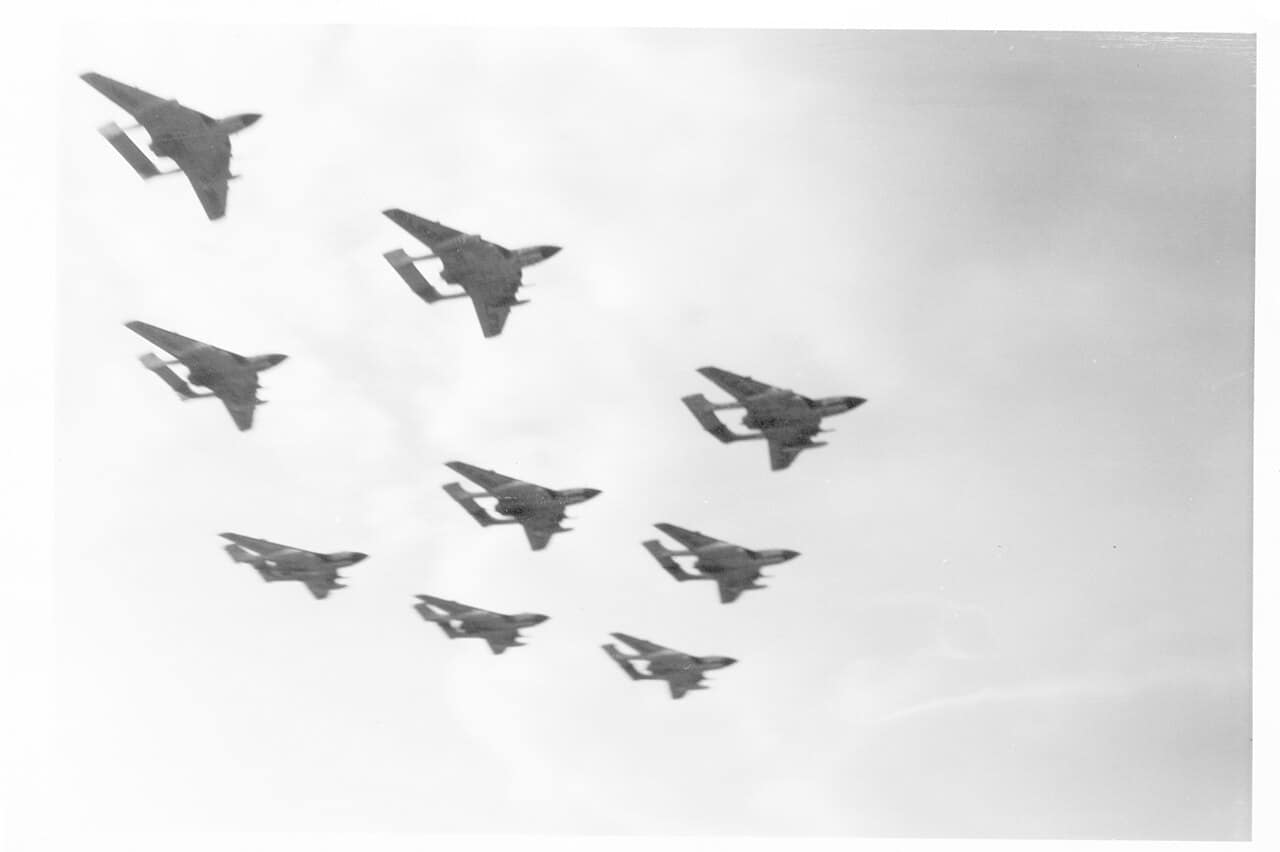
From the front it looked like the future: a big, twin-boom jet with a needle nose and no visible cockpit canopy where you would expect one. The de Havilland Sea Vixen was one of the most futuristic fighters the Royal Navy ever flew. It was also one of the deadliest — mostly to the men who flew it.
Fast, missile-armed and radar-equipped, the Sea Vixen should have been a triumph of 1950s British engineering. Instead its story is dominated by a grim accident record and a cockpit its own crews nicknamed “the coal hole.”
Kurzinfo
- Flugzeug: de Havilland DH.110 Sea Vixen, carrier fleet fighter
- Operator: Royal Navy Fleet Air Arm, 1959–1972
- Layout: Twin-boom, two Rolls-Royce Avon engines, two-seat
- Rüstung: All-missile — Firestreak then Red Top — plus rockets; no guns
- Bekanntheitsgrad: First British two-seat aircraft to go supersonic (in a dive)
- Grim record: Of 145 built, 55 were lost in accidents, 30 of them fatal
A fighter with no guns
The Sea Vixen broke with tradition in a way that startled contemporaries: it carried no cannon at all. Its punch came entirely from guided missiles — first the Firestreak, later the Red Top — backed by unguided rocket packs. In an age when most fighters still bristled with guns, an all-missile interceptor felt like science fiction.
Underneath, it was a thoroughly modern machine: 45-degree swept wings, two Rolls-Royce Avon turbojets tucked into a twin-boom tail, and a radar to hunt Soviet bombers over the sea. It even became the first British two-seat aircraft to punch through the sound barrier, though only in a dive.
The coal hole
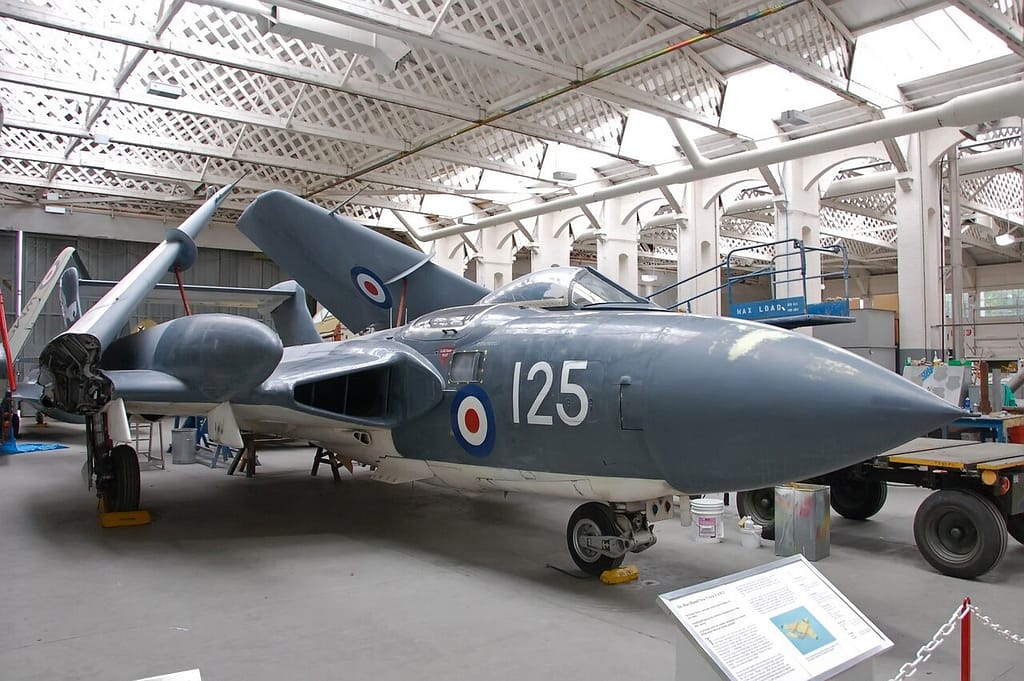
That futuristic nose hid a cruelty. The pilot sat under an offset canopy on the left. His radar observer sat down and to the right, almost entirely inside the fuselage, with nothing to see out of but a window roughly seven inches by ten, usually covered by a blind so the radar screen stayed readable. Crews called it the coal hole, and nobody volunteered for it happily.
A shadow from the start
The type was born in tragedy. On 6 September 1952, the DH.110 prototype from which the Sea Vixen was developed broke apart in the air at the Farnborough Airshow. The wreckage fell into the crowd, killing 31 people, including test pilot John Derry and his observer Tony Richards. It remains one of the worst air-show disasters in history.
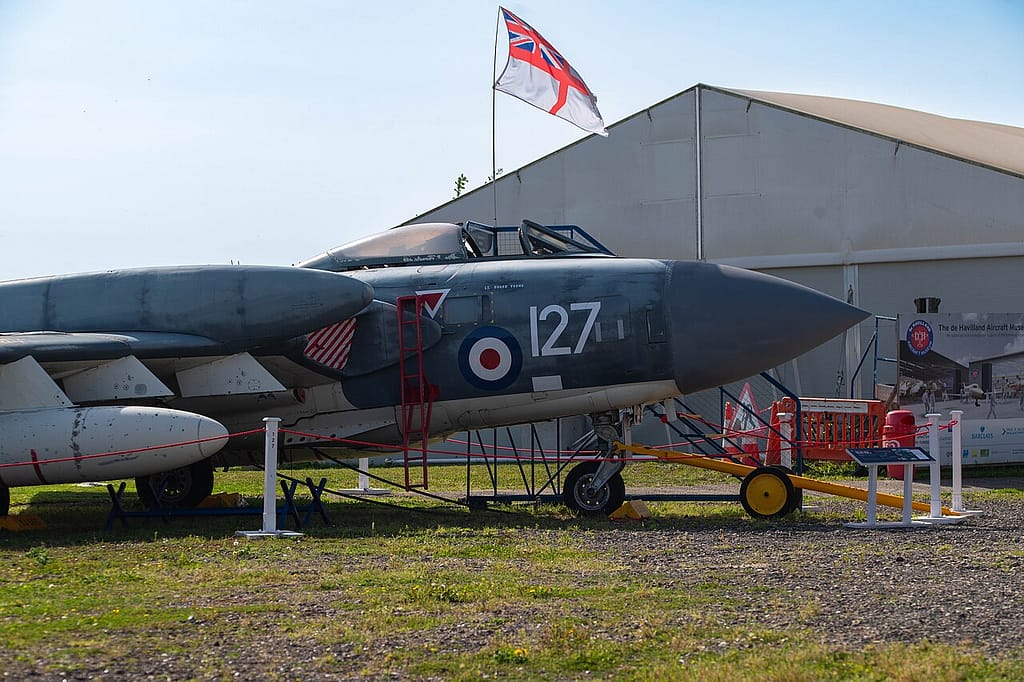
In service the losses kept coming. Of 145 production Sea Vixens, 55 were destroyed in accidents — 30 of them fatal, and 21 of those killing both pilot and observer. The airframe was capable, but ejecting from the coal hole was slow and often deadly, and the Fleet Air Arm paid a heavy price flying it from pitching carrier decks.
By 1972 the Sea Vixen was gone, replaced by the Phantom. It is remembered now as a beautiful, forward-looking fighter — and a reminder of how brutal the jump into the jet-and-missile age really was.
Sources: Wikipedia; BAE Systems Heritage; Thunder & Lightnings; SeaVixen.org aircrew testimonies.
0 Kommentare