
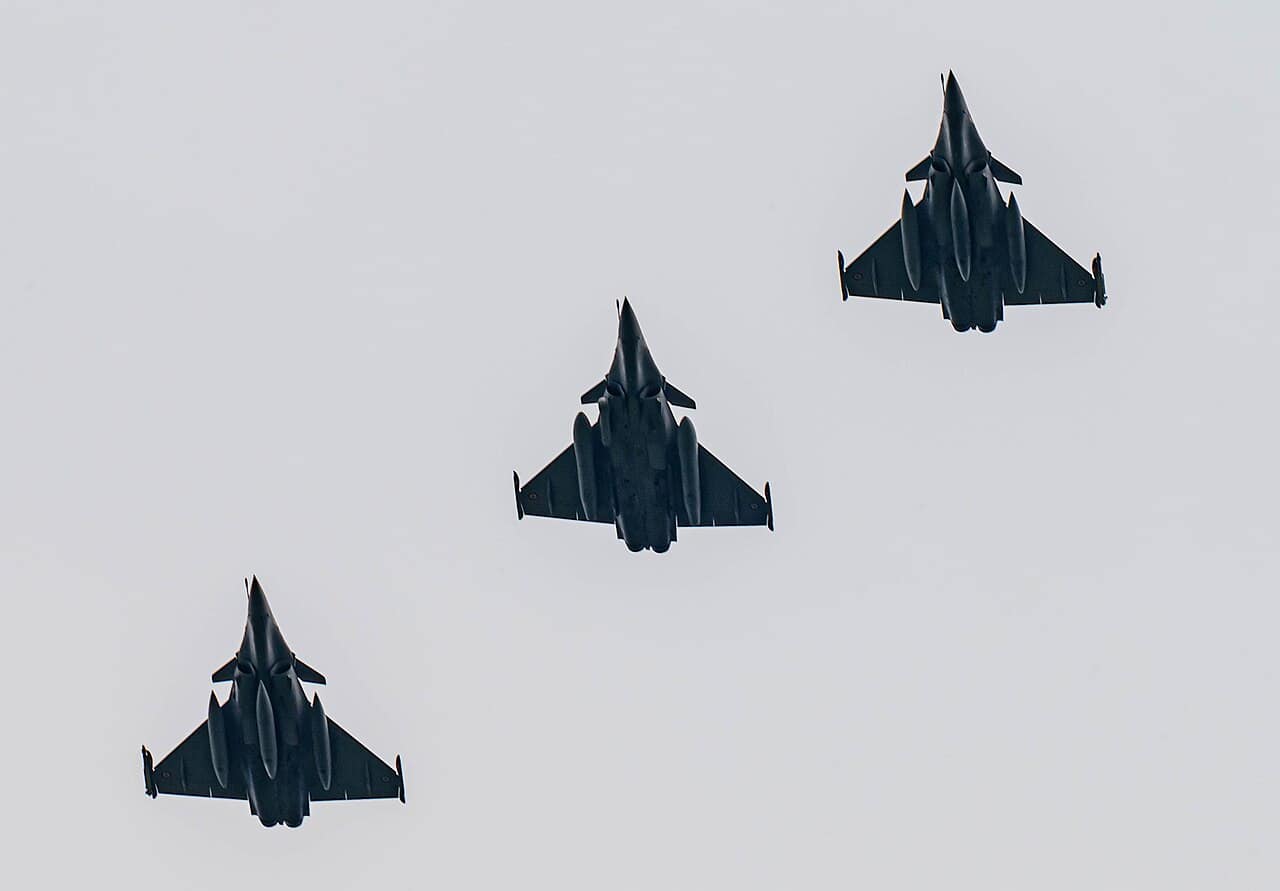
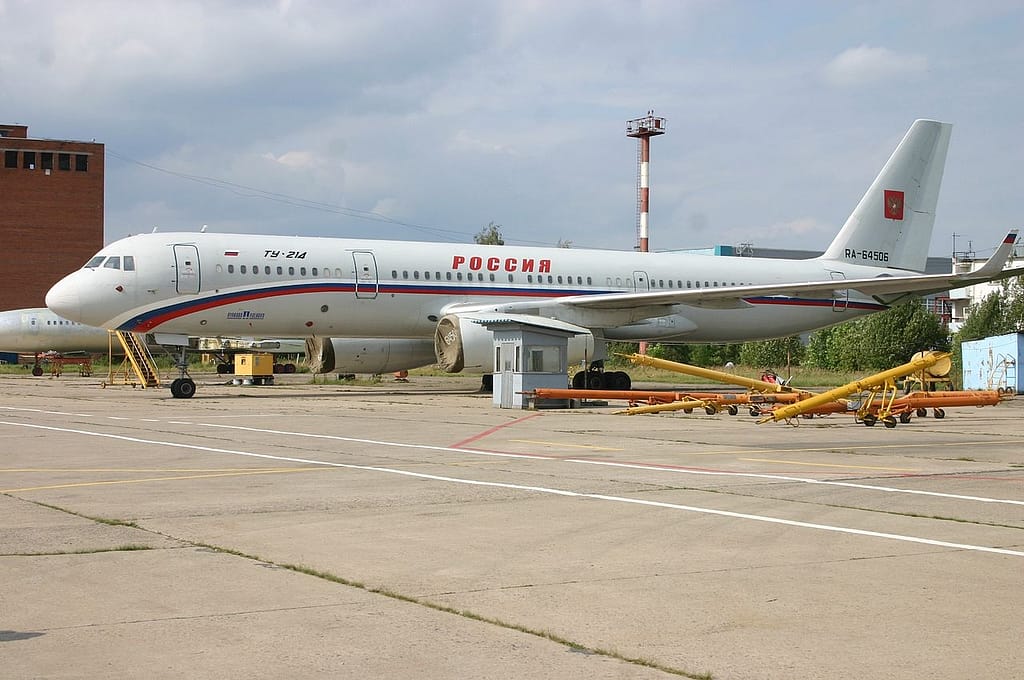
Somewhere over the Baltic this summer, a French Rafale slid into formation beside a Russian jet that almost never lets itself be seen. The aircraft was a Tupolev Tu-214PU — a rare, specially-equipped command aircraft that open-source analysts link to Russia's FSB security service, and which some believe is used by the FSB's own leadership.
The interception was one of 39 the French Air and Space Force carried out during a four-month tour flying NATO's Baltic Air Policing mission. But this one stood out, because of what French cameras captured on the Russian jet's fuselage — and who is thought to fly in it.
Kurzinfo
WHO: French Air and Space Force Rafales on NATO Baltic Air Policing
Wann: four-month deployment, 1 April to 31 July 2026 (two detachments)
Tally: 39 live "Alpha Scramble" interceptions, 540 flight hours, 69 training missions
The intercept: a Russian Tu-214PU, registration RA-64534, of the Special Flight Detachment "Rossiya"
Die Wendung: the jet carries an LSZ-100 laser missile-defence system — the kind fitted to Putin's Il-96 transports
Quelle: French Ministry of the Armed Forces; analysis by Piotr Butowski
Four Months on the Baltic Watch
Between 1 April and 31 July 2026, two French Rafale detachments stood alert over the skies of Lithuania, Latvia and Estonia, part of NATO's long-running Baltic Air Policing mission and, increasingly, a watch on Poland's eastern border against drone and missile incursions. Over those four months the French flew 540 hours and scrambled 39 times to identify and shadow aircraft approaching allied airspace.
The tempo is unforgiving. During "hot" alert periods, crews had to be airborne within 15 minutes of the klaxon; even in "cold" periods the clock ran to a few hours. Most intercepts are routine — a Russian transport or maritime-patrol aircraft skirting the edge of NATO airspace. One was not.
The Jet That Doesn't Want to Be Seen
The Tu-214PU is not an airliner. It is a heavily modified version of the Tu-214, operated by the Special Flight Detachment "Rossiya", the unit that flies Russia's most senior officials and security personnel. Open-source assessments describe the type as an airborne communications and command platform associated with the FSB, and analysts believe the specific aircraft the French met, RA-64534, is the one used by the FSB's leadership. There is no public proof of who, if anyone, was aboard during the interception.
The giveaway was hardware. Studying the French photographs, aviation analyst Piotr Butowski spotted an LSZ-100 mounted on the aircraft — a laser-based, electro-optical system designed to blind the infrared seekers of shoulder-fired missiles. It is not the sort of self-defence kit bolted to an ordinary government transport. It is the kit you fit to an aircraft you consider a very high-value target.
First to Down the Drones
The FSB jet was the headline, but the French tour left another mark. During the deployment, Rafales were reported to have become the first NATO fighters to shoot down drones over both Latvia and Estonia — a sign of how much the Baltic mission has shifted from Cold-War-style shadowing of bombers toward the messy, everyday business of intercepting unmanned intruders.
For a rare few minutes over grey Baltic water, though, a French fighter and a Russian command jet flew wing to wing — one making sure the other knew it had been seen. In the quiet contest along NATO's eastern edge, that is the whole point.
Sources: French Ministry of the Armed Forces (defense.gouv.fr); Piotr Butowski; Militarnyi; Defence Blog; United24 Media; Zona Militar.
0 Kommentare