
Ask a large language model for the combat radius of a foreign fighter and it will give you a number. Confident, specific, formatted like a fact. It may also be entirely invented.
That is an inconvenience if you are writing a school essay. It is something else if you are designing a stealth fighter around what you think the other side’s radar can do.
Engineers at the institute that designed China’s J-20 and its next-generation J-36 have now said so in print.
Kurzinfo
| WHO | Engineers at AVIC Chengdu Aircraft Research and Design Institute |
| Named author | Zhang Xianzhe |
| Published | 20 June 2026 |
| Journal | Information Studies: Theory & Application, run by Chinese state arms maker Norinco |
| Reported by | South China Morning Post, 19 August 2026 |
| Das Problem | AI models inventing aircraft specifications and getting radar parameters wrong |
| Warum es wichtig ist | Defence intelligence is described as a high-stakes, low-error domain |
| Institute’s products | J-20 stealth fighter; next-generation J-36 |
The Warning, in Their Own Words
The paper does not argue that large language models are useless for intelligence work. It says the opposite: they are genuinely good at mining large volumes of data and analysing weapons performance, tasks that used to consume enormous analyst time.
The problem is what happens when they are wrong.
And then the consequence, which is the sentence that makes this worth reading.
Why a Fighter Designer Cares About This
According to the paper, every fighter design begins with a picture of the enemy. What does the opponent’s radar cover? Which frequency bands does it use? Where are the gaps?
Those answers determine the shaping of the airframe, the coatings, the sensor fit, the tactics. Get the frequency bands wrong and you optimise a stealth design against a threat that does not exist, while remaining visible to the one that does. You would not discover the error until somebody was flying the aircraft in anger.
This is why the warning is interesting coming from this particular address. It is not a think tank worrying in the abstract. It is the design institute responsible for China’s front-line stealth fighter saying, in a journal published by a state arms manufacturer, that the tool everyone is rushing to adopt will confidently lie to you about exactly the numbers you need most.
An Unusually Candid Thing to Publish
China has spent the past two years promoting military AI heavily. The Zhisheng documentary series shown around Army Day showcased drone swarms and AI-enabled systems; Russia has just announced it will test combat AI on the two-seat Su-57D; the US Air Force is building its entire Collaborative Combat Aircraft programme around autonomy.
Against that backdrop, a paper from Chengdu saying be careful, the machine makes things up reads less like caution and more like someone who has actually tried to use one.
Nothing in the reporting suggests China is slowing down. The paper is a call for verification discipline, not abstinence. But it is a useful corrective to the assumption that adding AI to intelligence analysis is straightforwardly additive. A fast wrong answer is worse than a slow right one, and in this domain it can be considerably worse.
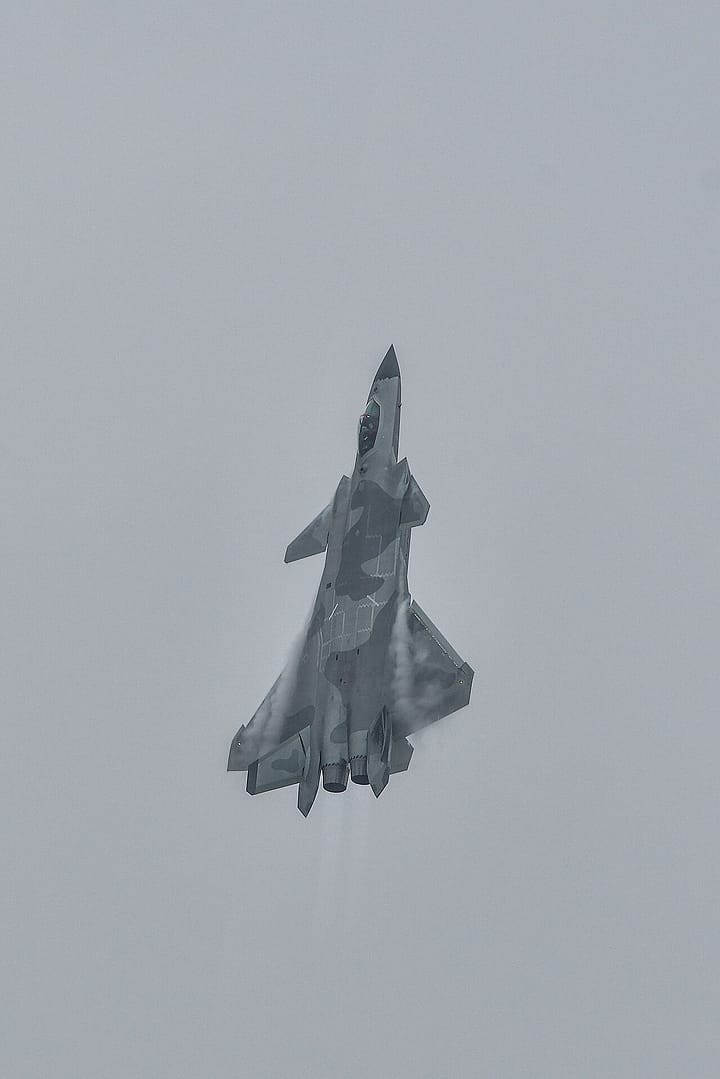
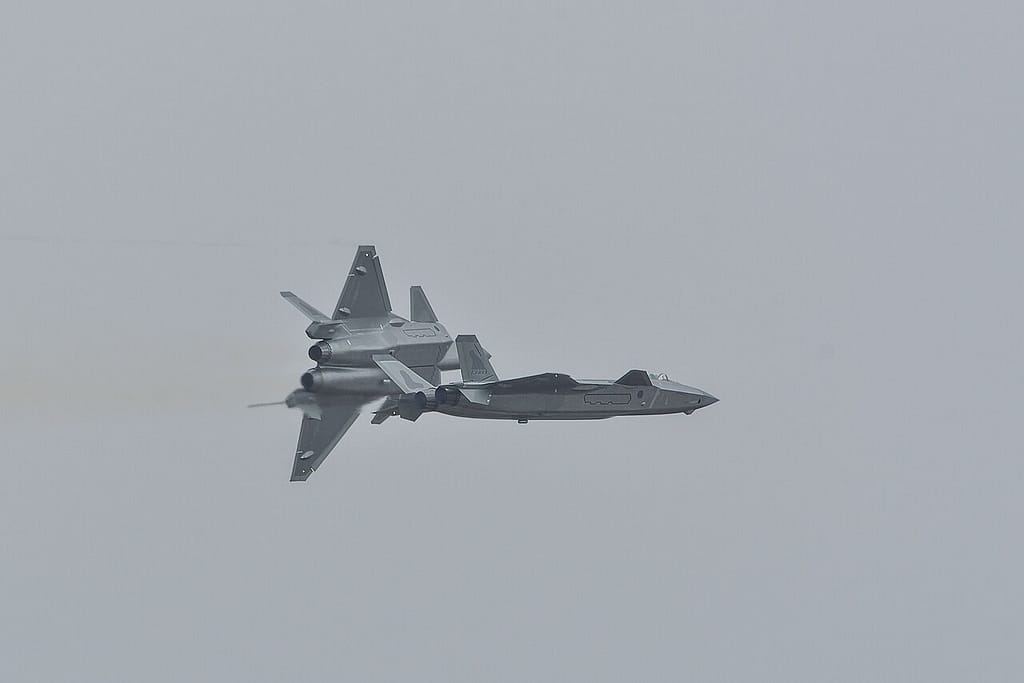
One honest note on the picture at the top of this article: no photograph of the J-36 exists under a free licence, and the images circulating are unofficial. The aircraft shown is the J-20, the other product of the same design institute.
Sources: South China Morning Post, 19 August 2026, reporting by Zhang Tong; Zhang Xianzhe, Information Studies: Theory & Application, 20 June 2026.



0 Kommentare