
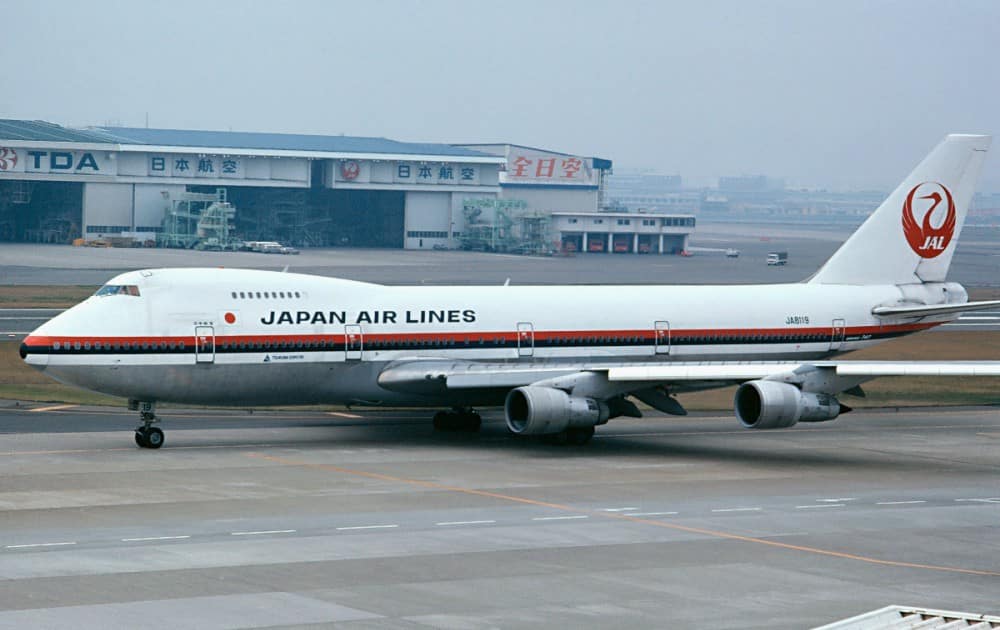
It was the eve of the Obon holiday, when families across Japan travel home to honour their ancestors. Japan Airlines Flight 123 lifted off from Tokyo’s Haneda Airport at 18:12 on 12 August 1985, bound for Osaka. The aircraft was a Boeing 747SR, a short-range jumbo built for exactly this kind of dense domestic hop, and she was nearly full: 524 souls aboard.
At the controls were three experienced men. Captain Masami Takahama, a veteran with more than 12,000 flight hours, was working the radios while the first officer flew as part of his command training. Nothing about the climb suggested that the next 44 minutes would become one of the most studied ordeals in aviation history.
- Date: 12 August 1985, departing Tokyo Haneda at 18:12 for Osaka
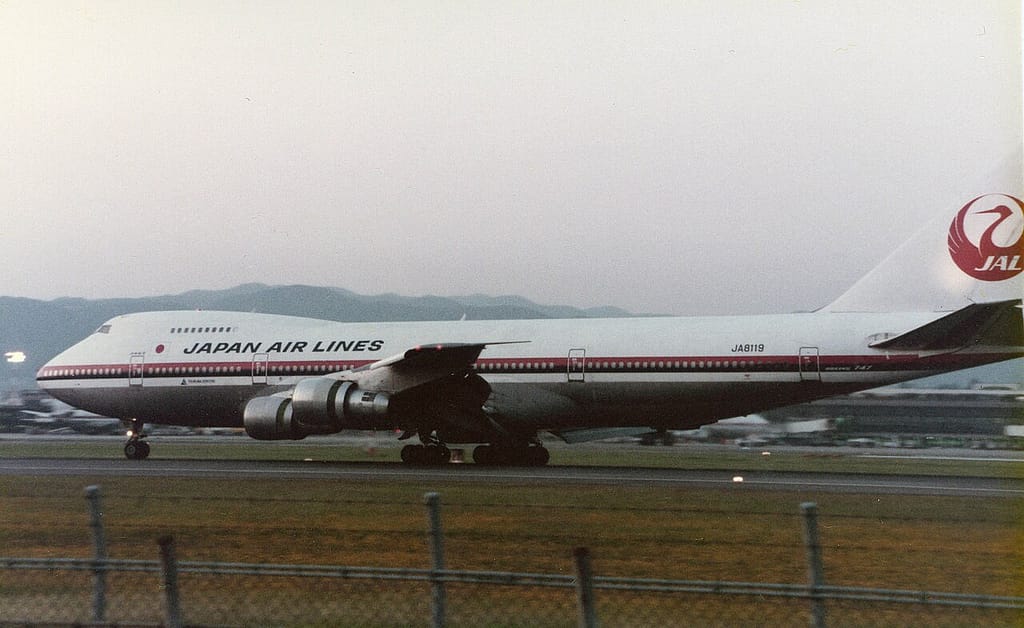
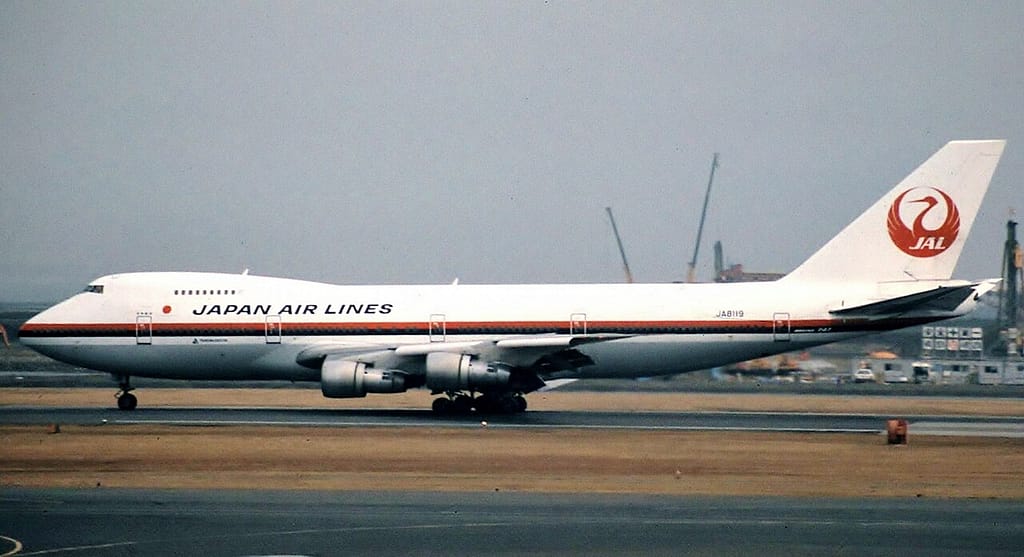
- Aircraft: Boeing 747SR, registration JA8119
- Failure: the aft pressure bulkhead ruptured, tearing away much of the vertical stabilizer and severing all four hydraulic systems
- The fight: the crew flew on engine thrust alone for 32 minutes before impact
- Toll: 520 of 524 aboard died; 4 survived — the deadliest single-aircraft accident in history
- Root cause: a faulty 1978 repair of the bulkhead after a tailstrike
Twelve minutes to catastrophe
At 18:24, roughly twelve minutes after takeoff, the aircraft suffered an explosive decompression. An off-duty cabin attendant seated at the rear later described a single loud crash from overhead and a rush of white mist. In the cockpit the crew reported trouble and requested an immediate return.
The reality was far worse than they knew. The rupture of the aft pressure bulkhead released a torrent of cabin air into the tail, and that surge tore away much of the vertical stabilizer and severed the lines of all four independent hydraulic systems. With no hydraulics, the pilots had no rudder, no elevators, no ailerons. They were, in the plainest sense, flying a 350-tonne aircraft they could no longer command.
Fliegen nur mit Schub
What followed was an extraordinary act of improvised airmanship. Denied every flight control, the crew learned in real time to fly the aeroplane on engine power alone — adding thrust to raise the nose, easing it to lower it, splitting power between left and right engines to turn. The jumbo pitched through slow, rolling waves and wallowed from side to side, and the pilots fought each swing with the throttles for 32 unbroken minutes.
They lowered the landing gear in the hope it might steady the aircraft, and wrestled it away from Tokyo toward open ground. Modern pilots who have tried the same scenario in simulators, with foreknowledge and no injuries, routinely fail to keep control at all. That the crew of 123 held the aircraft aloft for more than half an hour remains, in engineering terms, close to miraculous.
The mountain, and the long night
At about 18:56 the aircraft came down in rugged terrain near Mount Takamagahara in Gunma Prefecture, some 100 kilometres from Tokyo. A United States Air Force crew spotted the burning site within about 20 minutes, while it was still daylight, but organised ground rescue did not reach the remote ridge until the following morning.
That delay is one of the hardest parts of the story. Of the 524 aboard, 520 died. The four survivors were all seated toward the rear-left of the cabin. Medical staff later concluded that others had lived through the impact only to succumb overnight to their injuries and the cold mountain air.
What actually broke
The investigation traced the disaster back seven years. In 1978, this same aircraft had suffered a heavy tailstrike while landing at Osaka, cracking the aft pressure bulkhead. Boeing technicians repaired it — but not to Boeing’s own approved method.
The correct fix called for a single continuous splice plate joined by three rows of rivets. Instead, two separate plates were fitted, which effectively cancelled one row of rivets and cut the joint’s fatigue resistance dramatically. Hidden beneath overlapping metal, the flaw survived inspection. Each takeoff and landing had quietly loaded a crack no one could see, until it finally let go over Sagami Bay.
The lessons that outlived the flight
Flight 123 reshaped how the industry thinks about structural repairs — how they are performed, documented, and re-inspected over an aircraft’s life — because a single hidden deviation had proven capable of destroying an airframe years later. The idea that critical repairs must be verifiable, not just completed, is part of this accident’s legacy.
It also became a case study in what pilots can do when systems fail beyond any checklist. Four years later, when United Airlines Flight 232 lost all hydraulics over Iowa, a crew that had absorbed the lessons of throttle-only flying guided their DC-10 to a crash landing that saved 184 lives. In 2006 Japan Airlines opened a Safety Promotion Center where recovered pieces of the aircraft are displayed for every new employee to see. Flight 123 is not a story to sensationalise — it is a reminder of why we obsess over every rivet, and of the courage of a crew who fought for their passengers to the very last second.
Sources: Wikipedia (Japan Air Lines Flight 123); Aircraft Accident Investigation Commission report (1987); UPI (1985).
0 Kommentare