
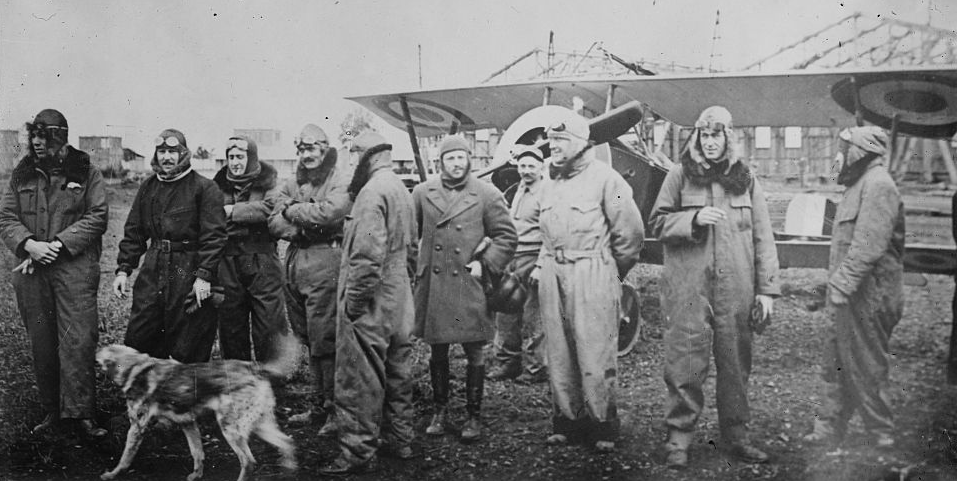
On a French airfield in 1916, you might have found two lion cubs named Whiskey and Soda padding between the tents, and a group of young Americans who had crossed an ocean to fight a war their own country had not yet joined. This was the Escadrille Lafayette — the most romantic unit of the First World War, and one of the strangest.
They were volunteers, adventurers and idealists: a squadron of American pilots flying French fighters for France, more than a year before the United States declared war. Some of them never came home.
Kurzinfo
- Einheit: Escadrille Lafayette (originally Escadrille N.124 “Americaine”)
- Formed: April 1916, under French command
- Pilots: A core of 38 American volunteers — before the US entered the war
- Flugzeug: Nieuport, then SPAD fighters, with an Indian-head insignia
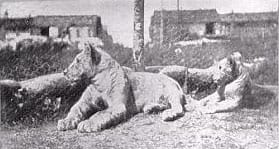
- Mascots: Two lion cubs, Whiskey and Soda
- Top ace: Raoul Lufbery, around 16–17 victories
Paying a very old debt
The squadron formed in April 1916 as the Escadrille Americaine, under French command but flown by Americans who had made their way to Europe to join the fight. When Germany objected that a neutral country’s citizens were flying against it, the French tactfully renamed the unit the Escadrille Lafayette — after the Marquis de Lafayette, the French nobleman who had fought for American independence.
The name carried real feeling. For many of these men, flying for France was repaying a debt owed since 1776. None put it more plainly than Kiffin Rockwell of Tennessee.
Rockwell meant it literally. On May 18, 1916, he became the first American to shoot down an enemy aircraft in the war. That autumn, on September 23, he was killed in a dogfight — one of the squadron’s first deaths, and far from its last.
Lions on the flight line
For all the danger, the escadrille had a swagger that became legend. Two lion cubs, Whiskey and Soda, served as squadron mascots — and Whiskey attached himself to the unit’s greatest pilot, the ace Raoul Lufbery, following him around the airfield like a tame house cat until the cubs grew too big and had to go to a zoo.
There was a ritual, too. After Rockwell’s first victory, a relative sent him a bottle of very old bourbon. He took a single swig, and from then on every pilot who downed an enemy was entitled to one ceremonial drink from what the squadron called the “Bottle of Death.”
The ace and the fallen
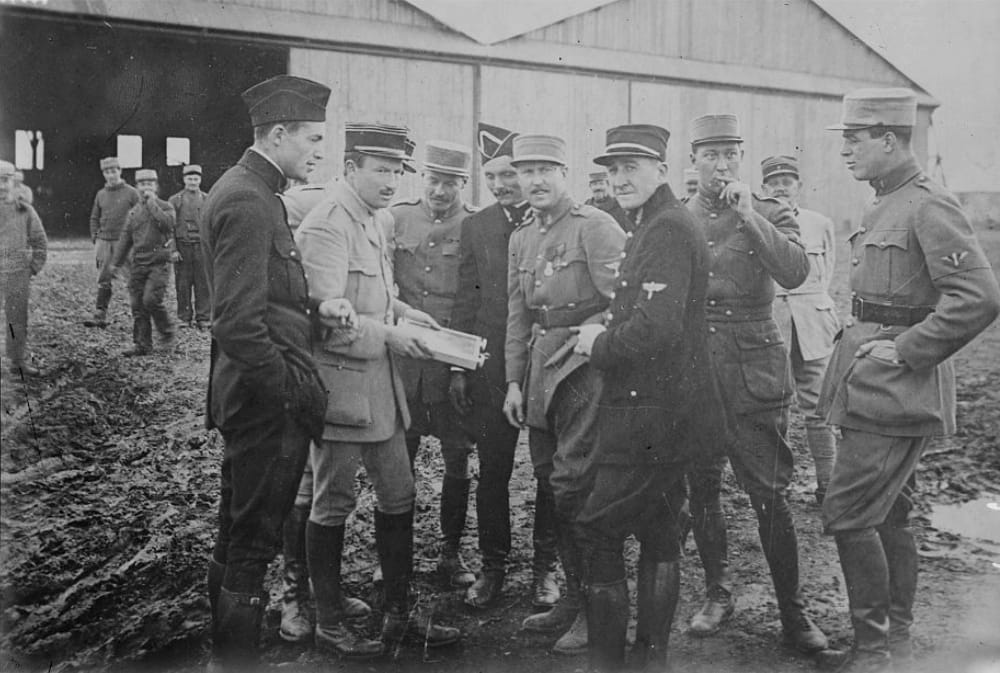
Raoul Lufbery was the star — French-born, American-raised, credited with around sixteen to seventeen victories, the first true American air ace. But the squadron paid dearly for its glamour. Victor Chapman, killed in June 1916, was the first American aviator to die in the war. Norman Prince, one of the unit’s founders, died that October. Over its two years, a steady stream of the young volunteers was lost.
Lafayette, we are here
When the United States finally entered the war in 1917, the symbolism came full circle. On July 4, 1917, at Lafayette’s tomb in Paris, an American officer, Colonel Charles Stanton, spoke the line that captured everything the escadrille had stood for.
In February 1918 the Escadrille Lafayette was folded into the US Army Air Service as the 103rd Aero Squadron, and its surviving pilots put on American uniforms at last. The wider Lafayette Flying Corps — the couple of hundred Americans who flew in French squadrons — helped seed the air arm the United States built almost from scratch.
They had gone to war for a country not their own, flown fragile fighters over the trenches, and kept two lions for company. The Escadrille Lafayette lasted less than two years. Its legend has lasted a century.
Sources: Wikipedia; National Air and Space Museum; World War I Centennial Commission; War Letters of Kiffin Yates Rockwell.
0 Kommentare