
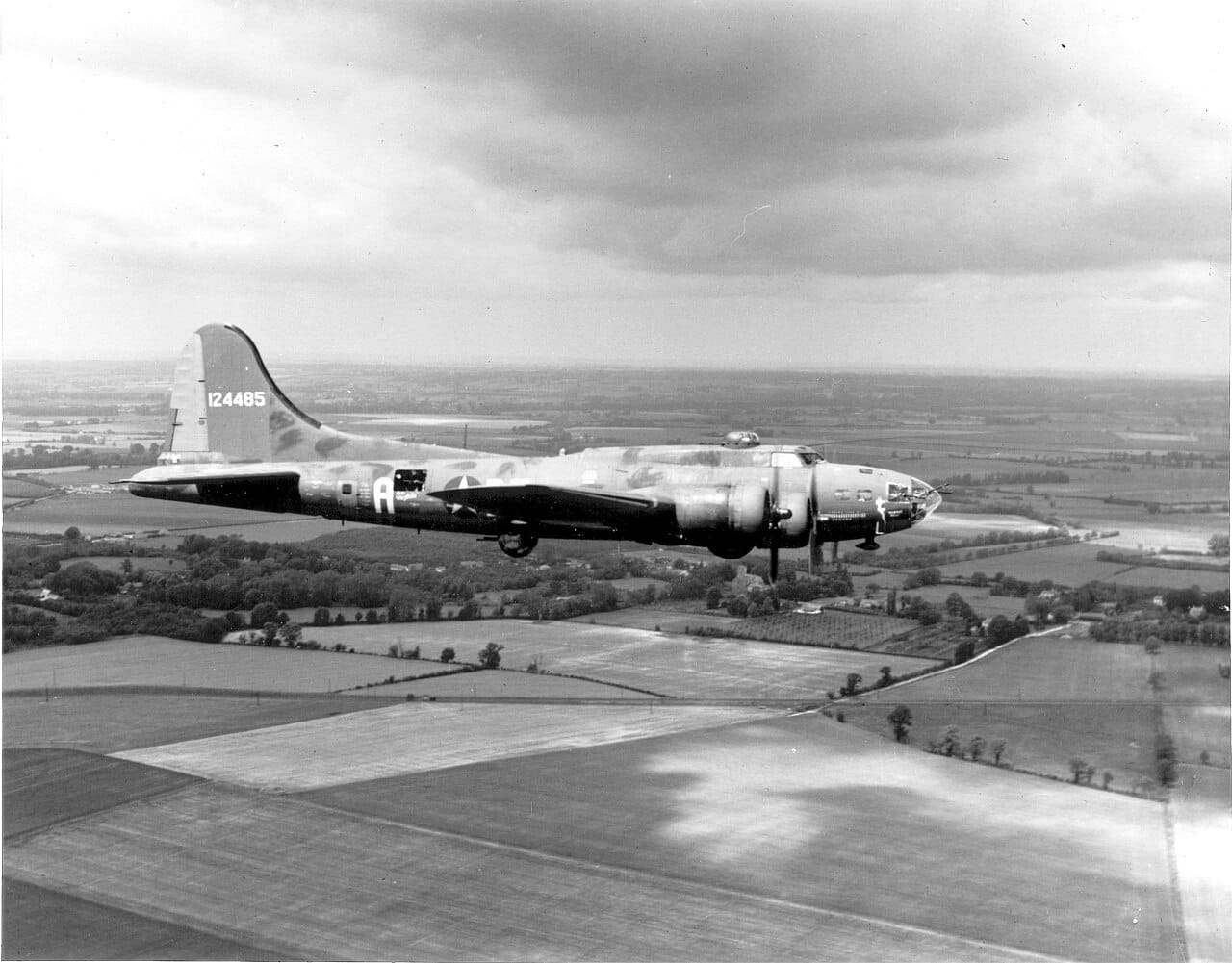
In the winter of 1942, the odds facing an American bomber crew over Europe were close to a coin toss. The Eighth Air Force flew its heavy bombers by daylight, without enough fighter escort, straight into the teeth of German flak and fighters. Finishing a full tour of 25 missions was less an expectation than a hope.
One crew and one aircraft beat those odds and became the most famous bomber in the world: the Memphis Belle.
Kurzinfo
- Flugzeug: Boeing B-17F Flying Fortress, serial 41-24485
- Einheit: 324th Bomb Squadron, 91st Bomb Group, 8th Air Force, Bassingbourn
- Tour: 25 daylight missions, November 1942 – May 1943
- Named for: Pilot Robert Morgan’s sweetheart, Margaret Polk of Memphis
- Ruhm: Subject of William Wyler’s 1944 combat documentary
- Now: Restored at the National Museum of the US Air Force, Dayton
The arithmetic of survival
The Belle was a Boeing B-17F, serial 41-24485, of the 91st Bomb Group at Bassingbourn, England. Between November 1942 and May 1943 she and her crew flew 25 daylight missions over Germany, France, Belgium and the Netherlands — around 148 hours in the air, more than 60 tons of bombs dropped, and, by the end, virtually every major part of the aircraft replaced at least once from battle damage.
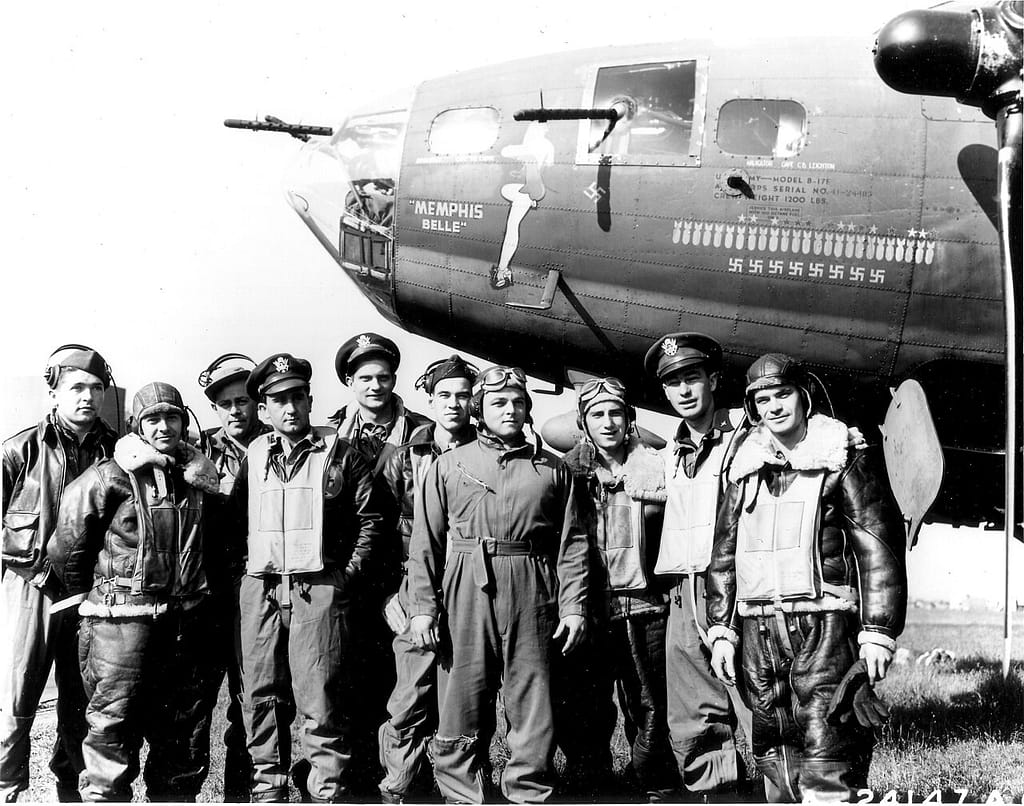
Pilot Captain Robert Morgan named her for his sweetheart, Margaret Polk of Memphis, and had a pin-up “Petty Girl” painted on the nose. Ten men flew her: pilot, co-pilot, navigator, bombardier, and the gunners and radio operator who manned her guns through mission after mission.
First, or almost first?
The legend says the Belle was the first Eighth Air Force bomber to complete 25 missions. The truth is a little more crowded: she was actually the third B-17 to reach 25 missions over Europe, and other Fortresses like the Hell’s Angels got there around the same time. What made the Belle first was what came next — she was the first to be pulled off combat and flown home to the United States, crew and all, to tour the country and sell war bonds.
It was a public-relations masterstroke. A battered but intact bomber and ten young men who had beaten the odds gave a war-weary home front exactly the story it needed.
The film that made her immortal
What turned the Belle from one lucky crew into an icon was a movie. The Hollywood director William Wyler — already famous, and soon to make The Best Years of Our Lives — went up in the bombers himself with hand-held colour cameras to film the raids as they happened. It was staggeringly dangerous work, and the footage he brought back was unlike anything audiences had seen.
His 1944 documentary, The Memphis Belle: A Story of a Flying Fortress, put civilians inside a bomber under fire for the first time. It was watched by millions and remains one of the most powerful pieces of wartime filmmaking ever made. Wyler had chosen the Belle, he later told Morgan, because there was a certain mystique to her name.
From bond tour to boneyard to museum
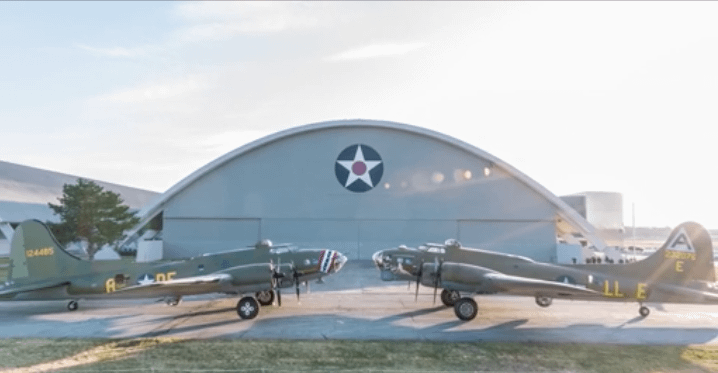
After the bond tour the fame faded, and the Belle very nearly ended her days as scrap. She was rescued, displayed for decades in Memphis, and finally given a full restoration. Today she stands, gleaming, in the World War II gallery of the National Museum of the US Air Force in Dayton, Ohio — the actual aircraft, not a replica.
Strip away the myth about being “first” and the real story is better anyway: ten ordinary young men who climbed into a thin aluminium tube twenty-five times, flew into the most dangerous airspace on earth, and came home. The Belle was their luck made visible — and, thanks to a Hollywood director with a hand-held camera, it belonged to everyone.
Sources: Wikipedia; National Museum of the US Air Force; Robert Morgan, “The Man Who Flew the Memphis Belle”; This Day in Aviation.
0 Kommentare