
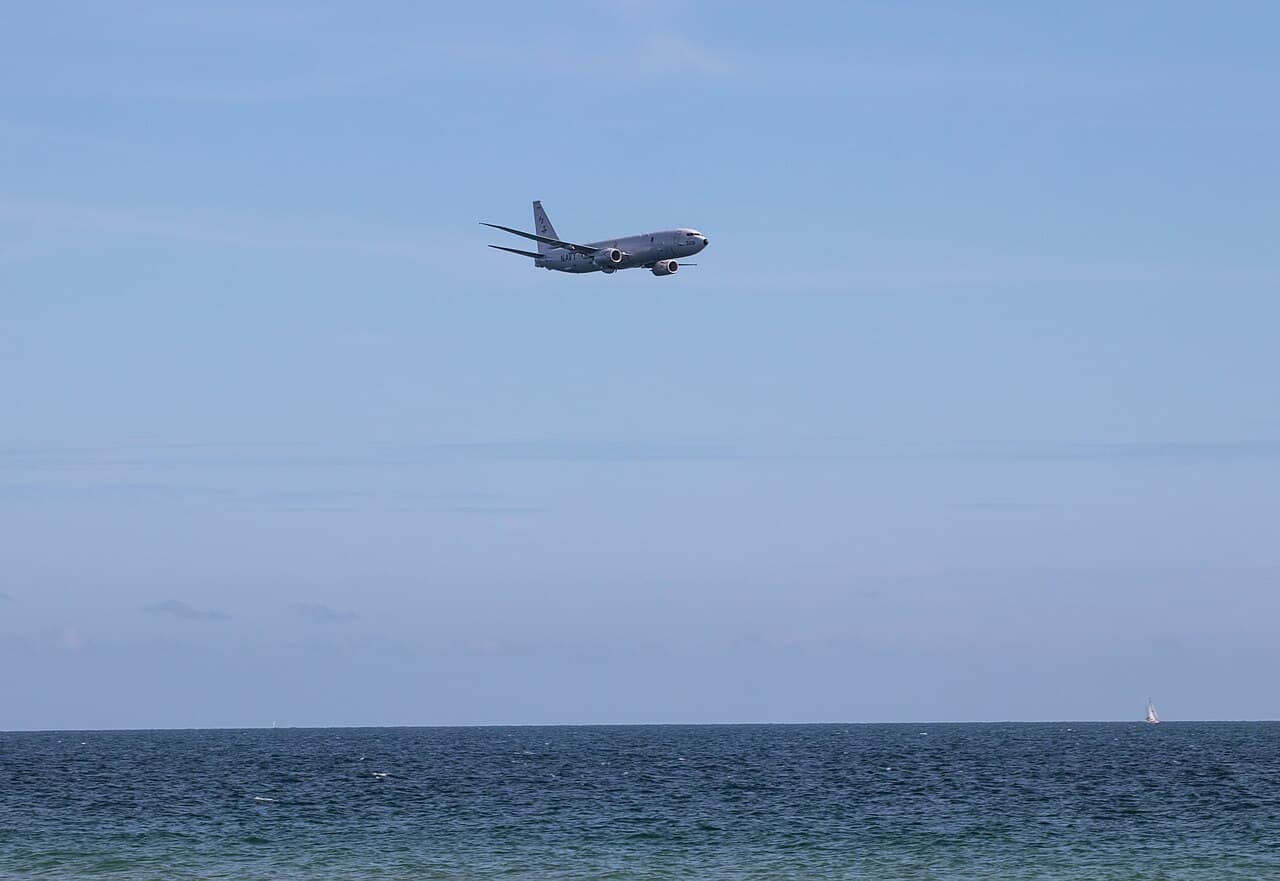
The U.S. Navy’s two great ocean-watchers already work as a pair. Now they are learning to talk directly to each other — and one of them is about to start taking orders straight from the other’s cockpit.
On 5 August, Boeing and Northrop Grumman announced that a P-8A Poseidon crew had, for the first time, tasked an MQ-4C Triton drone through a standardized machine-to-machine interface, cutting the ground control station out of the loop. It happened in a lab with simulated aircraft, not over the ocean — but it is the technical foundation for a P-8 crew retasking a Triton in mid-flight, on the spot.
Kurzinfo
- Was: First automated teaming between the P-8A Poseidon and MQ-4C Triton
- WHO: Boeing and Northrop Grumman (jointly funded)
- Wann: 5 August 2026, San Diego (laboratory demonstration)
- How: A P-8A crew tasked a simulated Triton over a standardized machine-to-machine interface (UCI)
- Payoff: groundwork to retask a Triton in flight without a ground station
- Bediener: U.S. Navy and Royal Australian Air Force
Two halves of one hunt
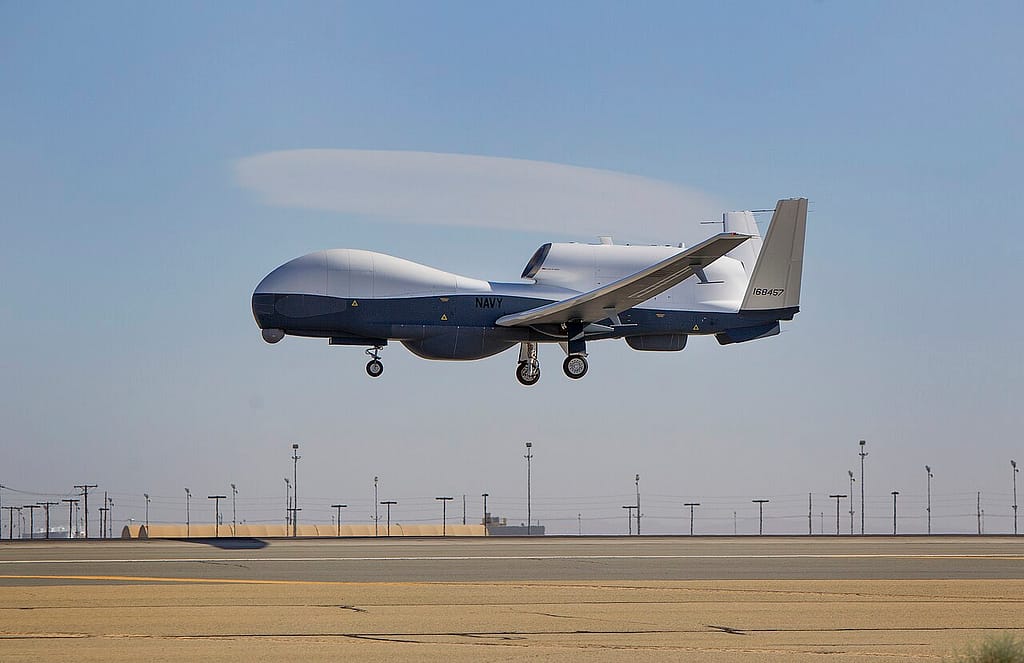
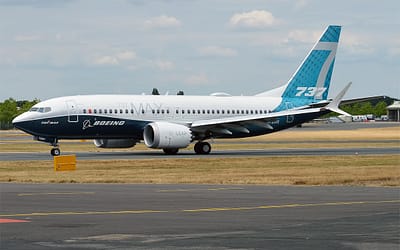
The pairing makes sense the moment you know the players. The Triton is a giant, high-flying unmanned aircraft that can loiter over vast stretches of ocean for a day at a time, hoovering up radar and signals intelligence. The P-8A Poseidon is the crewed sub-hunter and strike platform — a militarized 737 packed with sensors, sonobuoys and torpedoes. One finds the picture; the other acts on it.
Until now, telling the Triton where to go meant routing commands through a ground station. In the demonstration, the P-8A operator sent machine-readable tasking directly to the drone, which used its own AI to collect, process and pass intelligence straight back to the Poseidon.
Why cutting out the middleman matters
The link runs on the Universal Command and Control Interface, an open machine-to-machine standard. Because it is a standard rather than a one-off, the same plumbing could let the Triton work with other U.S. or allied assets that speak it too — less operator workload, faster decisions, cheaper integration.
Boeing is pitching it as a low-risk upgrade to an aircraft already in service — not a new jet, just new software and interfaces that expand what today’s crews can do. For allies like Australia, which flies both types, that is an attractive proposition.
From lab to ocean
The obvious caveat: this was a demonstration, not a deployment. Simulated aircraft, controlled conditions, no salt water involved. But manned-unmanned teaming has a habit of moving from lab to flight line fast when the money and the standards line up — and both are lining up here. The next time a Triton changes course over the Pacific, the order may come not from a trailer on the ground, but from the crew of a Poseidon a hundred miles away.
See the Triton and Poseidon at work — the team this software is built to tighten:
Sources: Northrop Grumman, Boeing, The War Zone.
0 Kommentare