
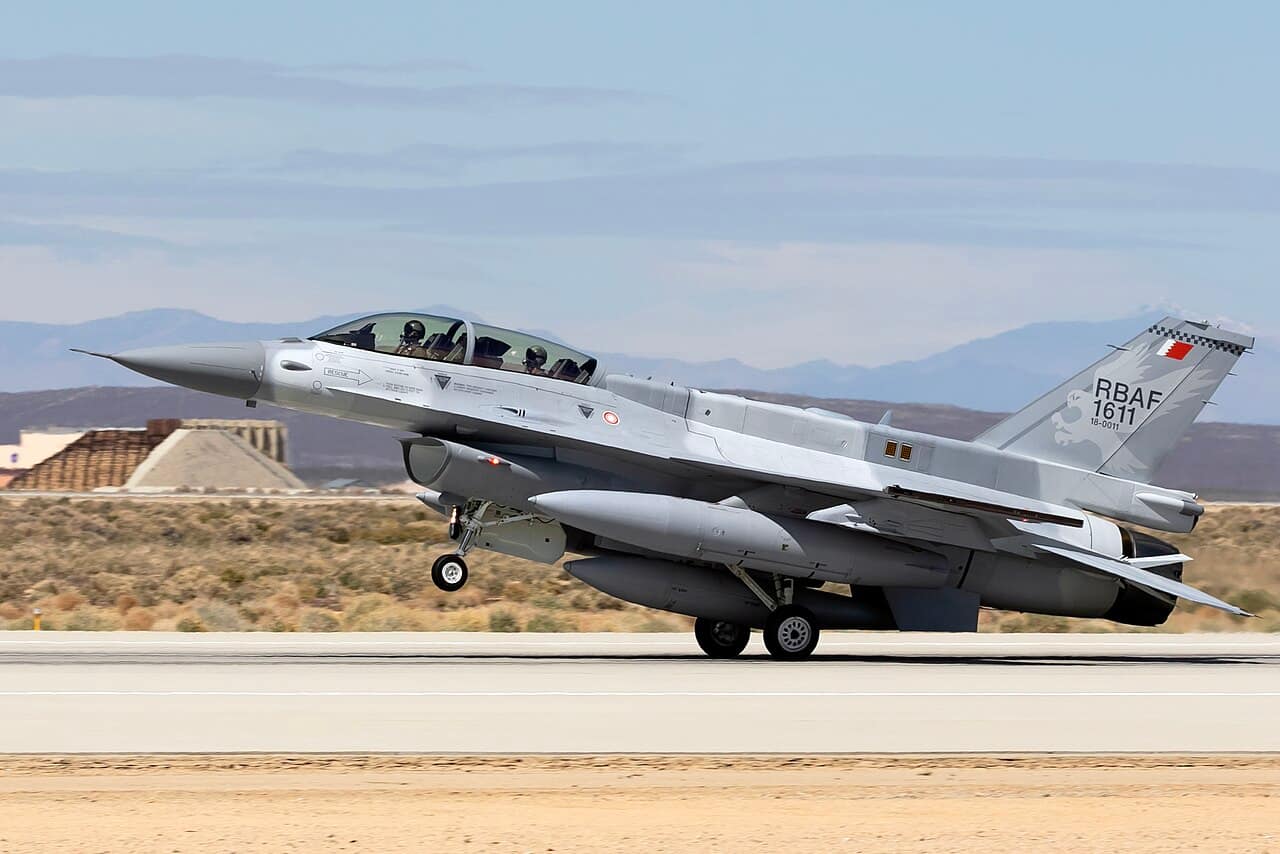
Peru has quietly filled in one of the most important blanks on its future fighter. On 19 August 2026, L3Harris confirmed it had been selected to supply the AN/ALQ-254(V)1 Viper Shield electronic-warfare suite for the F-16 Block 70s destined for the Fuerza Aérea del Perú. It is not a headline weapon or a new radar, but for a combat aircraft’s odds of coming home, it may be the single most consequential line item in the whole package.
The decision closes a question that was left deliberately open when the United States approved the sale in September 2025: the release covered “Viper Shield or an equivalent system.” Peru has now settled on the purpose-built option, the same suite L3Harris developed with Lockheed Martin and the U.S. Air Force specifically for the newest Vipers.
What follows is a straightforward look at what Peru bought, what the system actually does, and why an internally mounted jammer matters more than its low profile suggests.
Kurzinfo
- System: L3Harris AN/ALQ-254(V)1 Viper Shield — internally mounted digital radar-warning receiver plus DRFM jammer
- Flugzeug: F-16 Block 70 (ten single-seat F-16C, two twin-seat F-16D), F110-GE-129 engine (~29,000 lbf / 129 kN in afterburner)
- Operator: Fuerza Aérea del Perú (FAP)
- Fleet plan: 12 aircraft authorised, up to 24 intended; replaces the MiG-29 and Mirage 2000
- Vertrag: US Foreign Military Sale valued up to US$3.42 billion (DSCA); US$462 million first payment; deliveries 2029–2030
- Other Viper Shield users: Bahrain, Bulgaria, Slovakia, Morocco, Taiwan, Poland — eight nations, ~233 systems planned
- Gemeldet: 19 August 2026
What Peru Actually Bought
The initial batch runs to 12 aircraft: ten single-seat F-16Cs and two twin-seat F-16Ds. All are powered by the General Electric F110-GE-129, which produces roughly 29,000 lbf (129 kN) of thrust in afterburner and is the engine that defines a Block 70 as opposed to the Pratt & Whitney-powered Block 72. According to the U.S. Defense Security Cooperation Agency, the Foreign Military Sale is valued at up to US$3.42 billion, and Peru has already transferred a first payment of US$462 million. First deliveries are expected between 2029 and 2030.
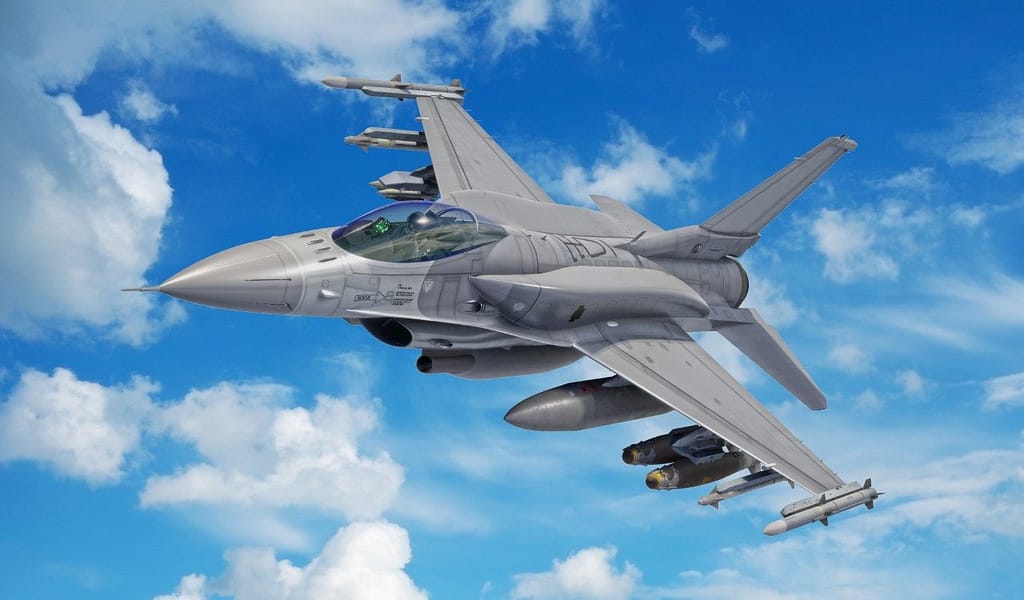
Viper Shield is only one component of a dense electronics fit. The same authorization covers AIM-120C-8 AMRAAM and AIM-9X Block II air-to-air missiles, AN/AAQ-28 Litening targeting pods, the Joint Helmet Mounted Cueing System II, and an infrared search-and-track sensor. Paired with the APG-83 active electronically scanned array radar, the result is a sensor-and-self-protection architecture built around a single mission system rather than a collection of separate boxes.
Inside the Viper Shield
Viper Shield is an all-digital, software-defined suite. Its digital radar warning receiver detects and classifies the electromagnetic signals a threat radar emits, while a jammer built on digital radio-frequency memory (DRFM) generates tailored responses designed to spoil a missile lock. Crucially, the whole system is mounted internally, so it consumes no weapons station and adds no drag, though L3Harris also offers an identical-hardware pod for operators mixing new and upgraded jets.
The design goal is longevity as much as raw performance. L3Harris built the suite around commercial 3U processing hardware and a small number of line-replaceable units, which lowers weight, improves reliability and lets maintainers swap modules in the field. Because capability lives largely in software, new threat responses can be loaded without ripping out the hardware, and the receiver is tied directly into the APG-83 so that radar and EW share one picture of the battlespace.
The Fleet It Replaces
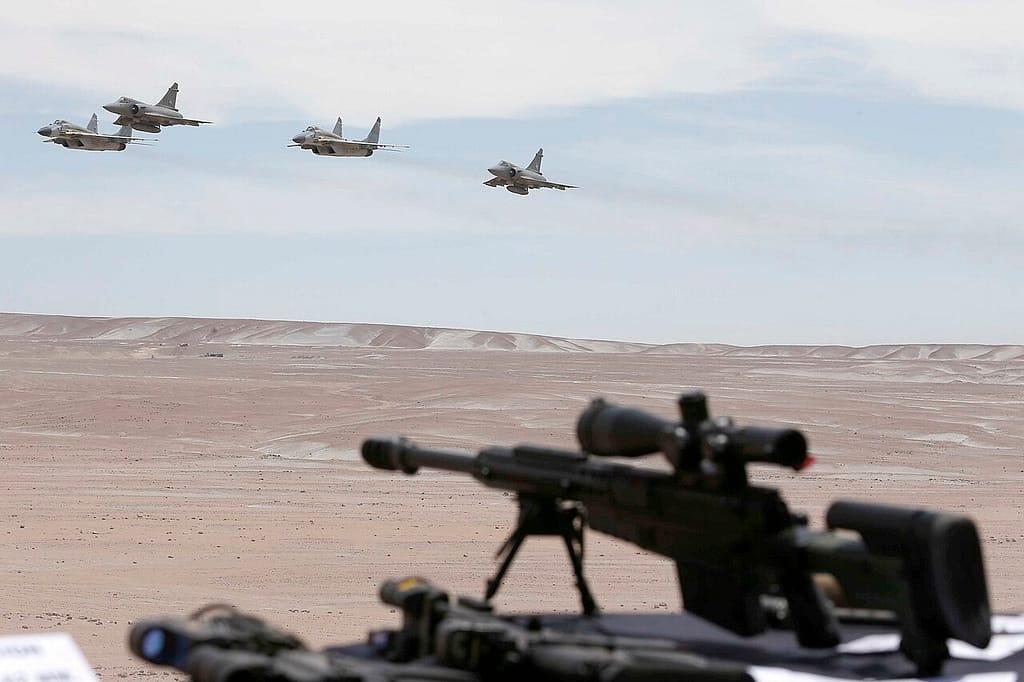
The context is a Peruvian fighter force that has run out of road. The FAP currently fields a mix of Mirage 2000 and MiG-29 fighters, both introduced in the 1980s and 1990s and both increasingly difficult and expensive to keep flying. Sustainment and modernization of those types has become one of the central problems of Peruvian combat aviation, and the Block 70 competition, launched in 2024, was explicitly framed as their replacement.
The F-16 beat the Saab Gripen E and the Dassault Rafale for the requirement. It also arrived with unusually direct political friction attached, which is worth stating plainly rather than glossing over.
Politics, Payment and Timing
The acquisition triggered a governmental crisis in Lima in April 2026. Interim President José Balcázar sought to defer the financial commitment to the next administration; a scheduled signing was postponed, and both the defense minister, Carlos Díaz, and the foreign minister, Hugo de Zela, resigned over the handling of the deal. A technical signing between authorized parties ultimately went ahead on 20 April 2026, and the first payment followed.
Warum das wichtig ist
The Viper Shield choice does more than complete a shopping list. It places Peru inside a growing community of operators flying a common EW architecture. L3Harris says eight countries have now selected the suite, among them Bahrain, Bulgaria, Slovakia, Morocco, Taiwan and Poland, and the company is ramping production toward a target of roughly 233 systems. Bahrain flew the internal variant on a Block 70 for the first time in February 2025 at Edwards Air Force Base.
Shared architecture means shared upgrades. As threat radars and surface-to-air systems evolve, a software-defined jammer can be updated across a coalition of users rather than one air force at a time. For a fleet Peru intends to fly for decades, and which is meant to number up to 24 aircraft once the second tranche is settled, that ability to keep pace with the electromagnetic environment is exactly the kind of unglamorous capability that decides whether a fighter stays relevant, or merely stays airworthy.
Sources: Aviacionline, L3Harris, The Aviationist, Lockheed Martin, Janes, U.S. Defense Security Cooperation Agency (DSCA).


0 Kommentare