
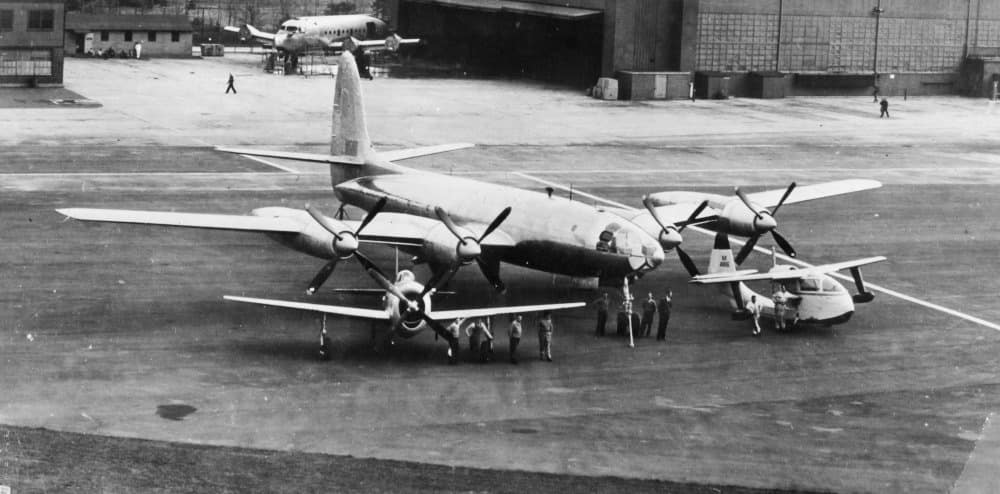
Some aircraft are ugly and effective. A very few are beautiful and useless. The Republic XF-12 Rainbow was that rarest thing: an aeroplane so aerodynamically pure it looked sculpted — and so perfectly built for a mission that, by the time it flew, no longer existed.
It remains the fastest four-engine, piston-powered aircraft ever built, the only one to exceed 450 mph in level flight. And almost no one has heard of it.
Kurzinfo
- Flugzeug: Republic XF-12 (later XR-12) Rainbow
- Designer: Republic Aviation — the team behind the P-47 Thunderbolt
- Erster Flug: 4 February 1946
- “Flying on all fours”: four engines, 400 mph, 40,000 ft, 4,000 miles
- Record: fastest four-engine piston aircraft ever — the only one to top 450 mph in level flight
- Feats: photographed the entire USA coast-to-coast in one 1948 flight; carried an airborne darkroom
- Schicksal: only two built; the jet age killed it before it entered service
Flying on all fours
The Rainbow was born in 1943, when the U.S. Army Air Forces needed a purpose-built spy plane for the vast distances of the Pacific — something that could outrun interception by simply flying higher, farther and faster than anything else. Republic, fresh from building the rugged P-47 Thunderbolt, set a striking target its engineers summed up in fours.
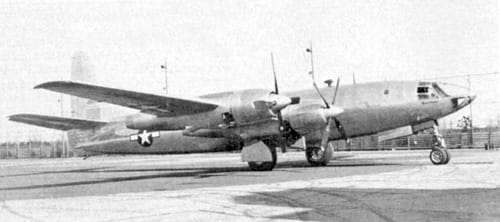
The formula became the aircraft’s nickname: “flying on all fours” — four engines, a 400 mph cruise, a 40,000-foot ceiling and 4,000 miles of range. Every line was shaped to cut drag. The fuselage was long and almost perfectly cylindrical with a sharp glazed nose; the four Pratt & Whitney R-4360 “corncob” radials were so cleanly cowled that their cooling air actually left the aircraft adding a little thrust.
A darkroom in the sky
It was a spy plane to its bones. Three camera bays behind the wing carried vertical and panoramic cameras with electrically heated lenses to stop them frosting at altitude; for night work it dropped photo-flash bombs. Most remarkably, it carried a complete airborne darkroom, so film could be developed and printed in flight and the intelligence read almost the moment it landed.
On its first flight in February 1946 and in the tests that followed, it beat nearly every target set for it, touching 470 mph at 45,000 feet with a range of 4,500 miles. Then, in September 1948, the second prototype flew from California across the entire United States at 40,000 feet, photographing its whole path in one continuous strip of hundreds of images — a feat splashed across the pages of Life magazine.
Perfect, and too late
The tragedy was timing. The war it was designed for had ended before it flew, budgets were shrinking, and the future of reconnaissance was already turning to jets like the RB-47. Only two Rainbows were ever built. One survived a landing-gear failure; the other suffered an engine explosion in November 1948 that killed two of its crew and helped seal the program’s fate. A 46-seat airliner version, the RC-2, drew polite interest from the airlines but proved too expensive against the Constellation and DC-6, and never left the drawing board.
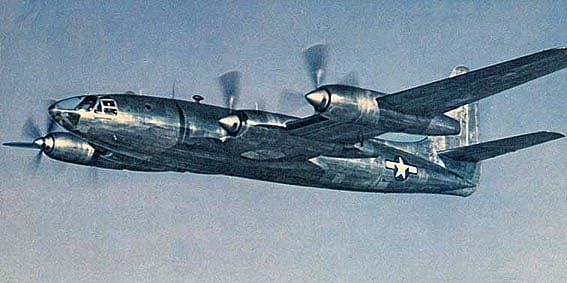
The Rainbow was not a failed aircraft. It did everything it promised, beautifully. It simply arrived in a world that had, almost overnight, stopped needing it.
Sources: Vintage Aviation News (Kapil Kajal); Hush-Kit; Cradle of Aviation Museum; Wikipedia.
0 Kommentare