
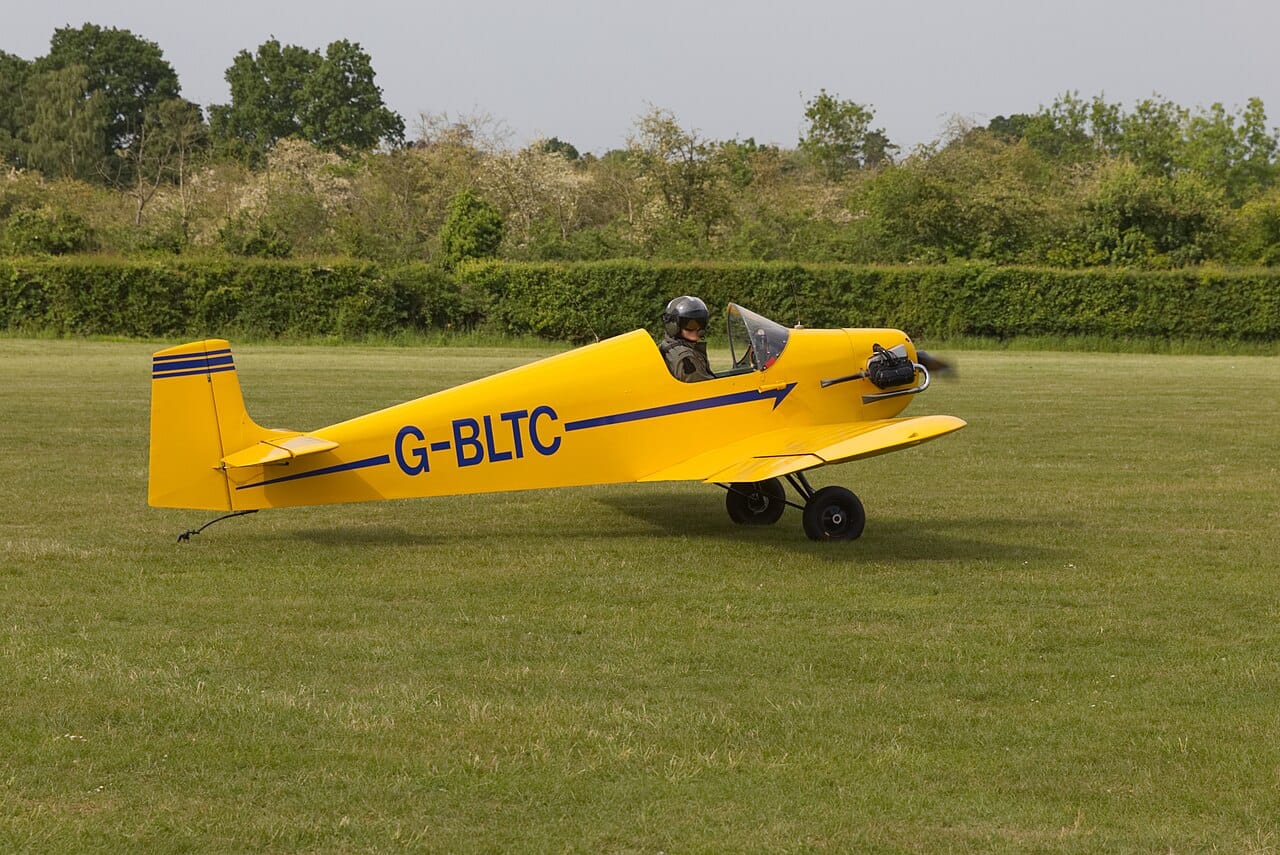
The Turbulent weighs about as much as two adult passengers. It is built from wood and fabric, powered by a converted Volkswagen Beetle engine, and its own display team has cheerfully described it as little more than a flying motorbike. On Sunday afternoon, in front of a sold-out crowd at Britain’s oldest intact military airfield, one of them came down.
The pilot survived. He is in a London hospital with injuries described by the aerodrome as life-changing but not life-threatening. No spectator was hurt. The show stopped where it stood.
It was the second serious accident at a historic English airfield in under 24 hours — and the Air Accidents Investigation Branch now has a question in front of it that the heritage display world has been circling for five years.
Kurzinfo
| Stow Maries | 16 August 2026, ~14:25. Druine D.31 Turbulent G-APVZ destroyed during Turbulent Team display. Pilot seriously injured. |
| Old Warden | 15 August 2026, ~19:20 BST. DH.88 Comet G-ACSS nosed over on the grass runway. Pilot discharged from hospital. |
| Das Flugzeug | Druine D.31 Turbulent: single-seat, wood and fabric, first flown 1951, VW-derived engine of roughly 40–60 hp, empty weight about 159 kg |
| The team | Tiger Club Turbulent Team, formed 1959, based at Damyns Hall, Essex |
| Investigating | UK Air Accidents Investigation Branch (AAIB) |
| Status | Stow Maries airfield closed to air traffic pending the investigation; museum due to reopen 21 August |
Twenty Feet of Margin
To understand why this particular accident matters beyond the day it happened, you have to understand what the routine asks for.
The Turbulent Team has been flying essentially the same act since 1959: low-level formation, balloon-bursting, flour-bombing, and the signature manoeuvre — limbo flying, in which the aircraft descends from around 500 feet and passes beneath bunting strung roughly twenty feet above the grass, arriving at the gate at about 90 knots with power coming in. It is genuinely thrilling to watch. It is also a manoeuvre with no altitude left to trade.
The Tiger Club Turbulent Display Team performing the limbo, flour-bombing and balloon-bursting routine in 2018. The bunting the aircraft pass beneath is about twenty feet above the ground.
In October 2021 the AAIB investigated a Turbulent, G-ARGZ, destroyed during limbo training at Damyns Hall. Its pilot held 7,496 hours in total but only ten on the type, and was seriously injured. The Branch’s conclusion was clinical, and it is the reason Sunday’s accident carries an echo.
At twenty feet, a corrective nudge on the stick reaches the ground before it reaches the pilot’s conscious mind. That was the 2021 finding. Whether anything similar happened at Stow Maries is exactly what the AAIB must now determine, and nobody should assume it in advance.
The Airfield Where It Happened
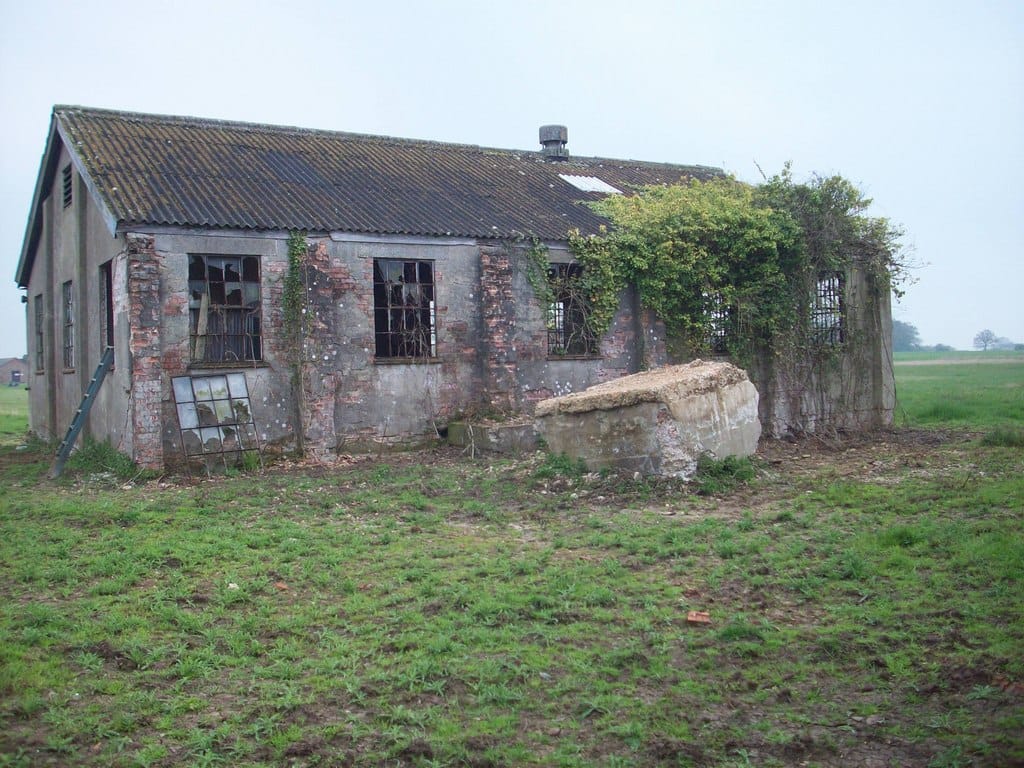
Stow Maries opened in August 1916 as home to B Flight of No. 37 (Home Defence) Squadron, Royal Flying Corps, formed to meet Zeppelin and Gotha raids on London. Almost uniquely among First World War aerodromes, it was never bulldozed or rebuilt, and it survives today as a working museum and charity. Sunday’s show was its biggest fundraiser of the year.
Essex Police were called shortly before 14:25. East of England Ambulance Service paramedics attended. The aerodrome halted the display, cleared the site and worked to protocols it rehearses with live drills.
The Night Before, at Old Warden
Twenty hours earlier and sixty miles away, the Shuttleworth Trust’s de Havilland DH.88 Comet had nosed over on the grass at Old Warden during the Flying Proms. The aircraft is G-ACSS, Grosvenor House — the machine that won the 1934 MacRobertson Air Race from England to Australia in 70 hours and 55 minutes, and the only original airworthy DH.88 left anywhere. Its pilot was taken to hospital and later discharged. The Trust has said the aircraft’s future will be addressed in due course.
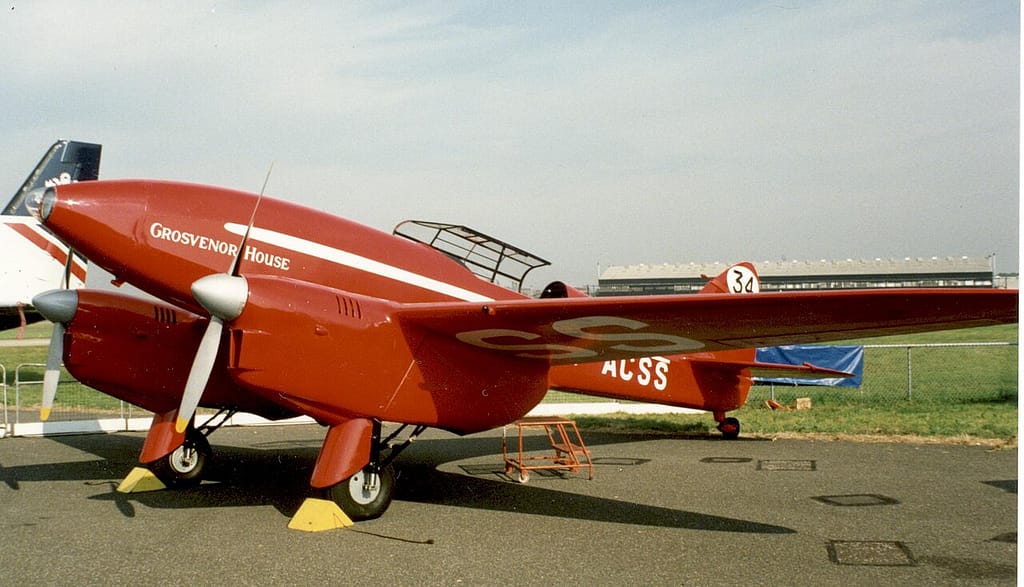
The Comet has always been a difficult aeroplane to land: long nose, tailwheel, poor forward view over the cowling, and a wing built for speed rather than forgiveness. It nosed over once before, in October 2002, when a landing gear leg collapsed after repeated bounces; that investigation led to structural modifications.
It was also the second accident at Old Warden this season. On 30 May a replica Avro Triplane IV struck trees during the Wings and Wheels show and came to rest some fifteen metres up, requiring a night rescue by Bedfordshire Fire and Rescue. That pilot walked away too. That inquiry is also still open.
What Shoreham Changed, and What It Did Not
Britain rewrote its display rules after August 2015, when a Hawker Hunter came out of a loop at Shoreham and struck the A27, killing eleven people on the ground. The Civil Aviation Authority’s review produced CAP 1400 in April 2016 with 29 action items, and CAP 403 — the operating framework for UK flying displays — was tightened: harder risk assessments, stricter display-pilot standards, stronger accreditation for Flying Display Directors, higher aerobatic minima and greater crowd separation for ex-military jets.
Those reforms were aimed squarely at what had killed people: a fast jet doing aerobatics near a public road. The Turbulent operates in a different world — slow, light, deliberately close, deliberately low. Light display teams are not exempt from CAP 403, but the ultra-low-level manoeuvre authorisations they hold were not the focus of the post-Shoreham overhaul.
None of that makes Sunday’s accident a regulatory failure. The AAIB has not reported, the cause is unknown, and speculation helps nobody — least of all a pilot in a hospital bed. But two destroyed heritage aircraft in a single weekend, in a season that had already put a Shuttleworth machine in a tree, is the kind of cluster that reopens questions. The Branch has confirmed it is deploying an inspector. There is no timeline for findings.
Heritage display flying exists because a handful of people are willing to keep eighty and ninety-year-old aeroplanes moving through the air where the public can see them. That is why it is worth watching, and it is also why every one of these weekends is expensive.
Sources: Air Accidents Investigation Branch; Civil Aviation Authority CAP 403 and CAP 1400; Stow Maries Great War Aerodrome; Essex Police; ITV News Anglia; AeroTime; The Aviationist; Aviation Safety Network.
Ähnliche Beiträge
0 Kommentare