
Switzerland's first F-35A Lightning II is no longer a set of drawings and contracts. It is now metal. In a hall at Cameri, in the Italian region of Piedmont, the first fuselage section of a Swiss jet has been mated to its first wing — the earliest physical sign of a 30-aircraft fleet that will reshape the Swiss Air Force.
The Swiss defence-procurement agency Armasuisse confirmed the milestone on 14 August 2026. The section carries the serial MJ-4 and will eventually become the aircraft registered J-6004 — the fourth F-35 assigned to Switzerland. For a programme that has been fought over in referendums, courts and parliament, the sight of a real Swiss airframe on the line is a significant moment.
And it is being built not in Texas, but in Italy.
Kurzinfo
Flugzeug: Lockheed Martin F-35A Lightning II (first Swiss section: MJ-4, to become J-6004)
Wo: Leonardo's Cameri FACO, Piedmont — the only F-35 final-assembly line in Europe
Befehl: 30 aircraft (cut from the 36 originally planned)
Ausbildung: first eight jets at Ebbing ANGB, Arkansas, from mid-2027
Basing: Payerne from mid-2028, Meiringen from 2030, Emmen from 2032
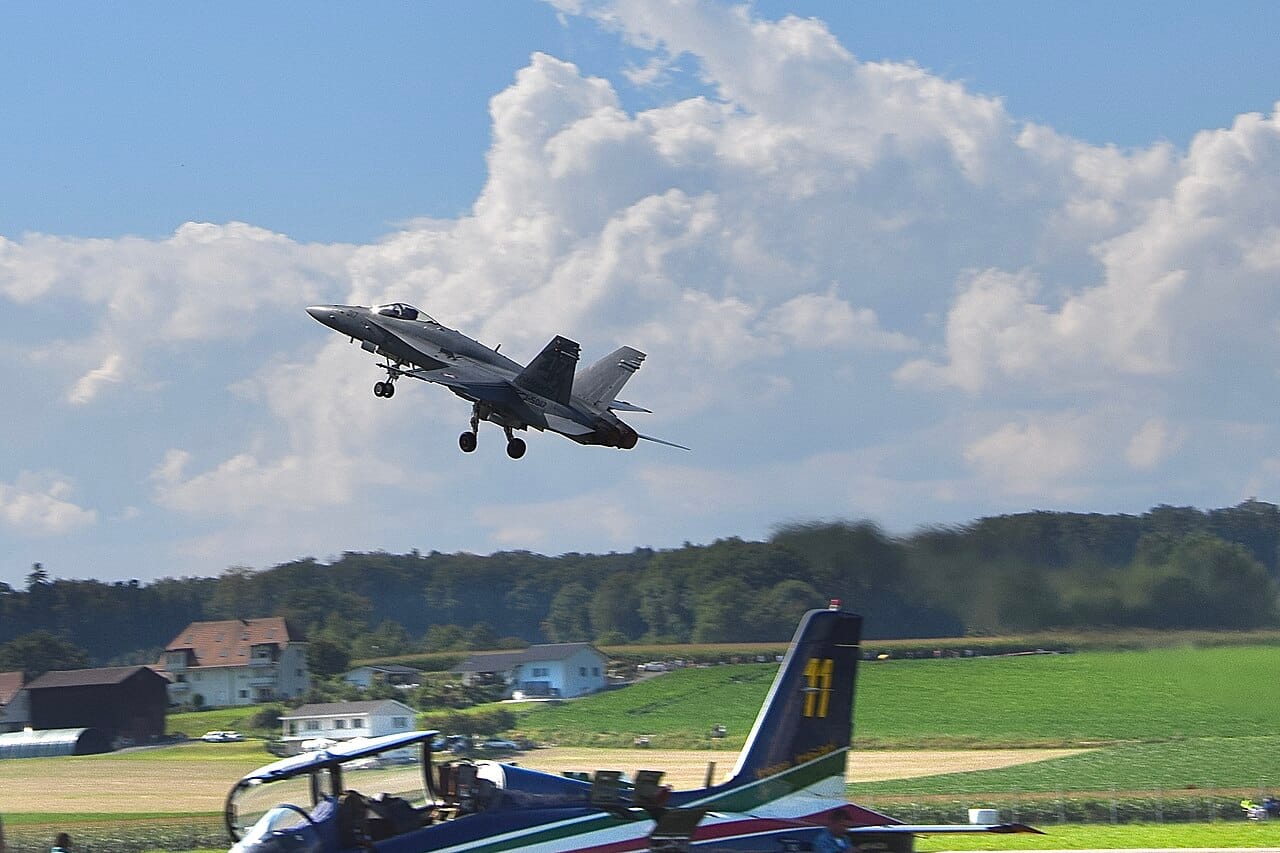
Ersetzt: the Swiss Air Force's F/A-18 Hornet fleet
Made in Cameri
Cameri is Europe's F-35 workshop. Run by Leonardo, it is the only final-assembly and check-out line for the fighter outside the United States, and it already turns out jets for Italy and the Netherlands. The plant can build up to 20 aircraft a year and manufactures roughly a third of all F-35 wings worldwide, part of a supplier network spanning more than 2,100 companies.
Switzerland's decision to have much of its fleet assembled there was deliberate — a nod to European industrial and security cooperation on a jet that is, ultimately, American. Once the structural work on MJ-4 is finished in Italy, the fuselage and its wings will be shipped to Lockheed Martin's plant in Fort Worth, Texas, to be joined with the rest of the aircraft.
The Long Road to Payerne
The timeline stretches out across the next several years. The first eight Swiss F-35s will be based from mid-2027 at Ebbing Air National Guard Base in Arkansas, where Swiss pilots and ground crews will learn the aircraft alongside other new European operators. The first Cameri-built jet is due to fly directly to Switzerland in mid-2028, with J-6004 itself expected home around the end of 2029.
From there the fighter rolls out across the country's mountain airfields: Payerne first, from mid-2028, then Meiringen from 2030 and finally Emmen from 2032. By then the F/A-18 Hornets that have guarded Swiss skies for three decades will be on their way out.
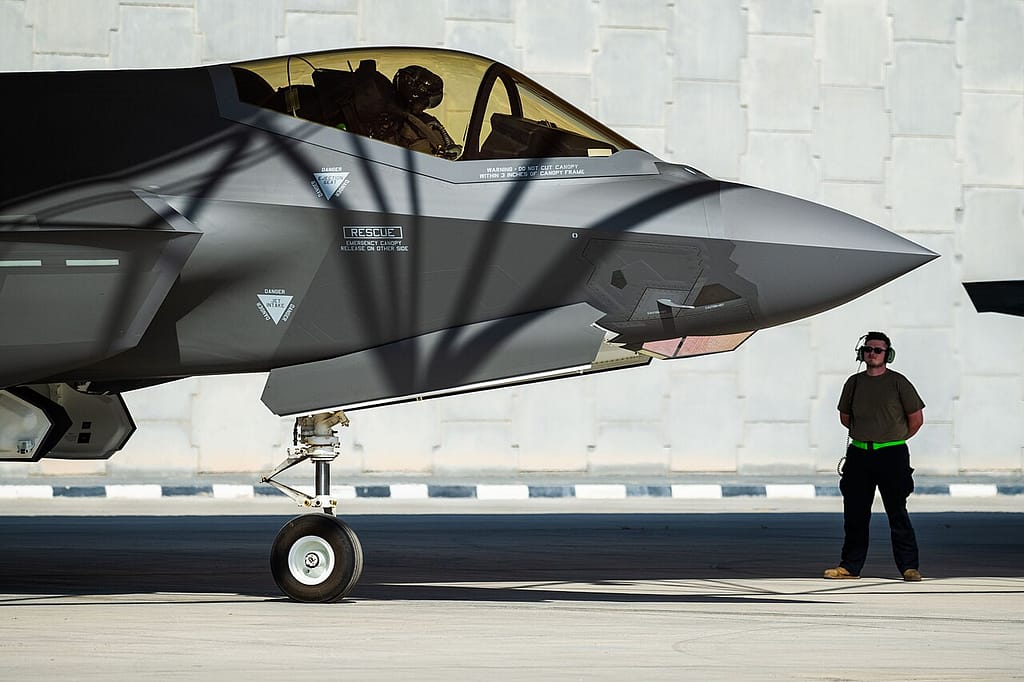
The F-35A on display in Europe — the type Switzerland is now building at Cameri.
A Purchase That Refuses to Be Simple
None of this has come easily. The Swiss F-35 has survived a knife-edge referendum, a long fight over whether the price was really fixed, and cost pressures that ultimately trimmed the order from 36 jets to 30. Critics still question the deal; supporters point to a modern stealth fighter replacing an ageing Hornet fleet that cannot fly forever.
Whatever side of that argument you sit on, the debate has now been overtaken by a fact on the ground: in a factory in northern Italy, the first piece of Switzerland's future air force is real, and it is being built. The paperwork is finally turning into a fighter.
Sources: Armasuisse; SWI swissinfo.ch; Defence Industry Europe; Air Data News; GlobalSecurity.
0 Kommentare