
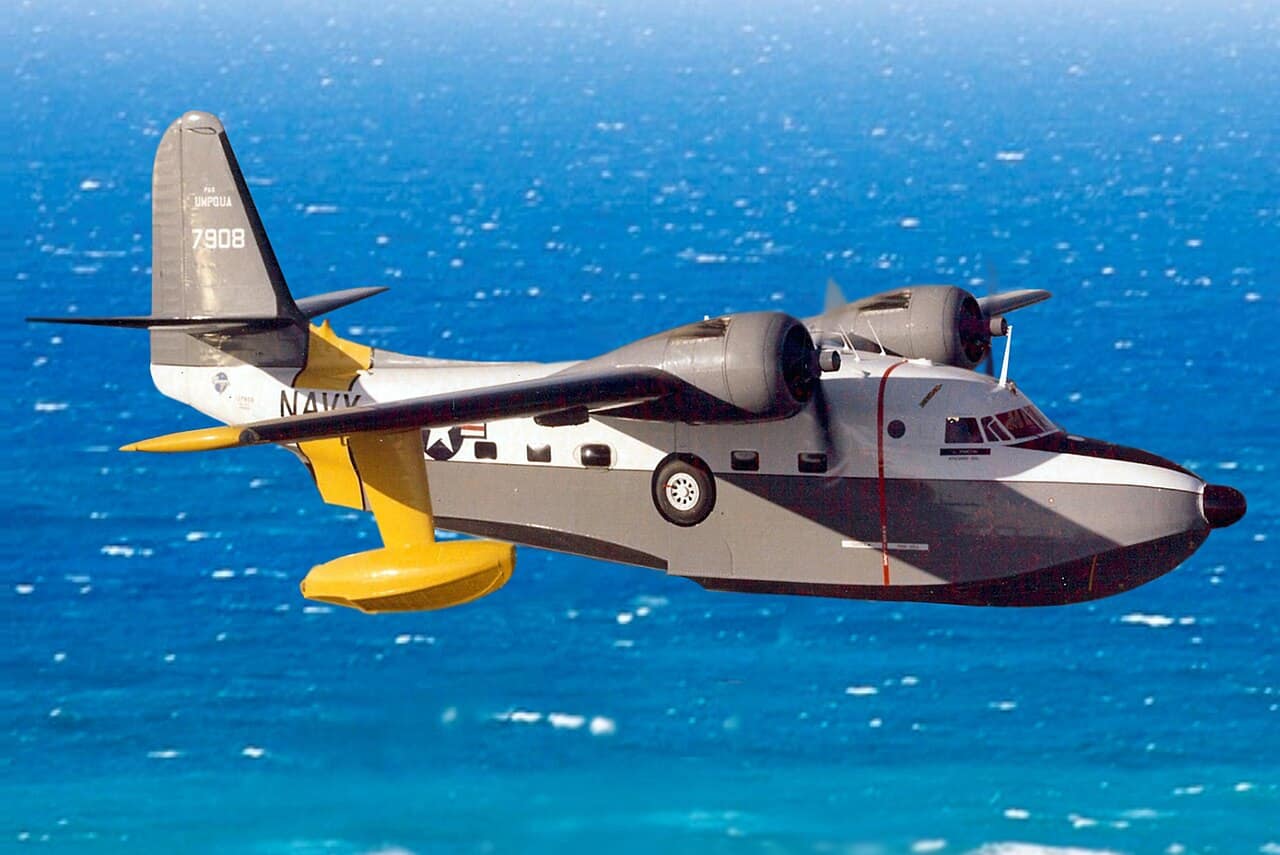
Imagine you are a fighter pilot who has just bailed out over a cold, heaving sea, far from land, with the enemy coast in sight. You are alone in the swell — until you hear engines, and a big, ungainly flying boat drops out of the sky, lands on the open ocean beside you, and hauls you aboard. For thousands of airmen, that aircraft was the Grumman HU-16 Albatross, and it was the most beautiful thing they ever saw.
It was never glamorous. It was slow, slab-sided and homely. But it did something almost no other aircraft could: it landed on the sea, in real waves, to bring people home.
Datos rápidos
- Aeronave: Grumman HU-16 Albatross (originally SA-16) amphibian
- Role: air-sea rescue and maritime patrol — flown by the USAF, US Navy and Coast Guard
- Primer vuelo: October 1947; 466 built between 1949 and 1961
- Motores: two Wright R-1820 radials
- Superpower: could land on the open ocean — best in ~4-ft seas, rougher with rocket-assisted takeoff — to pick up downed airmen
- Combat rescues: nearly 1,000 in Korea; 47 downed airmen in Vietnam
- Longevity: the US Coast Guard flew it until 1983; Greece until 1995
Built to touch down on the ocean
Grumman designed the Albatross just after the Second World War around a deceptively hard requirement: an amphibian rugged enough to set down not on a calm lake but on the open sea. Its deep-V hull was made to slice into swell; it was happiest in seas of about four feet, but with a boost from rocket bottles strapped to the rear it could wrestle itself off water far rougher than that. It could also work from land, snow and ice, making it one of the most versatile aircraft its crews had ever flown.
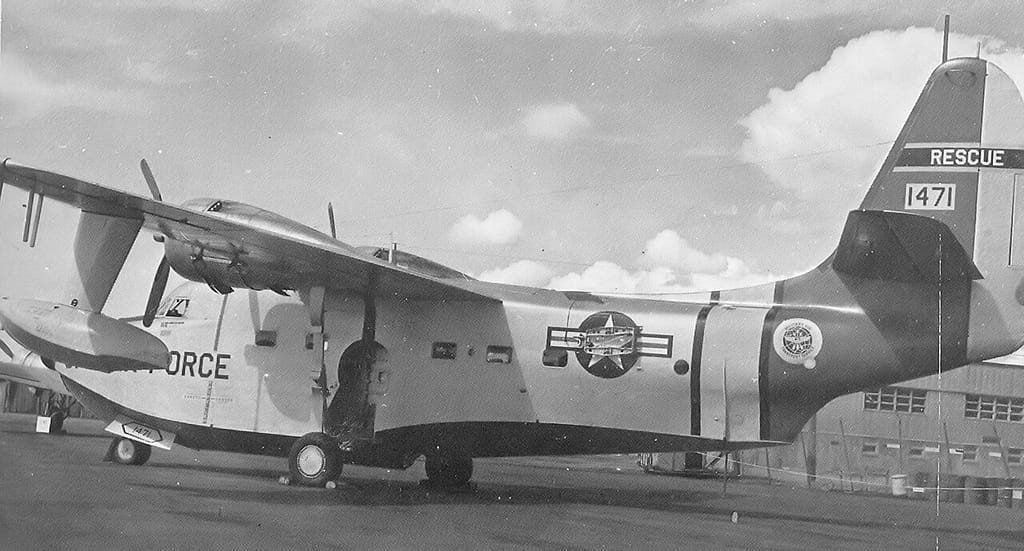
Two Wright radials, a crew of four to six, litter racks inside for the wounded and a platform to lift survivors straight out of the water — everything about it was built for the job of saving lives.
Angel of mercy
In Korea, the Albatross flew combat rescue for the US Air Force and pulled nearly a thousand United Nations personnel from coastal waters and from behind enemy lines. In Vietnam it kept at it, snatching downed airmen — 47 in that war alone — often right under the enemy’s guns. To the men it carried home, it earned a name that stuck.
The rescues were rarely tidy. Landing a heavy aircraft in ocean swell is violent and dangerous, and getting off again could be harder still.
The long, useful life of a homely hero
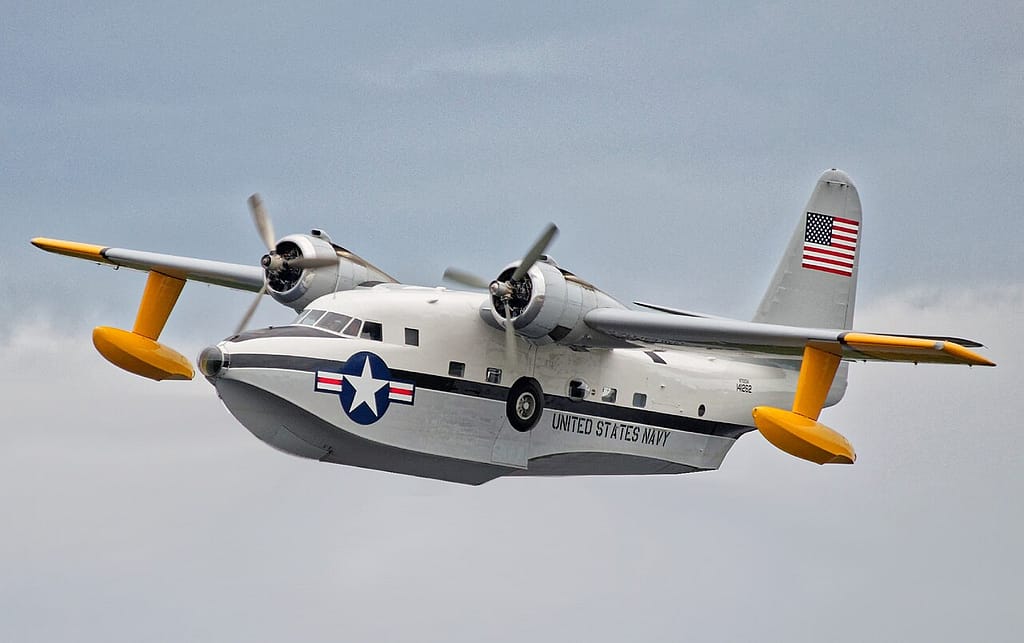
The Albatross was as tireless in peace as in war. The US Coast Guard alone flew 91 of them for more than half a million hours, setting altitude, speed and distance records — including a non-stop haul of over 3,100 miles from Alaska to Florida. A total of 466 were built, and more than twenty nations flew them for search and rescue. The last US Coast Guard Albatross was retired in 1983; Greece kept its own flying until 1995.
Sleeker aircraft came and went. But when the mission was to find one person in a vast, hostile ocean and physically carry them out of it, few machines have ever done it better than the plain, patient, life-saving Albatross.
Sources: Vintage Aviation News (Kapil Kajal); Strategic Research Center; Wikipedia.
Publicaciones relacionadas
0 Comentarios