
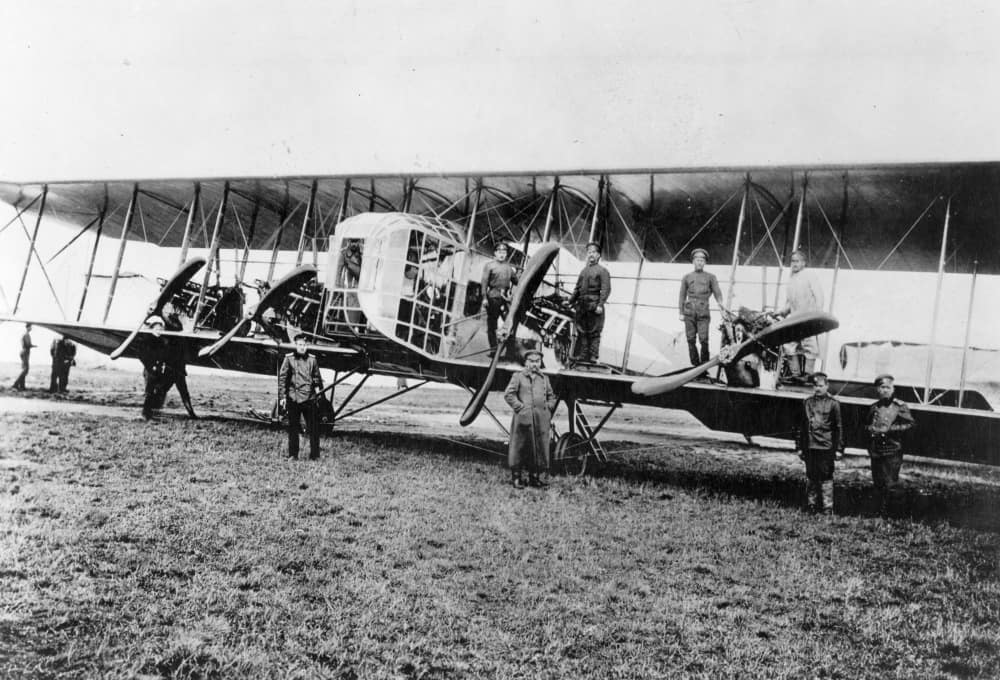
In 1913, while the rest of the world was still coaxing flimsy single-engine biplanes into the air for a few shaky minutes, a 24-year-old Russian rolled out an aircraft with four engines, a heated passenger lounge, electric lighting, and a washroom. It was called the Ilya Muromets, after a giant of Russian folklore. The name fit.
It was the world’s first four-engine airliner — and within two years it had become the world’s first four-engine heavy bomber, an aircraft so tough that German fighter pilots learned to leave it alone.
Its designer, Igor Sikorsky, would later flee revolution, emigrate to America, and give his name to the helicopter. But his first masterpiece was this giant — a machine a full generation ahead of everything around it.
Datos rápidos
| Aeronave | Sikorsky Ilya Muromets (S-22 and later) |
| Diseñador | Igor Sikorsky, RBVZ, St Petersburg |
| Primer vuelo | December 1913 |
| Motivo de fama | World’s first four-engine airliner, then first four-engine bomber |
| Onboard luxuries | Heated cabin, electric lighting, the first airborne toilet |
| WWI record | ~400 sorties, 65 tons of bombs, only one lost to enemy fighters |
| Construido | Roughly 80 |
A flying ship with a lounge
Sikorsky did not set out to build a weapon. The original Ilya Muromets was a luxury airliner, and its cabin was unlike anything else in the sky: an insulated passenger saloon with wicker chairs, a private compartment with a bed and table, heating piped from the engine exhausts, electric lights powered by a wind generator, and the first lavatory ever carried aloft. Passengers could even walk to the rear of the cabin and look out of proper windows.
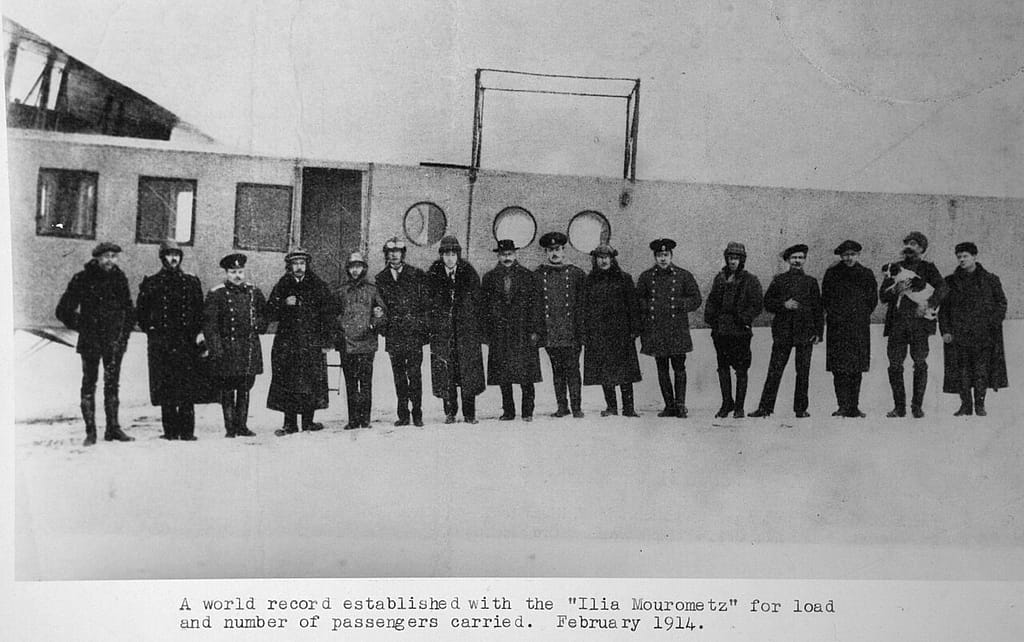
Most astonishing of all, the wings were strong and broad enough that mechanics could climb out of the fuselage and walk along them to tend the engines in flight. On 11 February 1914 the aircraft took sixteen people into the air at once — a world record. That summer it flew from St Petersburg to Kiev and back, more than 1,000 kilometres each way, a feat no other aircraft on Earth could match.
The clip below captures just how far ahead of its time this machine was — including those men strolling along the wings mid-flight.
The first heavy bomber
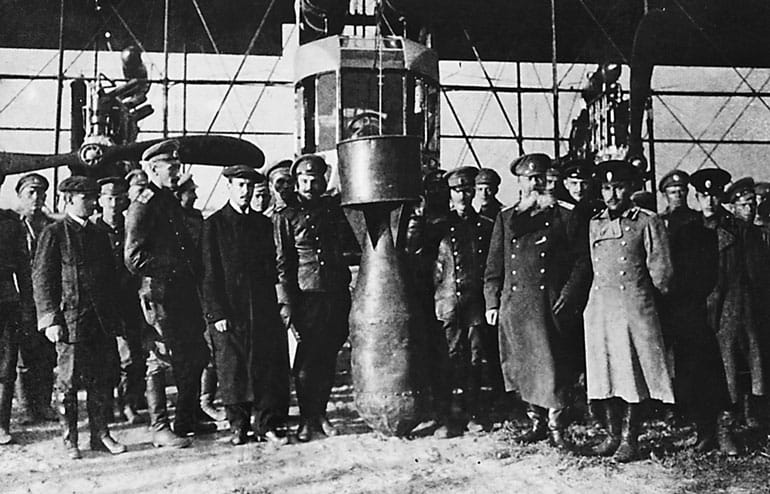
Then war came. Sikorsky redesigned his airliner into the “Military” Ilya Muromets, and in December 1914 Russia formed the world’s first dedicated heavy-bomber unit around it — the Squadron of Flying Ships. Its first raid fell on German positions in February 1915.
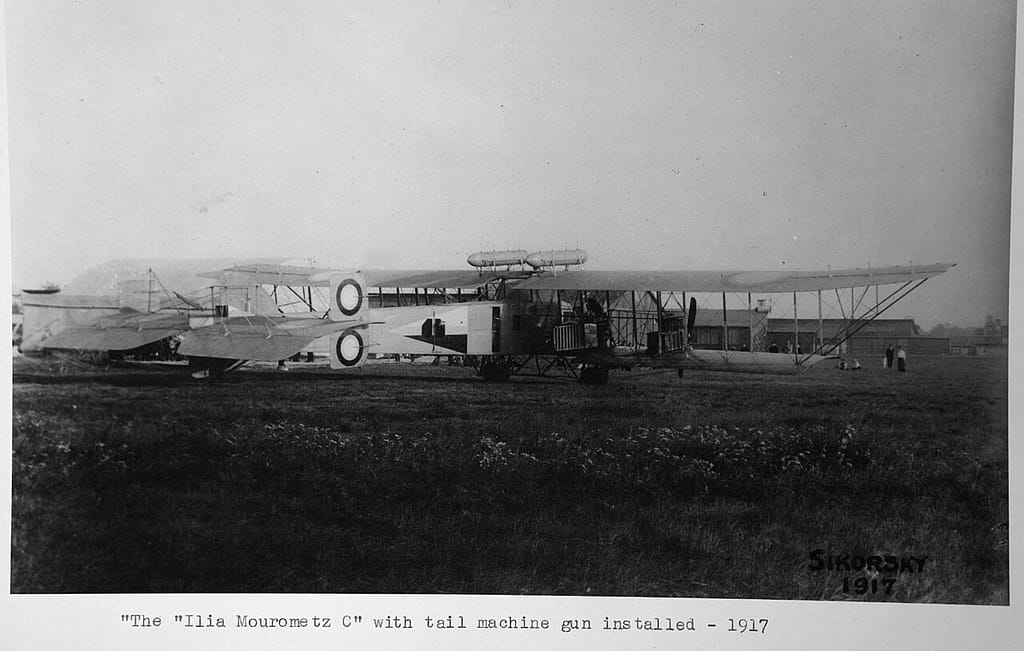
The bomber carried internal racks for up to 800 kilograms of bombs and bristled with defensive machine guns. In 1916 it became the first aircraft in history to mount a tail-gunner position — a solution to the fighter’s favourite blind-spot attack that heavy bombers would still be using in 1945. Its engines were even fitted with thin armour plate.
Almost impossible to shoot down
The result was a bomber that was genuinely hard to kill. German pilots were reluctant to attack the Muromets: its overlapping gun positions could put fire in almost every direction, and small fighters that closed in found themselves tossed about by the propeller wash of four big engines.
The record speaks for itself. Across the entire war, only a single Ilya Muromets was shot down by enemy aircraft — and it took three of the four German fighters attacking it with it before it fell. The type flew roughly 400 sorties and dropped 65 tons of bombs, pioneering night bombing, group raids and photographic damage assessment along the way.
By 1918 the fleet was worn out and revolution had engulfed Russia. Sikorsky left for the United States with almost nothing, and built a second and third career in flying boats and helicopters. But the giant he created in 1913 had already written the template for the heavy bomber — four engines, a defended tail, and the reach to strike far behind the lines. Everyone else spent the next thirty years catching up.
Sources: Sikorsky Ilya Muromets (Wikipedia); Igor Sikorsky, “The Story of the Winged-S” (1938/1952); Scott W. Palmer, “Dictatorship of the Air” (Cambridge University Press, 2006); K. N. Finne, “Igor Sikorsky: The Russian Years.”
Publicaciones relacionadas
0 Comentarios