
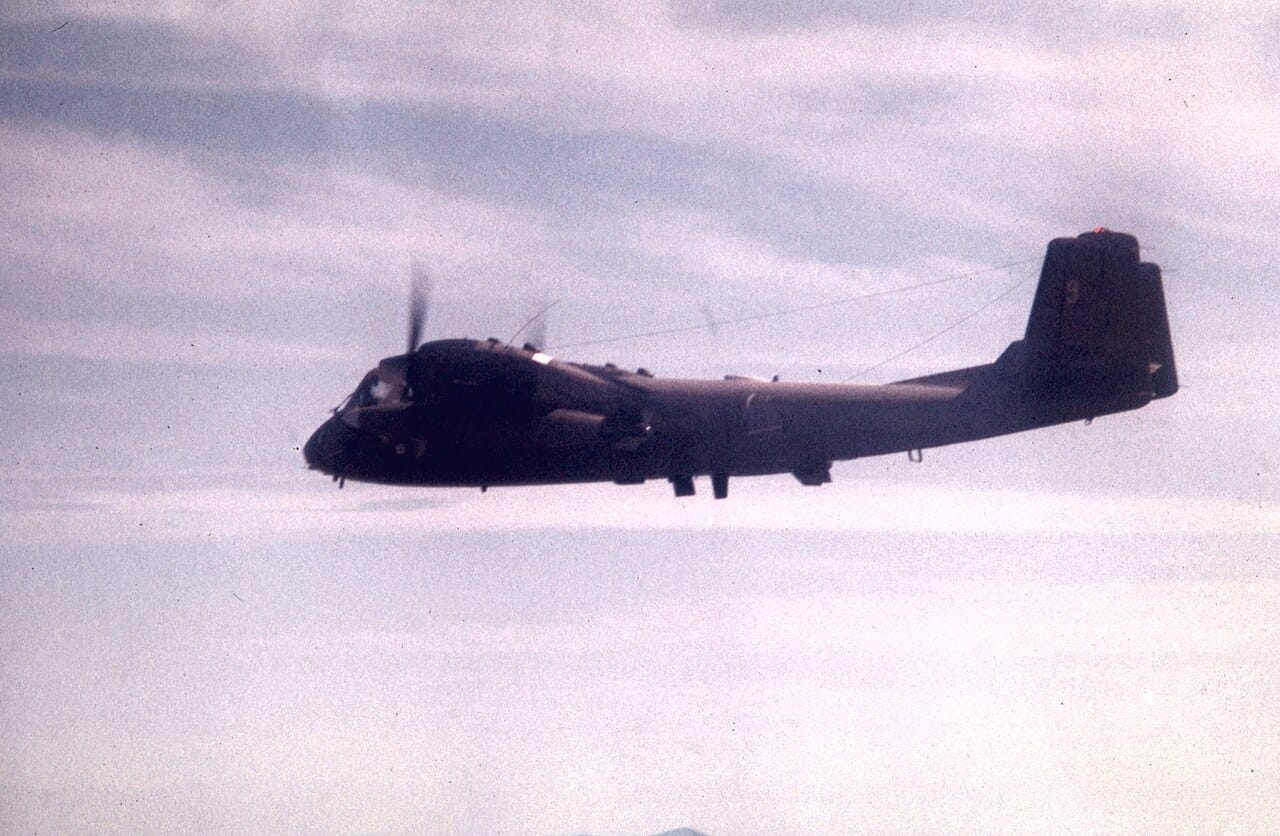
By a decades-old agreement between the U.S. services, the Army isn’t really supposed to fly its own combat aeroplanes — that job belongs to the Air Force. The Grumman OV-1 Mohawk is the great exception: a stubby, triple-tailed, bug-eyed turboprop built for the Army alone, designed to fly low over a battlefield and see everything the enemy hoped to hide.
Datos rápidos
- Tipo: Grumman OV-1 Mohawk — battlefield surveillance turboprop
- Primer vuelo: April 14, 1959
- Multitud: two, side by side
- Motores: two Lycoming T53 turboprops — hence three tails
- Sensors: side-looking radar (SLAR), infrared and cameras
- Jubilado: U.S. Army, 1996 (about 380 built)
Built to see
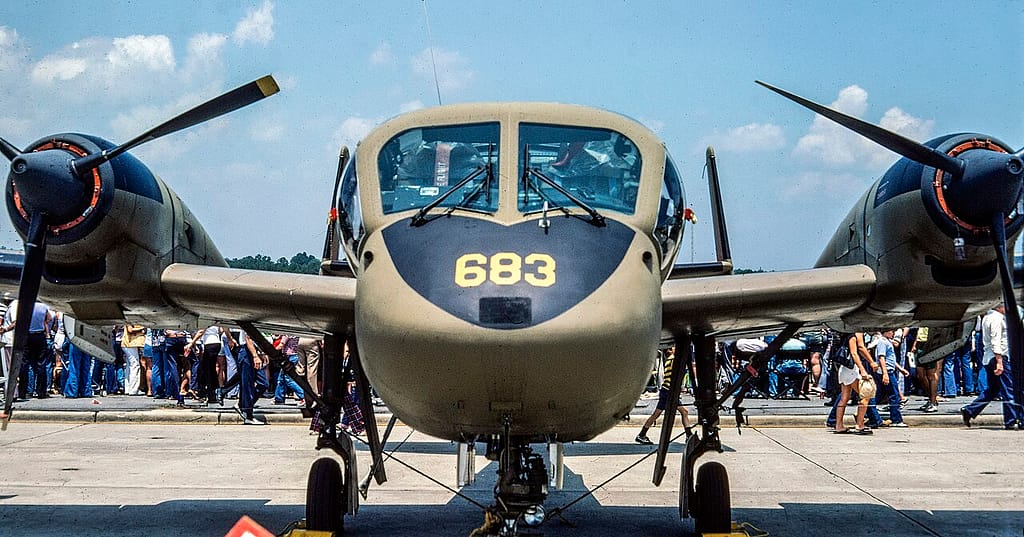
The Mohawk was born from a late-1950s Army requirement for a rugged battlefield-surveillance aircraft (the Marines briefly joined, then dropped out). Grumman gave it two Lycoming T53 turboprops, a side-by-side cockpit under a deeply glazed canopy for all-round visibility, ejection seats, and a short-field wing for rough strips.
Its trademark triple tail was pure engineering pragmatism: the torque from two big turboprops would otherwise have demanded a single fin some 15 feet tall.
The eyes of the Army in Vietnam
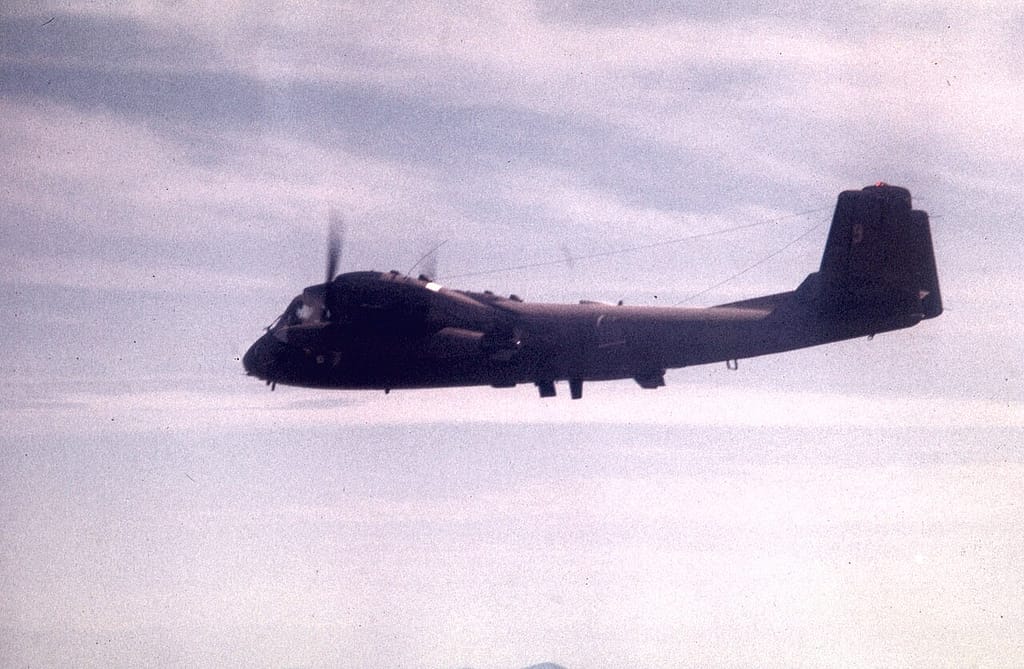
In Vietnam the Mohawk was the Army’s eyes. By day it skimmed the treetops shooting panoramic photographs; by night it prowled at around 800 feet, mapping the ground with side-looking radar and infrared to catch troops and trucks moving beneath the jungle canopy. It was perilous work — 65 Mohawks were lost in Vietnam — and the aircraft earned fierce loyalty from the crews who flew it.
The Army’s only MiG killer
The Mohawk could also bite back. Some versions carried rocket pods and guns, and in February 1968 an armed Mohawk flown by Ken Lee is widely reported to have shot down a North Vietnamese MiG-17 — often cited as the only fixed-wing air-to-air kill ever claimed by U.S. Army aviation. The account is second-hand, so it is best remembered as a cherished legend rather than a line in the official record.
A long, quiet career
The Mohawk kept watching everywhere: the Korean DMZ, Cold War Europe, Central America, and finally the deserts of Operation Desert Storm, before the Army retired it in 1996. Around 380 were built; a handful of ex-Army examples soldiered on with Argentina into the 2010s, and warbird owners keep a few flying to this day.
It never looked like much — three tails, a bulbous nose, propellers where you might expect jets. But for nearly four decades the Mohawk did the unglamorous, essential job of telling the Army exactly what lay over the next hill. Not bad for the aeroplane the Army was told it shouldn’t have.
Sources: Defense Media Network; MilitaryHistoryNow; Vintage Aviation News; Wikipedia.
0 Comentarios