
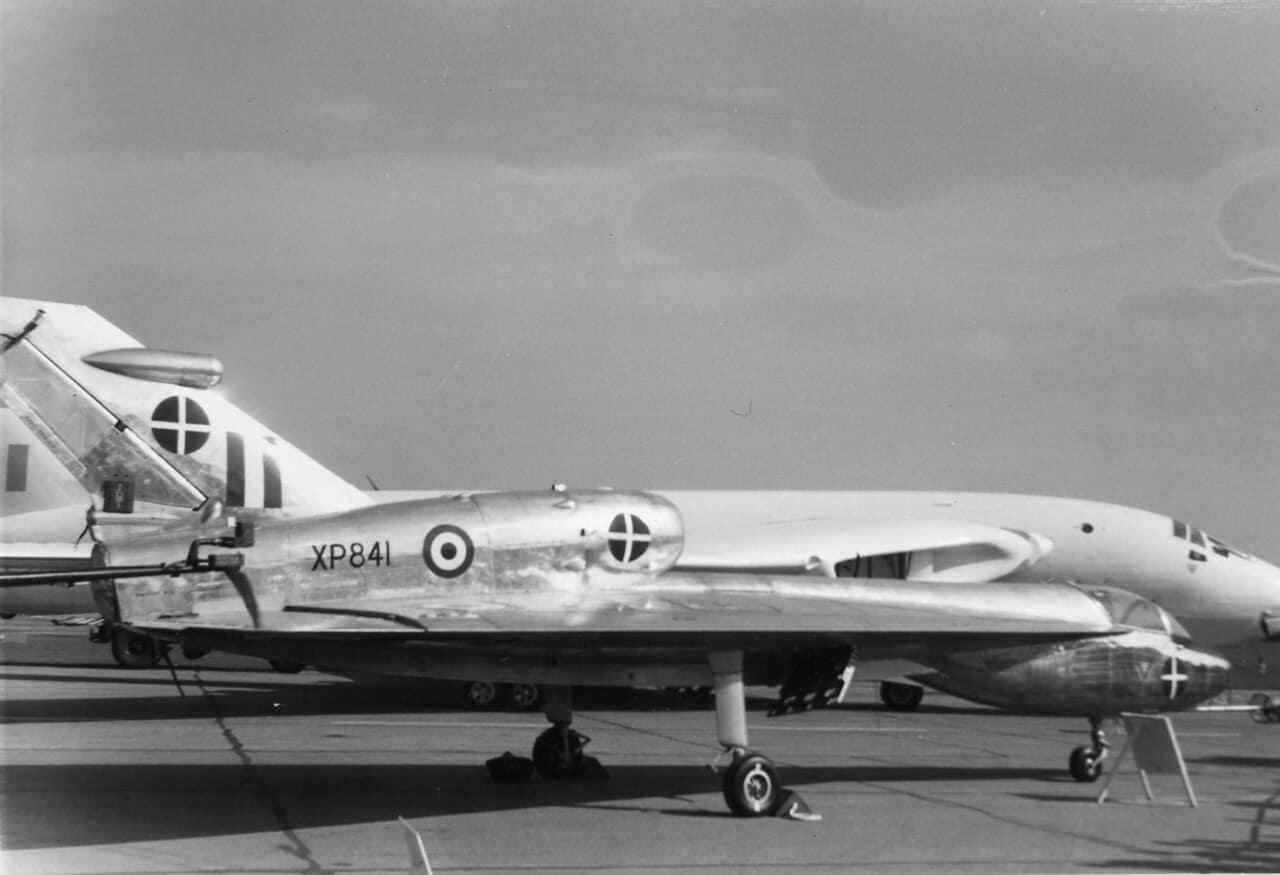
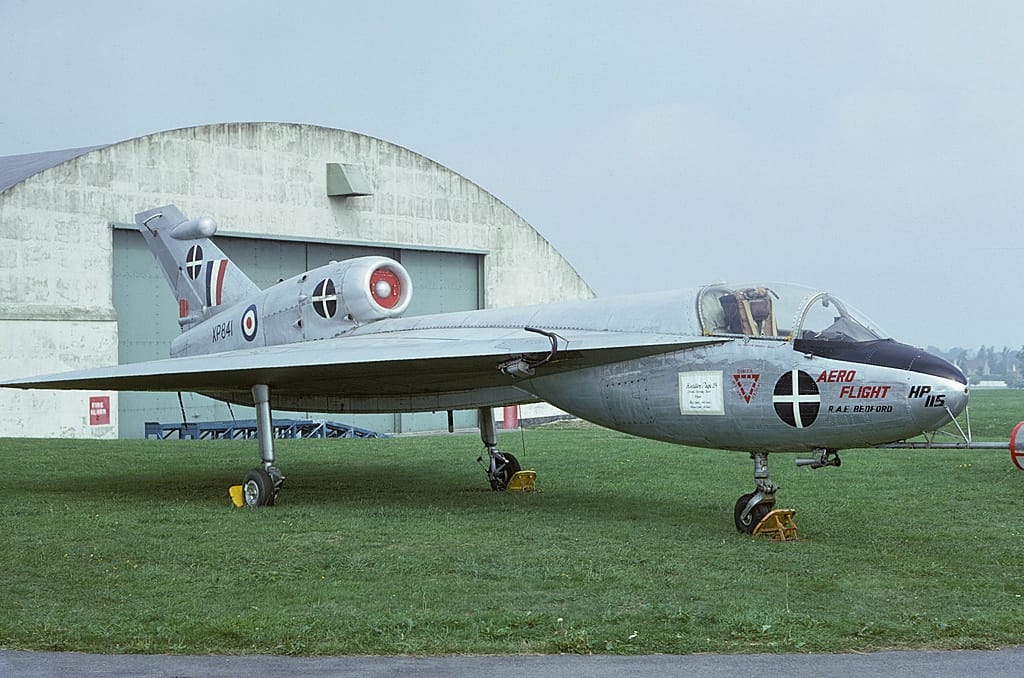
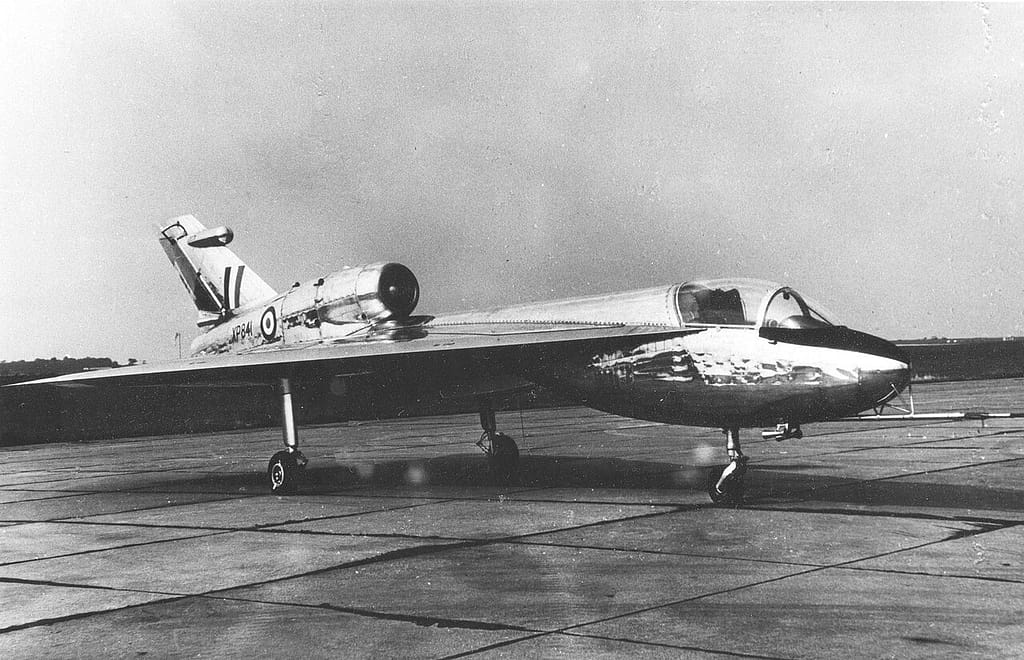
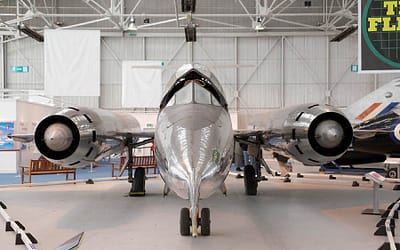
It looks like a paper dart that a child drew and an engineer took seriously. A long needle nose, a huge triangular wing, spindly stalk-like landing gear, and a single small jet perched at the base of the fin. The Handley Page HP.115 was one of the strangest and most important aircraft Britain ever built.
In the 1950s, planners chasing a supersonic airliner hit a wall. The very slender delta wing that behaves beautifully at supersonic speed threatened to be a death trap at landing speed. Wind tunnels could only argue about it. Someone had to fly it.
DATOS RÁPIDOS
| Tipo | Slender-delta low-speed research aircraft |
| Primer vuelo | 17 August 1961 |
| Role | Low-speed delta research for supersonic transport |
| Central eléctrica | 1 x Bristol Siddeley Viper turbojet |
| Velocidad máxima | 248 mph (399 km/h) |
| Número construido | 1 (serial XP841) |
| Destino | Retired 1974; preserved at the Fleet Air Arm Museum |
Chasing a vortex
Royal Aircraft Establishment researchers, building on the work of Dietrich Küchemann and Johanna Weber, realised a sharply swept delta sheds powerful vortices at low speed that suck extra lift from the air above the wing. The HP.115 was built to test that idea for real, with a wing swept back a dramatic 75 degrees.
On 17 August 1961 test pilot Jack Henderson lifted XP841 off at RAE Bedford and came back grinning. Far from being lethally twitchy, the little jet was docile. Pilots could roll it hard from bank to bank while crawling through the air at just 69 mph, a fraction of the landing speed of a fast jet.
The needle that pointed to Concorde
For thirteen years the HP.115 quietly gathered the low-speed data that a supersonic transport would need on takeoff and landing. Its findings, paired with high-speed work by the BAC 221, helped convince engineers that a slender delta could be trusted. That confidence flowed straight into Concorde.
By 1974 XP841 had reached its design life of around 500 flight hours and was retired from research flying.
One aircraft. One engine. One idea, proved. XP841 now sits beside a Concorde nose at the Fleet Air Arm Museum, the humble needle next to the airliner it helped make possible.
A short history of the fragile little delta that de-risked Concorde:
Sources: Fleet Air Arm Museum; Vintage Aviation News; Wikipedia.

0 Comentarios