
On the afternoon of 6 April 1965, test pilot Roland "Bee" Beamont was having lunch at a pub near Boscombe Down when the BBC news bulletin came through the radio. Chancellor of the Exchequer James Callaghan, midway through his Budget Speech in the House of Commons, had just cancelled the BAC TSR-2. Beamont set down his pint. The aircraft he had first taken aloft six months earlier had flown just twenty-four times. He knew exactly what the country was throwing away.
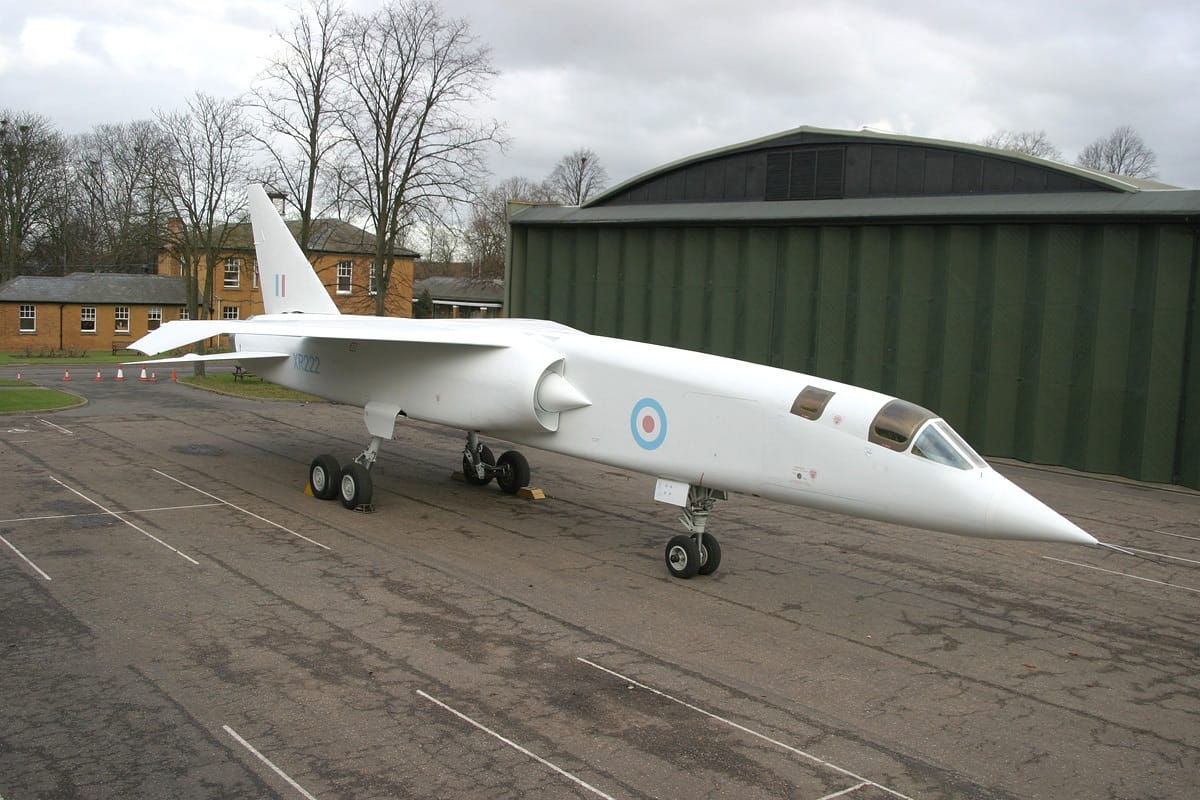
The TSR-2 was not merely another Cold War jet. It was, by the testimony of every pilot who touched the controls, one of the most capable military aircraft ever built — a Mach 2 strike-and-reconnaissance platform designed to fly under Soviet radar at treetop height, deliver a nuclear weapon, and get home. It was also the aircraft that Britain murdered in its cradle, and whose ghost still haunts the country's aerospace industry six decades later.
The Requirement That Frightened Engineers
In 1956, the Royal Air Force issued General Operational Requirement 339 — a specification so demanding that several of Britain's aircraft companies initially doubted it could be met. The RAF wanted a single aircraft that could penetrate the most heavily defended airspace on Earth at Mach 1.2 at sea level, climb to Mach 2+ at altitude, deliver tactical nuclear weapons with pinpoint accuracy using a terrain-following radar, operate from rough or bomb-damaged airstrips as short as 3,000 feet, and perform high-altitude photo reconnaissance over denied territory.
No aircraft in the world could do all of that in 1956. None could do it in 1964 either — except the TSR-2. Under intense government pressure, English Electric, Vickers-Armstrongs, Bristol Aeroplane Company, and Hunting Aircraft were merged into the British Aircraft Corporation specifically to build it. Two Bristol Siddeley Olympus 320 engines — each generating 30,610 pounds of thrust in afterburner — would push the airframe past Mach 2, while a blown flap system and sturdy landing gear would allow it to slam down on unprepared strips that would shatter the undercarriage of any contemporary fighter.
Twenty-Four Flights to Brilliance
The first prototype, XR219, flew on 27 September 1964 from Boscombe Down with Beamont at the controls and navigator Don Bowen in the back seat. The initial flight lasted fifteen minutes with the undercarriage locked down and a speed limit of 250 knots. Even within those constraints, Beamont reported handling qualities that were exceptional — the aircraft was stable, responsive, and remarkably smooth at low altitude, exactly where it was designed to fight.
Over the next six months, Beamont and the flight test team expanded the envelope steadily. The TSR-2 reached Mach 1 on its fourteenth flight, accelerating through the sound barrier in level flight without afterburner — a feat that shocked engineers who had expected to need full reheat. The terrain-following radar, though still in early development, showed the potential to guide the aircraft automatically at 200 feet above the ground at speeds above 600 knots. Beamont called it the finest aircraft he had ever flown, and he had flown Spitfires, Tempests, Lightnings, and Canberras.
Death by Budget Speech
The TSR-2 was not killed by engineering failure. It was killed by cost, politics, and inter-service rivalry. The programme's original budget estimate of £90 million had been hopelessly optimistic for such a complicated machine. By early 1965, costs had climbed toward £195 million and were still rising. The Royal Navy lobbied hard for its own Blackburn Buccaneer — a smaller, cheaper, carrier-capable strike aircraft — arguing that the RAF did not need a separate platform. Factions within the new Labour government, ideologically hostile to prestige weapons programmes, saw the TSR-2 as a symbol of Cold War excess.
On 1 April 1965, the Cabinet voted to cancel. The replacement, they announced, would be the American General Dynamics F-111 — cheaper, they claimed, and already flying. It was a catastrophic miscalculation. The F-111K order was itself cancelled three years later as its own costs soared, and the RAF was left operating the Buccaneer and the Phantom — both capable aircraft, but neither remotely close to what the TSR-2 would have been.
The Destruction Order
What happened next remains the most contentious act in British aviation history. The government ordered BAC to destroy not only the remaining prototypes but every jig, tool, and fixture associated with the programme — making it physically impossible for any future government to reverse the decision. The order was carried out with a thoroughness that stunned the industry. Completed airframes were cut apart. Tooling was scrapped. Engineering drawings were reportedly incinerated, though some survived in private hands.
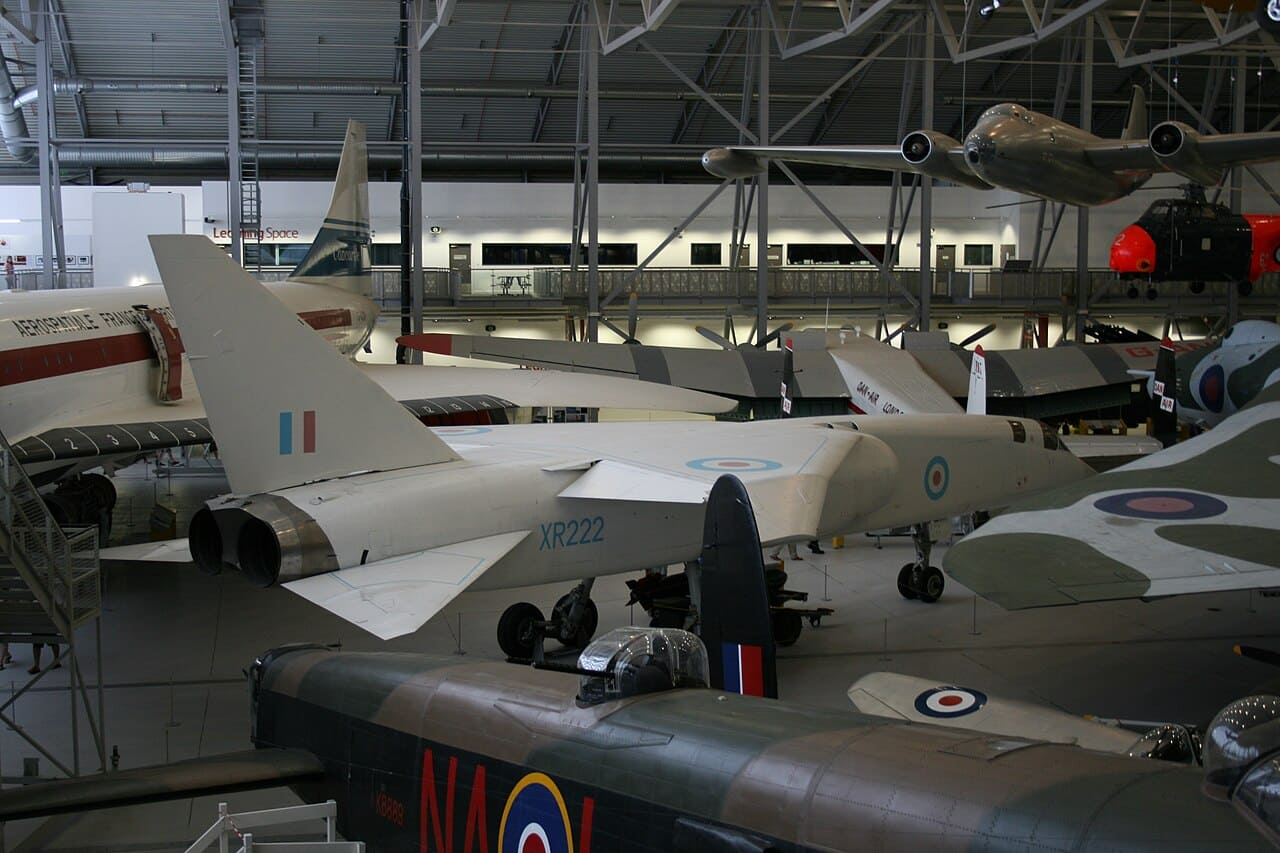
Two airframes escaped the cull. XR220, the second prototype that was due to fly on the very day of cancellation, is preserved at the RAF Museum Cosford. XR222 sits at the Imperial War Museum Duxford. They stand as monuments to what might have been — Mach 2 aircraft that flew before the politics caught up, and whose destruction guaranteed that Britain would never again attempt a strike aircraft of comparable ambition. The Tornado, which eventually filled the TSR-2's role two decades later, was a multinational compromise. The TSR-2 was uncompromised, and that was precisely its problem.
Related Questions
What was the BAC TSR-2?
The BAC TSR-2 was a British Mach 2 strike and reconnaissance aircraft of the 1960s, designed to fly under Soviet radar at treetop height, deliver a nuclear weapon and return. Pilots who flew it praised it as one of the most capable military aircraft ever built, but it was cancelled in 1965 after only 24 test flights.
Why was the TSR-2 cancelled?
The TSR-2 was cancelled on 6 April 1965 by Chancellor James Callaghan during his Budget Speech, chiefly on grounds of spiralling cost and political pressure. The decision, made after just 24 flights, is still seen as a devastating blow to Britain's aircraft industry from which it arguably never fully recovered.
How many times did the TSR-2 fly?
The TSR-2 flew just 24 times before it was cancelled. The first prototype, XR219, made its maiden flight on 27 September 1964 from Boscombe Down with test pilot Roland 'Bee' Beamont at the controls. It reached Mach 1 on its fourteenth flight, in level flight without afterburner, astonishing its engineers.
What was the TSR-2 designed to do?
The TSR-2 was built to meet General Operational Requirement 339 of 1956: penetrate heavily defended airspace at Mach 1.2 at sea level, climb past Mach 2 at altitude, deliver tactical nuclear weapons using terrain-following radar, operate from rough 3,000-foot strips, and fly high-altitude reconnaissance. Its strike role echoed Britain's V-bomber nuclear force and the wave-top Buccaneer.
Who flew the TSR-2?
Test pilot Roland 'Bee' Beamont made the TSR-2's first flight in September 1964, with navigator Don Bowen in the back seat. Beamont was one of Britain's most experienced test pilots, having also flown the English Electric Lightning. He reported that the TSR-2 handled superbly at low level, exactly where it was designed to fight.
Do any TSR-2 aircraft survive?
Yes. Only two TSR-2 airframes survive, because the government ordered the prototypes and tooling destroyed after cancellation, an order only partly carried out. One surviving aircraft, XR220, is preserved at the RAF Museum Cosford, and the other is at the Imperial War Museum Duxford.
0 Comments