
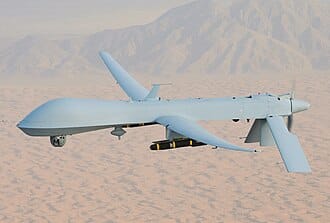
Datos rápidos
Zumbido: MQ-1 (probablemente MQ-1C Gray Eagle, posiblemente un MQ-1B Predator reactivado)
Incidente: Derribado sobre el Golfo Pérsico, 31 de mayo de 2026.
La afirmación de Irán: Un dron entró en el espacio aéreo iraní.
Reclamación de EE. UU.: Operando en aguas internacionales
Represalias de EE. UU.: Huelgas en Goruk y la isla de Qeshm
Estado de la flota de MQ-9: De 231 a 135 aeronaves desde el año fiscal 2025.
¿De vuelta del cementerio de huesos?
La USAF retiró oficialmente el MQ-1B Predator en marzo de 2018, reemplazándolo por el MQ-9 Reaper, más grande, rápido y con mayores capacidades. En septiembre de 2024, quince MQ-1B aún permanecían en el cementerio de aeronaves de Arizona en AMARG. El CENTCOM se negó a aclarar si la aeronave derribada era un MQ-1B Predator recuperado del almacenamiento o un MQ-1C Gray Eagle, la variante del Ejército, que permanece en servicio activo y está desplegada en Oriente Medio. La distinción es importante. Si la USAF está reincorporando al servicio Predators almacenados, esto sugiere que la flota de MQ-9 está bajo una presión extrema. Y así es: el teniente general David Tabor informó que el inventario de MQ-9 de la Fuerza Aérea se ha reducido de 231 aeronaves al comienzo del año fiscal 2025 a solo 135, una disminución de casi 100 aeronaves, acelerada por las grandes pérdidas en combate sobre Irán esta primavera. Con un coste aproximado de 14.000 millones de MQ-9, la pérdida de unidades es insostenible. En cambio, reactivar un MQ-1B almacenado prácticamente no supone ningún coste. Si las estructuras están en buen estado, la lógica es evidente.La represalia
La respuesta estadounidense fue rápida y contundente. Los ataques alcanzaron estaciones de radar y centros de mando de drones iraníes, seguidos de ataques de cazas contra sistemas de defensa aérea en la isla de Qeshm, un punto estratégico clave en el estrecho de Ormuz. Dos drones iraníes de ataque unidireccional, considerados una amenaza para la navegación, también fueron destruidos. Este intercambio refleja la fragilidad del alto el fuego de abril. Ambos bandos siguen disparando. La única incógnita es cuánto durarán las pausas entre los enfrentamientos. Fuentes: The War Zone, Washington Times, Gulf Business, CENTCOMPreguntas relacionadas
¿Derribó Irán un dron estadounidense?
Sí. El Comando Central de Estados Unidos confirmó que el 31 de mayo de 2026 un dron estadounidense "MQ-1" fue interceptado y destruido por las defensas aéreas iraníes sobre el Golfo Pérsico. Irán afirmó que la aeronave había entrado en su espacio aéreo, mientras que Estados Unidos declaró que operaba sobre aguas internacionales. Estados Unidos respondió en cuestión de horas contra las instalaciones de radar y drones iraníes.
¿Qué es el MQ-1 Predator?
El MQ-1 Predator es una aeronave pilotada a distancia utilizada por Estados Unidos para misiones de vigilancia y ataque. La Fuerza Aérea de EE. UU. retiró el Predator en 2018, por lo que el dron derribado por Irán probablemente era el MQ-1C Gray Eagle del Ejército, que aún está en servicio, en lugar de un Predator original. La confusión en la nomenclatura lo explica..
¿Cuál es la diferencia entre el MQ-1 Predator y el MQ-1C Gray Eagle?
Ambos son drones de General Atomics, pero el MQ-1C Gray Eagle es una versión más grande y con mayores capacidades, desarrollada por el Ejército a partir del MQ-1 Predator, ya retirado por la Fuerza Aérea. El Gray Eagle transporta más combustible, sensores y armamento, y permanece en servicio, lo que probablemente lo convierte en la aeronave que da origen a la designación imprecisa de "MQ-1" del CENTCOM.
¿Cómo respondió Estados Unidos al derribo del dron?
Horas después de la pérdida del dron el 31 de mayo de 2026, Estados Unidos atacó instalaciones de radar y centros de mando de drones iraníes en Goruk y en la isla de Qeshm. Posteriormente, aviones de combate destruyeron las defensas aéreas iraníes, una estación de control terrestre y dos drones de ataque unidireccionales.
¿Por qué el MQ-1 seguía volando después de haber sido retirado?
La Fuerza Aérea retiró sus MQ-1 Predator en 2018, pero aeronaves relacionadas, como el MQ-1C Gray Eagle del Ejército, permanecen en servicio activo. Los drones más antiguos son valiosos para la vigilancia de áreas en disputa porque perder uno no conlleva un costo humano, en parte por qué Los drones dominan ahora los conflictos modernos..
Publicaciones relacionadas
Maltratada pero imparable: Así funciona la red de defensa aérea de Irán.

0 Comentarios