
In June 2025, an Italian Air Force spokesperson told Janes that Italy was not looking at acquiring any mission-specific systems to counter drones.
On 21 August 2026, the US State Department approved the sale to Italy of 5,031 laser guidance kits designed to turn cheap unguided rockets into drone-killers. Estimated cost: $364 million.
We wrote about this weapon last month in El cohete $20,000 que destruye drones. What has changed is who is buying it, and how fast the argument turned.
Datos rápidos
| Approved | 21 August 2026, U.S. Department of State, Transmittal #26-92 |
| Recipient | Government of Italy |
| Costo estimado | $364 million (approximately €312 million) |
| Principal item | 5,031 × Guidance Section Single Variant Air-to-Air APKWS-II, WGU-59B/B |
| También se incluye | LAU-131 A/A launchers, Mk-152 HE warheads, MK66 rocket motors, proximity fuzes, practice warheads |
| Contratista principal | BAE Systems, Nashua, New Hampshire |
| Weapon type | 70 mm (2.75 in) semi-active laser-guided rocket |
| Guidance section cost | Around $15,000 per unit |
| Compared with | AIM-9X Block II ~$420,000; AIM-120 AMRAAM over $1 million |
| Carrying platform | Not specified in the release |
The Arithmetic That Changed Everyone’s Mind
APKWS II is not a new weapon. It is a guidance kit that screws in between a standard 70 mm Hydra rocket motor and a ten-pound warhead, with four folding wings carrying the laser seeker optics. No modification is needed to the rocket, the launcher or the aircraft’s fire control system.
The result costs about $15,000 in guidance, plus a few thousand for the rest. An AIM-9X costs around $420,000. An AMRAAM costs over a million.
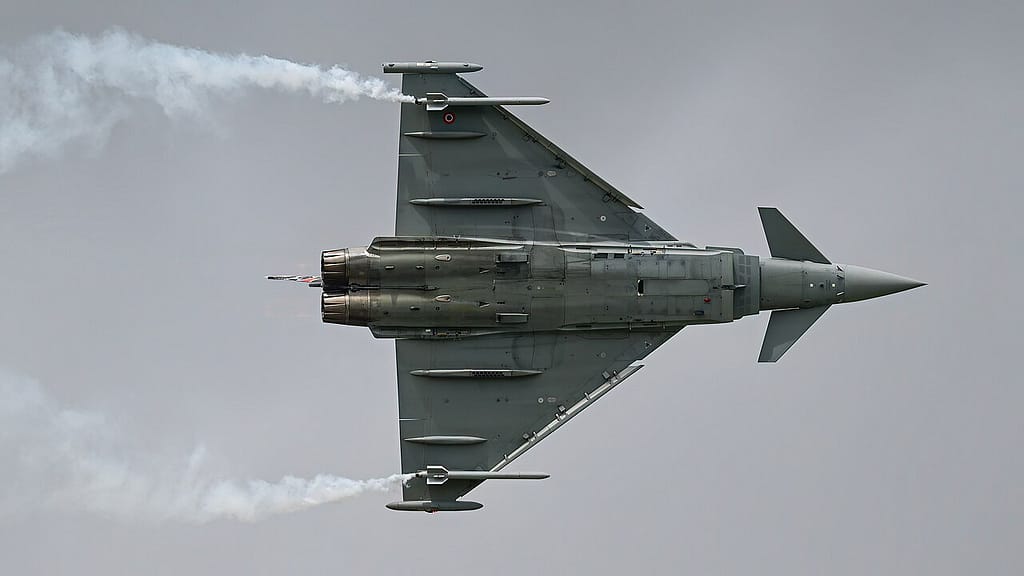
Against a Shahed-type drone that costs perhaps $20,000 to build, firing a million-dollar missile is a losing trade even when you win. A seven-tube LAU-131 pod on a single hardpoint carries seven guided shots where one missile used to hang. That is the whole argument, and it is why the position reversed so quickly.
One Week After a Live Shootdown
The timing is hard to miss. On 14 August 2026, an Italian Typhoon shot down an unidentified drone over Latvia during NATO Baltic Air Policing. The State Department approval came seven days later.
Italian Typhoons currently have AMRAAM, Meteor, IRIS-T and a 27 mm Mauser cannon for that job. All of them work. None of them is economical against something that costs less than a family car, and the cannon requires closing to a range nobody enjoys.
Britain got there first: by May 2026 the RAF had APKWS-II operational on Typhoons with 9 Squadron at RAF Akrotiri in Cyprus. The UK had made the same denial as Italy a year earlier.
What the Release Does Not Say
The State Department language is the standard formula, and worth quoting because it sets the framing.
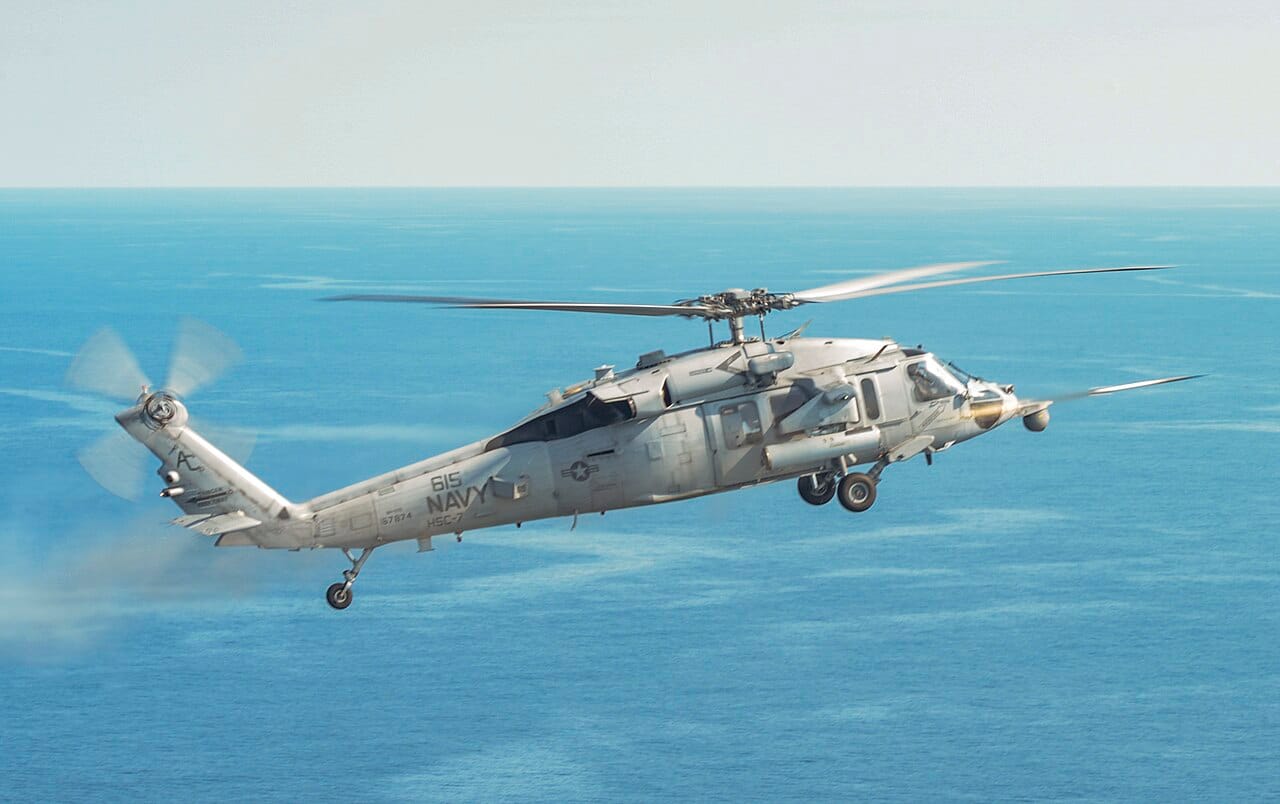
What it does not say is which service gets the rockets or what aircraft carries them. Every report linking this to the Eurofighter is making a reasonable inference from the air-to-air designation and the RAF precedent, not repeating an official statement. The LAU-131 A/A launcher is equally at home on helicopters.
The approval is also not a contract. Congress reviews it, and terms still have to be negotiated. But the direction of travel across NATO is now unambiguous: when the threat is cheap and numerous, the answer has to be cheap and numerous too.
Sources: U.S. Department of State, Bureau of Political-Military Affairs, Transmittal #26-92, 21 August 2026; The Aviationist, 21 August 2026; Janes; Militarnyi.

0 Comentarios