
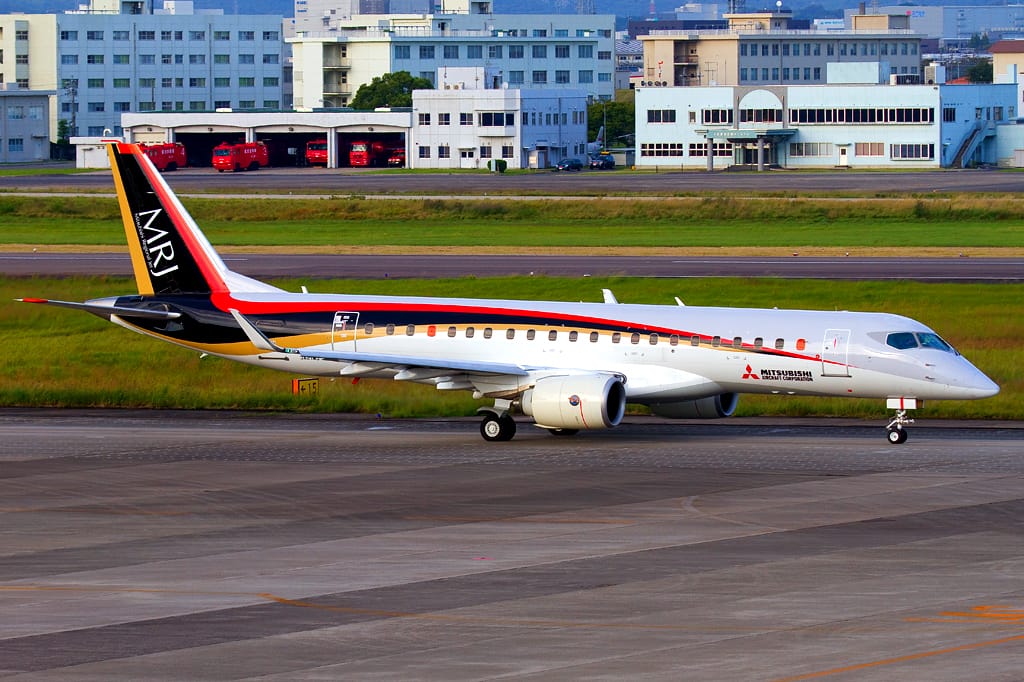
It flew. That is the strangest, most expensive part of the whole story. The Mitsubishi SpaceJet was not a paper aeroplane or a CGI fantasy that died on a designer's screen. It rolled out, it taxied, it rotated off the runway at Nagoya, and it climbed into a clear Japanese sky in front of cheering engineers. Over the years it logged more than 3,900 hours of flight testing. It was, by most accounts, a rather good little jet.
And then Japan cancelled it. Not because it crashed, not because it couldn't fly, but for reasons that were, in the end, far more mundane and far more humiliating: paperwork, a heavier-than-expected airframe, and a single contract clause buried in American pilot agreements. By the time Mitsubishi Heavy Industries finally pulled the plug in February 2023, the program had consumed something close to ¥1 trillion — roughly US$9 billion — without ever carrying a single paying passenger.
Datos rápidos
| Program launched | March 2008 (as Mitsubishi Regional Jet / MRJ) |
| Primer vuelo | 11 November 2015, Nagoya, Japan |
| Renamed SpaceJet | June 2019 (MRJ90 → SpaceJet M90) |
| Total spend | ~¥1 trillion / roughly US$9 billion |
| Fatal flaw | Too heavy for US “scope clause” pilot contracts |
| Cancelled | 7 February 2023 — zero paying passengers ever carried |
A nation's comeback jet
To understand the heartbreak, you have to understand the ambition. Japan had not built its own commercial airliner since the propeller-driven NAMC YS-11 of the 1960s. When Mitsubishi Heavy Industries officially launched the Mitsubishi Regional Jet — the MRJ — on 28 March 2008, it was meant to be a national homecoming. The launch order came from All Nippon Airways: 25 aircraft, a vote of confidence from the country's flag carrier.
The pitch was genuinely smart. A clean-sheet 70-to-90-seat regional jet with Pratt & Whitney's new geared turbofan engines, promising big fuel savings over the ageing regional jets that ferry passengers between secondary cities all over the world. Entry into service was pencilled in for 2013. Japan Inc. was going to break the Embraer–Bombardier duopoly. What could possibly go wrong?
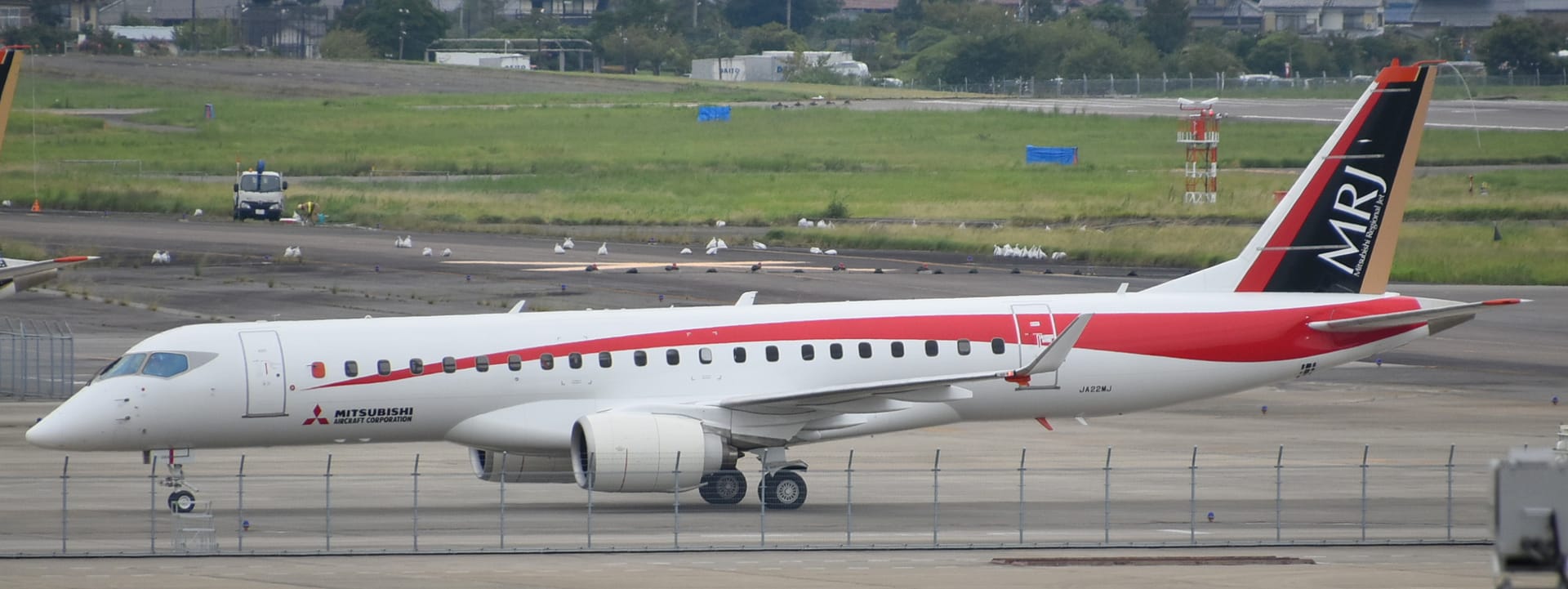
The Mitsubishi MRJ takes to the air for the first time, 11 November 2015.
Death by a thousand delays
Almost everything, it turned out — slowly. The 2013 target slipped. Then it slipped again. And again. The final design was frozen late, first flight crept from 2012 to 2015, and deliveries marched ever further into the future. By the time the program was done, it had endured at least six major schedule revisions, each one chewing through cash and credibility.
The MRJ finally flew on 11 November 2015, a genuinely triumphant moment. But behind the celebration, the certification process was turning into a quagmire. Mitsubishi's engineers were brilliant at building aeroplanes and badly inexperienced at the labyrinth of proving one safe to the satisfaction of regulators. Crucial parts of the design had to be reworked mid-stream.
The clause that killed it
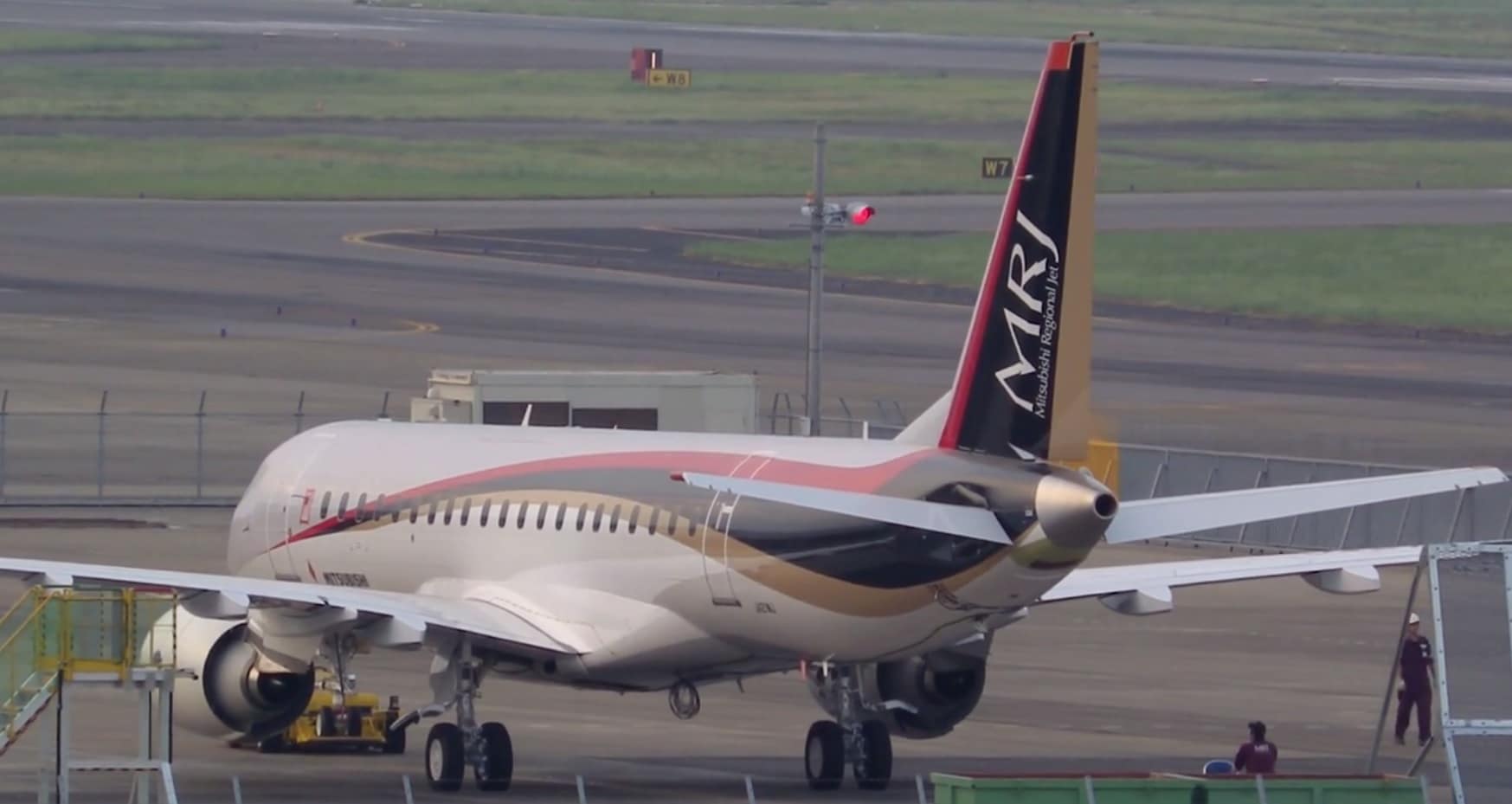
Then came the problem no amount of Japanese engineering could fix. In the United States — the single biggest regional-jet market on Earth — major airlines' pilot contracts contain something called a "scope clause." It limits the regional jets that feed into the network: typically no more than 76 seats, and crucially, a maximum take-off weight of around 86,000 lbs. It is the law of the land not because of physics, but because of labour politics.
The MRJ90 — rebranded the SpaceJet M90 when Mitsubishi gave the program a glossy new name in June 2019 — tipped the scales well above that weight limit and seated up to 88. Far too heavy, far too many seats. American regional carriers had hundreds of conditional orders on the books, but every one of them was contingent on the unions relaxing scope. The unions made it abundantly clear they would do no such thing.
Mitsubishi did design a fix: the smaller SpaceJet M100, a redesigned 76-seat aircraft engineered specifically to slip under the scope-clause weight limit. But it was a paper escape route, never firmed into hard orders, because by then the whole world could see the program wobbling.
A trillion yen, quietly written off
The numbers had become terrifying. By the end, total program spending climbed toward ¥1 trillion. Mitsubishi Heavy Industries' other divisions were under pressure, a new CEO was determined to stop the bleeding, and the regional-jet dream was looking less like a national triumph and more like a national money pit.
In January 2020 the Western executives recruited to rescue the program were eased out. Then COVID-19 arrived. In October 2020 the program was officially frozen, US operations shuttered, the budget slashed. For more than two years Mitsubishi insisted the program was merely "paused" — a careful, face-saving fiction. Finally, on 7 February 2023, the company stopped pretending and confirmed the SpaceJet was dead.
A deep dive into why the SpaceJet collapsed — scope clauses, certification, and corporate culture.
The most beautiful failure in the sky
What makes the SpaceJet such an unsettling story is that it was not really a failure of engineering. The jets are real. They are sitting in hangars in Japan right now, red-and-white test machines that flew thousands of hours and proved the aeroplane worked. The failure was everything around the metal: an underestimation of how brutally hard it is to certify an airliner, a corporate culture that chased perfection when "good enough, on time" would have won, and a bet that American pilots' unions would blink. They never did.
Japan's once-in-a-lifetime chance to join the global airliner club is, for now, gone. The SpaceJet remains the rarest of aviation artefacts: a jet that flew, dazzled, cost a fortune, and never once carried a passenger who paid for a seat.
Sources: Mitsubishi Heavy Industries (discontinuation notice, 7 Feb 2023); Leeham News; AeroTime; AirInsight; Wikipedia.
Preguntas relacionadas
What was the Mitsubishi SpaceJet?
The Mitsubishi SpaceJet was Japan’s attempt at a home-built commercial airliner. Launched in 2008 as the Mitsubishi Regional Jet (MRJ) and renamed SpaceJet in 2019, it was a clean-sheet 70-to-90-seat regional jet. After about US$9 billion of spending it was cancelled in 2023, having never carried a paying passenger.
Why was the Mitsubishi SpaceJet cancelled?
The SpaceJet was cancelled on 7 February 2023, chiefly because it was too heavy to satisfy the US scope clauses in pilot contracts — limits that cap the weight and size of regional jets US mainline pilots will allow. Without the lucrative US market, the programme was no longer viable.
What is a scope clause in aviation?
A scope clause is a provision in US airline pilot union contracts that limits the weight and seat count of regional jets flown by partner carriers. The SpaceJet exceeded those limits, locking it out of the crucial US regional market and contributing to its cancellation.
When did the Mitsubishi SpaceJet first fly?
The aircraft made its maiden flight on 11 November 2015 in Nagoya, Japan, then still branded the Mitsubishi Regional Jet. Despite reaching flight testing, repeated delays and certification challenges meant it never entered commercial service.
How much did the Mitsubishi SpaceJet cost?
Mitsubishi Heavy Industries spent roughly one trillion yen — about US$9 billion — on the programme over 15 years. The entire sum was lost when the jet was cancelled in 2023 without a single paying passenger ever flown.
Who ordered the Mitsubishi regional jet?
The launch order came from All Nippon Airways, which committed to 25 aircraft when Mitsubishi officially launched the MRJ on 28 March 2008. It was meant to mark Japan’s return to airliner manufacturing after the propeller-driven NAMC YS-11 of the 1960s.
Had Japan built an airliner before the SpaceJet?
Yes, but not for decades. Japan’s last home-built commercial airliner before the MRJ/SpaceJet was the propeller-driven NAMC YS-11 of the 1960s. Like other ambitious programmes such as the cancelled Boeing 2707 SST, the SpaceJet shows how hard and costly clean-sheet aircraft can be.
Publicaciones relacionadas

0 Comentarios