
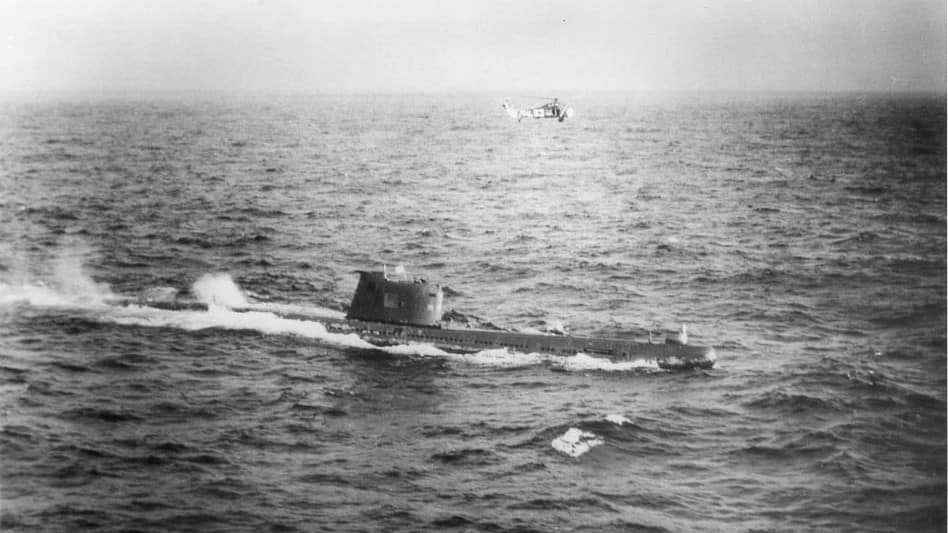
By the late afternoon of Saturday, 27 October 1962, the men of Soviet submarine B-59 had very little left to breathe. The boat had been at sea for almost four weeks, hiding from the US Navy in the warm water north of Cuba, and her batteries were nearly flat. With the air conditioning starved of power, the temperature in her compartments had climbed past 45 degrees Celsius — about 113 Fahrenheit — and towards 60 degrees in the engine spaces. Carbon dioxide crept up towards the limit of what a human body can take. According to the men who were there, sailors were fainting at their stations.
Then the explosions started. Overhead, destroyers of the USS Randolph’s hunter-killer group were rolling practice depth charges onto the contact they had been chasing all day. The charges were signals, not weapons — Washington had told Moscow that submarines would be asked to surface this way. But that message had never reached B-59. Her crew had heard nothing from home in days. All they knew was that the hull was ringing around them, again and again, in the dark.
What happened next in that broiling control room — and what almost happened — would stay secret for forty years. And it was only one of three moments, all packed into this single Saturday, when the Cuban Missile Crisis nearly slipped out of everyone’s hands. In Washington they came to call it Black Saturday. It earned the name three times over.
Quick Facts: Black Saturday, 27 October 1962
| The day | The worst 24 hours of the Cuban Missile Crisis, with US strategic forces already at DEFCON 2 |
| Fuse one | Major Rudolf Anderson’s U-2 shot down by an SA-2 missile over Cuba — the crisis’s only combat death |
| Fuse two | Captain Charles Maultsby’s U-2 strays over Soviet Chukotka; MiGs scramble, US F-102s launch with nuclear-tipped missiles |
| Fuse three | Submarine B-59, under depth charges, prepares its nuclear torpedo — one officer, Vasili Arkhipov, says no |
| The weapon below | One T-5 torpedo with a nuclear warhead, commonly described as roughly Hiroshima-scale |
| Kept secret until | 2002, when Russian veterans and declassified records surfaced at a 40th-anniversary conference in Havana |
One Day, Three Fuses
By that Saturday the crisis was twelve days old. Soviet medium-range missiles were being assembled in Cuba, a US naval quarantine ringed the island, and Strategic Air Command had gone to DEFCON 2 — one step short of general war — for the first time in its history. B-52s loitered at their failsafe points. Invasion forces gathered in Florida. Two leaders were trading letters that might decide whether there would be a Monday.
Newsreels from those days show a world holding its breath — and they had no idea how right they were to hold it.
What the public could not see was how many separate fuses were burning at once, and how far they ran beyond anyone’s control. Three of them nearly reached the powder on 27 October. One belonged to a pilot who died. One belonged to a pilot who got lost. And one belonged to a submarine officer whose name almost nobody would learn for four decades.
A Death Over Banes
The first fuse burned through at midday. Major Rudolf Anderson Jr., a 35-year-old U-2 pilot from South Carolina, was photographing military sites over eastern Cuba when a Soviet SA-2 surface-to-air missile burst beside his aircraft near the town of Banes. Shrapnel pierced his pressure suit. Anderson was killed — the only man to die by enemy fire in the entire crisis.
The shootdown, ordered from below without Moscow’s approval, convinced many in Washington that the Soviets were escalating deliberately — and brought the pressure for a full US strike on Cuba to its peak. Kennedy, remarkably, chose to absorb the blow rather than answer it. Anderson’s story deserves more than a paragraph, and we have told it in full: the shootdown of Rudolf Anderson, the man Black Saturday killed.
Lost at the Top of the World
The second fuse lit itself over the Arctic, before Anderson was even hit. Captain Charles “Chuck” Maultsby — a former Thunderbirds display pilot who had survived two years as a prisoner of war in Korea — had taken off from Eielson Air Force Base, Alaska, at midnight on a routine air-sampling mission to the North Pole, collecting fallout evidence from Soviet nuclear tests. Nobody had thought to cancel the flight just because the world was ending.
Over the pole there is no compass worth trusting; a U-2 pilot navigated by the stars. That night the aurora borealis smeared the sky with light, and Maultsby’s sextant fixes went subtly, fatally wrong. When he turned for home he was not flying towards Alaska. He was flying into the Soviet Union, nearly 1,000 miles off course, straight over the Chukotka Peninsula — in a type of aircraft the Soviets had every reason to treat as the tip of a nuclear spear.
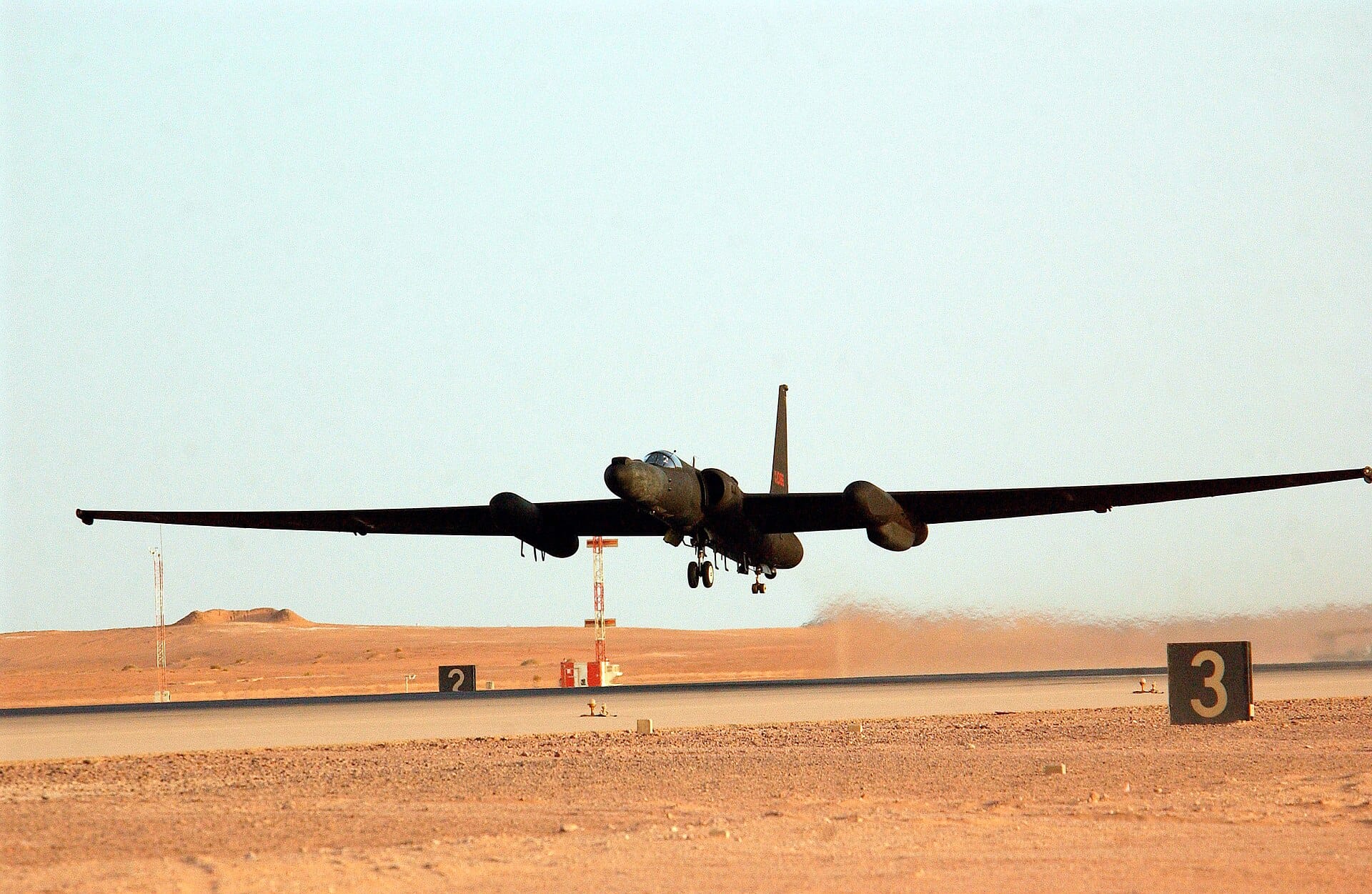
Soviet radar found him at once. MiG interceptors scrambled from Pevek and later Anadyr and shadowed the intruder for hundreds of miles, climbing towards a target their jets could not quite reach — the U-2 cruised above 70,000 feet, the MiGs topped out well below it. On the American side, the response was worse than symmetrical: two F-102 Delta Daggers rose from Galena to escort the stray home. Because the alert had been raised earlier that week, their conventional armament had been replaced with GAR-11 Falcon air-to-air missiles — each with a nuclear warhead.
A navigation error had now put nuclear-armed American fighters and Soviet interceptors on converging courses at the edge of Soviet territory, on the very day both capitals were primed to read anything as the start of the war. When Defense Secretary Robert McNamara heard a U-2 was over Chukotka, the president was briefed within minutes. Kennedy’s reply became famous.
Maultsby, meanwhile, was saved by a whisper. American radio operators had found him, and a command post reached him with a strange instruction: turn left until Orion’s Belt sat off his right wingtip. Steering home by a constellation, his engine finally starved of fuel, he glided in silence for the better part of an hour and dead-sticked the U-2 onto a small airstrip at Kotzebue, Alaska. He had been airborne 10 hours and 25 minutes — reportedly the longest U-2 flight ever made, and very nearly the most expensive.
Maultsby was never blamed; the mission had been flown exactly as ordered, which was precisely the problem. McNamara cancelled all further polar sampling flights the same day. The full story of the wandering U-2 has since become one of the great what-ifs of the crisis.
The Barrel and the Sledgehammer
The third fuse was underwater, and it had been smouldering for weeks. On 1 October, four Foxtrot-class diesel submarines had sailed from the Kola Peninsula for Cuba. Each carried 21 conventional torpedoes — and one more in the bow room that the crews spoke of carefully: a T-5 with a nuclear warhead, commonly described as roughly Hiroshima-scale. The Americans hunting them had no idea the weapons were aboard.
On 27 October the US Navy finally pinned B-59 and set about forcing her up. The men inside had no way to know the depth charges were meant as a doorbell — the US had announced the surfacing procedure through diplomatic channels, but the notice never reached the boats. Vadim Orlov, the radio-intercept officer aboard, described the bombardment in an account made public in 2002 — the fullest we have, though other veterans have disputed parts of it.
Hours of it, on top of the heat and the foul air, pushed the boat to the edge. Her captain, Valentin Savitsky, could not reach the General Staff. As far as he knew, the war he had been sent out to fight might already be burning above his head.
By Orlov’s account, the exhausted Savitsky ordered the nuclear torpedo assembled to battle readiness, shouting that there might be a war raging up there while they were doing somersaults in the deep.
On B-59, uniquely among the four boats, the decision was not the captain’s alone. The brigade’s chief of staff, Vasili Arkhipov, was embarked on this submarine, and by most accounts the launch needed his agreement along with the captain’s and that of the political officer, Ivan Maslennikov — though historians still argue over the exact authorisation rules that night.
What matters is what he did. Arkhipov — a quiet 36-year-old who had already lived through the reactor disaster aboard the missile submarine K-19 the year before — refused, and set about talking his captain down: the charges were falling wide, the ships above were signalling, not killing. A warship trying to sink a submarine does not miss on purpose, over and over, for hours.
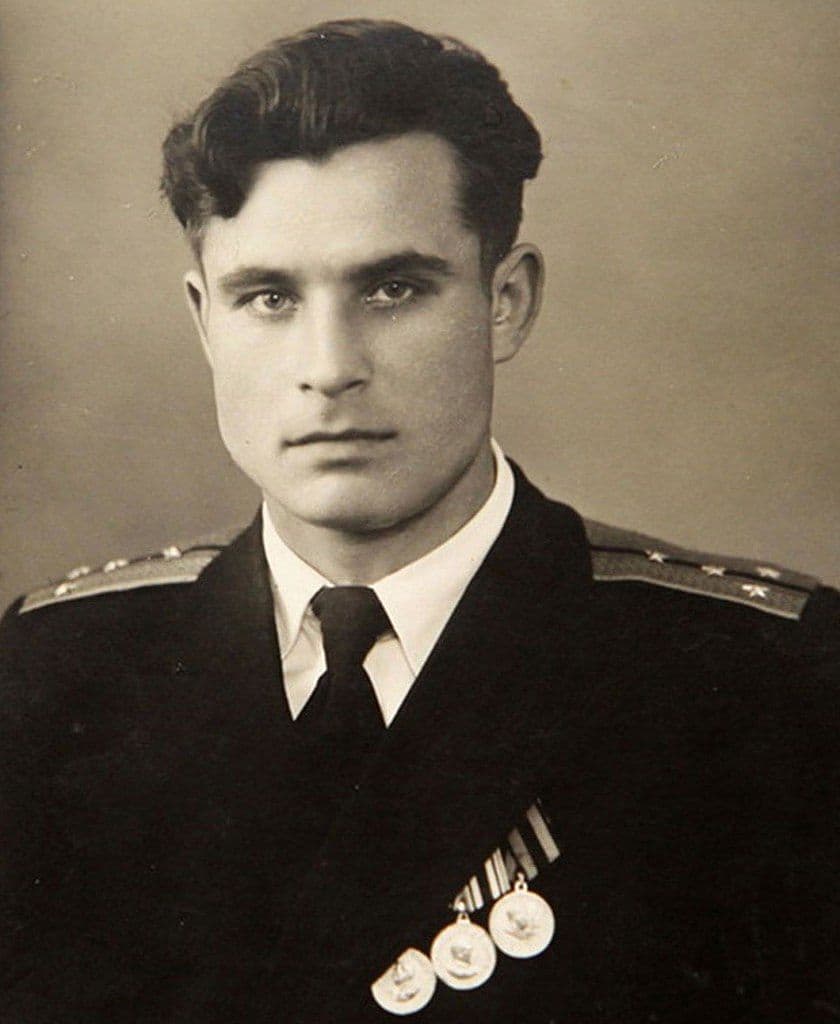
Savitsky relented. B-59 surfaced into a ring of American destroyers, searchlights and circling aircraft, reported her position to Moscow, and eventually turned east for home. To the US Navy crews watching her wallow up out of the black water, it was a procedural victory — a Soviet boat forced to show herself.
None of them had any idea what had nearly come out of her bow tube. Nobody on the American side would know for forty years.
What Havana Revealed
The truth surfaced in October 2002, at a conference in Havana marking the crisis’s 40th anniversary, where Russian veterans — Orlov among them — and newly declassified records laid out what had happened aboard the submarines. Robert McNamara himself sat among the listeners.
The revelation that the Foxtrots had carried nuclear torpedoes at all — and that one crew had come within an argument of using one — landed on the room like a delayed depth charge. The director of the US National Security Archive, which helped convene the conference, put it as plainly as a historian ever has.
Kennedy’s own advisor Arthur Schlesinger Jr., looking back at that Saturday, called it not only the most dangerous moment of the Cold War but the most dangerous moment in human history. Arkhipov heard none of it. He had died in 1998, a retired vice admiral, largely unknown outside his own navy — his health, like that of many K-19 survivors, reportedly undermined by the radiation he absorbed in 1961. In 2017 his family accepted the first Future of Life Award on his behalf.
That same Saturday evening in Washington, Robert Kennedy quietly offered the Soviet ambassador a deal — the missiles out of Cuba, older American missiles out of Turkey, never to be spoken of. By Sunday morning Khrushchev had announced the withdrawal.
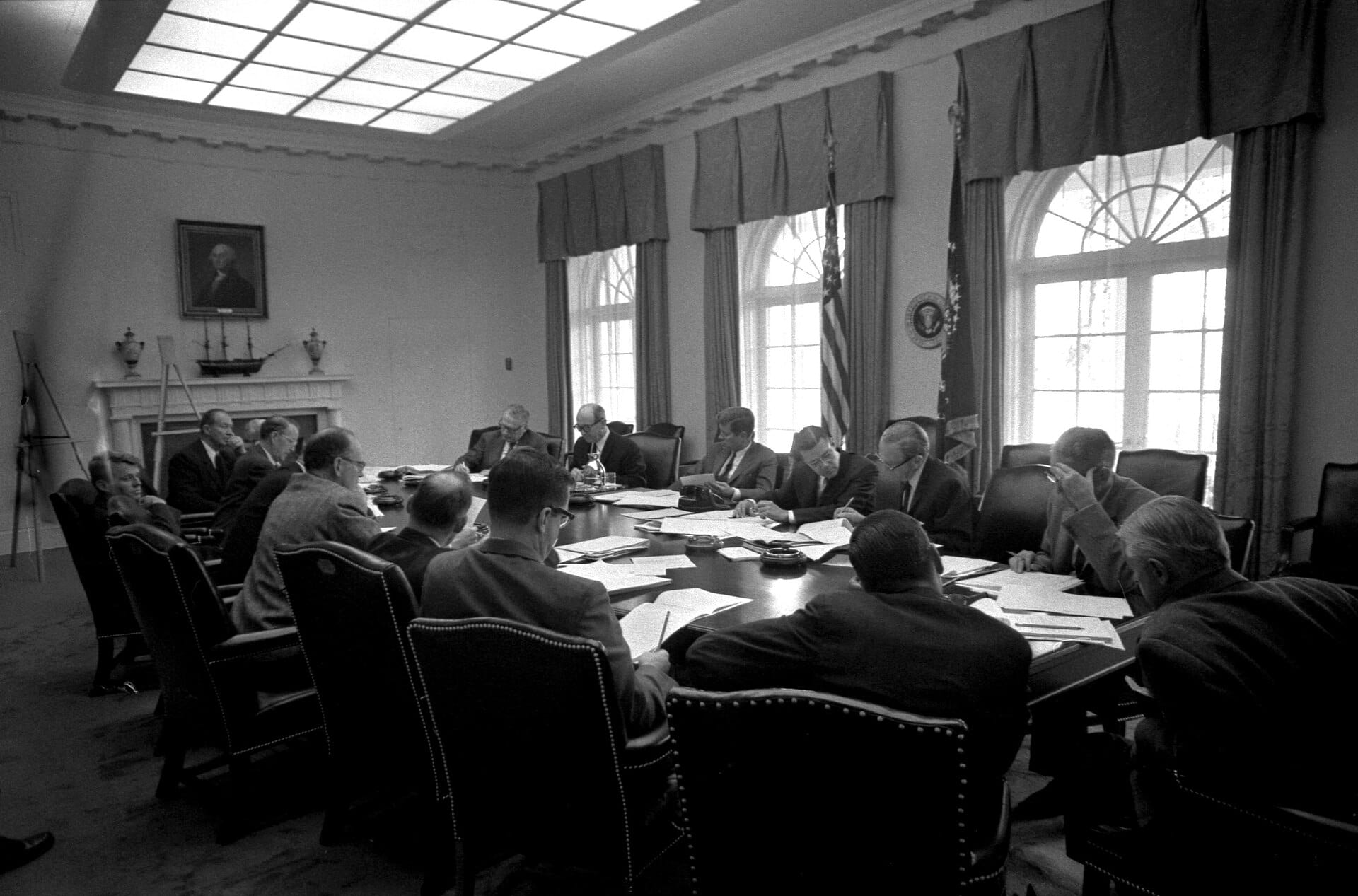
The crisis ended not because the machinery of deterrence worked, but because — at least three times in one day — it briefly depended on people instead. A dead pilot whose loss was absorbed rather than avenged, a lost navigator steered home by a constellation, and a submariner’s stubborn calm: that was the margin. It is worth remembering how narrow it was, every time someone calls nuclear weapons stabilising.
Sources: National Security Archive (Orlov recollections, trans. Svetlana Savranskaya); Michael Dobbs, One Minute to Midnight; PBS Secrets of the Dead; Air & Space Forces Magazine; Anchorage Daily News; Wikipedia. Where veterans’ accounts conflict, we say so.
0 Comentarios