
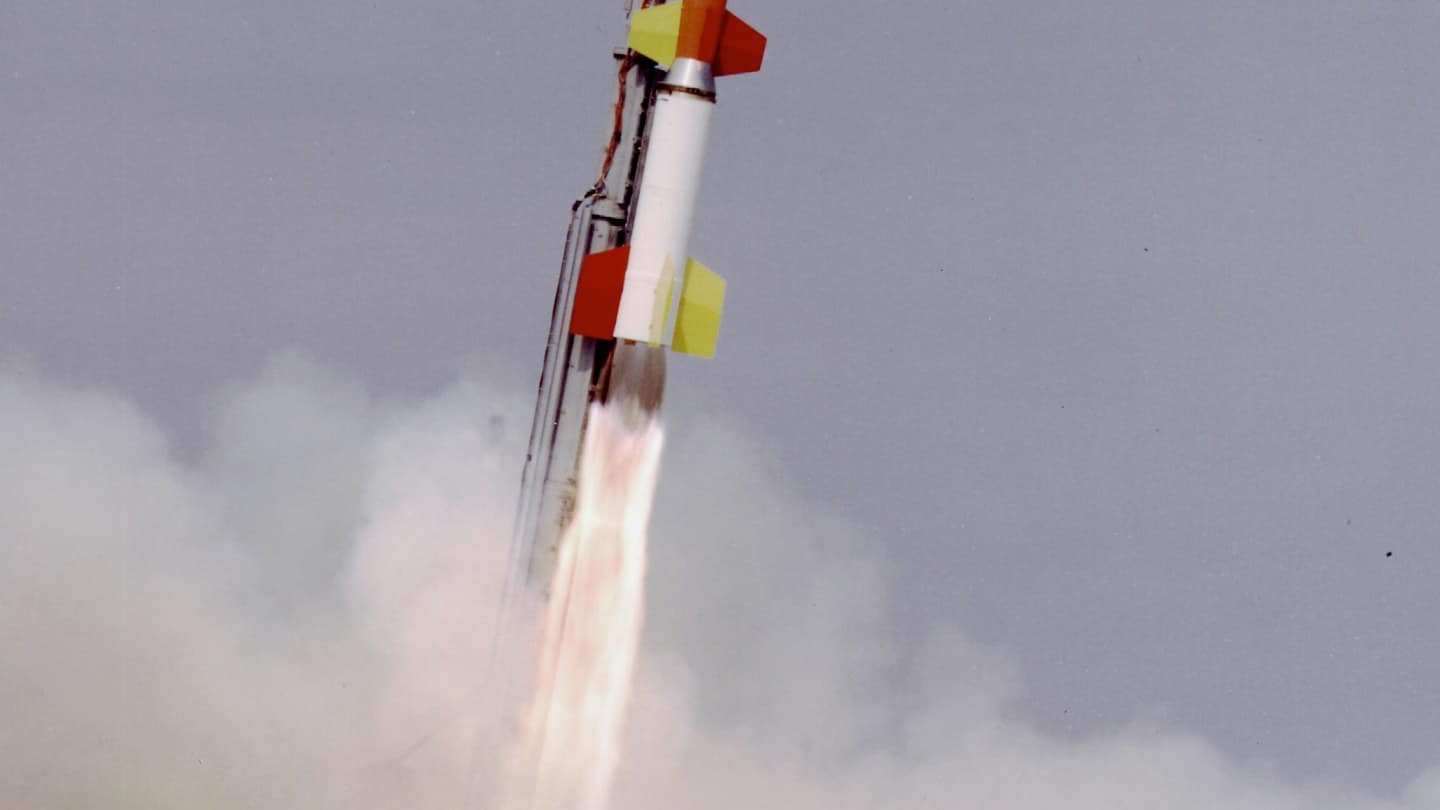
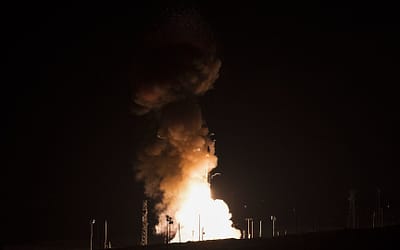
On the morning of 25 January 1995, on the island of Andøya in Arctic Norway, a team of Norwegian and American scientists watched a four-stage Black Brant XII sounding rocket climb away from its launcher and curve north-east over the sea towards Svalbard. It was carrying instruments to study the aurora borealis — the same northern lights that shimmer over the archipelago all winter. The launch was clean. The team began tracking their experiment. Nothing about the moment suggested that, 1,000 kilometres to the east, officers of the Russian early-warning service were watching the same dot of light and reaching for very different procedures.
At the Olenegorsk radar station on the Kola Peninsula, the object rising out of the Norwegian Sea looked uncomfortably familiar: the speed, the arc, the staging of a submarine-launched ballistic missile. Not any missile — a Trident, the kind carried by American submarines that patrol beneath exactly those waters. And a single Trident, fired from the Barents Sea, fitted a scenario Russian planners had worried about for years: one warhead, detonated high over the country, whose electromagnetic pulse would blind the radars before the real attack followed.
Within minutes, the alert had climbed further up the Russian chain of command than any before or since. In Moscow, for the first and — as far as anyone knows — only time in the nuclear age, the briefcase from which a president can authorise nuclear launch was activated in earnest. The Cold War had been over for three years. The scientists on Andøya had done everything by the book. And the book had failed.
Quick Facts: The Norwegian Rocket Incident
| Date | 25 January 1995 |
| The rocket | Black Brant XII, a four-stage scientific sounding rocket |
| Launched from | Andøya Rocket Range, northern Norway |
| Mission | Studying the aurora borealis over Svalbard; apogee roughly 1,450 km (900 mi) |
| Mistaken for | A US Navy Trident submarine-launched ballistic missile from the Barents Sea |
| The alarm reached | President Boris Yeltsin — the only publicly known activation of a nuclear briefcase |
| Decision window | About ten minutes, most of it spent tracking the trajectory |
| Root cause | Norway’s advance notification never reached Russia’s radar crews |
A Rocket for the Northern Lights
Andøya had been launching scientific rockets since the 1960s, and Russia’s northern neighbours knew it. What was different in January 1995 was the rocket itself. The Black Brant XII was the largest vehicle the range had ever flown: four stages, a trajectory arcing to roughly 1,450 kilometres of altitude — higher than the International Space Station flies today — and a burn profile far closer to a military missile than the modest single-stage sounders that had come before it.
The experiment was pure science, part of a joint campaign to study the aurora over Svalbard. But physics does not label its intentions. To a radar, a big solid-fuelled rocket climbing steeply out of the Norwegian Sea is a shape and a velocity, nothing more.
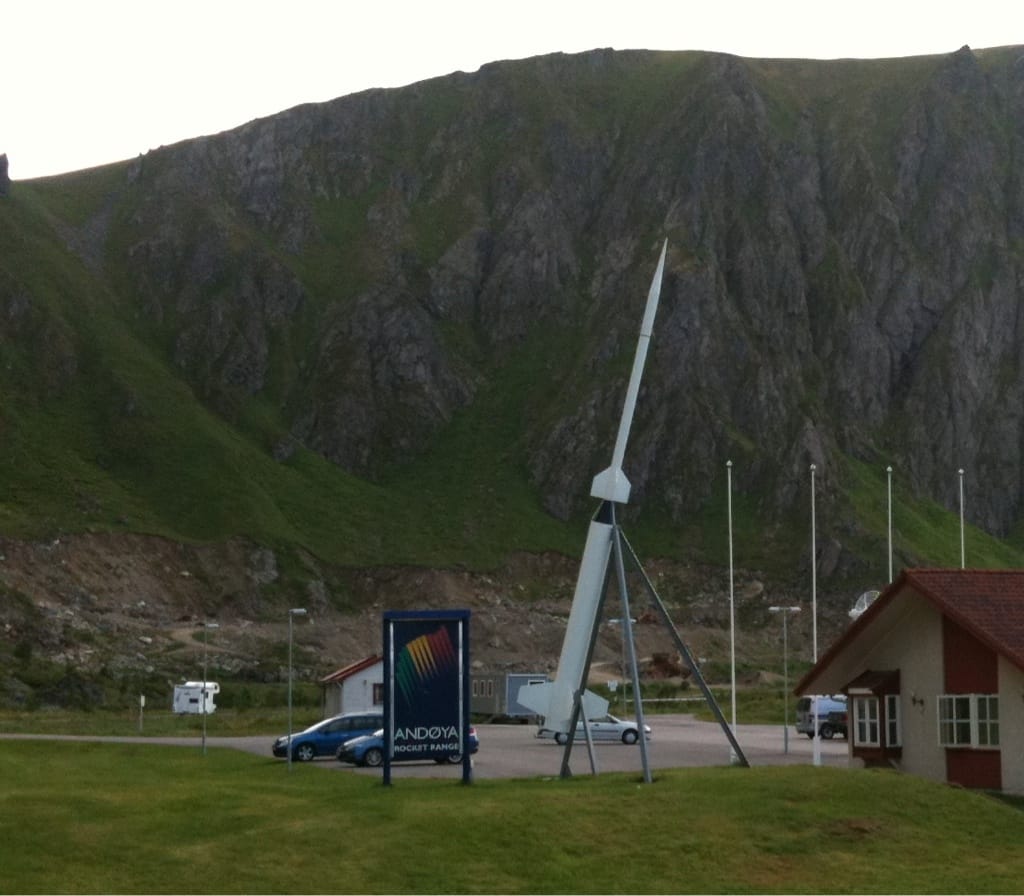
There was, in fact, a label attached — a diplomatic one. Weeks earlier, on 21 December 1994, the launch team had asked the Norwegian Foreign Ministry to notify Russia and more than two dozen other states of the coming campaign, exactly as they always did. The letter went out. What happened to it afterwards is the quiet hinge of the whole story, and we will come back to it.
On Russian Screens, a Trident
To understand the panic at Olenegorsk, it helps to know what Russian planners feared most in the 1990s. It was not a massed American first strike out of nowhere — that would be visible, unmistakable, and answered in kind. It was the decapitation scenario: a single missile, fired from a submarine close to Russian shores, detonating a warhead at high altitude to generate an electromagnetic pulse that would blind radars and paralyse command links — the opening note of an attack the defenders would never see arriving.
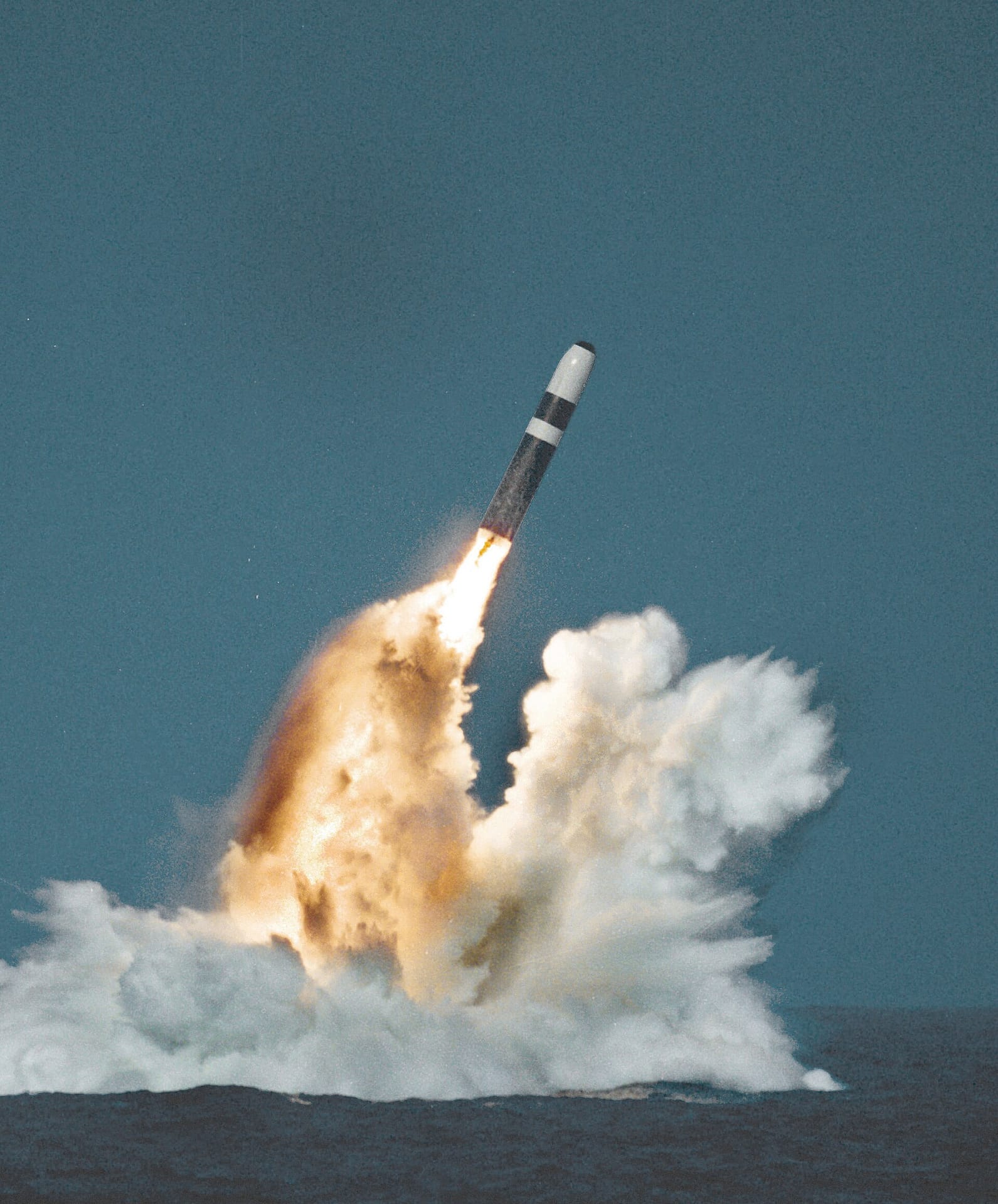
A Trident II launched from the Barents Sea could reach Russian territory in roughly ten minutes. That number dictated everything: whatever the object on the screen was, the window for deciding how to answer it was about as long as a coffee break.
The Black Brant XII was a plausible impostor. Its size and staging resembled a Trident’s; as its boosters separated, the radar picture reportedly took on the look of a missile releasing multiple warheads. And its trajectory, bending towards Svalbard, passed through a corridor that Russian planners associated with flight paths between American missile fields and Moscow.
Alarm klaxons sounded at Russian early-warning headquarters. The track was passed upward — not sideways into an archive of scientific launch notifications, but upward, through the General Staff, towards the man who had inherited the Soviet arsenal.
The Briefcase Opens
Russia’s nuclear command system, like America’s, travels with its president. The device is called Cheget — a briefcase, one of three (the president’s, the defence minister’s, the chief of the General Staff’s), that together form the electronic conference through which a launch order can be authorised. On the morning of 25 January 1995, the briefcases came alive. Boris Yeltsin, Defence Minister Pavel Grachev and General Mikhail Kolesnikov were connected in an emergency session while the radar crews watched the track.
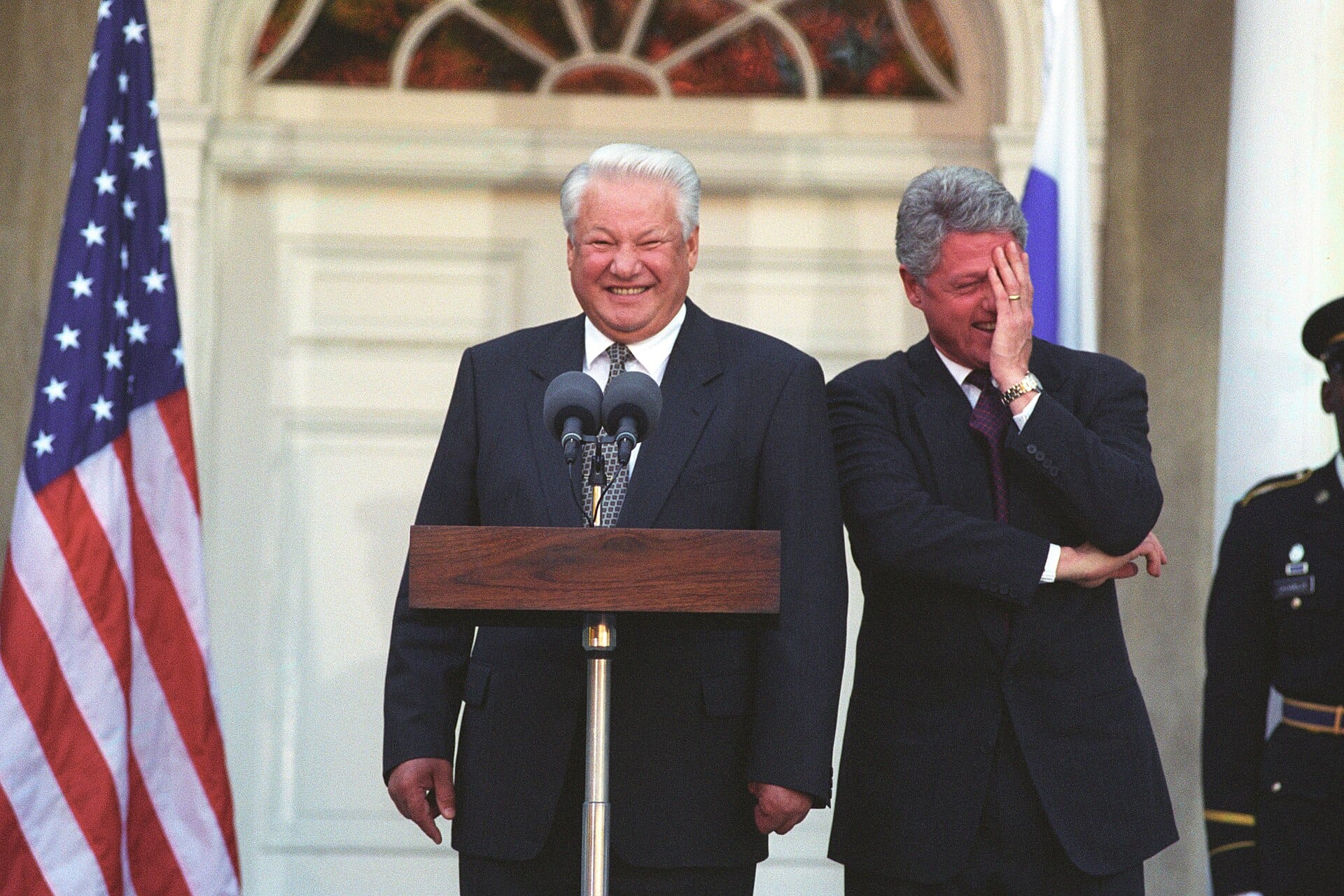
It is the only time any nuclear-armed state is publicly known to have activated the apparatus in response to a live warning. How close the moment actually came to a launch decision is, honestly, unknowable from outside: post-Soviet Russia has never released the minutes, and accounts from officials and analysts differ — some describe a genuinely dangerous scramble, others an alert handled well within its margins. What is documented is what Yeltsin himself said to reporters the next day.
The path saved everyone. Some eight of the ten available minutes were reportedly consumed tracking the object before its trajectory made the truth plain: it was heading out towards Svalbard and the sea, not inland towards Russia. The stand-down flowed back down the chain. Twenty-four minutes after launch, the spent experiment fell, as planned, near Spitsbergen. The scientists on Andøya packed up an entirely successful mission, unaware they had briefly been the most dangerous men in Europe.
The Letter That Never Arrived
Then came the reckoning with the paperwork. Norway had notified Russia — formally, in writing, through the embassy in Oslo, a month in advance. The message had simply died somewhere in the bureaucracy between the Russian Foreign Ministry and the men at the radar consoles. The most dangerous ten minutes of the post-Cold-War era were caused not by a rogue general or a failed computer, but by an unforwarded letter.
For students of nuclear risk, that is precisely what makes 1995 so instructive. The hardware worked. The radars detected a real object and characterised it plausibly. Every human in the chain did his duty. The failure lived in the seams between institutions — the same seams that no amount of missile engineering can close. One former CIA analyst, Peter Vincent Pry, who documented the episode in his book War Scare, rendered a verdict that still startles.
Not everyone agrees — some scholars argue the Russian system in fact proved itself, catching and correcting the error with minutes to spare. Both readings can be true: the safeguards held, and it is disquieting that they were needed at all, three years after the Cold War’s end, against a weather rocket.
The Quietest Close Call
The aftermath was undramatic, which is its own lesson. Moscow protested; Oslo apologised for nothing while promising better notification procedures; the two countries quietly improved their channels. Andøya kept launching — it launches to this day, now as Andøya Space. The incident might have vanished entirely had Yeltsin not volunteered his remark about the little black case, turning an internal alert into a historical record.
Of the three great nuclear false alarms — 1962’s Black Saturday, Petrov’s night in 1983, and this one — the Norwegian incident is the least known and, in one way, the most unsettling. The others happened at the height of confrontation, when everyone expected the worst. This one happened in peacetime, between countries on friendly terms, over an aurora experiment. The machinery of nuclear alarm does not care what era it is. It only sees shapes and velocities — and it is always switched on.
Sources: Wikipedia; Nuclear Museum / Atomic Heritage Foundation; Center for Arms Control and Non-Proliferation; Smithsonian Magazine; Russia Matters (Harvard); Peter Vincent Pry, War Scare. Russian-side specifics remain partly unverifiable and are hedged accordingly.
0 Comentarios