
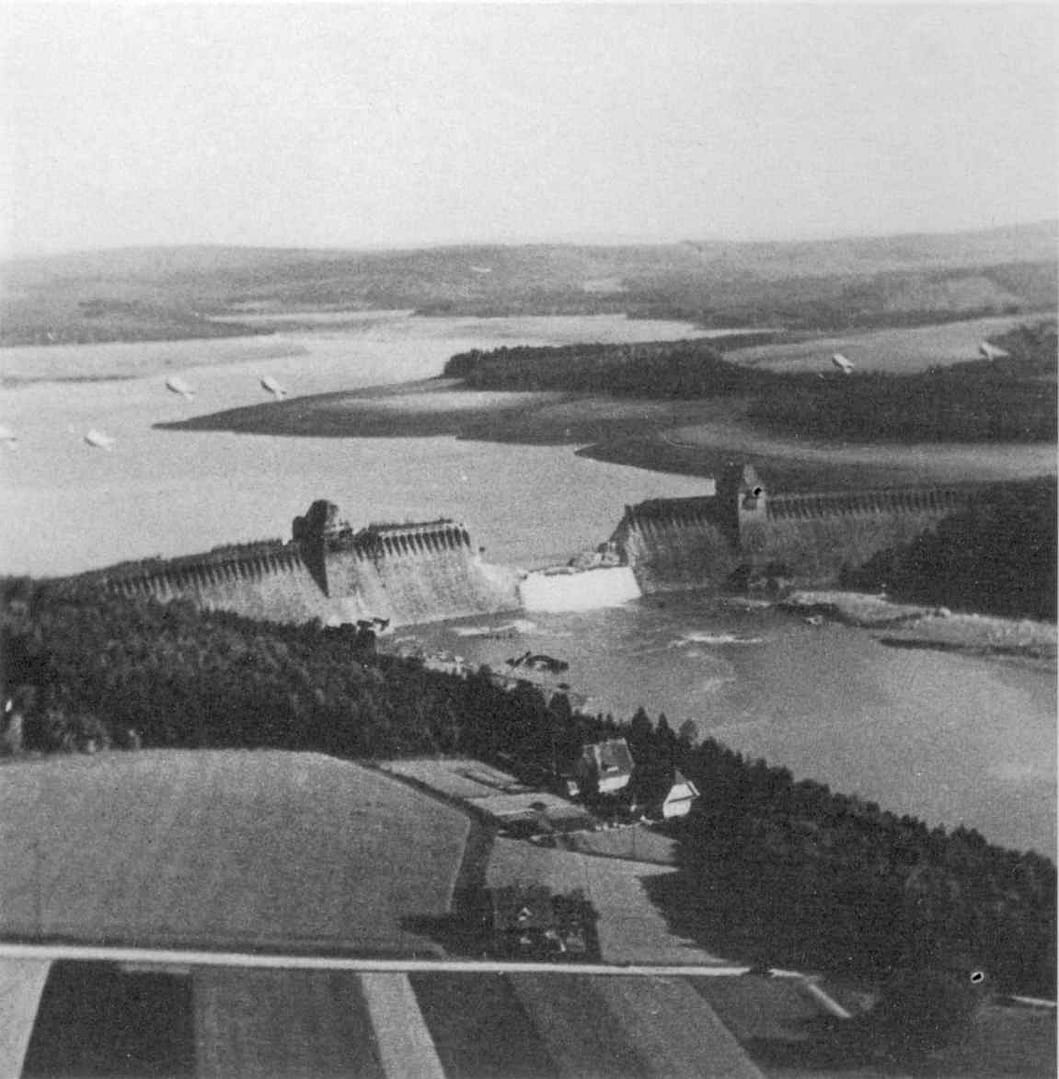
The problem was geometry. A German dam in 1943 was a wall of masonry more than a hundred feet thick at its base, protected by torpedo nets in the water and anti-aircraft guns on the crest. A bomb dropped from altitude would miss; a torpedo would snag the nets; a mine detonating in open water would waste its force. To break the Ruhr’s dams, someone had to deliver a very large charge to the exact spot where the water met the wall, several metres down. Barnes Wallis worked out how — and the answer bounced.
On the night of 16 May 1943, nineteen Lancasters of the newly formed 617 Squadron flew into Germany at treetop height to find out whether the physics held. By dawn, two of the great dams had failed.
Quick Facts
| Operation | Chastise, the night of 16–17 May 1943 |
| Unit | No. 617 Squadron, RAF Bomber Command |
| Force | 19 Avro Lancasters, 133 aircrew, in three waves |
| Weapon | Barnes Wallis’s “Upkeep” bouncing bomb |
| Result | Möhne and Eder dams breached; Sorpe only lightly damaged |
| Cost | 8 aircraft lost; 53 aircrew killed, 3 captured; an estimated 1,600 civilians drowned, most of them forced labourers |
The Marbles in the Garden
Wallis began with marbles, skipping them across a tub of water in his garden to test a hunch. A spherical, and later cylindrical, charge given backspin and dropped at the right speed and height would skip across the reservoir surface like a stone, hop over the torpedo nets, strike the dam face, and — still spinning backwards — crawl down the wall underwater before a hydrostatic pistol fired it at a depth of about nine metres. The water itself would then focus the blast against the masonry. It was an elegant solution to an impossible delivery problem.
The engineering demanded absurd precision from the crews. The bomb had to be released at exactly 60 feet above the water, at 232 mph, precisely 425 yards from the dam. Sixty feet at night over water is lethally low.
Restored 1943 footage of the bouncing-bomb trials shows just how strange Wallis’s weapon looked in flight.
Sixty Feet at Night
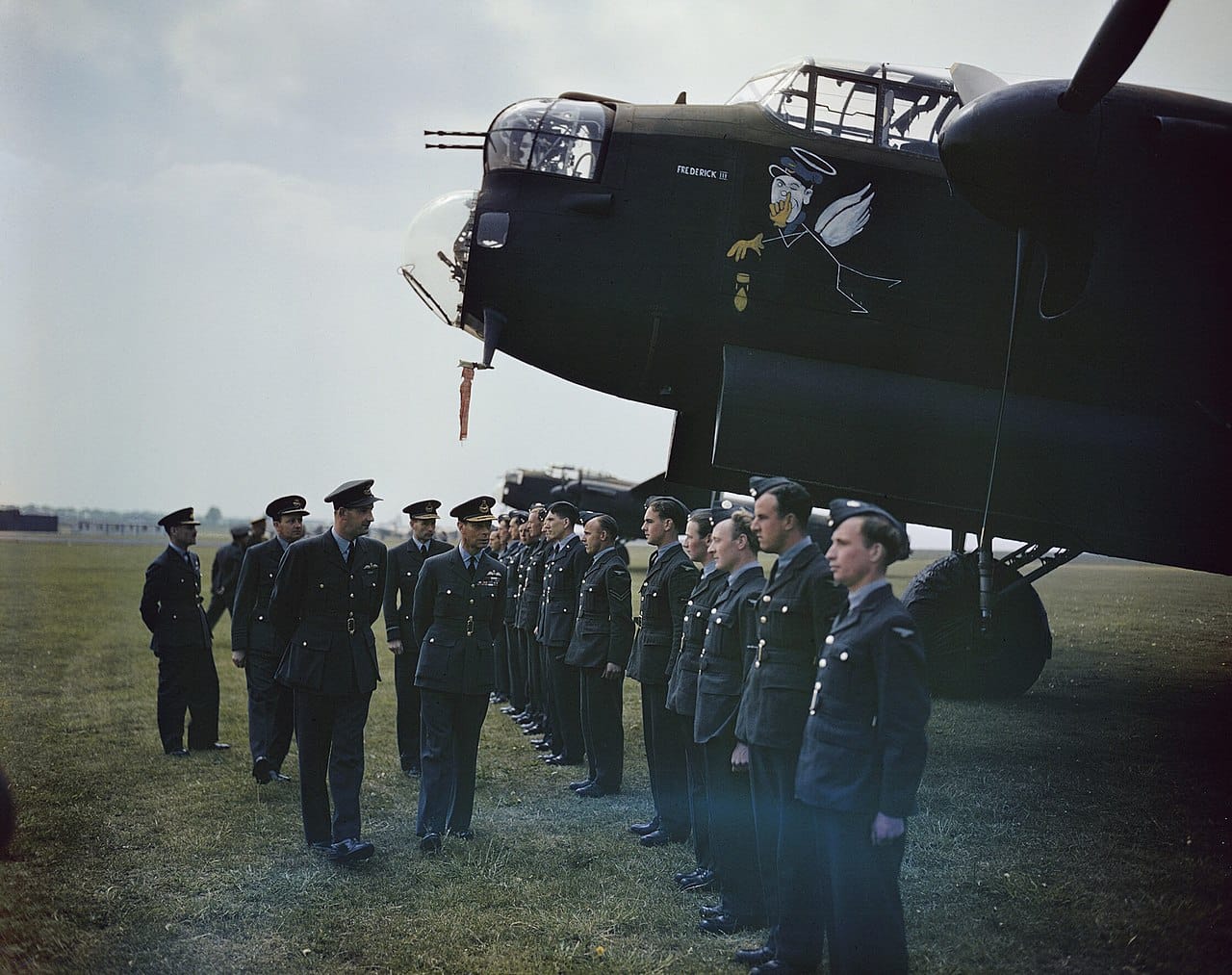
The height problem was solved with theatre-grade improvisation: two spotlights mounted under each Lancaster, angled so their beams converged into a single spot on the water only when the aircraft was exactly 60 feet up. The bomb-aimer used a simple hand-held wooden sight with two nails to judge the release distance against the dam’s towers. There was no radar, no computer — just spotlights, nails and nerve.
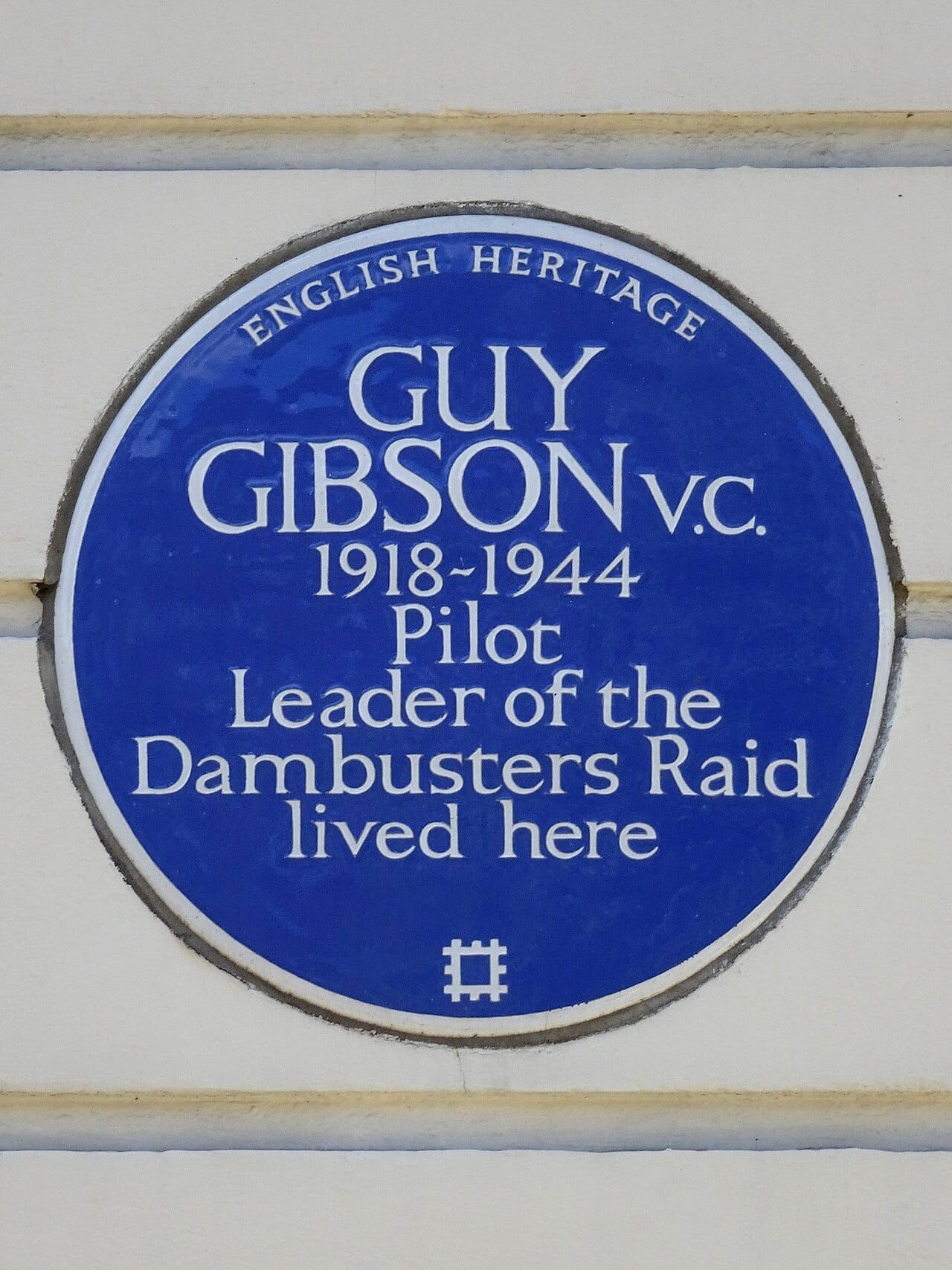
Wing Commander Guy Gibson, just 24, led the raid and attacked the Möhne first, then flew alongside later aircraft to draw the flak away from them. His memoir captured the instant the Möhne finally gave way.
Two Dams, and the Cost
The Möhne breached after repeated attacks; the Eder collapsed in the small hours; the Sorpe, of a different earthen construction, shrugged off its hits. A wall of water rolled down the Ruhr and Eder valleys, destroying power stations, bridges, factories and farms. But the price was brutal. Eight of the nineteen Lancasters did not come home; 53 of the 133 aircrew were killed in a single night. And the flood did not discriminate — of the roughly 1,600 people it drowned, about a thousand were enslaved labourers, most of them Soviet, held in camps below the dams.
Wallis, who had pushed relentlessly for the raid, was shattered by the losses among the young men who flew it.
A full documentary on the raid, its planning and its aftermath.
What It Actually Achieved
Strategically, Chastise was less decisive than the legend suggests. The Germans repaired the Möhne with startling speed, and Ruhr production had largely recovered by September. The raid diverted labour and flak to dam defences and disrupted water and power for a season, but it did not cripple the war economy.
What it did do was harder to measure and, in 1943, arguably more valuable: it proved that a precisely engineered weapon, flown with suicidal accuracy, could hit a target everyone thought untouchable. It gave Britain a victory of imagination at a grim moment, made 617 Squadron the RAF’s permanent specialists in the impossible, and turned a garden full of skipping marbles into one of the most studied raids in the history of air power.
A concise retelling of the operation from take-off to the breach.
Sources: Imperial War Museums; Guy Gibson, Enemy Coast Ahead; Paul Brickhill, The Dam Busters; RAF Bomber Command records.
Related Questions
What was Operation Chastise, the Dambusters raid?
Operation Chastise was the RAF's attack on German dams on the night of 16–17 May 1943. Nineteen Avro Lancasters of the newly formed 617 Squadron flew into Germany at treetop height carrying Barnes Wallis's bouncing bombs, breaching the Möhne and Eder dams in the Ruhr valley.
Who invented the bouncing bomb?
The engineer Barnes Wallis devised the bouncing bomb, codenamed Upkeep. He began by skipping marbles across a tub of water in his garden, then developed a spinning cylindrical charge that would skip over torpedo nets, strike the dam wall, and sink before detonating at depth.
How did the bouncing bomb work?
Given backspin and dropped at a precise speed and height, the drum-shaped Upkeep skipped across the reservoir like a stone, hopped over the torpedo nets, hit the dam face and — still spinning backwards — crawled down the wall underwater before a hydrostatic pistol fired it at about nine metres' depth, focusing the blast against the masonry.
Which dams did the Dambusters destroy?
The raid breached the Möhne and Eder dams, sending floodwater across the Ruhr valley. The third main target, the Sorpe dam, was only lightly damaged because its earthen construction resisted the bouncing-bomb technique that worked against the masonry dams.
What was 617 Squadron?
No. 617 Squadron was a special RAF Bomber Command unit formed specifically for the dams raid. On the night of 16–17 May 1943 it sent 19 Avro Lancasters and 133 aircrew in three waves against the German dams, earning the enduring nickname "the Dambusters."
How costly was the Dambusters raid?
Of the 19 Lancasters, 8 were lost; 53 aircrew were killed and 3 captured. On the ground, an estimated 1,600 civilians drowned in the floods, most of them forced labourers. The raid's effect on German industry was significant but temporary.
What other daring low-level bombing raids happened in WWII?
Low-level precision raids were a hallmark of the era — from the Dambusters to the 1943 attack on the Ploiești oil refineries, flown at rooftop height. The Avro company behind the Lancaster later built Britain's delta-winged Vulcan bomber.
0 Comentarios