
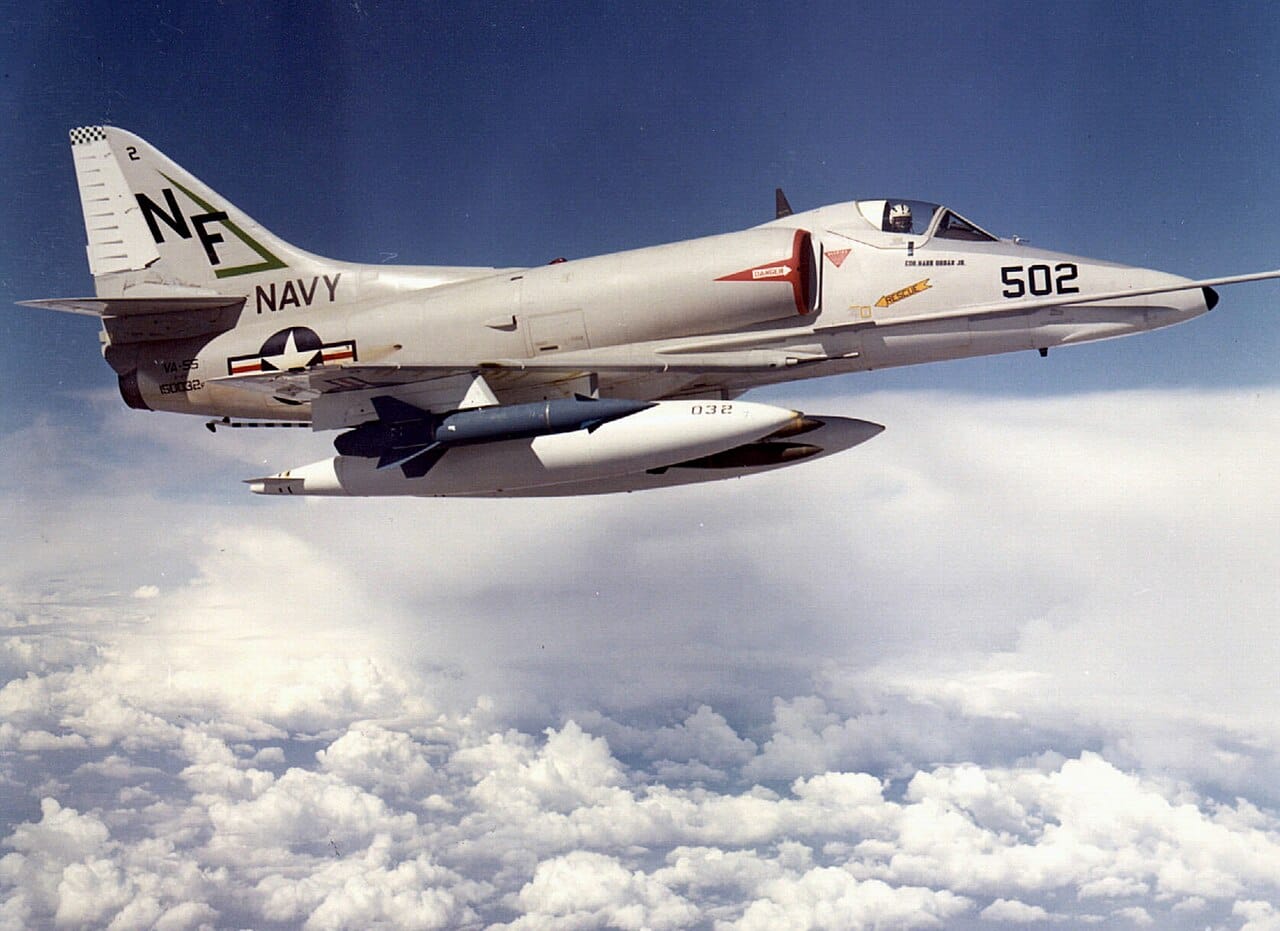
In the 1950s the trend in military aircraft ran one way: bigger, heavier, more complex. Ed Heinemann ran the other way. When the U.S. Navy asked Douglas for a new jet attack aircraft and set a weight limit of 30,000 pounds, Heinemann came back with a design that weighed barely half that. The result was the A-4 Skyhawk — a jet so small it did not need folding wings to fit a carrier lift, so simple it was cheap to build, and so nimble that pilots seventy years later still grin when they talk about it.
They called it the Scooter, the Bantam Bomber, and — when it briefly held a world speed record — Heinemann’s Hot Rod. It was all three.
Quick Facts
| Designer | Ed Heinemann, Douglas Aircraft Company |
| First flight | 22 June 1954 |
| Weight | About 15,000 lb loaded — roughly half the Navy’s 30,000 lb limit |
| Built | 2,960 aircraft, the last delivered in February 1979 |
| Service | Vietnam attack workhorse, Blue Angels, TOPGUN adversary, and exported worldwide |
| Still flying | As a civilian aggressor jet into the 2020s |
Half the Weight
Heinemann’s genius was subtraction. Every pound removed from an airframe is a pound that does not need wing area to lift it, fuel to move it, or engine to push it — and the savings compound. He gave the Skyhawk a compact delta wing so small it fitted on a carrier deck edge lift without folding, deleted the heavy folding mechanism entirely, and kept the systems ruthlessly simple. The finished aircraft came in thousands of pounds under specification, which meant it could be built cheaply and in enormous numbers.
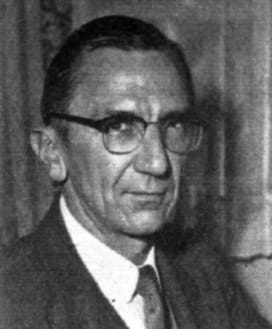
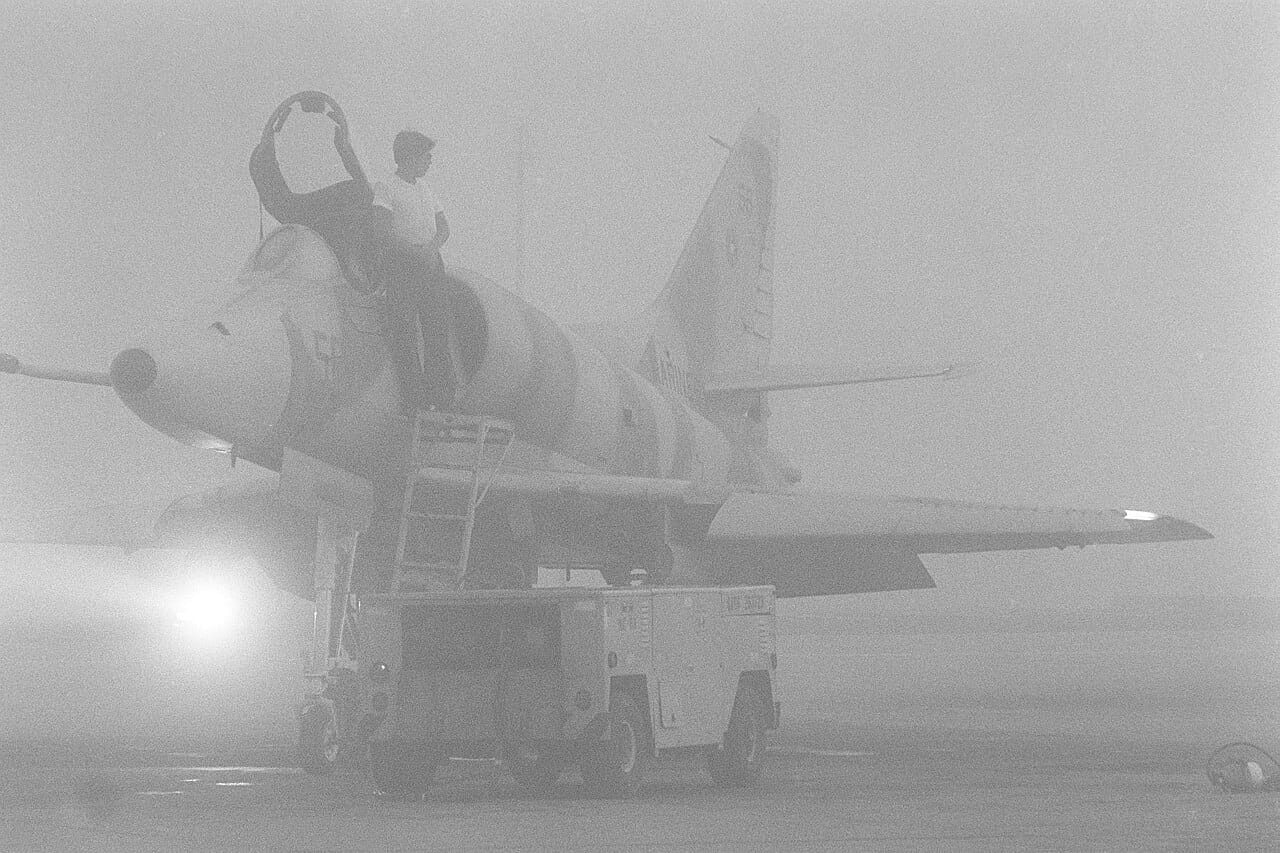
The full story of Heinemann’s little attack jet.
The Scooter Goes to War
In Vietnam the A-4 became the U.S. Navy and Marine Corps light-attack workhorse, flying tens of thousands of sorties from carrier decks with a bomb load out of all proportion to its size. It was the aircraft John McCain was flying when he was shot down over Hanoi. And for all its role as a bomb truck, pilots adored it for how it flew.
The Skyhawk in action across its long career.
From the Falklands to TOPGUN
That agility gave the Scooter a remarkable second life. Argentina flew A-4s against the British in the 1982 Falklands War, pressing home low-level attacks that sank and damaged Royal Navy ships. Israel made it a mainstay of its attack fleet. And because the little jet handled so much like a nimble threat fighter, the U.S. Navy turned it into the perfect adversary aircraft — A-4s wore aggressor colours at TOPGUN, standing in for the MiG-17, and the type also served with the Blue Angels for more than a decade.
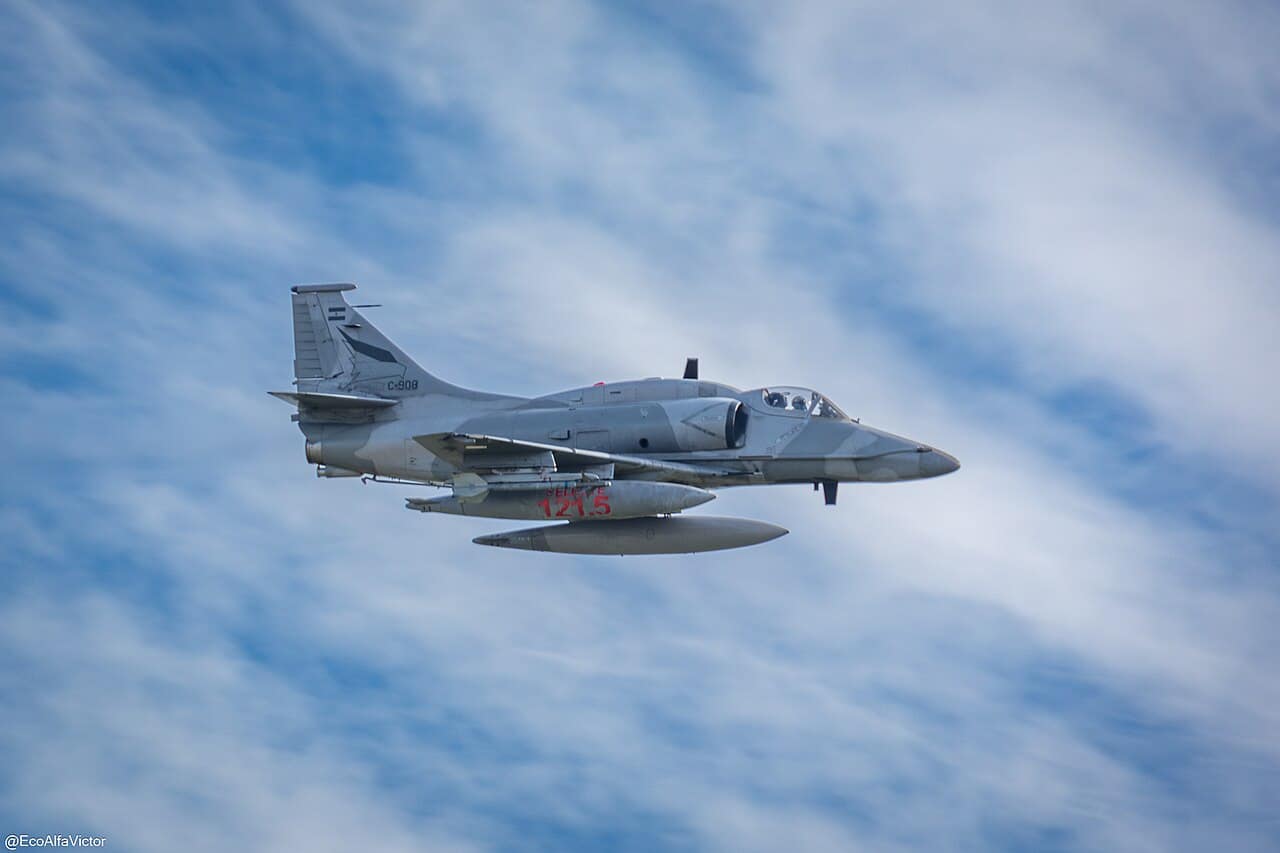
A look at the design and enduring appeal of Heinemann’s Hot Rod.
The Jet That Refused to Retire
Nearly 3,000 Skyhawks were built across a quarter-century of production, and the type simply would not go away. Long after the last one left the factory in 1979, A-4s were still flying — in air arms around the world, and, into the 2020s, as privately operated aggressor jets hired to play the bad guy against modern fighters. Seventy years after its first flight, Heinemann’s exercise in doing more with less remains one of the most successful attack aircraft ever built, and the clearest proof that in aviation, lightness is its own kind of power.
Sources: HistoryNet; The Aviation Geek Club; U.S. Naval Aviation Museum.
Related Questions
What was the A-4 Skyhawk?
The A-4 Skyhawk was a small, lightweight US Navy jet attack aircraft designed by Ed Heinemann at Douglas. It first flew on 22 June 1954, weighed about half the Navy's 30,000 lb limit, and became a Vietnam workhorse. In total 2,960 were built, the last delivered in February 1979.
Who designed the A-4 Skyhawk?
Ed Heinemann of the Douglas Aircraft Company designed the Skyhawk. Asked for an attack jet under 30,000 pounds, he delivered one weighing roughly 15,000 pounds loaded — about half the limit — through relentless weight-saving, which made it cheap to build in huge numbers.
Why was the A-4 Skyhawk nicknamed the Scooter?
Pilots called the nimble little jet the Scooter, the Bantam Bomber, and Heinemann's Hot Rod after it briefly held a world speed record. Its small size and light weight made it exceptionally agile and beloved by aircrew for decades.
Why did the A-4 Skyhawk not need folding wings?
Heinemann gave the Skyhawk a compact delta wing small enough to fit a carrier deck-edge lift without folding. Deleting the heavy folding mechanism saved weight, which reduced the wing area, fuel and engine size needed — savings that compounded across the whole design.
What roles did the A-4 Skyhawk serve?
The Skyhawk was a Vietnam attack workhorse, flew with the Blue Angels, and served as a TOPGUN adversary. Its agility made it ideal for dissimilar air-combat training, a role later taken to an extreme by the secret Soviet MiGs of Constant Peg.
Is the A-4 Skyhawk still flying?
Yes. Long after military retirement, A-4 Skyhawks still fly into the 2020s as privately operated adversary jets, hired to train fighter crews. Their low cost and agility keep them useful decades after the last new airframe was delivered.
How many A-4 Skyhawks were built?
A total of 2,960 Skyhawks were built, with the last delivered in February 1979 — a production run spanning 25 years and a testament to Ed Heinemann's simple, cheap and effective design philosophy.
0 Comentarios