
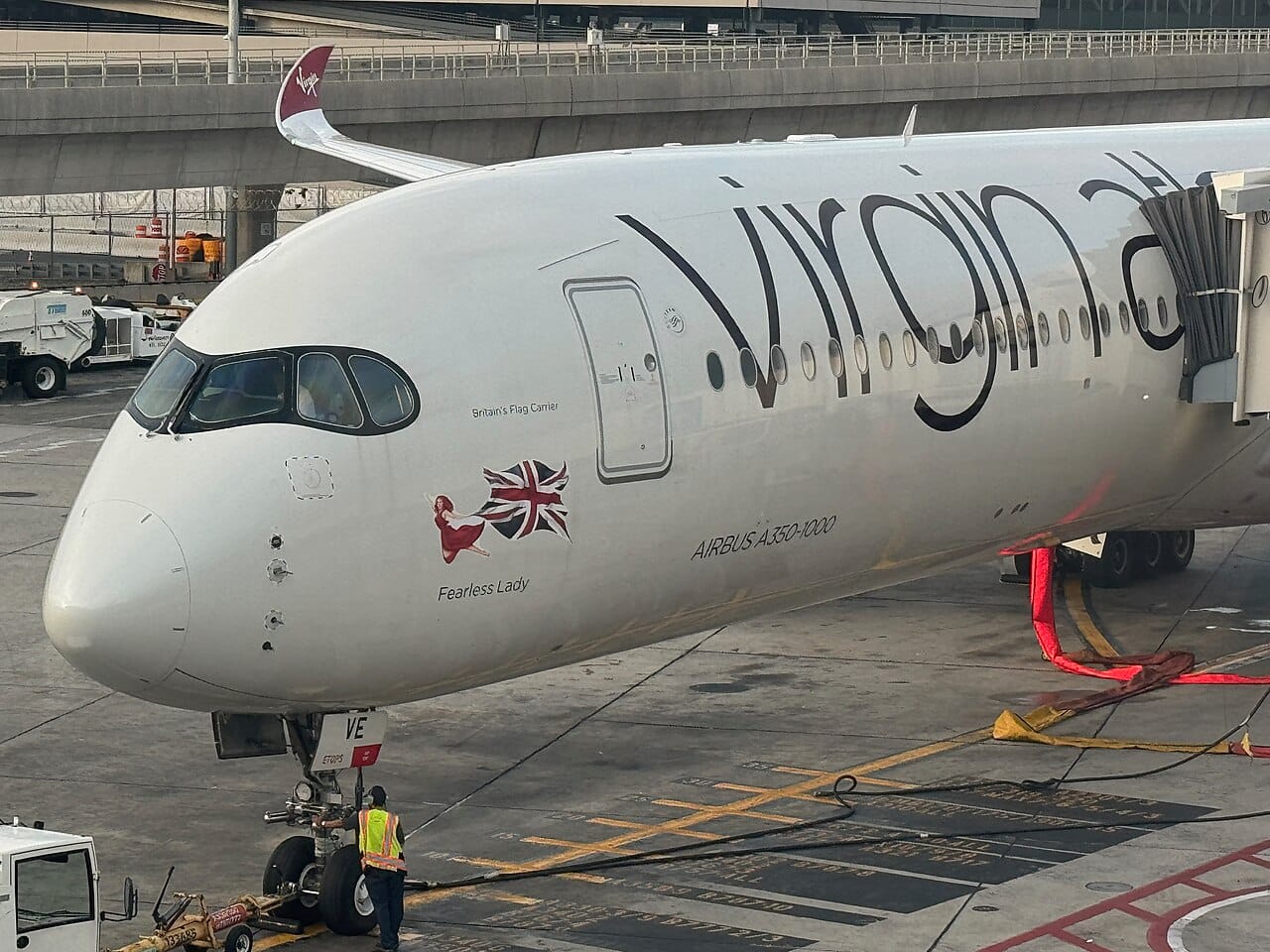
The passengers on Virgin Atlantic flight VS135 boarded at Heathrow on Monday afternoon expecting palm trees and theme parks. Five hours later they climbed down the same set of stairs at the same London airport, no closer to Orlando than when they started — but a good deal more tired.
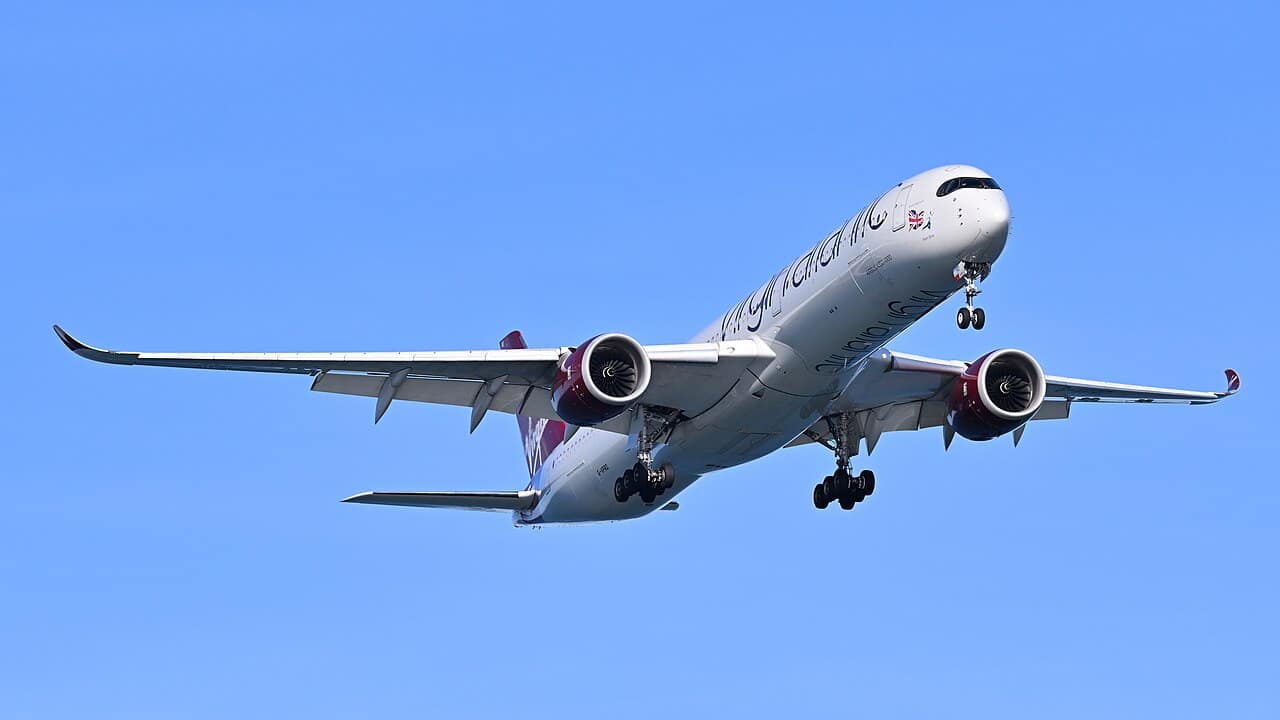
The Airbus A350-1000 never crossed the Atlantic. It got as far as the edge of Irish airspace, spent two hours drawing lazy circles off the coast, and then gave up and went home. It is one of the more surreal ways to spend an afternoon: a transatlantic flight to nowhere.
Datos rápidos
- Flight: Virgin Atlantic VS135, London Heathrow (LHR) to Orlando (MCO)
- Aeronave: Airbus A350-1000 (reg. G-VELJ, as reported)
- Departed: Heathrow, ~14:00 local, Monday 13 July 2026
- Time airborne: ~5 hours — none of it toward Orlando
- Reported cause: navigation system fault (per AIRLIVE)
- Resultado: returned to Heathrow ~19:00; flight cancelled
A U-turn at the edge of the Atlantic
VS135 lifted off from Heathrow at around 2:00 p.m. local time, climbed out over the west of England and set course for Florida. About an hour into the flight, as it reached the western edge of Irish airspace, the crew stopped heading west and started holding — flying a racetrack pattern off the Irish coast rather than pressing on across the ocean.
That holding pattern lasted roughly two hours. To the flight-trackers watching online, the aircraft’s trace looked like a knot tied over the Atlantic approaches. Eventually the crew made the call: not west to Orlando, but east, back to London.
Why circle for two hours first?
The delay before turning back is the interesting part. A widebody like the A350-1000 takes off heavy with fuel for a nine-hour ocean crossing — far heavier than its maximum permitted landing weight. Rather than slam back onto the runway overweight, crews will typically burn the fuel down first, holding in a safe block of airspace until the aircraft is light enough to land within limits. That is the most likely reason VS135 spent two hours going in circles before committing to the return.
According to an exclusive report by the aviation site AIRLIVE, the aircraft was dealing with a navigation system fault. Over the open ocean, where there are no ground-based navigation beacons and the crew relies on the jet’s own systems to know precisely where it is, a navigation fault is not something you carry across 4,000 miles of water. Turning back was the conservative, correct call.
Undramatic in the cabin, dramatic on the map
For all the online attention, this was not an emergency. No mayday, no evacuation, no drama in the cabin beyond boredom and disappointment. The A350-1000 is one of the most modern and reliable long-haul aircraft flying, and a precautionary return over a technical niggle is exactly the sort of unglamorous decision that keeps aviation as safe as it is.
The video below shows the same aircraft type flying the same Heathrow-to-Orlando route as it is supposed to go — all the way to Florida.
Virgin Atlantic rebooked the affected passengers, and VS135 was cancelled for the day. Somewhere in Orlando, a lot of very patient British families had to wait one more night for the sunshine.
Sources: AIRLIVE; TheTravel; flight-tracking data; Virgin Atlantic.

0 Comentarios