
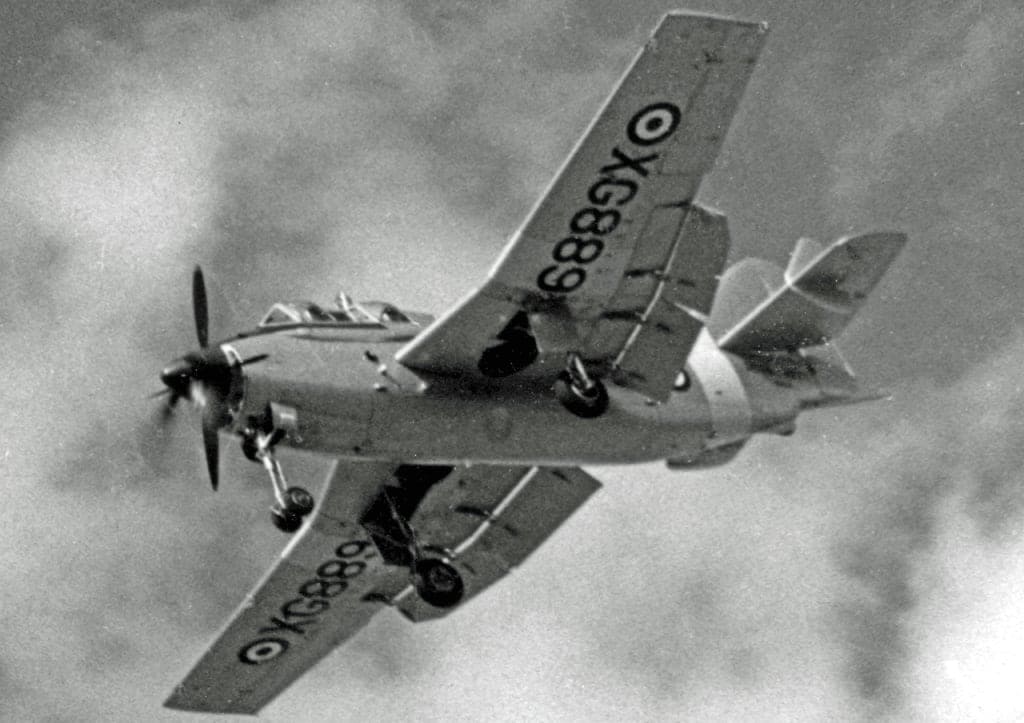
Head-on, the Fairey Gannet looked like something a committee had argued about and lost. A deep, humpbacked fuselage, a chin full of radar, and a nose crowded with eight spinning propeller blades stacked in two counter-rotating discs. It is one of the most awkward-looking aircraft the Royal Navy ever put to sea.
It was also brilliant at its job. Behind the ungainly shape sat one of the cleverest powerplants of the 1950s and a genuine aviation first — the first turboprop aircraft ever to land on an aircraft carrier.
Datos rápidos
- Aeronave: Fairey Gannet, carrier anti-submarine (and later early-warning) aircraft
- Operador: Royal Navy Fleet Air Arm, plus Australia, Germany and others
- Primero: First turboprop to land on a carrier — HMS Illustrious, 18 June 1950
- Motor: Armstrong Siddeley Double Mamba — two turboprops, one propeller hub
- Party trick: Shut down half the engine in the cruise to nearly double endurance
- Construido: Roughly 300 anti-submarine and 45 early-warning aircraft
Two engines, one propeller
The heart of the Gannet was the Double Mamba: two Armstrong Siddeley Mamba turboprops mounted side by side, each driving one of two coaxial propellers spinning in opposite directions on the same axis. The left engine turned the front propeller, the right engine the rear.
That layout solved a problem that had killed plenty of twin-engine pilots. Because the propellers were coaxial and contra-rotating, shutting one engine down produced no asymmetric thrust — the aircraft simply flew on the other half. So crews did exactly that. On a long patrol they would shut down one Mamba, dropping cruise speed from around 250 mph to about 170, and stretch their endurance from roughly three and a half hours to over five, swapping engines every half hour or so to even out the wear.
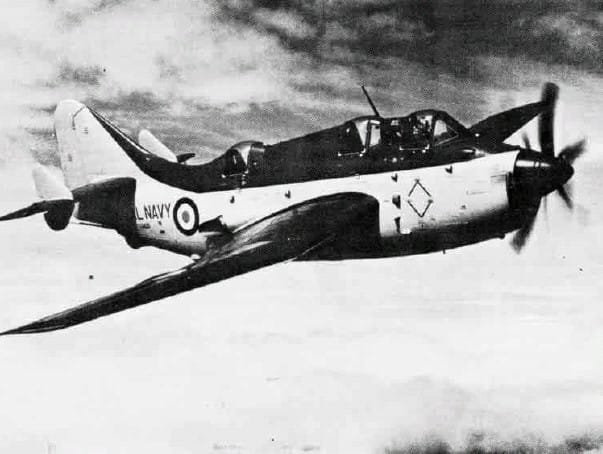
Starting it was a performance in itself. The front engine was fired by a cartridge; the rear was then wind-milled into life by the slipstream of the front propeller. Between that and the theatrical unfolding of its double-hinged wings, a Gannet coming to life on deck was quite a show.
Built for the deck
Everything about the Gannet was shaped by carrier life. The wings folded twice into a distinctive ‘Z’ to save precious hangar space. A sturdy nose-wheel undercarriage gave the pilot a good view over the nose, unlike the tail-draggers before it. Three crew squeezed aboard — a pilot, an observer running the tactical hunt, and a rear-facing radio operator.
The design so impressed the Fleet Air Arm’s most famous test pilot that his verdict was blunt.
A second life looking down
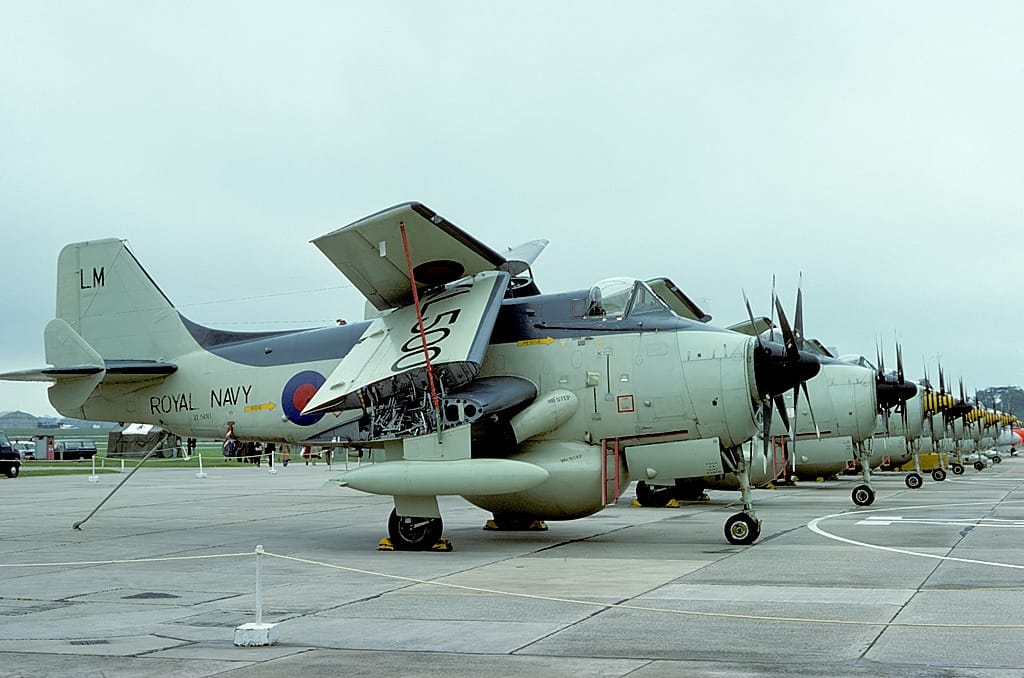
By the end of the 1950s, helicopters were taking over the submarine hunt, but the Gannet was too useful to retire. It was rebuilt as the AEW3, an airborne early-warning aircraft with a big belly radome and a more powerful engine, scanning the skies for the fleet. In that role it soldiered on until 1978, when the Royal Navy paid off its last fixed-wing carrier, HMS Ark Royal.
Around 300 anti-submarine Gannets and 45 early-warning versions were built, serving Britain, Australia and others. Awkward, clever and quietly indispensable, the Gannet was proof that in naval aviation, looking good has never been the point.
Sources: AvBuyer / GA Buyer Europe; Thunder & Lightnings; Royal Australian Navy Sea Power Centre; Wikipedia.
Publicaciones relacionadas
El cazador de submarinos que vigiló los océanos durante 60 años.
0 Comentarios