
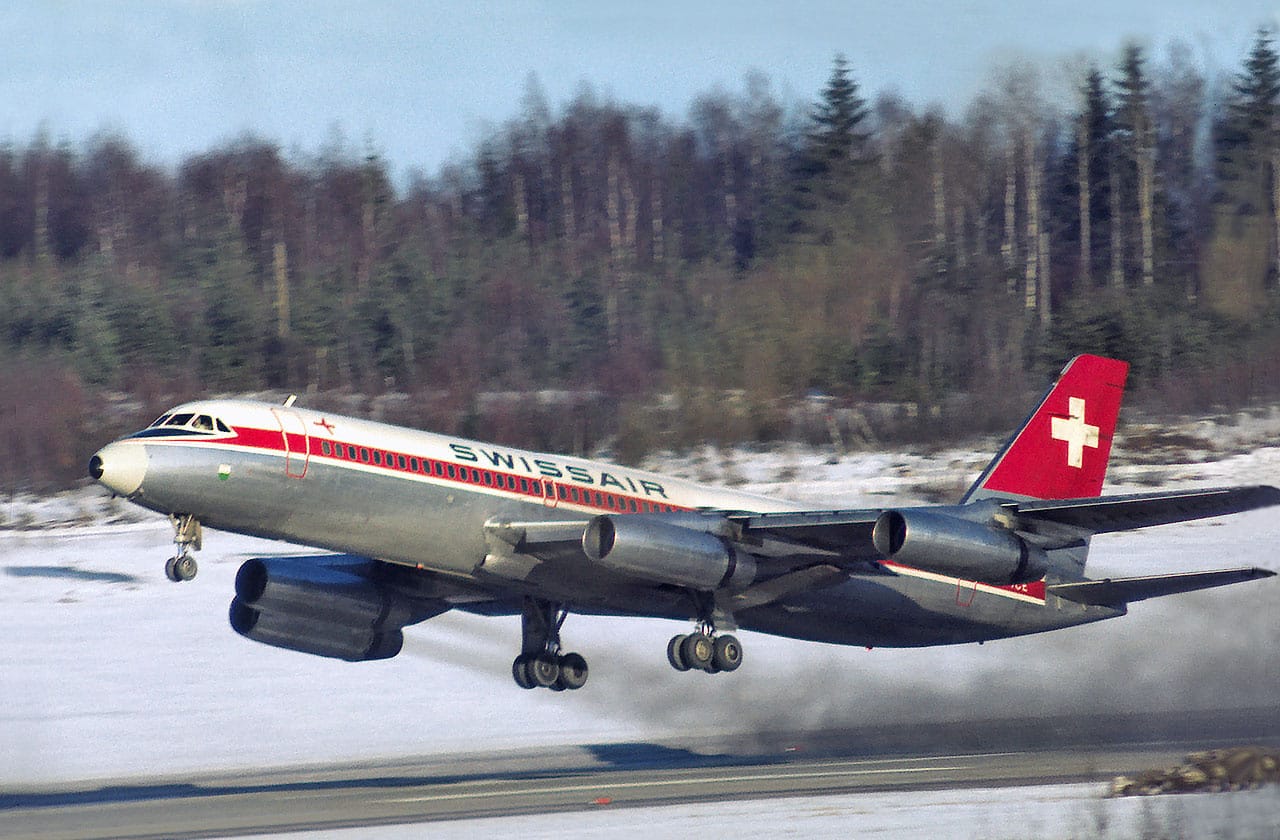
In the early 1960s, two American giants owned the jet age: Boeing’s 707 and the Douglas DC-8. Convair, a division of General Dynamics, decided it could not out-size them — so it tried to out-run them.
The result was the Convair 990 Coronado: a sleek four-engine jet with strange bulges on its wings and a single, audacious promise. It would be the fastest airliner in the sky. And it was — in cruise it ran markedly quicker than any 707 or DC-8, the fastest subsonic jet airliner ever built.
Almost nobody bought it. Just 37 were made before Convair pulled the plug, handing its parent company one of the biggest corporate losses in American business history. This is the story of a jet that won the race and lost the war.
Datos rápidos
| Tipo | Four-engine narrow-body jet airliner (a stretched Convair 880) |
| Fabricante | Convair, a division of General Dynamics |
| Primer vuelo | 24 January 1961 |
| Motores | Four General Electric CJ805-23 aft-fan turbofans |
| Velocidad | Cruised at about Mach 0.84 — 25 to 35 mph faster than a 707 or DC-8 |
| Firma | Four anti-shock “speed capsules” on the wings to delay transonic drag |
| Construido | Just 37 |
| Afterlife | NASA flew two as “Galileo” research aircraft |
Convair’s Gamble to Beat Boeing
Convair’s first jet, the 880, was fast but too small — airlines wanted seats, not speed records. American Airlines came back with a challenge: stretch it, and build a jet that could cross the United States nonstop against the wind. Convair lengthened the 880 and aimed for a machine that cruised closer to the speed of sound than anything else carrying passengers.
The Speed Bumps That Made It Fast
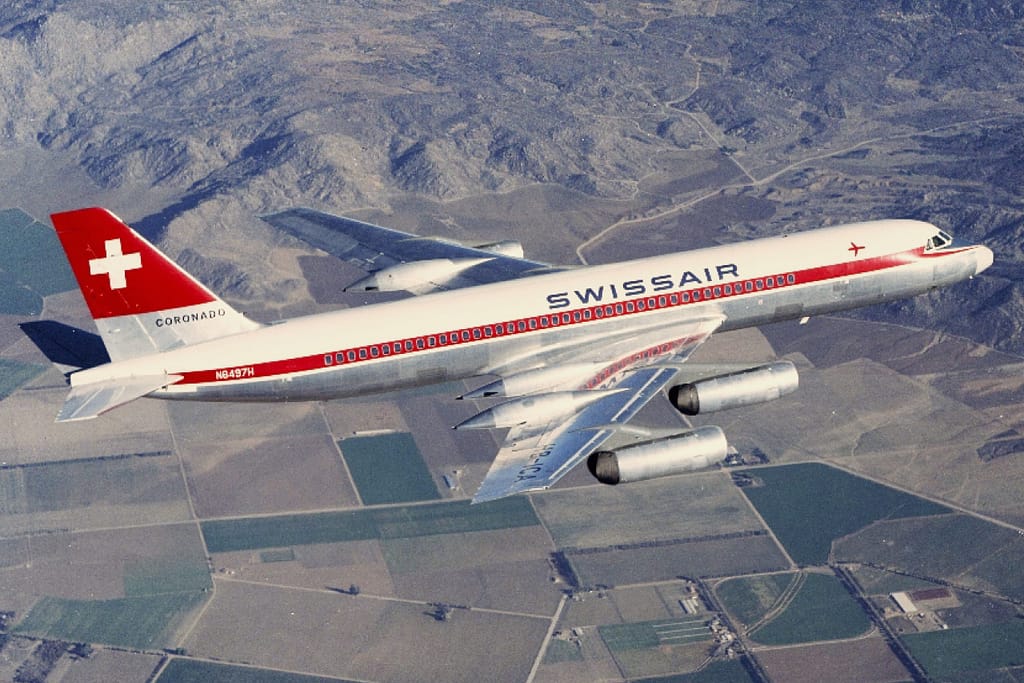
The 990’s signature is the row of four fairings on the trailing edge of the wing — anti-shock bodies, sometimes called “speed capsules.” Shaped on the transonic area-rule principle, they smoothed the airflow to raise the speed at which drag rises sharply near Mach 1. The larger inboard pods doubled as fuel tanks. Paired with rear-fan turbofans derived from a supersonic fighter’s engine, the Coronado was built to loiter close to Mach 0.9.
The story of the world’s fastest subsonic airliner.
Broken Promises and Reluctant Airlines
The physics did not fully cooperate. In everyday service the early 990 fell short of the speed guaranteed to American Airlines, because the anti-shock bodies produced more drag than predicted. A crash redesign eventually recovered the lost performance, but the jet never reliably delivered the coast-to-coast nonstop it was sold on. Swissair bought a handful and flew them hard to South America, Africa and the Far East.
Why the Coronado Flopped
Speed cost fuel. The 990 was too thirsty, too small in the cabin, and too late: Boeing’s later models captured its niche. Only 37 were built. The combined 880 and 990 programme handed General Dynamics one of the largest corporate losses in American history to that point, and Convair never built another airliner.
Why the fastest airliner was also a failure.
The Galileo Afterlife
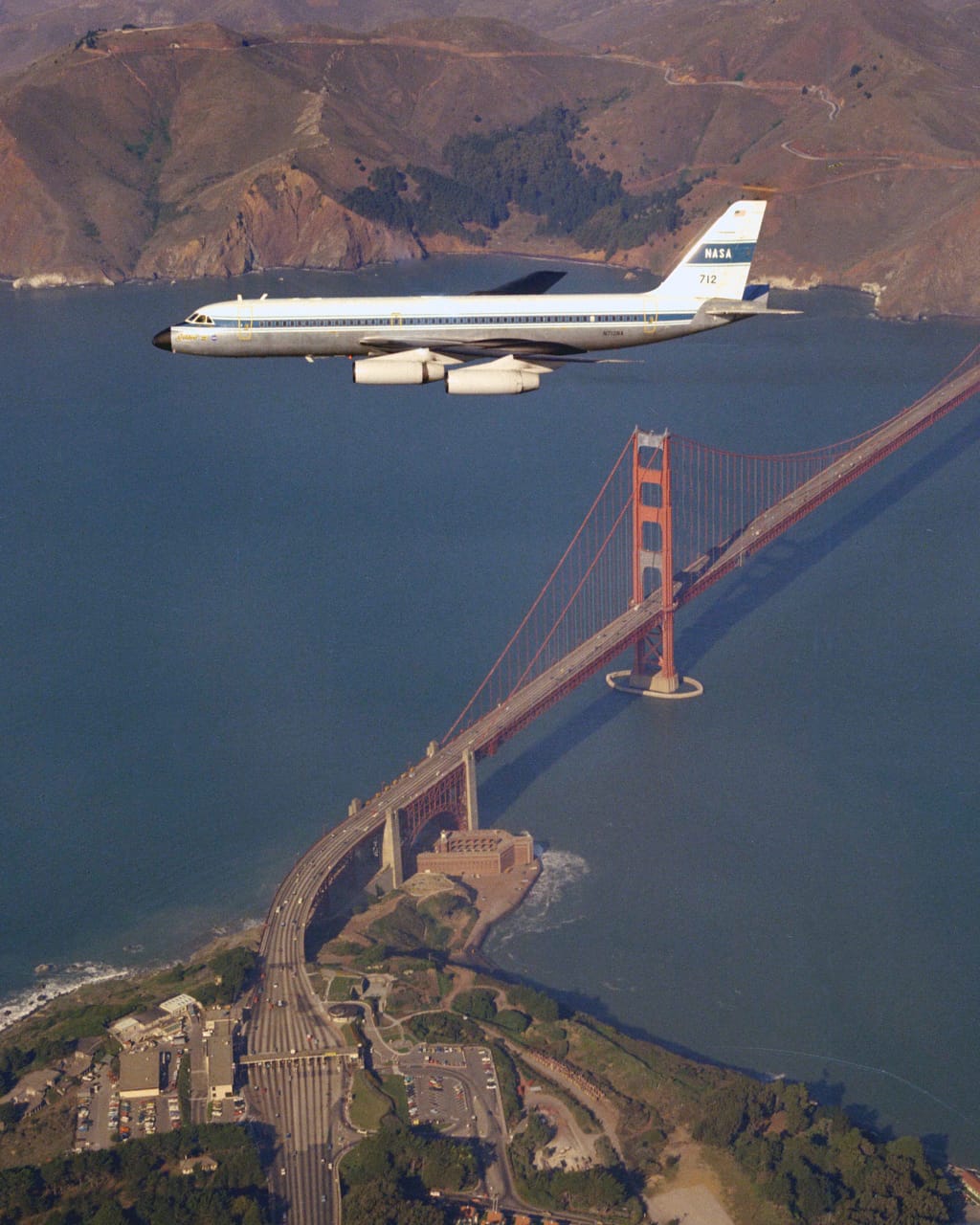
Retired Coronados found second lives with charter carriers, and NASA turned two into flying laboratories named “Galileo” and “Galileo II,” using them for atmospheric and astronomy research into the 1980s. One Swissair example survives in a museum in Lucerne.
The Coronado remains aviation’s classic beautiful failure — an engineer’s jet that was faster than it needed to be, in an era that just wanted cheaper seats.
The jet that was, in one telling, too fast to survive.
Sources: Wikipedia (Convair 990 Coronado); Aviation Week (1961); John T. Kutney Sr., AIAA (2007); NASA / Wikimedia Commons.
0 Comentarios