
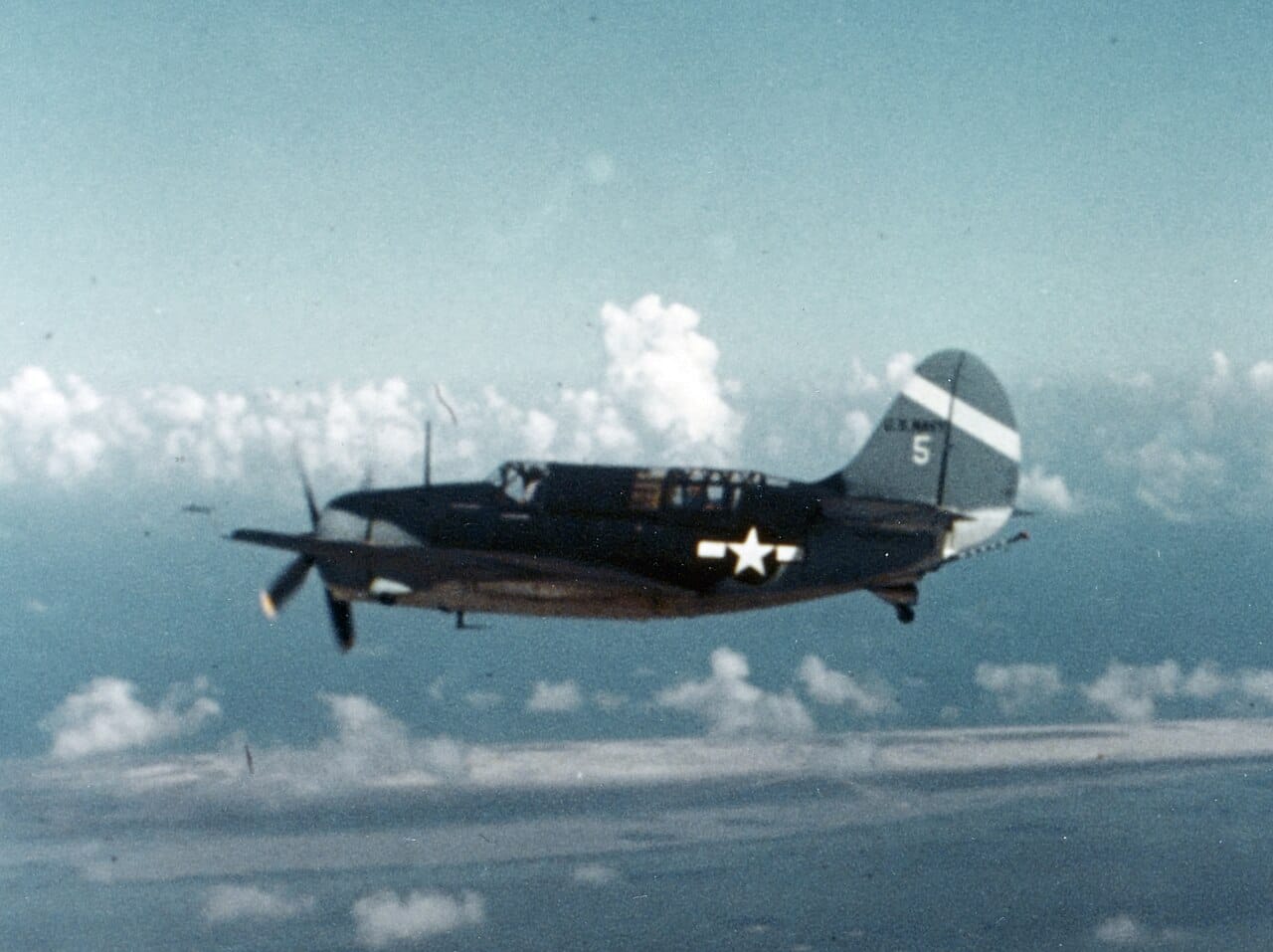
Its own crews called it “the Beast.” Less politely, they said the letters SB2C stood for “Son of a Bitch, 2nd Class.” An MIT professor who studied a model of it in a wind tunnel declared that anyone who built more than one would have to be insane. The U.S. Congress launched an investigation into how badly its development had gone.
And yet, by the end of the Second World War, the Curtiss SB2C Helldiver was the most important carrier bomber in the United States Navy, and had helped send two of the largest battleships ever built to the bottom of the Pacific. This is the story of an aircraft everyone loved to hate — that won the war anyway.
Datos rápidos
- Aeronave: Curtiss SB2C Helldiver, U.S. Navy carrier dive bomber; first flew 1940
- Nicknames: “the Beast,” “Big-Tailed Beast,” and “Son of a Bitch, 2nd Class”
- Job: to replace the beloved Douglas SBD Dauntless
- Troubles: 880 modifications demanded before the Navy would accept it; a scathing Congressional (Truman Committee) report
- Redemption: helped sink the battleships Musashi and Yamato
- Construido: 7,140 — the last purpose-built dive bomber
Born Compromised
The Helldiver was doomed by its own requirements. The Navy wanted a dive bomber bigger and more powerful than the Dauntless, able to haul a heavy load a long way — but it also had to be short enough to fit two aircraft on an aircraft-carrier elevator. The designers were asked to make a plane that was huge on the inside and tiny on the outside, and the compromise produced a stubby fuselage that was chronically unstable in flight.
The fix — a giant vertical tail, which gave the aircraft its “Big-Tailed Beast” nickname — never fully cured the problem. The first prototype crashed. The second broke apart in a dive. And by the time the Navy finished demanding changes, it had insisted on some 880 modifications, adding nearly half again to the aircraft’s weight. Congress’s Truman Committee investigated the fiasco and helped push the once-great Curtiss company into terminal decline.
The Beast Goes to War
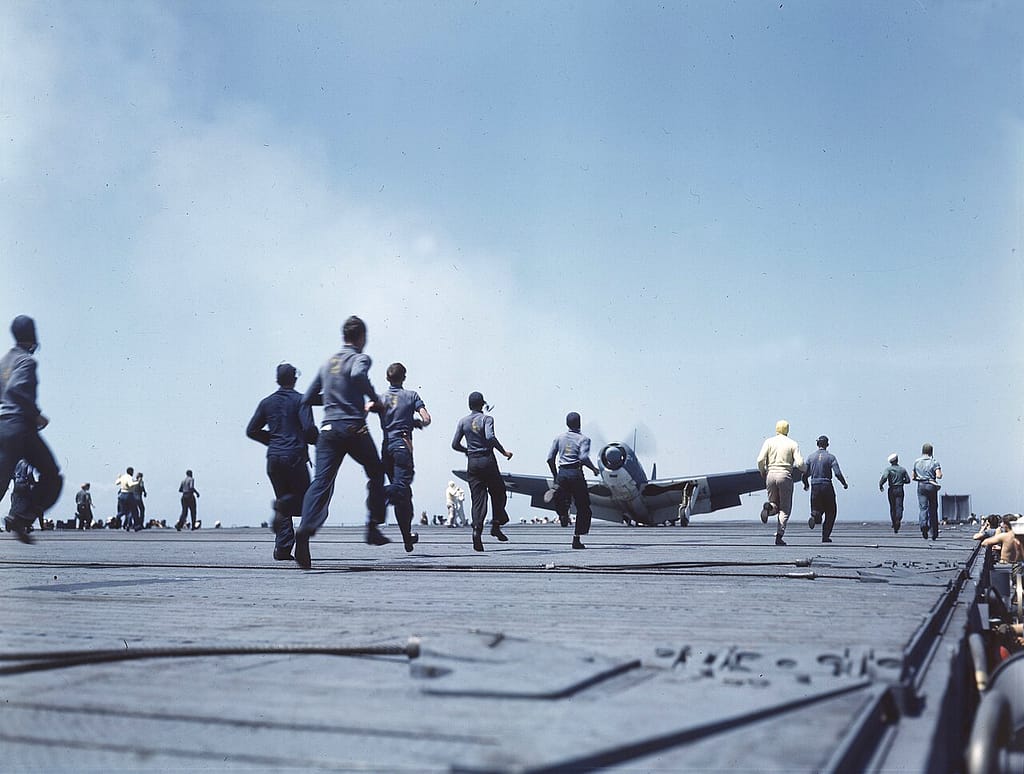
When the Helldiver finally reached combat in late 1943, the reviews were brutal. It was underpowered, shorter-ranged than the aircraft it replaced, temperamental to maintain, and a handful to land. At the Battle of the Philippine Sea, 45 Helldivers were lost in a single night — not to the enemy, but simply running out of fuel on the long flight home from an extreme-range strike.
Then, slowly, it got better. A more powerful engine and a four-bladed propeller arrived and cured the chronic lack of power. Crews learned its quirks. And the one thing the Beast could always do — put a heavy bomb precisely onto a target from a screaming vertical dive — began to tell.
The Battleship Killer
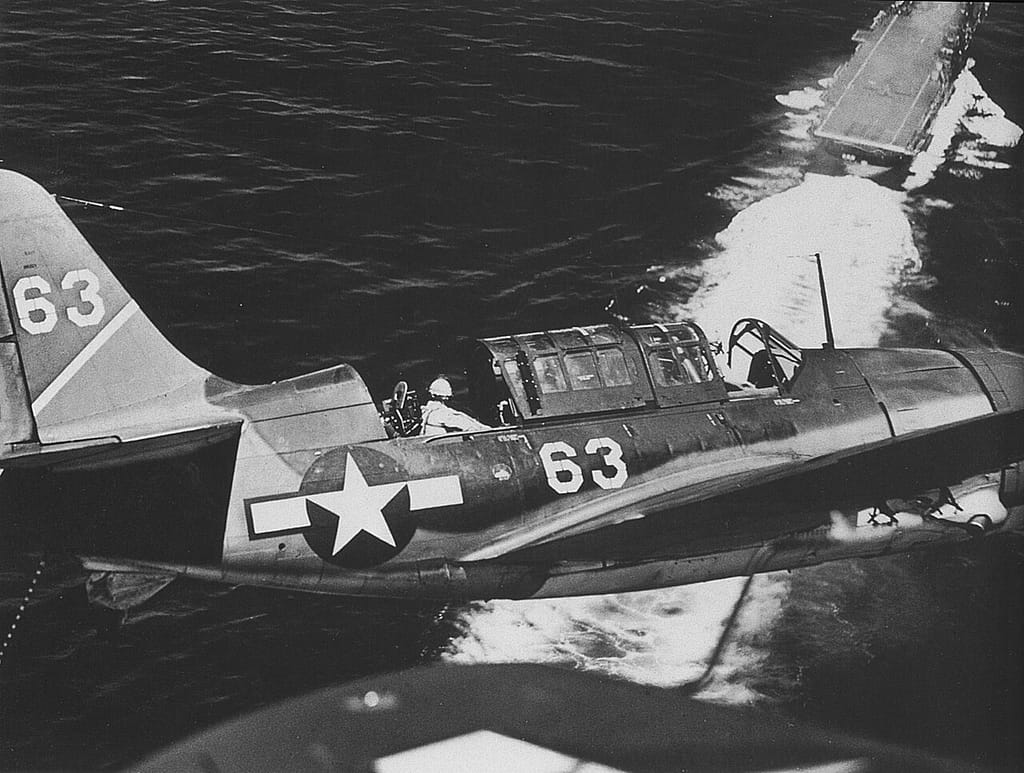
In the great carrier battles of 1944 and 1945, the Helldiver came into its own. Its dive bombers helped overwhelm and sink the Musashi at Leyte Gulf and the Yamato off Okinawa — the two heaviest battleships ever built. By the war’s end, the aircraft nobody wanted had become the backbone of the U.S. Navy’s carrier strike force, flying from the decks of the mighty Essex-class fleet.
It would be the last of its kind. The arrival of air-to-ground rockets meant no navy would ever again need a purpose-built dive bomber, and the Beast soldiered on into the 1950s in French and Greek hands — bombing over Indochina and in the Greek civil war — before finally being retired.
The SB2C Helldiver is the war’s great lesson that “unloved” and “ineffective” are not the same thing. It was awkward, ugly and cursed by its own crews — and it still helped win the war in the Pacific. Not every hero looks the part. Some of them are just a Son of a Bitch, 2nd Class.
Sources: Wikipedia; Robert Guttman, Historia de la aviación (“Curtiss SB2C Helldiver: The Last Dive Bomber”); Warfare History Network; Barrett Tillman, Helldiver Units of World War 2.
0 Comentarios