
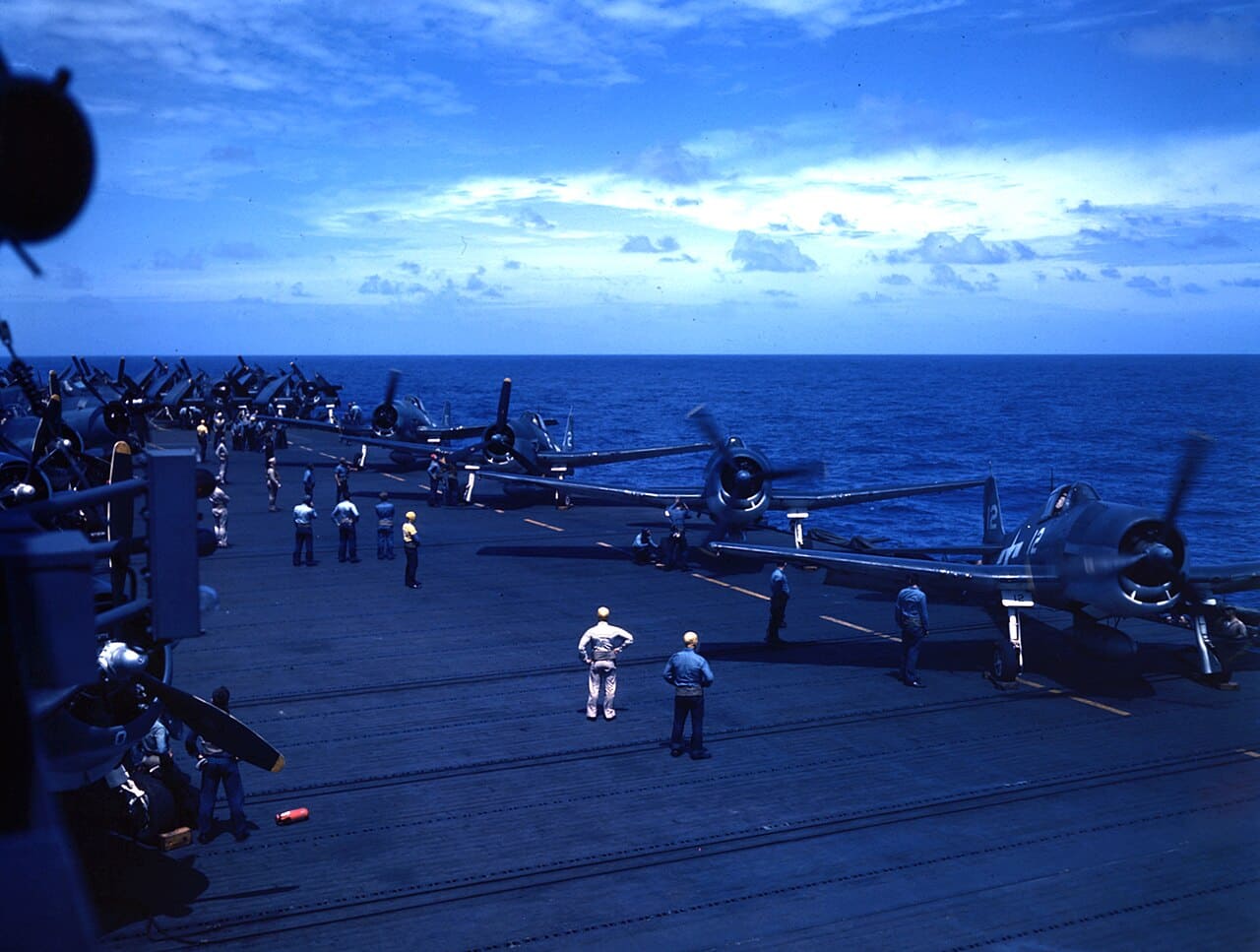
It is just after ten in the morning on 19 June 1944, and Lieutenant (junior grade) Alexander Vraciu is hanging in the blue over the Philippine Sea, hood back, oxygen mask tight, hunting. Below and ahead of his Grumman F6F Hellcat, a loose gaggle of Japanese dive bombers wallows toward the American carriers off Saipan. Vraciu picks one, closes until the bomber fills his windscreen, and squeezes. Six .50-caliber guns hammer; the bomber shudders and falls away trailing fire. He picks another. And another. In about eight minutes he downs six aircraft, and he is only one Hellcat pilot among hundreds.
By sundown, his shipmates would have a name for what they had just done. A young fighter pilot named Ziggy Neff, climbing out of his cockpit, summed it up for the whole U.S. Navy: it had been just like an old-fashioned turkey shoot. The phrase stuck. The aerial slaughter of 19–20 June 1944 — the heart of the Battle of the Philippine Sea — would forever be the “Great Marianas Turkey Shoot.”
It was the day Japanese naval aviation died. In two days, Japan lost the better part of the carrier air arm it had spent years building — and the United States lost comparatively little. This is how a single, lopsided afternoon ended the empire’s hopes of ever again fighting a great carrier battle.
Quick Facts: The Great Marianas Turkey Shoot
- When: 19–20 June 1944, the air battle of the Battle of the Philippine Sea
- Where: The Philippine Sea, west of the Mariana Islands (Saipan, Tinian, Guam)
- Who: U.S. Fifth Fleet under Adm. Raymond Spruance; carrier Task Force 58 under Vice Adm. Marc Mitscher; Japan’s First Mobile Fleet under Vice Adm. Jisaburo Ozawa
- Main U.S. weapon: The Grumman F6F Hellcat carrier fighter, backed by radar-guided fighter direction and proximity-fuzed anti-aircraft fire
- Japanese aircraft lost: Roughly 550–645 across the battle (sources vary); on 19 June alone, around 350 of some 370+ attacking carrier planes were destroyed
- Japanese carriers lost: Three — Taihō (submarine Albacore), Shōkaku (submarine Cavalla), and Hiyō (air strike, 20 June)
- U.S. aircraft lost: About 123, most in the night recovery of 20 June — only roughly two dozen in air combat
- Legacy: Japan’s carrier air arm was effectively destroyed and never recovered
A trap years in the making
By the summer of 1944, the war had turned. American shipyards were launching fleet carriers faster than Japan could imagine, and U.S. Marines were about to storm Saipan, deep inside Japan’s defensive perimeter. Lose the Marianas, and American B-29 bombers would be in range of the Japanese home islands. Tokyo understood the stakes perfectly. The Imperial Japanese Navy gathered its First Mobile Fleet — nine carriers and the bulk of its remaining naval aviators — for a decisive battle it called Operation A-Go.
The plan, drawn up by Vice Admiral Jisaburo Ozawa, was clever. His carrier aircraft had longer range than the Americans’, and he counted on hundreds of land-based planes on Guam and the other islands to join the attack. He would strike from beyond the reach of U.S. planes, shuttle his aircraft to the island airfields to refuel and rearm, and hit the Americans twice. On paper it was elegant. In practice, almost every assumption was already broken.
The animated breakdown above, from The Operations Room, walks through the geography and the fleet movements that set up the largest carrier-versus-carrier battle in history — 24 carriers and roughly 1,350 aircraft at sea.
What Ozawa did not fully grasp was how much had changed in the cockpits on the other side. The green, hastily trained pilots he was sending into battle would be flying against an American carrier force that had spent two years learning, refining, and arming itself for exactly this fight.
Why it was so lopsided
The Turkey Shoot was not luck. It was the product of advantages that had been stacking up for two years, and on 19 June they all arrived at once.
First, the aircraft. The Grumman F6F Hellcat was rugged, heavily armed with six .50-caliber machine guns, well armored, and fast in a dive. Against it, Japan still leaned heavily on the Mitsubishi A6M Zero — once a world-beater, now outclassed in nearly every category that mattered for a slugging match. A Hellcat could absorb hits that would have torn a Zero apart, then climb back into the fight.
Second, the people. American carrier squadrons were full of combat-tested aviators with hundreds of flight hours. Japan’s prewar elite had been bled white at Coral Sea, Midway, and over the Solomons. Their replacements often arrived at the front with only a fraction of the training, thrown into the most demanding combat flying on earth.
Third, and most decisively, the Americans could see the enemy coming. Shipboard radar picked up Ozawa’s raids while they were still far out, and skilled fighter-direction officers vectored Hellcats to the perfect altitude and position to pounce before the Japanese ever reached the fleet. When a few attackers did break through, they ran into a wall of anti-aircraft fire made deadlier by the new proximity (VT) fuze, which detonated shells near an aircraft without needing a direct hit.
Four waves, one massacre
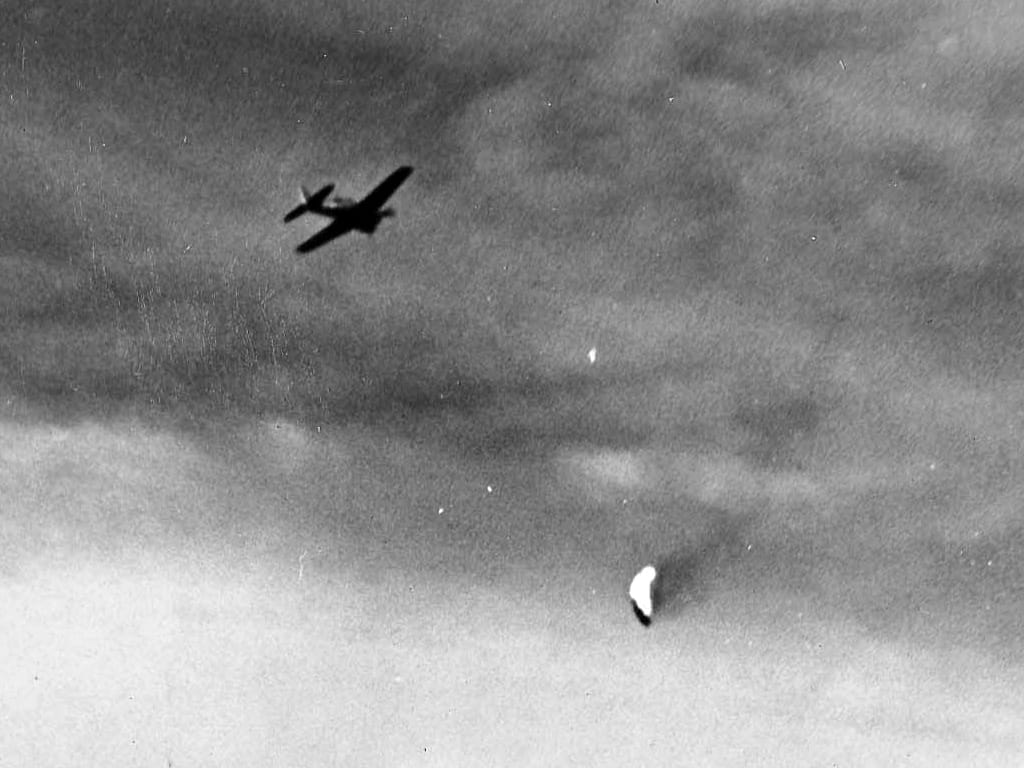
On the morning of 19 June, Ozawa launched his carrier planes in four great raids. American radar caught each one. Mitscher’s Hellcats climbed to meet them, and one by one the Japanese formations were torn apart over the open sea, in full view of the fleet they had come to destroy.
It was during this running slaughter that Lieutenant (j.g.) Ziggy Neff — a fellow Hellcat pilot who, by one account, came from a hunting background — tossed off the line that named the battle.
The arithmetic was brutal. Of the hundreds of carrier aircraft Ozawa threw at Task Force 58 on 19 June, only a fraction returned. American naval aviation and anti-aircraft fire destroyed somewhere around 350 of them that single day, against the loss of roughly two dozen Hellcats in air combat. Across the whole battle, Japanese aircraft losses ran to roughly 550 to 645 by various accounts — sources differ, but every one tells the same story of annihilation.
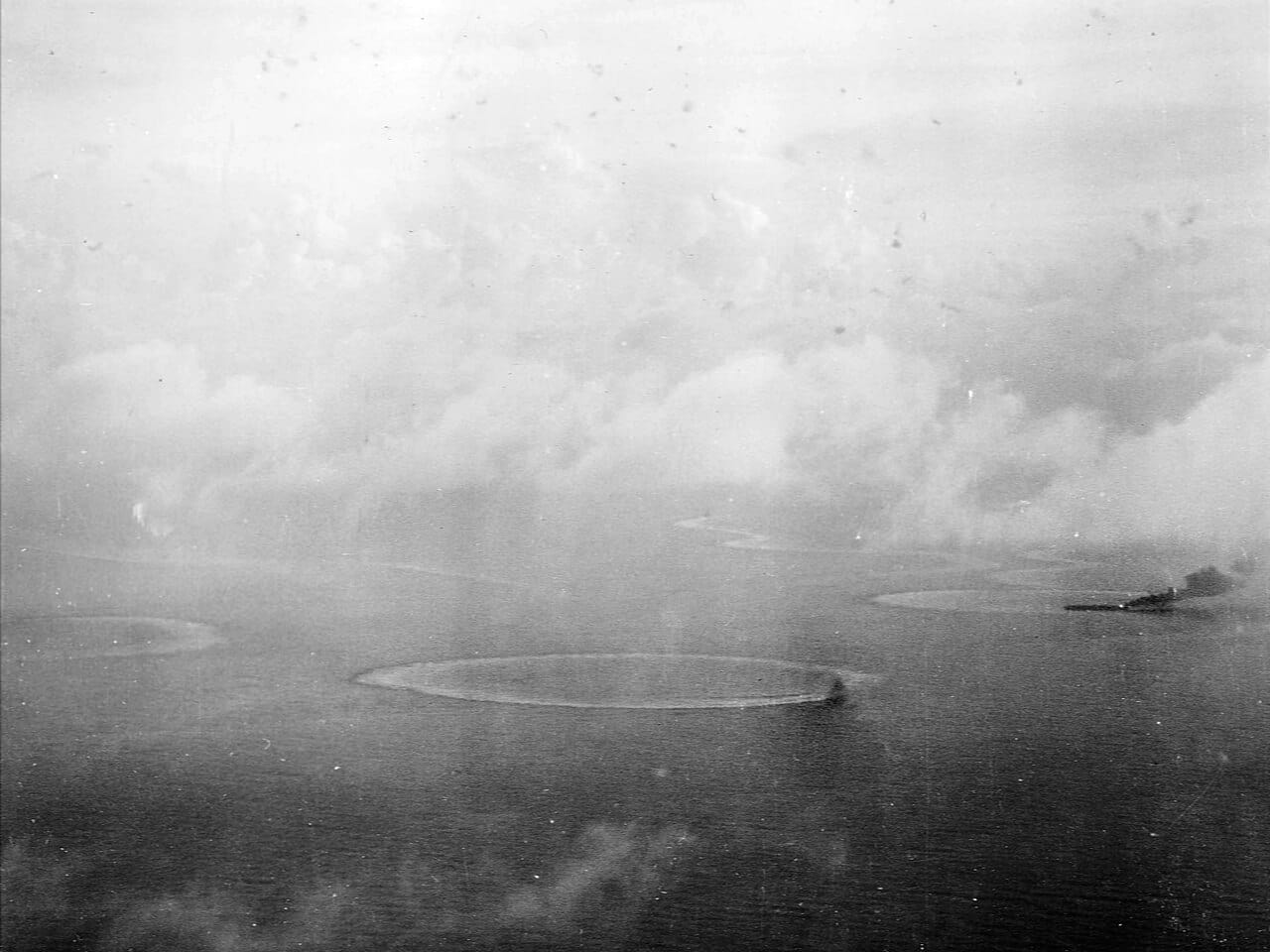
And the carriers themselves were dying too. While the dogfights raged, the U.S. submarine Albacore put a torpedo into Ozawa’s brand-new flagship Taihō; poor damage control turned leaking aviation fuel into a catastrophic explosion that sank her. Hours later the submarine Cavalla sent three torpedoes into the veteran carrier Shōkaku — a survivor of Pearl Harbor — and she too went down.
“Launch them anyway”: the strike at the edge of darkness
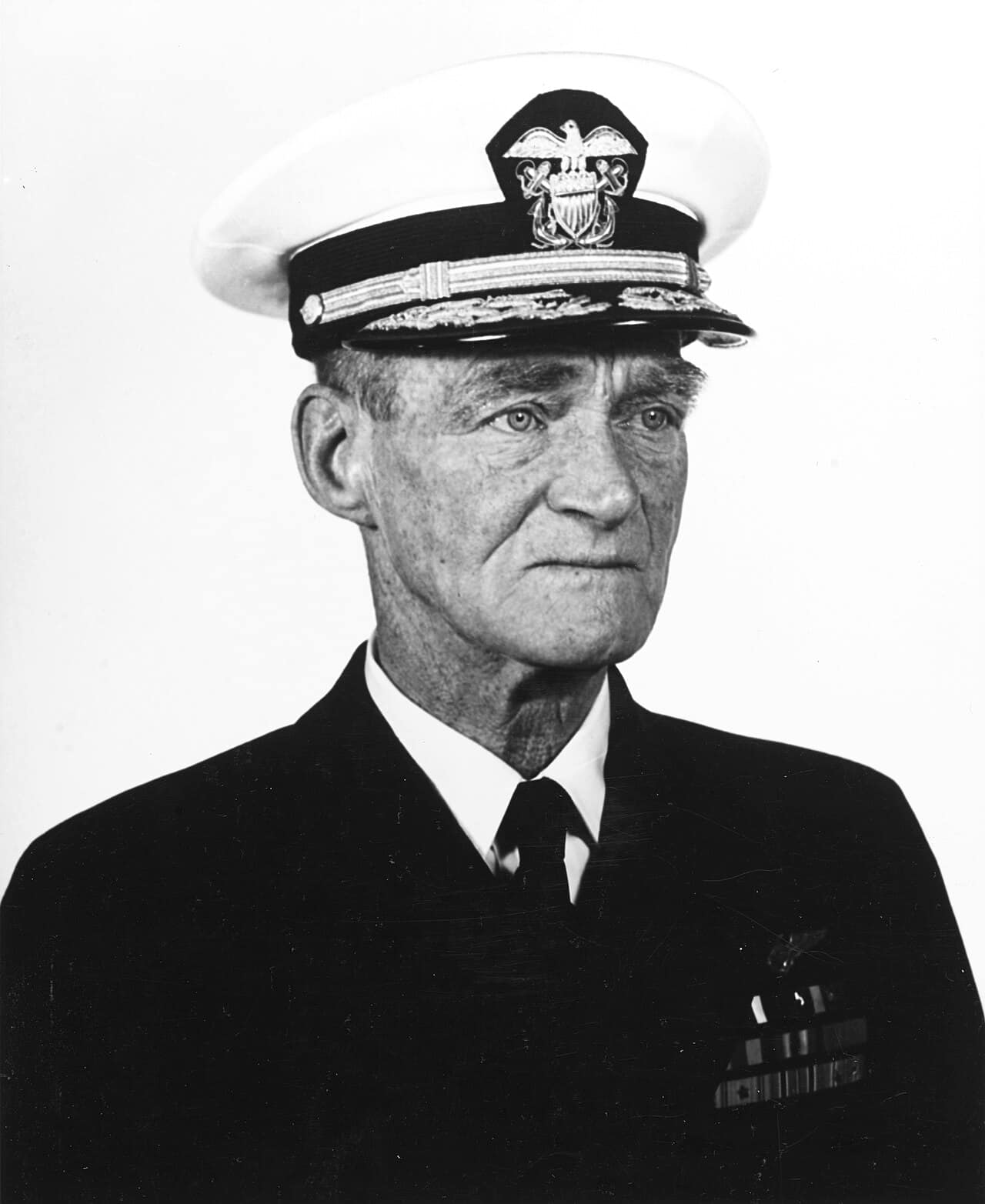
The next day, 20 June, the hunters became the pursuers. Ozawa was retreating, and Mitscher wanted to finish the job — but his scouts did not pin down the fleeing Japanese fleet until late afternoon, at the very limit of his aircraft’s range. To strike meant his crews would have to fly out, attack, and then find their way home in the dark, many of them on fumes. Mitscher launched them anyway.
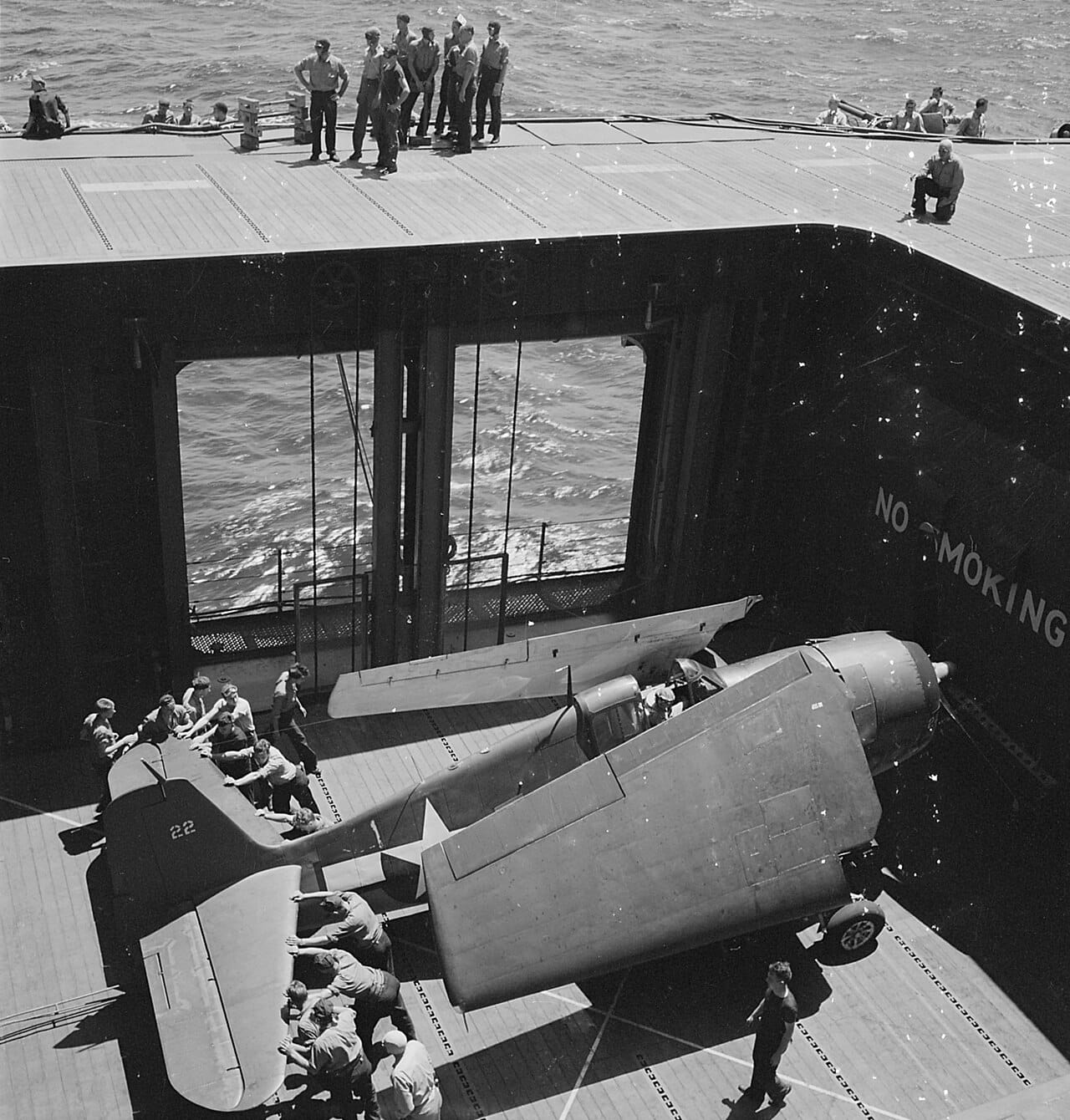
The strike sank the carrier Hiyō and damaged other ships, but the real drama came on the way home. As the sun went down, more than 200 American aircraft were strung out over a black ocean, fuel gauges falling, pilots straining to spot a wake or a shadow. Many would not make it back; the choice was to ditch in the dark or risk it all on a night landing few had ever practiced.
Then Mitscher did something that broke every rule in the book. With Japanese submarines possibly lurking, doctrine demanded total blackout. Instead, the soft-spoken admiral ordered his task force to light up — flight decks, searchlights, star shells, the works — so his lost airmen could find the fleet. The order that has echoed through naval history ever since was simple: turn on the lights.
The recovery that followed was chaotic. Planes landed on any deck they could find; some crashed, some ditched alongside, destroyers fished crews from the water through the night. The U.S. lost around 80 aircraft that evening to fuel exhaustion and crack-ups — the bulk of its roughly 123 aircraft losses for the whole battle — yet most of the aircrews were saved. Mitscher, a naval aviator himself, had decided that his men were worth the risk.
The day Japanese naval aviation died
Strategically, the Battle of the Philippine Sea was decisive. The Marianas fell, and within months B-29s were flying from their airfields toward the Japanese home islands. But the deeper wound was the one that could never heal: Japan had lost not just ships and planes, but the trained carrier aircrews it could no longer replace.
Some critics, especially the aviators, faulted Spruance afterward for fighting cautiously — for guarding the Saipan invasion rather than charging west to annihilate Ozawa’s fleet outright. The historian Samuel Eliot Morison, who chronicled the U.S. Navy’s war, weighed both sides and came down firmly on Spruance’s.
Whatever the merits of that debate, the result was beyond dispute. When the next great clash came at Leyte Gulf in October 1944, Japan’s carriers had so few aircraft and trained pilots left that they were reduced to serving as bait. The carrier air arm that had stunned the world at Pearl Harbor was gone — shot out of the sky in two June days over the Philippine Sea.
The period color footage above, compiled by World War 2 in Colour, shows the Hellcats, the carriers, and the scale of the fighting that earned the battle its grim nickname.
The men who flew that day did not call it a battle. They called it a turkey shoot — and they were right.
Sources: U.S. Naval History and Heritage Command; Wikipedia, “Battle of the Philippine Sea” and “Grumman F6F Hellcat”; Encyclopaedia Britannica; U.S. Naval Institute (Naval History magazine); Indiana Historical Society (Alex Vraciu); History.com; Navy Times.
Related Questions
What was the Great Marianas Turkey Shoot?
The Great Marianas Turkey Shoot was the nickname U.S. Navy aviators gave to the air battle of the Battle of the Philippine Sea on 19–20 June 1944. American carrier fighters, mostly F6F Hellcats, and anti-aircraft gunners destroyed the bulk of Japan’s carrier aircraft for very light U.S. losses, effectively ending Japanese naval aviation as a fighting force.
When did the Battle of the Philippine Sea take place?
The Battle of the Philippine Sea was fought on 19–20 June 1944 in the Philippine Sea, west of the Mariana Islands, during the U.S. invasion of Saipan. The aerial fighting on the first day produced the lopsided result that became known as the Great Marianas Turkey Shoot.
How many aircraft did Japan lose in the Battle of the Philippine Sea?
Estimates vary, but Japan lost roughly 550 to 645 aircraft across the battle. On 19 June 1944 alone, around 350 of the 370-plus Japanese carrier planes that attacked Task Force 58 were shot down, while the United States lost only about two dozen fighters in air combat that day.
Which Japanese carriers were sunk at the Battle of the Philippine Sea?
Three Japanese carriers were lost. The flagship Taihō was sunk after a torpedo from the submarine USS Albacore triggered a fuel explosion; the veteran Shōkaku was sunk by the submarine USS Cavalla; and the Hiyō was sunk by a U.S. carrier air strike on 20 June 1944.
Why was the F6F Hellcat so effective in the Turkey Shoot?
The Grumman F6F Hellcat was fast, heavily armed with six .50-caliber guns, well armored, and rugged. Combined with radar-guided fighter direction, proximity-fuzed anti-aircraft fire, and far more experienced American pilots, it overwhelmed the outdated Japanese Zeros flown by poorly trained replacement aircrew.
What did Admiral Mitscher mean by "turn on the lights"?
On the night of 20 June 1944, Vice Admiral Marc Mitscher ordered his ships to illuminate their decks and searchlights so that aircrews returning from a long-range strike, low on fuel and flying in darkness, could find the fleet. The order broke blackout doctrine but saved most of the aircrews who would otherwise have ditched at sea.
Who commanded the forces at the Battle of the Philippine Sea?
The U.S. Fifth Fleet was commanded by Admiral Raymond Spruance, with the carriers of Task Force 58 under Vice Admiral Marc Mitscher. Japan’s First Mobile Fleet was commanded by Vice Admiral Jisaburo Ozawa.
Why is the Battle of the Philippine Sea considered so important?
It eliminated Japan’s ability to fight a major carrier battle. Japan lost three carriers and most of its remaining trained carrier aircrew, losses it could not replace. The United States secured the Marianas, whose airfields later launched B-29 raids against Japan, and Japanese carriers were reduced to a decoy role at Leyte Gulf months later.
0 Comments