
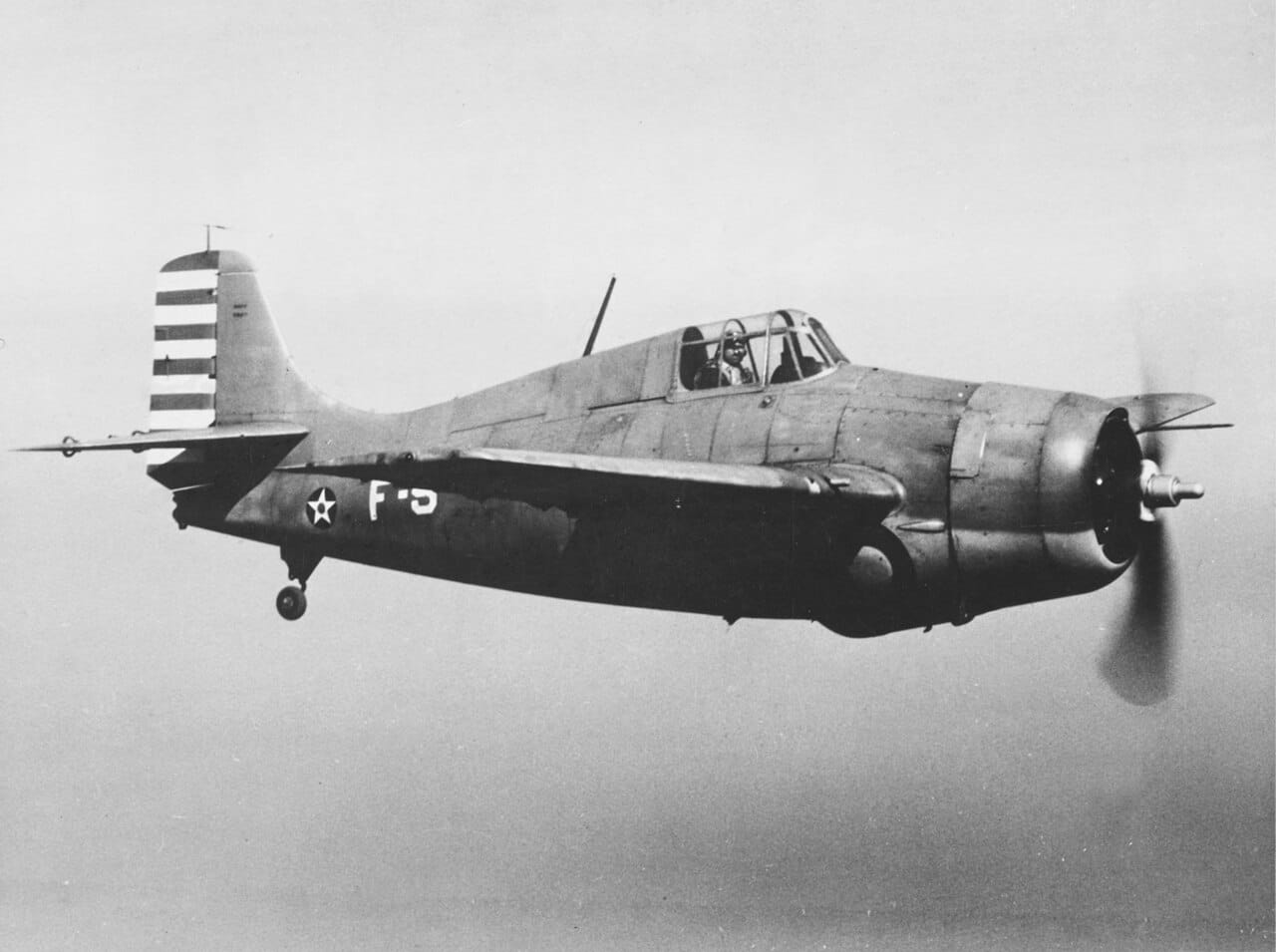
On the morning of December 8, 1941, the same Japanese offensive that had just shattered Pearl Harbor reached a speck of coral 2,000 miles to the west. Wake Island was barely three low islets around a lagoon — a refuelling stop with an airstrip, a few hundred Marines, and twelve fighter planes. What happened there over the next fifteen days became one of the great last stands in American history.
By the time it was over, a garrison the world had written off had sunk warships, shot down bombers, and held long enough to make an enemy bleed for every yard of sand.
Datos rápidos
- Battle: Defense of Wake Island, December 8–23, 1941
- Defenders: Fewer than 500 US Marines, plus sailors and ~1,200 civilian contractors
- Air unit: VMF-211, with 12 Grumman F4F-3 Wildcats
- First assault: Repulsed December 11 — two Japanese destroyers sunk
- Hero: Capt. Henry “Hammerin’ Hank” Elrod, first Marine aviator awarded the Medal of Honor in WWII
- Fell: December 23, to a second, far larger invasion
Twelve Wildcats, seven gone by lunch
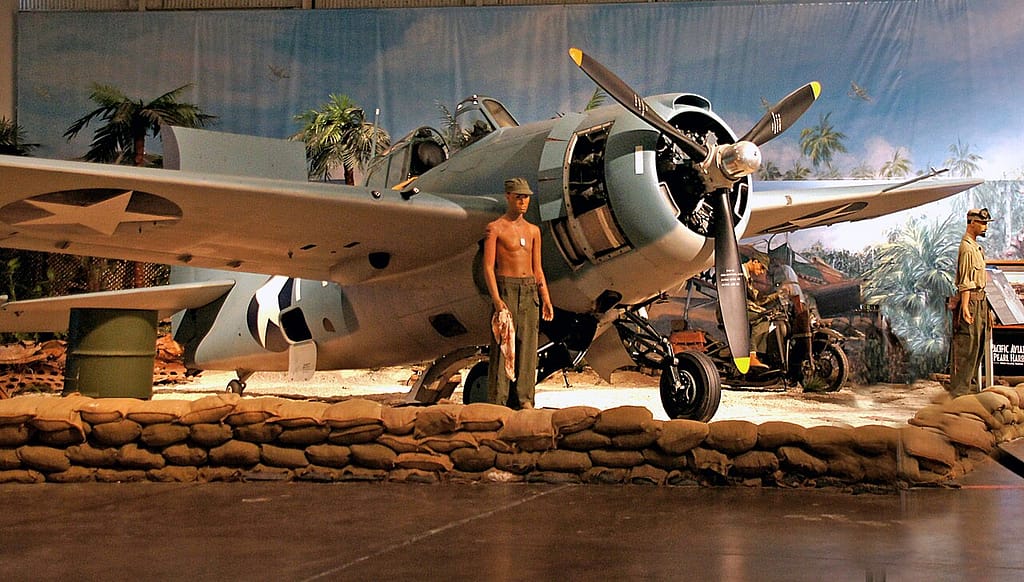
Wake’s air defense was Marine Fighting Squadron 211 — VMF-211 — which had flown its dozen stubby Grumman F4F-3 Wildcats off the deck of USS Enterprise only four days earlier. On the first morning, a formation of Japanese bombers came in low out of a rain squall and caught the fighters on the ground. Seven of the twelve were wrecked in minutes.
That left five. For the next two weeks, an ever-shrinking handful of Wildcats — cannibalised for parts, patched, flown by exhausted pilots — kept rising to meet the daily bombing raids.
The invasion that was thrown back
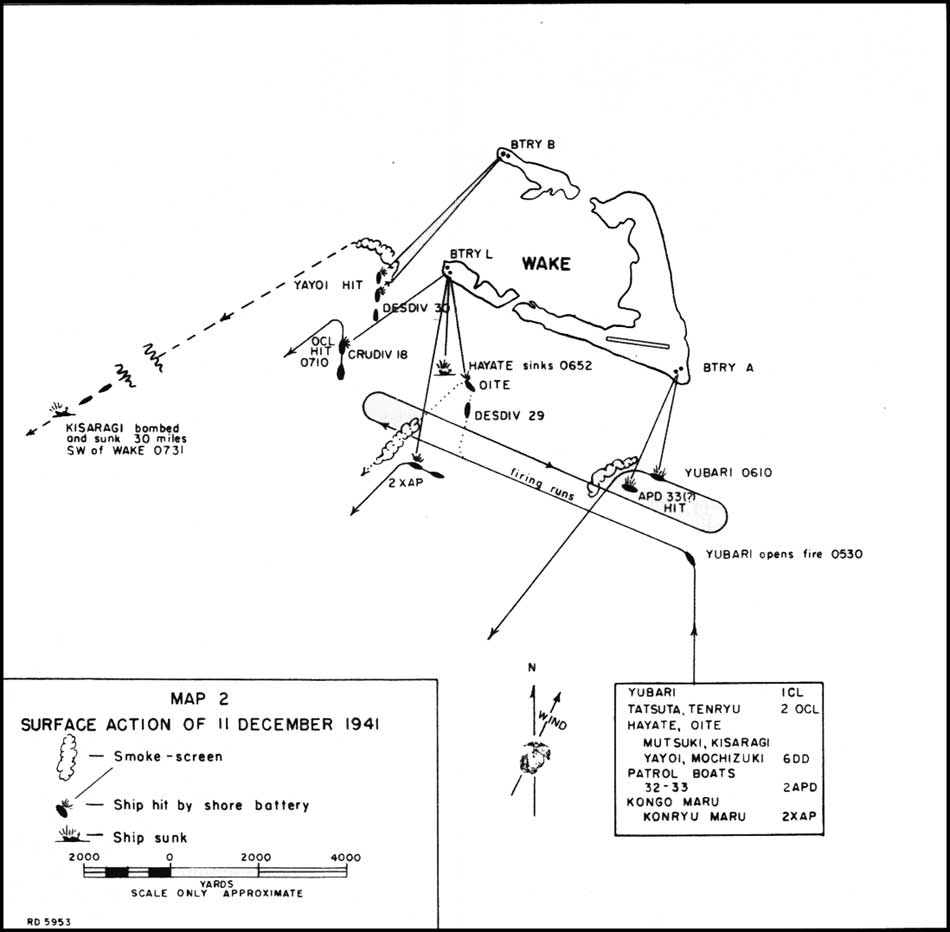
On December 11, the Japanese came to take the island outright, steaming in with cruisers, destroyers and troop transports. They expected a walkover. Instead, Wake’s hidden five-inch shore batteries held their fire until the ships were point-blank, then opened up — and the Wildcats fell on the fleet from above.
The destroyer Hayate blew apart under the shore guns, the first Japanese warship sunk by American forces in the war. Then Captain Henry Elrod, diving his Wildcat through anti-aircraft fire, put small bombs into the destroyer Kisaragi and sank her too. The invasion fleet turned and ran — the only time in the Pacific war that an amphibious assault was thrown back into the sea from the beach.
Hammerin’ Hank
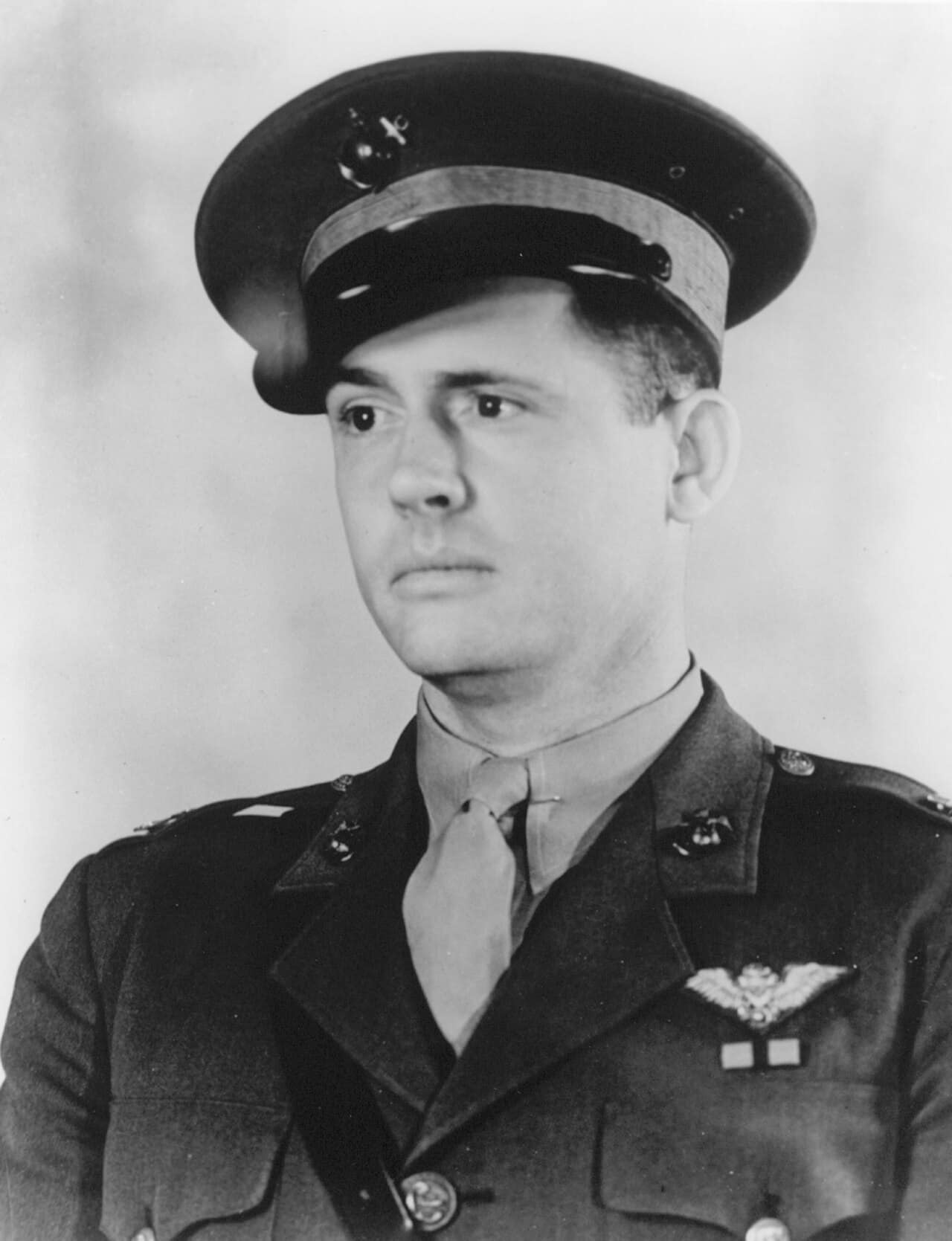
Henry Elrod became the face of the defense. Over the days of the siege he shot down two of a flight of 22 bombers and sank a warship with a fighter’s bombs — then, when the last Wildcat was gone, picked up a rifle and fought as infantry. He was killed on the final day, defending his position. He became the first Marine aviator to receive the Medal of Honor in the Second World War.
The message that was never sent
The legend that outran the battle was a single defiant line. Asked by headquarters what the garrison needed, Wake supposedly answered: “Send us more Japs!” It was printed across America and lifted a grieving nation’s spirits. It was also almost certainly never sent.
Commander Winfield Cunningham, the island’s senior officer, had actually radioed a long list of what Wake really needed: fighter parts, gunsights, fire-control radar. Major James Devereux, who led the Marine defense, spent years afterward patiently explaining that no one on Wake ever asked for more of the enemy. The truth was grimmer and braver than the myth: they simply kept fighting with what little they had.
The end, and the legend
On December 23 the Japanese returned in overwhelming strength and landed under cover of darkness. After hours of close, confused fighting in the dark, with no relief force coming, Cunningham ordered the surrender. Most of the garrison spent the rest of the war in prison camps; in a later atrocity, the Japanese executed 98 civilian contractors held on the island.
Wake fell — but the way it fell mattered. In the bleak weeks after Pearl Harbor, a few hundred men and a dozen worn-out fighters had shown that the enemy could be hurt. America called them the heroes of Wake, and the story of the little garrison that refused to quit became a rallying cry for a nation just learning how to fight back.
Sources: Wikipedia; US Marine Corps history; Congressional Medal of Honor Society; Naval History Magazine; Gregory Urwin, “Facing Fearful Odds.”
0 Comentarios