
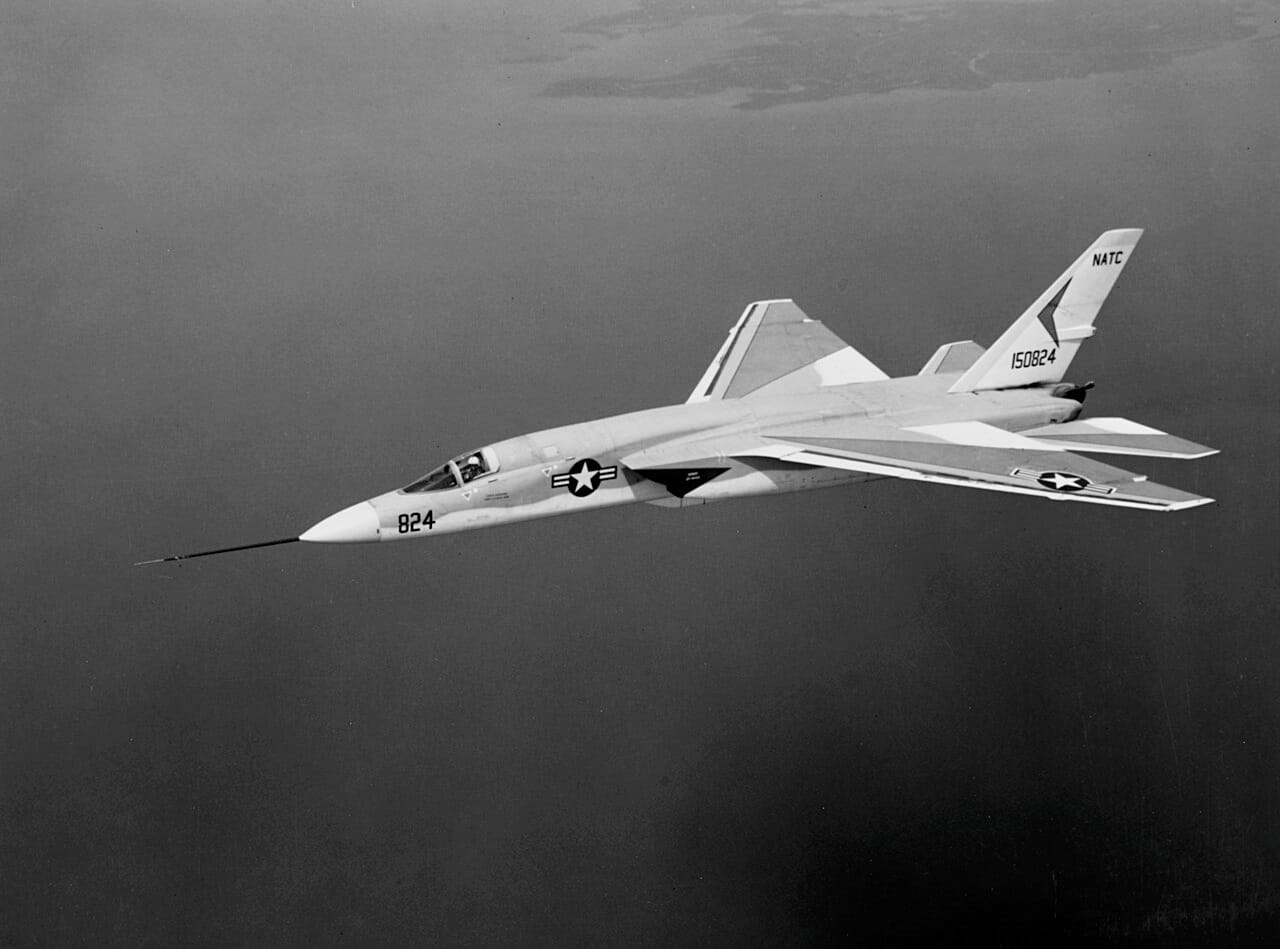
Puede que sea el avión más hermoso que la Armada de los Estados Unidos haya enviado jamás al mar: largo, increíblemente elegante, con doble aleta y diseñado para despegar a dos veces la velocidad del sonido desde la cubierta de un portaaviones. El North American A-5 Vigilante parecía sacado de una década futura. Sin embargo, como bombardero nuclear, fue un fracaso casi total, frustrado por una idea brillante que simplemente se negó a funcionar.
La historia del Vigilante es la historia de esa idea, y de la segunda vida, inesperada, que encontró la aeronave una vez que todos abandonaron la primera.
Datos rápidos
| Aeronave | North American A-5 Vigilante (originalmente designado A3J) |
| Primer vuelo | 1958 |
| Actuación | Mach 2 a gran altitud: algo extraordinario para un bombardero embarcado. |
| Adelantada a su tiempo | Sistema de control de vuelo electrónico primitivo, una computadora digital para el bombardeo y tomas de aire variables en el motor. |
| El defecto | Una bahía de bombas “lineal” que expulsaba su arma hacia atrás y que nunca funcionó. |
| Segunda vida | Reconstruido como el RA-5C, el avión de reconocimiento rápido embarcado de la Armada. |
Un avión del futuro
Cuando realizó su primer vuelo en 1958, el Vigilante era increíblemente avanzado. Contaba con un sistema de control de vuelo fly-by-wire, una de las primeras computadoras digitales instaladas en un avión de combate para navegación y bombardeo, y rampas de entrada de aire variables que le permitían alcanzar Mach 2. Era más grande que algunos bombarderos contemporáneos, y aun así despegaba desde portaaviones. Todo en él era ambicioso, incluso la pieza que lo hizo fracasar.
Un perfil del leviatán supersónico de la Armada y las ideas que lo inspiraron.
La bodega de bombas que no funcionó
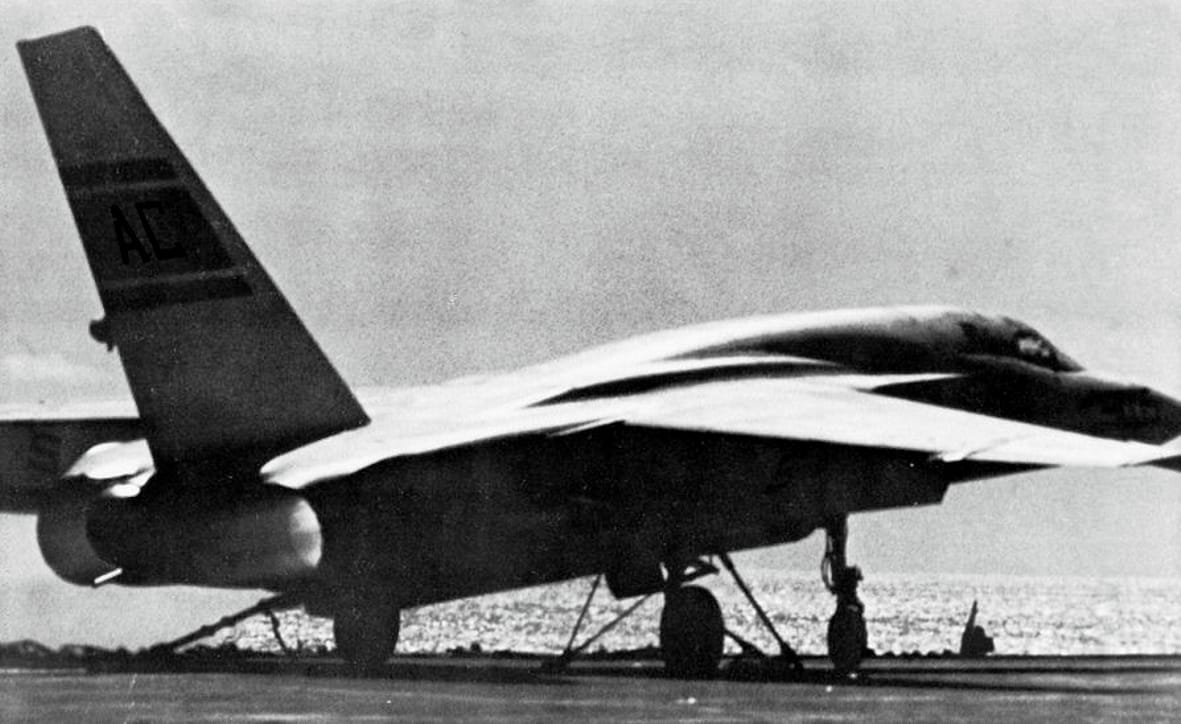
El arma nuclear del Vigilante no se transportaba bajo las alas ni en una bahía convencional. En cambio, se ubicaba en un largo túnel que discurría entre las dos locomotoras, acoplado a dos depósitos de combustible situados detrás. Al ser liberada, todo el tren salía despedido. hacia atrás La bomba salía por un orificio entre las toberas de escape; la teoría era que desaceleraría y caería limpiamente detrás del avión a reacción en movimiento. En la práctica, no sucedió nada parecido.
Un análisis más detallado del RA-5C y del sistema de lanzamiento lineal que condenó al bombardero.
Renacido como espía
En lugar de desechar un fuselaje excelente, la Armada lo reconstruyó. Como RA-5C, el problemático túnel se llenó de tanques de combustible —para alimentar los motores de alto consumo— y la aeronave se equipó con cámaras y sensores para convertirse en la plataforma de reconocimiento rápido de la flota. En Vietnam, el RA-5C fue invaluable, sobrevolando objetivos a gran velocidad para obtener imágenes que nadie más podía conseguir. Pero su velocidad misma exigía vuelos rectos, predecibles y de alta energía, y esto tuvo un alto costo: el Vigilante sufrió numerosas pérdidas en misiones de reconocimiento sobre Vietnam del Norte.
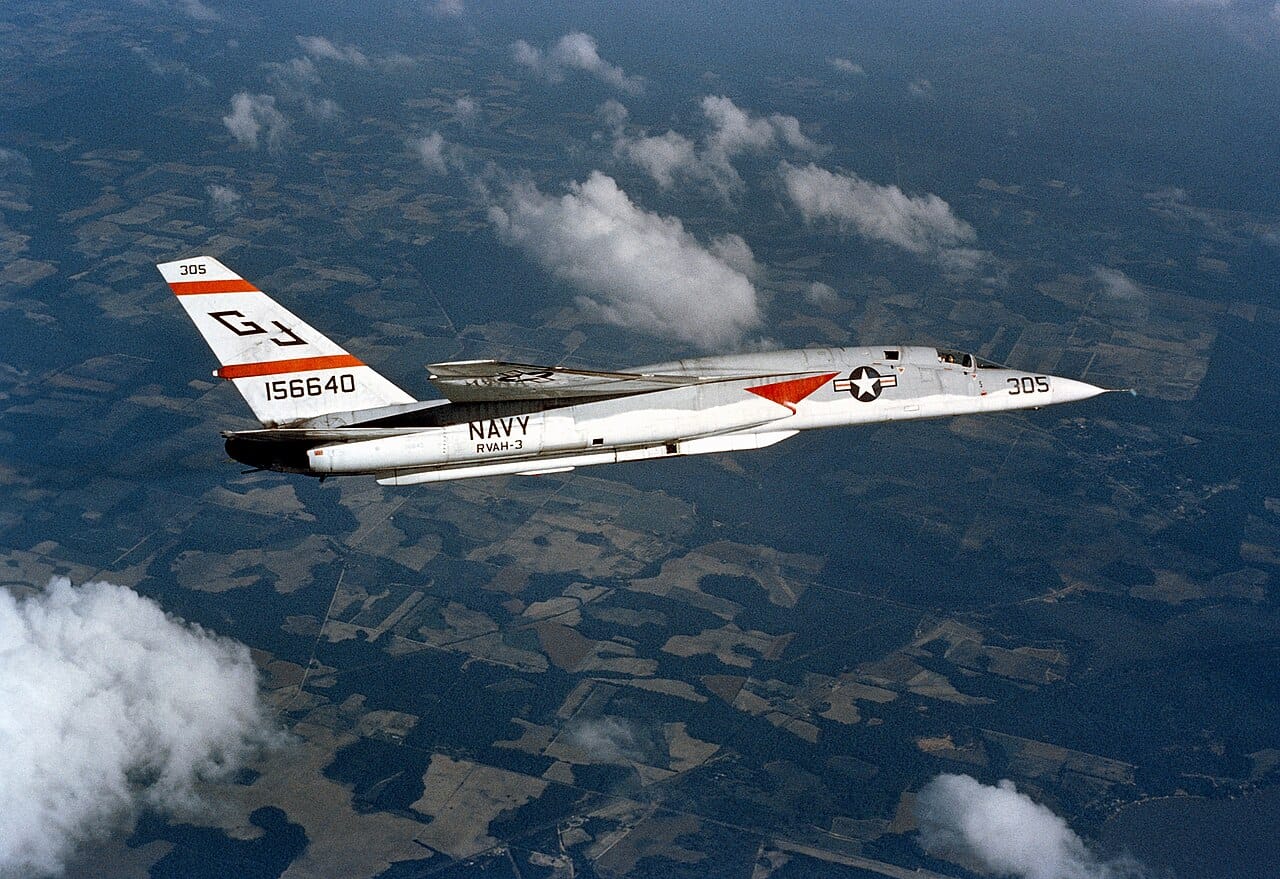
El auge y la caída de uno de los aviones más emblemáticos de la aviación naval.
Hermoso y condenado
Solo se construyeron alrededor de 150 Vigilantes, y a finales de la década de 1970 ya no estaban en servicio, dado que la Armada consolidó sus operaciones de reconocimiento con otros tipos de aeronaves. Lo que queda es uno de los ejemplos más conmovedores de lo que pudo haber sido en la aviación: una máquina tan adelantada a su tiempo que aspiraba a una capacidad que la tecnología aún no podía ofrecer. El Vigilante era más rápido, más elegante y más inteligente que casi cualquier otro avión de su época, y su gran innovación fue precisamente lo que justificó su propósito original. A veces, la solución más brillante se encuentra en el problema equivocado.
Fuentes: The Aviation Geek Club; Comando de Historia y Patrimonio Naval de los Estados Unidos; Archivos de Aviación de América del Norte.
Preguntas relacionadas
¿Qué era el North American A-5 Vigilante?
El A-5 Vigilante (originalmente designado A3J) era un bombardero embarcado bimotor de gran tamaño de la Armada de los Estados Unidos que realizó su primer vuelo en 1958 y podía alcanzar Mach 2. Construido para transportar un arma nuclear, incorporaba tecnología de vanguardia, pero su sistema de bombardeo falló y fue reconstruido como el avión de reconocimiento RA-5C.
¿Por qué fracasó el A-5 Vigilante como bombardero?
Su arma nuclear se ubicaba en una bahía de bombas lineal —un largo túnel entre los dos motores— acoplada a dos depósitos de combustible diseñados para ser expulsados hacia atrás por la cola. El mecanismo nunca funcionó de forma fiable, por lo que el Vigilante nunca logró cumplir su función prevista de ataque nuclear.
¿Qué hacía que el A-5 Vigilante fuera tan avanzado?
El Vigilante, que realizó su primer vuelo en 1958, contaba con un sistema de control de vuelo fly-by-wire pionero, uno de los primeros ordenadores digitales instalados en un avión de combate para navegación y bombardeo, y rampas de entrada de aire variables para alcanzar Mach 2; tecnología que estaba años por delante de sus contemporáneos.
¿Qué era el RA-5C Vigilante?
El RA-5C fue la versión de reconocimiento del Vigilante y representó la exitosa segunda vida de la aeronave. Tras el fracaso del concepto de bombardero nuclear, la Armada de los Estados Unidos reconstruyó la rápida y ágil aeronave de gran altitud, convirtiéndola en su principal avión de reconocimiento embarcado.
¿Era el A-5 Vigilante un avión embarcado?
Sí. Aunque más grande que algunos bombarderos terrestres, el Vigilante Mach 2 se lanzaba y recuperaba de los portaaviones en una cubierta de vuelo oscilante. Sirvió en la misma época que aviones más pequeños de la Armada como el A-4 Skyhawk.
¿Se considera al A-5 Vigilante un avión bonito?
El Vigilante suele ser considerado uno de los aviones más bellos que la Armada de los Estados Unidos haya enviado al mar: largo, elegante y con doble aleta, parecía haber llegado del futuro. Aparece regularmente en las listas de Los diseños más elegantes de la aviación.
Publicaciones relacionadas
El A-6 Intruder: La leyenda de la Armada para todo tipo de clima

0 Comentarios