
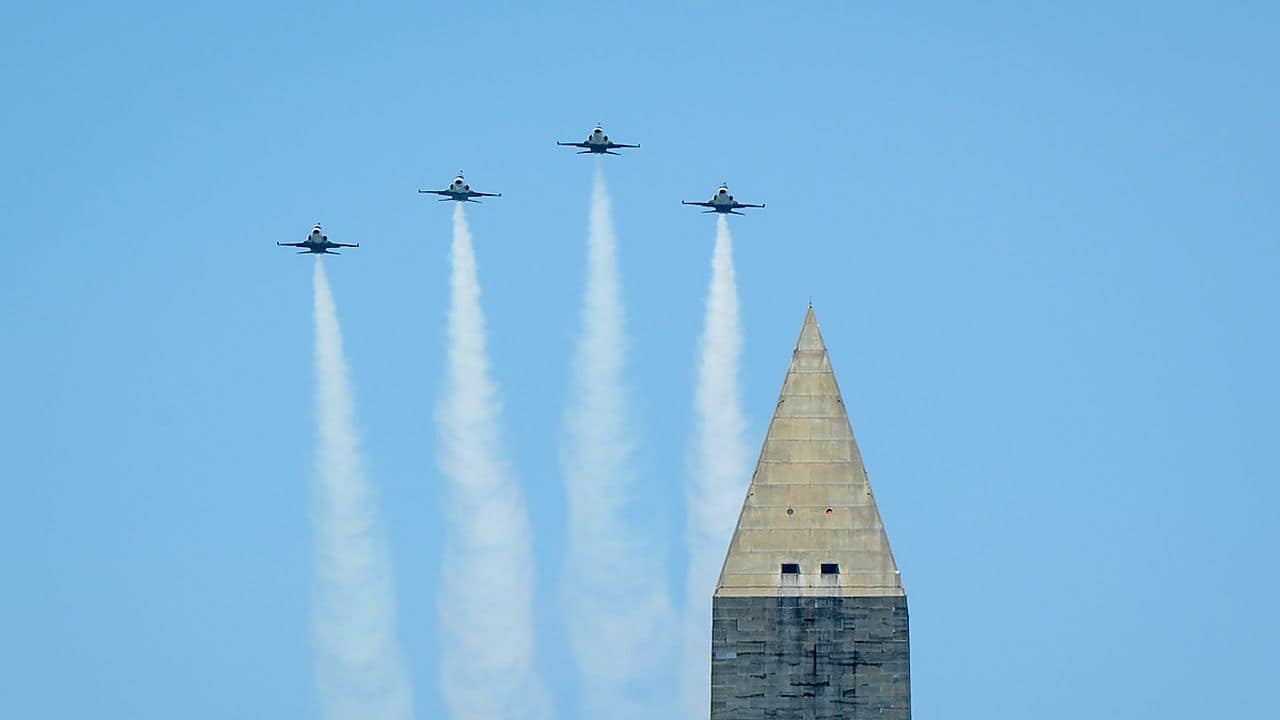
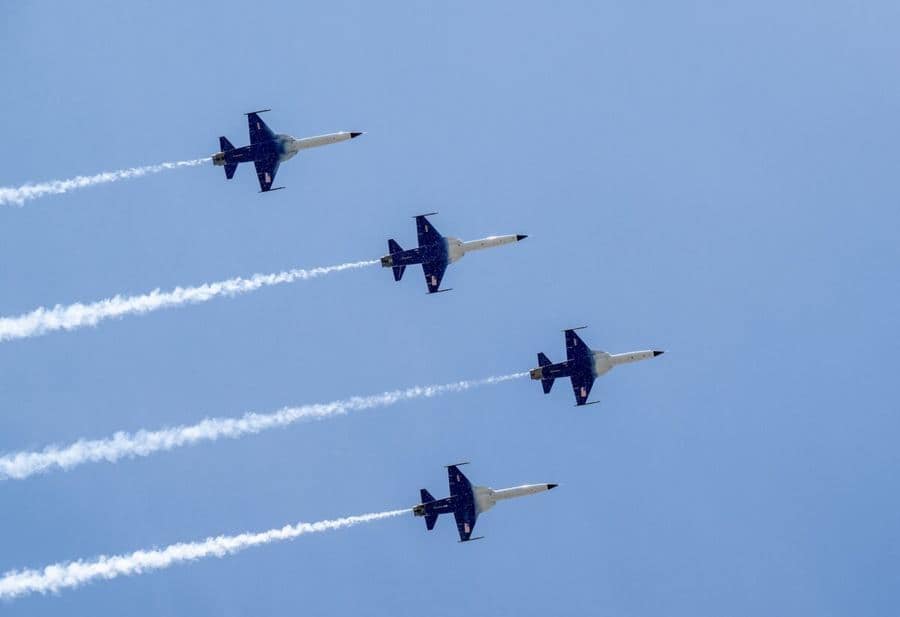
El termómetro marcaba más de 100 grados Fahrenheit, la multitud en el National Mall había estado sofocada desde la mañana, y en algún lugar por encima de la bruma cuatro F-5 Los aviones Tigre se estaban formando. Uno de ellos era pilotado por el propio administrador de la NASA. Eran las 13:14 del 4 de julio de 2026, y la celebración del 250 aniversario de Estados Unidos estaba a punto de pasar las próximas nueve horas en el cielo.
Lo que siguió fue, por la cantidad de aeronaves y la ambición desmedida, uno de los mayores espectáculos aéreos jamás realizados sobre una ciudad estadounidense: todas las ramas de las fuerzas armadas, además de la NASA y la Guardia Costera, desfilaron en oleada tras oleada, desde equipos de paracaidistas hasta una formación de tres bombarderos y un flamante Air Force One. Ni siquiera la tormenta eléctrica que finalmente obligó a todos a abandonar el National Mall pudo ponerle fin: un solitario B-1 regresó al anochecer para encender sus postquemadores sobre los fuegos artificiales.
Datos rápidos: Sobrevuelo en homenaje a Estados Unidos
| Fecha | 4 de julio de 2026 — 250º aniversario de la independencia de Estados Unidos |
| Ubicación | National Mall, Washington, DC. |
| Duración | Más de nueve horas de vuelo programado (de 13:14 a después de las 22:00). |
| Participantes | Fuerza Aérea de EE. UU., Armada, Cuerpo de Marines, Ejército, Guardia Costera, NASA |
| Reflejos | Formación de tres bombarderos (B-52, B-1B, B-2), primera demostración de los Thunderbirds sobre la capital, los Blue Angels, el nuevo VC-25B Air Force One con F-22 escolta |
| Clima | Calor de más de 100 °F; tormentas eléctricas vespertinas interrumpieron varios actos. |
Una revista naval en el cielo
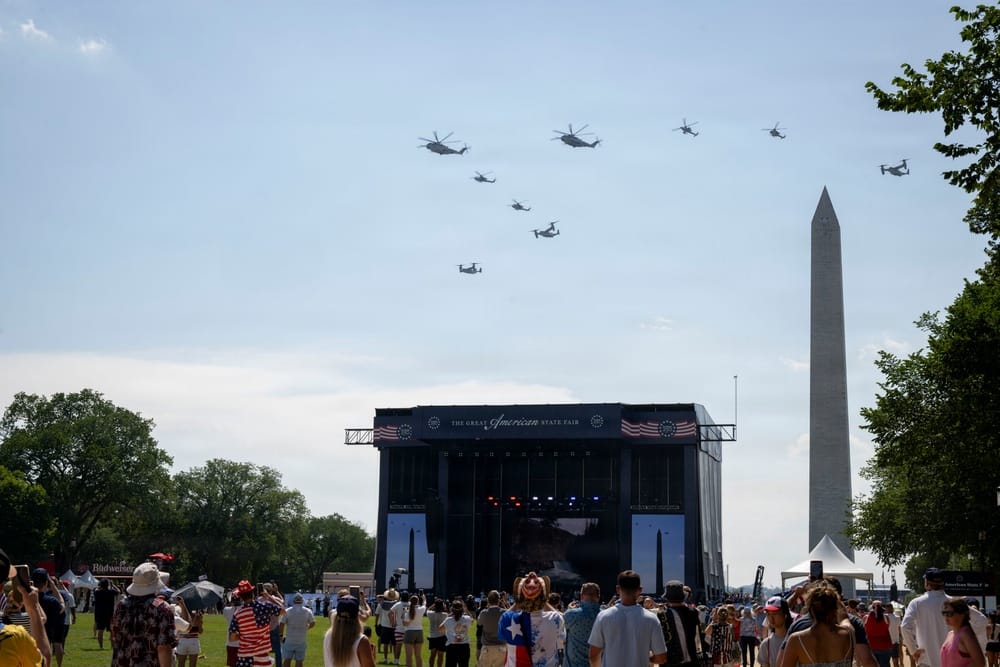
El programa comenzó suavemente: cuatro F-5 Tiger II de propiedad privada, uno de ellos proporcionado y pilotado por el administrador de la NASA Jared Isaacman, seguidos de aviones de la propia flota de la NASA, incluido un F-15D y un F/A-18B luciendo una librea especial con la bandera estadounidense por su 250 aniversario. Luego, los servicios se turnaron. Los Dolphins y Jayhawks de la Guardia Costera. Los Golden Knights del Ejército y los Leap Frogs de la Armada descendieron en paracaídas sobre el National Mall. Una formación de ocho helicópteros del Ejército, Apaches, Black Hawks y Chinooks.
La Fuerza Aérea envió primero sus aviones de combate más pesados —un C-17, un KC-135, un KC-46 y un C-5 Galaxy— antes de una oleada de operaciones especiales que partió de la Base Aérea Cannon: dos aviones de ataque AC-130J Ghostrider, dos CV-22 Osprey y un par de OA-1K Skyraider II, los aviones fumigadores reconvertidos en aviones de ataque que han estado en los titulares la semana pasada por razones menos festivas.
Los Marines trajeron diez helicópteros, luego aviones cisterna Hércules y Hornets. La Armada respondió con Seahawks, un P-8 Poseidon y Super Hornets que sobrevoló el National Mall como preámbulo de los eventos principales. Incluso los helicópteros presidenciales del Escuadrón Uno de Helicópteros de la Infantería de Marina hicieron un sobrevuelo.
Tres bombarderos, un pase
Alrededor de las 6 de la tarde, los fotógrafos de aviación habían estado esperando todo el día para presenciar el espectáculo: los tres bombarderos estratégicos de la Fuerza Aérea de Estados Unidos —el B-52 Stratofortress, el B-1B Lancer y el B-2 Spirit— sobrevolando el National Mall juntos en formación. Tres generaciones de disuasión estadounidense, más de 70 años de historia del diseño, todo en una sola imagen junto al Monumento a Washington.
Luego llegó el momento de los Thunderbirds. El equipo ha actuado por todo el mundo desde 1953, pero el espacio aéreo fuertemente restringido de la capital siempre había mantenido su espectáculo alejado de los monumentos, hasta que se les concedió una exención especial para el quincuagésimo centenario. Ocho rojos, blancos y azules. F-16C Volaron lo que su comandante describió de antemano como "la mayor parte de nuestro espectáculo": la primera demostración de los Thunderbirds jamás realizada sobre la capital del país.
El nuevo Air Force One y la tormenta
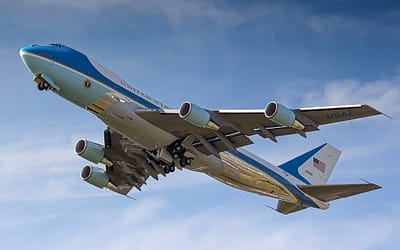
Poco después de las 7 de la tarde, el avión más nuevo de la flota presidencial hizo su debut público en Washington: el VC-25B, el antiguo Boeing 747-8 qatarí que había realizado su primera misión como Air Force One tan solo unos días antes, sobrevoló el National Mall con cuatro F-22 Raptor en sus alas.
Para entonces, sin embargo, el cielo tenía otros planes. Las tormentas eléctricas que se formaban sobre la ciudad obligaron a evacuar el National Mall justo cuando el gran Boeing sobrevolaba la zona. El sobrevuelo previsto de los aviones furtivos, las pasadas con postcombustión del F-22 y el salto al atardecer de los Golden Knights fueron cancelados. Para una celebración que giraba en torno a nueve horas de vuelo, fue un final frustrante, pero los organizadores tenían una última carta bajo la manga.
Cuando el centro comercial reabrió sus puertas a las 9:45 p. m., un solitario B-1B Lancer regresó en la oscuridad y encendió sus postquemadores sobre los fuegos artificiales. Si hay que terminar un espectáculo aéreo de nueve horas antes de tiempo, esa es la manera de hacerlo.
Por qué era importante
Los sobrevuelos suelen ser un simple adorno: treinta segundos de ruido sobre un estadio. Pero esto fue algo distinto: un retrato deliberado, que duró todo el día, de la aviación militar estadounidense, escenificado sobre el único tramo de espacio aéreo donde casi nunca se permite volar a estos aviones. Para el público que aguantó el calor y los relámpagos, fue un espectáculo único en la vida, un inventario de todo tipo de aeronaves, desde paracaídas hasta bombarderos furtivos.
Las imágenes que aparecen a continuación capturan los momentos más importantes del día: el nuevo Air Force One, los bombarderos y los cazas que cerraron el espectáculo.
Fuentes: Stars and Stripes, AeroTime, Air & Space Forces Magazine, Washington Post, DVIDS, NASA
Preguntas relacionadas
¿Qué fue el sobrevuelo "Saludo a América"?
El sobrevuelo "Salute to America" fue una exhibición aérea militar masiva sobre Washington, D.C., el 4 de julio de 2026, conmemorando el 250.º aniversario de la Independencia de Estados Unidos. El evento, que tuvo lugar sobre el National Mall, contó con más de nueve horas de vuelos programados de todas las ramas de las fuerzas armadas, además de la NASA y la Guardia Costera, convirtiéndose en una de las mayores exhibiciones aéreas jamás realizadas sobre una ciudad estadounidense por el número de aeronaves involucradas.
¿Cuándo tuvo lugar el sobrevuelo militar del 4 de julio de 2026 en Washington?
El sobrevuelo tuvo lugar el 4 de julio de 2026, el 250 aniversario de la Independencia de Estados Unidos, sobre el National Mall en Washington, DC. El vuelo comenzó a la 1:14 p. m. con cuatro F-5 Tiger, uno de ellos pilotado por el administrador de la NASA, y estaba programado para durar más de nueve horas, aunque las tormentas eléctricas vespertinas acortaron parte del mismo.
¿Qué aeronave sobrevoló el National Mall el 4 de julio de 2026?
La exhibición abarcó casi todos los tipos del inventario estadounidense: F-5 Tiger, equipos de paracaidistas del Ejército y una formación de ocho helicópteros Apache, Black Hawk y Chinook; aviones pesados de la Fuerza Aérea, incluidos el C-17, KC-135, KC-46 y C-5 Galaxy; AC-130J Ghostriders y CV-22 Ospreys de operaciones especiales; Super Hornets y P-8 de la Armada; y el La mayor manifestación de los Thunderbirds jamás realizada sobre la capital.
¿Afectó el clima al sobrevuelo del 4 de julio de 2026?
Sí. Las tormentas eléctricas que se formaban sobre Washington obligaron a evacuar el National Mall justo cuando el nuevo Air Force One sobrevolaba la zona alrededor de las 19:00. El sobrevuelo previsto de los aviones furtivos, las pasadas con postcombustión del F-22 y el salto al atardecer de los Golden Knights fueron cancelados. Sin embargo, un bombardero B-1 solitario regresó al anochecer para encender sus postquemadores sobre los fuegos artificiales.
¿Qué es el VC-25B Air Force One?
El VC-25B es el avión presidencial más nuevo, un Boeing 747-8 convertido que Comenzó su vida como un avión qatarí antes de ser reconstruido como el Air Force One.. Hizo su debut público en Washington durante el sobrevuelo del 4 de julio de 2026, pasando a toda velocidad sobre el National Mall con cuatro F-22 Raptor en sus alas, tan solo unos días después de haber realizado su primera misión como avión presidencial.
¿Cómo se desarrolló el espectáculo aéreo del 4 de julio de 2026?
El espectáculo comenzó a la 1:14 p. m. del 4 de julio de 2026 con cuatro F-5 Tiger, uno de ellos pilotado por el administrador de la NASA. Durante horas, desfilaron oleadas de aeronaves: equipos de paracaidistas, helicópteros del Ejército, aviones pesados de la Fuerza Aérea y la Infantería de Marina, cazas de la Armada y los Thunderbirds, antes de que las tormentas vespertinas obligaran a evacuar el National Mall y cancelaran las pasadas sigilosas y con postcombustión del final.
0 Comentarios