
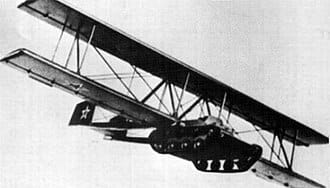
Es el tipo de idea que nunca debió haber salido de la servilleta. Tomar un tanque pequeño, que pesa aproximadamente 5,5 toneladas. Atornillarle un ala de biplano y una cola de doble brazo. Remolcar el conjunto por los aires detrás de un bombardero pesado. Soltarlo sobre las líneas enemigas. Dejar que el tanque planee hacia abajo. Tener a la tripulación, sentada dentro del tanque en funcionamiento, desprenderse de las alas al aterrizar y lanzarse al combate.
Este es el Antonov A-40, también conocido como Krylya Tanka, "Alas de Tanque", y fue construido por la Unión Soviética. De hecho, voló. Una sola vez.
Datos rápidos
Diseñador: Oleg Antonov (posteriormente fundador de la Oficina de Diseño Aeronáutico Antonov)
Base del tanque: Tanque ligero T-60, modificado
Ala: Configuración biplano, ~18 m de envergadura, cola de doble brazo
Peso total: ~7,8 toneladas
Aeronave remolcadora: Bombardero pesado cuatrimotor Tupolev TB-3
Primer (y único) vuelo: 2 de septiembre de 1942, aeródromo de Bykovo, URSS
Piloto de pruebas: Sergei Anokhin
Resultado: El avión remolcador se sobrecalentó; el A-40 se soltó antes de tiempo, planeó y aterrizó sin problemas.
Un problema en busca de una idea.
En 1941, la Unión Soviética tenía un problema de abastecimiento para los partisanos. Operar tras las líneas alemanas requería lanzar soldados en paracaídas (un método lento y disperso) o aterrizar aviones de transporte en pistas despejadas a toda prisa (un método suicida). Lo que las fuerzas partisanas realmente necesitaban eran vehículos: vehículos pequeños, blindados y móviles que pudieran pasar directamente del lanzamiento aéreo al combate.
Oleg Antonov, por entonces un diseñador de planeadores de 36 años que más tarde dirigiría la principal oficina de aviones de transporte de la Unión Soviética, propuso la solución obvia una vez que se veía: hacer que el propio tanque volara.
El avión
El A-40 combinaba un tanque T-60 modificado —sin armamento ni munición, con combustible estrictamente limitado— con una unidad de ala/cola desmontable. Las alas eran grandes: casi 18 metros de envergadura, de configuración biplano, recubiertas de tela y muy sencillas. Un empenaje de doble brazo proporcionaba a las superficies de control un amplio alcance. Las orugas del tanque servían de tren de aterrizaje. El conductor del tanque era el piloto, sentado en el asiento del conductor habitual y manejando los controles del planeador mediante un volante modificado.
La secuencia prevista era elegante. Un bombardero pesado remolcaría el conjunto hasta la altitud de crucero, se adentraría en territorio enemigo y soltaría el A-40 en una trayectoria de planeo hacia los partisanos que se encontraban abajo. El tanque planearía hasta tocar tierra con sus orugas, reduciría la velocidad hasta detenerse, la tripulación desprendería el ala mediante un mecanismo de liberación mecánica y el tanque partiría hacia el combate.
El vuelo
El 2 de septiembre de 1942, el piloto de pruebas Sergei Anokhin subió a la cabina del conductor. Un Tupolev TB-3 —cuatro motores, lento, con poca resistencia aerodinámica y el mayor avión remolcador del inventario soviético— encendió sus motores y tiró. El A-40 despegó. Y, efectivamente, voló.
Entonces los motores del TB-3 comenzaron a sobrecalentarse. La resistencia aerodinámica combinada del tanque con alas era simplemente excesiva. El piloto remolcador, al ver que la aguja del indicador de temperatura del aceite subía hasta la zona roja, le comunicó a Anokhin que lo iban a soltar. Anokhin se soltó y planeó hacia abajo. Aterrizó en un campo, aplicó los frenos (las orugas del tanque ahora servían como frenos de rodaje), se detuvo y, a continuación, hizo exactamente lo que el diseño preveía.
Anokhin desprendió el ala y la cola, y el T-60 regresó a su base por sus propios medios. Fue la única vez que se realizó esta maniobra: no existía ningún avión remolcador soviético lo suficientemente potente como para remolcar el A-40 operativamente, y el programa fue cancelado discretamente.
Sergei Anokhin aterrizó el planeador tanque en un campo cerca del aeropuerto. Tras desprenderse de las alas y la cola del planeador, el T-60 regresó a su base por sus propios medios.
El relato aceptado del único vuelo del A-40 — pilotado por Sergei Anokhin (1910-1986), piloto de pruebas soviético y Héroe de la Unión Soviética, el 2 de septiembre de 1942.
Por qué sigue siendo importante
El A-40 representa uno de los grandes interrogantes de la aviación. La idea era sólida —un vehículo blindado lanzado intacto al campo de batalla multiplica la fuerza—, pero la tecnología de remolque de la década de 1940 no podía estar a la altura de la ambición. En menos de una década, los helicópteros resolverían el mismo problema de forma más elegante.
Oleg Antonov diseñó todos los principales aviones de transporte soviéticos de la posguerra, incluido el An-225 Mriya, el avión más grande jamás construido. El A-40 se quedó en un experimento, una valiosa aportación a la larga lista de ideas que la Unión Soviética probó. Voló una sola vez. Eso es más de lo que lograron la mayoría de las ideas similares.
La historia completa del tanque volador soviético: el Antonov A-40.
Fuentes: Archivos de la Oficina de Diseño Antonov, “OKB Antonov: Historia de la Oficina de Diseño” (Yefim Gordon), informes de pruebas soviéticas desclasificados.
Preguntas relacionadas
¿Qué era el tanque volador Antonov A-40?
El Antonov A-40 (Krylya Tanka, 'Alas de Tanque') fue un tanque volador experimental soviético construido en 1942. Combinaba un tanque ligero T-60 modificado con un gran ala biplano desmontable y una cola de doble brazo. La idea era remolcarlo detrás de un bombardero, soltarlo sobre las líneas enemigas y dejarlo planear para que la tripulación pudiera desplegar las alas y dirigirse al combate.
¿Realmente voló el tanque volador Antonov A-40?
Sí, una vez. El 2 de septiembre de 1942, el piloto de pruebas Sergei Anokhin despegó del aeródromo de Bykovo con el tanque-planeador remolcado por un bombardero Tupolev TB-3. El avión voló, pero la fuerte resistencia aerodinámica sobrecalentó los motores del avión remolcador. Anokhin fue liberado antes de tiempo, planeó y aterrizó sano y salvo en un campo. El proyecto nunca se repitió.
¿Quién diseñó el Antonov A-40?
El A-40 fue diseñado por Oleg Antonov, entonces un ingeniero de planeadores de 36 años que más tarde fundaría la Oficina de Diseño Antonov, el principal fabricante de aviones de transporte de la Unión Soviética. El tanque volador reflejaba su experiencia en planeadores: un ala de biplano simple, cubierta de tela, de casi 60 pies de ancho, acoplada a un tanque ligero. Su oficina llegó a construir leyendas como el Antonov An-2.
¿Por qué querían los soviéticos un tanque volador?
Para 1941, los soviéticos necesitaban suministrar vehículos blindados a los partisanos que operaban tras las líneas alemanas. El lanzamiento de soldados en paracaídas era lento y disperso, mientras que el aterrizaje de aviones de transporte en pistas irregulares era un suicidio. Un tanque capaz de planear directamente al combate parecía una solución elegante: llevar un vehículo blindado y móvil del aire al campo de batalla en un solo paso.
¿Por qué el tanque volador A-40 nunca se utilizó en combate?
La única prueba de 1942 expuso un defecto fatal: incluso el avión remolcador más grande de la Unión Soviética, el TB-3, no podía remolcar la combinación de tanque y alas sin que sus motores se sobrecalentaran. Al no haber un remolcador lo suficientemente potente disponible, el concepto fue abandonado. Se unió a una larga lista de audaces aeronaves experimentales, como el de nueve alas. Caproni Ca.60, que voló una vez y no más.
0 Comentarios