
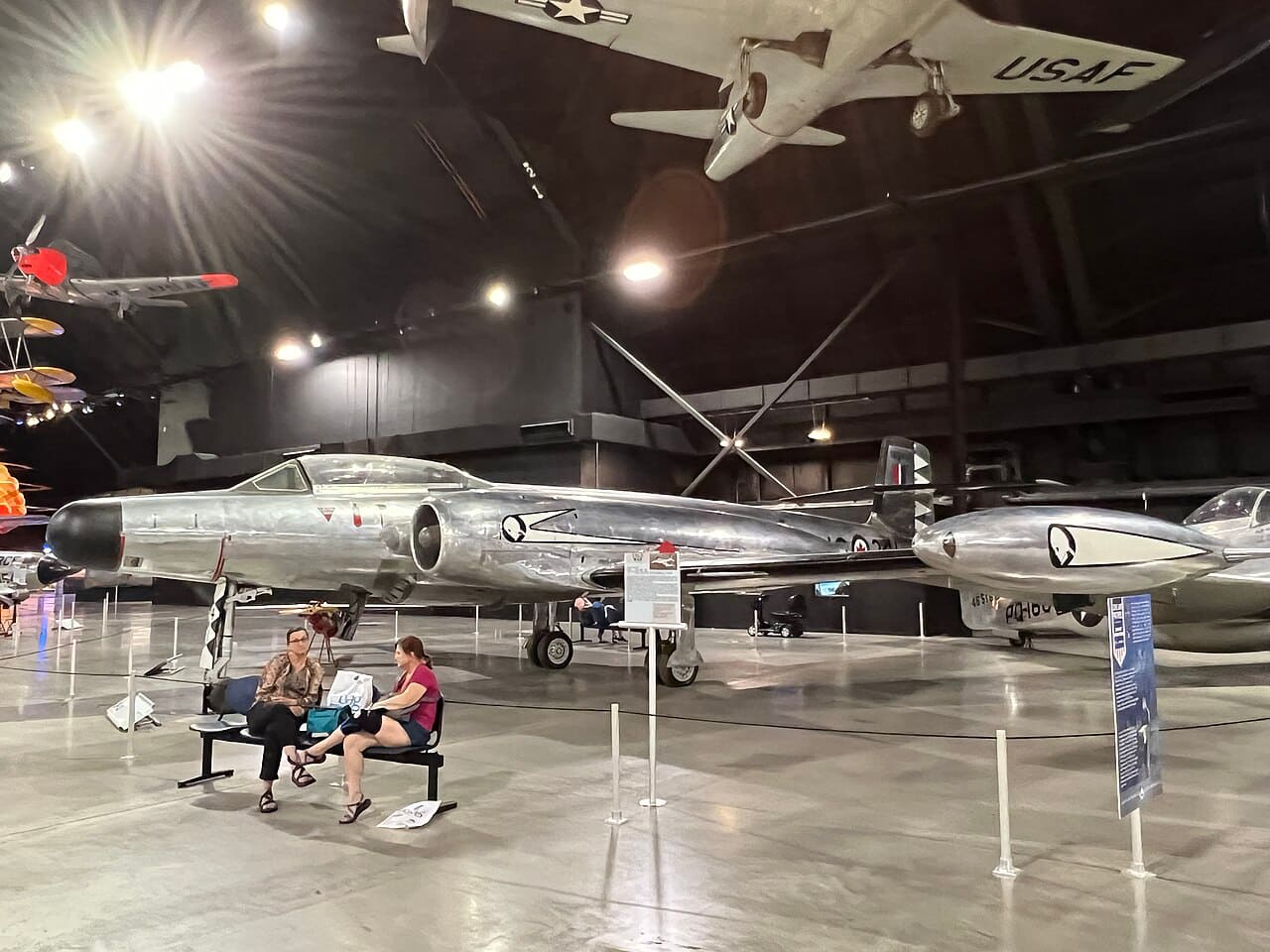
Canada has designed exactly one fighter that went into mass production, and it was not the famous one. Everybody remembers the Avro Arrow, the beautiful Mach-2 interceptor that politics killed before it could serve. Almost nobody outside Canada remembers the homely, hard-working jet that actually did the job for a decade: the Avro CF-100 Canuck.
Its own crews called it the "Clunk," after the noise its nose gear made retracting. It was never glamorous. But it guarded the roof of North America through the coldest years of the Cold War — and it could do something the sleek F-86 Sabre beside it could not: fight in the dark, in cloud, in a blizzard.
Datos rápidos
- Fabricante: Avro Canada
- Primer vuelo: 19 January 1950 (test pilot Bill Waterton)
- Role: two-seat all-weather interceptor
- Motores: two Avro Canada Orenda turbojets (prototypes flew on Rolls-Royce Avons)
- Construido: 692, including 53 for the Belgian Air Force
- Nicknames: "Clunk," "Canuck," "Lead Sled"
- Motivo de su fama: only Canadian-designed fighter to reach mass production
- Jubilado: front line from ~1961; EW/target duties until 1981
Canada builds its own
In the late 1940s Canada wanted an interceptor tailored to its own brutal geography: vast distances, foul weather, long polar nights. Rather than buy foreign, it built its own. Avro Canada's CF-100 first flew in January 1950, a big straight-winged twin-jet stuffed with radar and a crew of two — pilot and radar operator.
Crucially, it was powered by an engine Canada built itself, the Avro Orenda. For a country that had barely had an aircraft industry a decade earlier, designing a modern fighter y its engine was a genuine feat of national engineering.
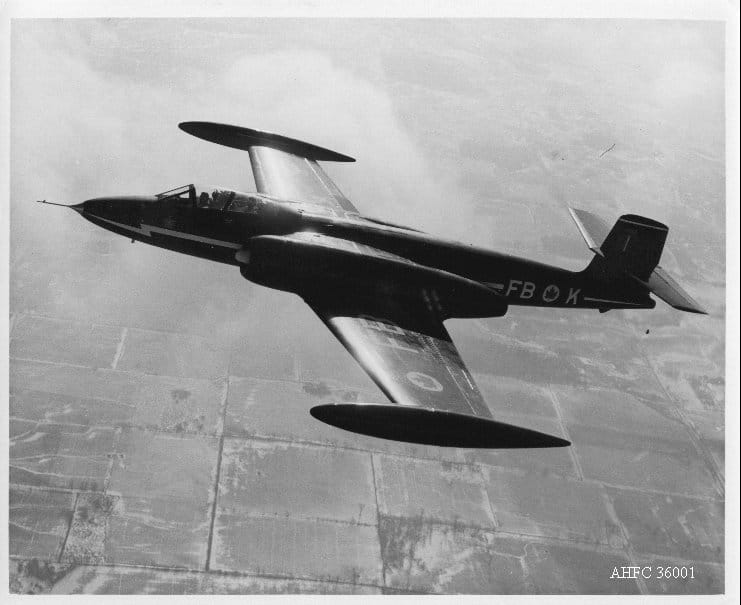
The "Clunk" goes supersonic
The Canuck looked heavy and it was — hence "Lead Sled" — but it had a surprise in it. In December 1952, Avro's charismatic Polish-born test pilot Janusz Zurakowski dived a CF-100 through the sound barrier, making it, by Canadian accounts, the first straight-winged jet to go supersonic in controlled flight. Zurakowski became a national figure; his hair-raising "falling leaf" tumble at the 1955 Farnborough show is often credited with selling the aircraft to Belgium.
Roof of the continent
At its peak the Canuck equipped RCAF squadrons defending North America under NORAD and four squadrons sent to Europe with NATO, where for a time it was the only alliance fighter that could reliably intercept in zero visibility. It was exported to Belgium and served, in one role or another, right up to 1981 — long after its Mach-2 sibling, the Arrow, had been cancelled and cut up for scrap.
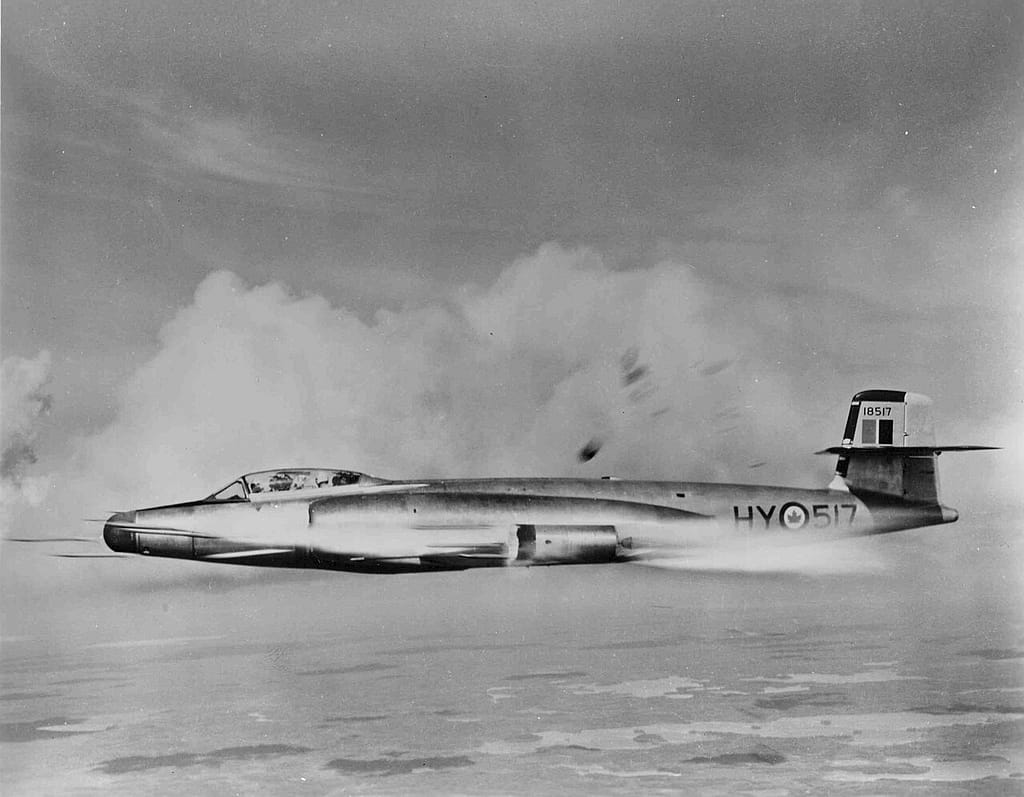
The Arrow gets the songs and the documentaries. But the CF-100 is the one that actually flew the missions, in the worst weather, for twenty-five years. Not bad for a jet whose nickname was the sound of its own landing gear.
Sources: Wikipedia; The Canadian Encyclopedia; Canadian Aviation and Space Museum; The Globe and Mail. The supersonic-dive figure is attributed to Canadian sources and given as reported.
Publicaciones relacionadas
0 Comentarios