
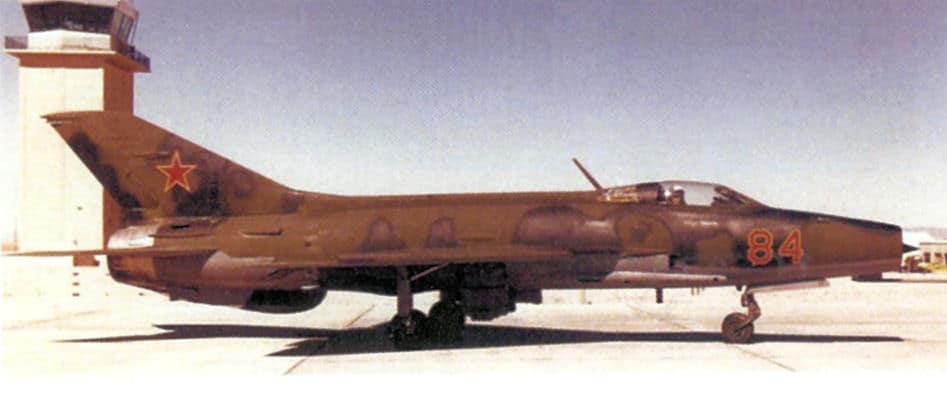
Somewhere over the Nevada high desert, a young American fighter pilot rolls into a turn and sees something that should not exist. A stubby, silver dart is sliding into formation off his wing — snub nose, sharp delta, a red star where a national insignia ought to be. It is a MiG. A real one. His pulse spikes, his mouth goes dry, and for a heartbeat the training and the swagger drain out of him completely.
That reaction had a name inside the program: “buck fever.” And curing it — before a pilot met the real thing over hostile territory with missiles in the air — was the entire point of one of the Cold War’s best-kept secrets. For nearly a decade, the United States Air Force quietly flew captured and acquired Soviet fighters against its own aircrews, out of a hidden airfield most Americans had never heard of.
The program was called Constant Peg. The men who flew the MiGs called themselves the Red Eagles. And for years, almost no one knew they were there.
• Programa: Constant Peg — named for Gen. Hoyt Vandenberg Jr.’s callsign “Constant” and Maj. Gail Peck’s wife, Peggy (“Peg”)
• Unidad: 4477th Test and Evaluation Squadron, the “Red Eagles”
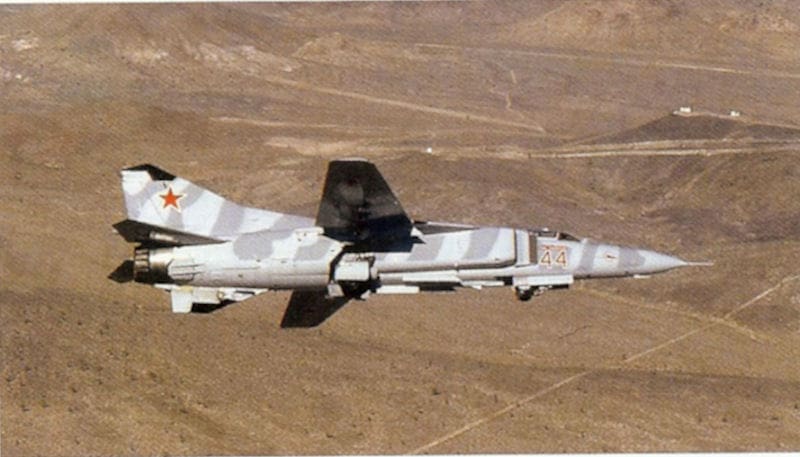
• Aeronave: MiG-17 “Fresco,” MiG-21 “Fishbed” and MiG-23 “Flogger”
• Base: Tonopah Test Range Airfield, remote Nevada (operations from 1979)
• Corrió: roughly 1979–1988 (last sorties March 1988; unit inactivated 1990)
• Reach: 69 “Bandit” pilots flew 15,000+ sorties, exposing nearly 6,000 US aircrew to real MiGs
• Declassified: 2006
A lesson written in Vietnam
Constant Peg was born out of a hard, bloody lesson. In the skies over North Vietnam, American crews flying big, missile-armed jets like the F-4 Phantom had been humbled by nimble little MiG-17s and MiG-21s. The Pentagon had convinced itself that dogfighting was obsolete — that the age of guns and turning fights was over and the age of the guided missile had arrived. The MiGs proved otherwise. Kill ratios that Americans had taken for granted collapsed.
The Navy responded by founding TOPGUN and revitalizing the art of the dogfight, and its kill ratio soared. The Air Force lagged. What it needed was not just pilots trained in Soviet tactics, but the actual Soviet jets to fly against — so that when an American aviator finally met a Fishbed for real, it would not be for the first time.
A callsign, a wife’s name, and a napkin
The idea was championed by Major Gail Peck, a Vietnam veteran F-4 pilot who had grown frustrated with how his service trained its fighter crews. Peck had heard about the earlier, hyper-classified Have Doughnut and Have Drill programs, in which the US had secretly test-flown a handful of MiGs obtained through Israel. He wanted more than a test program. He wanted a school.
He found a patron in Major General Hoyt “Sandy” Vandenberg Jr., who lent the effort his own callsign, “Constant.” Peck completed the name with his wife Peggy’s nickname, “Peg.” The whole airfield, Peck later said, began as a sketch he drew with a ballpoint pen on a napkin aboard an airliner — a runway, a ramp, three hangars. The site he had convinced himself was right: the Tonopah Test Range, a patch of government desert so remote it would not even be publicly acknowledged as an Air Force airfield until 1985.
The official US Air Force documentary on Constant Peg, featuring the pilots and ground crews who ran the secret MiG squadron.
MiGs pulled from scrapyards
Standing up a squadron of Soviet fighters from scratch was a logistical nightmare. There were no manuals, no reliable supply of spare parts, and no factory support — only aircraft acquired through a patchwork of intelligence deals, quiet purchases and outright improvisation. The jets arrived from Israel, from Indonesia, later from Egypt as it drifted away from Moscow. Some were pristine defectors’ aircraft; others were wrecks.
The Red Eagles’ maintainers — a small, fiercely dedicated crew — reverse-engineered the jets, machined parts that could not be bought, and coaxed temperamental Soviet engines back to life. To keep the program hidden, the MiGs were given innocuous American cover designations — the MiG-21 became the “YF-110,” the MiG-23 the “YF-113” — so paperwork never had to name a Soviet type outright. By day, Tonopah’s runway launched MiGs; by night, the same secret field hosted training for the F-117 stealth fighter.
The Bandits and the cure for buck fever
Each Red Eagles pilot earned a personal “Bandit” number; 69 men held one over the life of the program. They were drawn from the elite — Fighter Weapons School and Aggressor instructors, TOPGUN graduates — and their job was to give ordinary frontline crews the single most valuable thing training could offer: a first encounter with a MiG that happened somewhere safe.
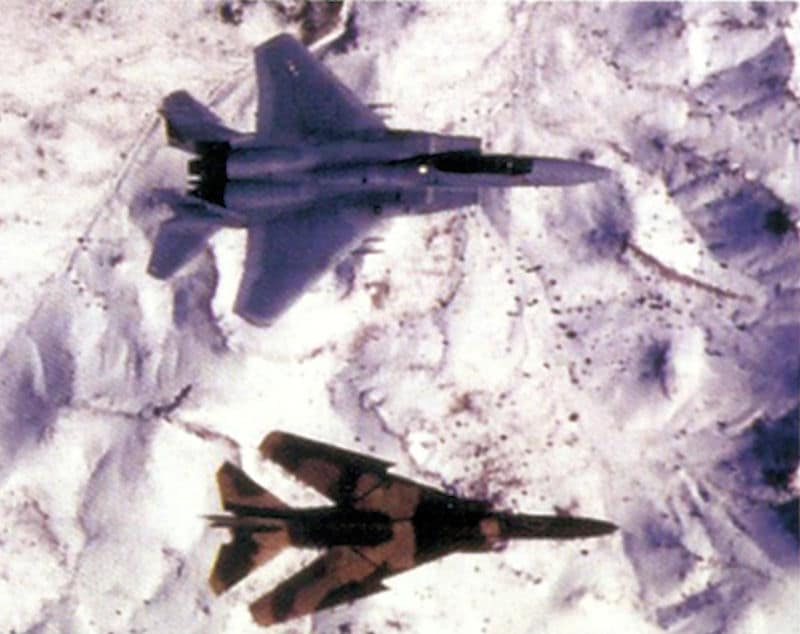
A typical “exposure” began with an intercept and a formation flight, letting the visiting pilot simply stare at the thing and get the shock out of his system. Then came the maneuvering — one-versus-one, MiG strengths and weaknesses laid bare — building to mock dogfights where the Red Eagles flew like Soviets. The commander who built it understood exactly what he was curing.
It was not without cost. Three men connected to the program died in its service — two pilots in flying accidents and one airman in a ground mishap. Flying unfamiliar, irreplaceable jets with no manual was, by any measure, dangerous work.
The secret that paid off in Iraq
Flight operations at Tonopah wound down in March 1988, as a new generation of Soviet aircraft arrived and Cold War budgets tightened; the 4477th was formally inactivated in 1990. In roughly a decade, the Red Eagles had flown more than 15,000 sorties and put nearly 6,000 American aircrew nose-to-nose with real MiGs.
The payoff came in the desert again — this time Iraq. During Operation Desert Storm in 1991, US Air Force pilots downed dozens of Iraqi aircraft, including MiG-21s and MiG-23s, without losing a single fighter to enemy aircraft. Many credit that lopsided result, in part, to the men who had spent the 1980s learning exactly how a Fishbed turns and where a Flogger runs out of ideas.
The whole thing stayed buried until 2006, when the Air Force finally declassified Constant Peg. For years, aviation’s best-kept dogfighting secret had hidden in plain sight — a squadron of red-starred jets, looping over the Nevada desert, teaching a generation of American pilots not to be afraid.
Sources: Wikipedia (4477th Test and Evaluation Squadron); National Museum of the USAF, “CONSTANT PEG”; Steve Davies, Red Eagles: America’s Secret MiGs (Osprey, 2008); The War Zone.
Preguntas relacionadas
What was Constant Peg?
Constant Peg was a secret US Air Force program that, from about 1979 to 1988, flew captured and acquired Soviet fighters against American aircrews. Run from a hidden Nevada airfield, it let US pilots train against real MiGs before facing them in combat. The program was declassified in 2006.
¿Quiénes eran las Águilas Rojas?
The Red Eagles were the pilots of the 4477th Test and Evaluation Squadron, the unit that flew the Soviet MiGs of the Constant Peg program. Its 69 "Bandit" pilots flew more than 15,000 sorties, exposing nearly 6,000 US aircrew to real MiGs so they could overcome "buck fever" before meeting the enemy for real.
What Soviet aircraft did the Red Eagles fly?
The Constant Peg Red Eagles flew the MiG-17 Fresco, the MiG-21 Fishbed and the MiG-23 Flogger. These were the frontline Soviet types US crews were most likely to face, and flying against them revealed their real strengths and weaknesses in a way no manual could.
Where was the Constant Peg program based?
Constant Peg operated from the Tonopah Test Range Airfield, a patch of remote Nevada desert so secret the government would not even acknowledge it as an Air Force airfield until 1985. Flight operations there began in 1979.
How did the United States get its secret MiGs?
The US assembled its MiG fleet through a patchwork of intelligence deals, quiet purchases and improvisation, with aircraft arriving from Israel, Indonesia and later Egypt as it drifted away from Moscow. There were no manuals or spare-parts pipelines — a challenge echoed in tales like the Mossad operation that stole a MiG-21.
Why was Constant Peg created?
Constant Peg grew out of hard lessons from Vietnam, where American crews in big missile-armed jets like the F-4 Phantom were humbled by nimble MiG-17s and MiG-21s. The Pentagon had wrongly assumed dogfighting was obsolete; when kill ratios collapsed, the services realised pilots needed real practice against real MiGs.
When was Constant Peg declassified?
The Constant Peg program was declassified in 2006, nearly two decades after its last sorties flew in March 1988 and the 4477th squadron was inactivated in 1990. Only then did the story of America's secret desert MiGs and their 15,000-plus training sorties become public.
0 Comentarios