
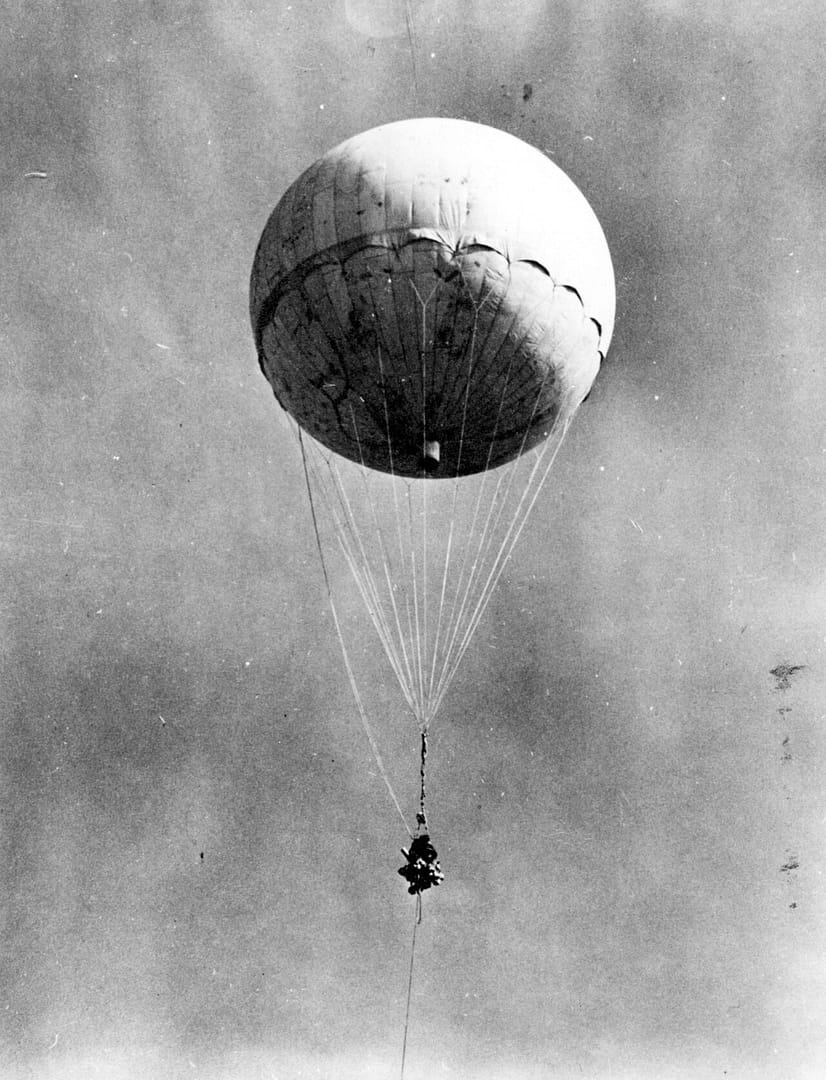
Es la mañana del 5 de mayo de 1945, en las laderas boscosas del monte Gearhart, al sur de Oregón. El reverendo Archie Mitchell ha llevado a su esposa embarazada, Elsie, y a sus cinco hijos de la escuela dominical a un picnic. Mientras Archie aparca el coche, los demás se adelantan caminando hacia el arroyo Leonard, y uno de los niños grita que han encontrado algo extraño entre los árboles: un gran globo desinflado, enredado entre la maleza.
Archie grita una advertencia. Es demasiado tarde. Una poderosa explosión arrasa con el pequeño grupo, y en un instante Elsie Mitchell y los cinco niños mueren.
Murieron a causa de una bomba lanzada desde el otro lado del océano Pacífico, que fue transportada por el viento a más de seis mil millas de distancia. Siguen siendo las únicas personas que murieron en un ataque enemigo en territorio estadounidense durante toda la Segunda Guerra Mundial.
Datos rápidos
| Qué | Fu-Go (fusen bakudan): bombas de globos japonesas |
| Período | Se lanzaron aproximadamente 9.000 unidades entre noviembre de 1944 y abril de 1945. |
| Diseño | Globos de papel de aproximadamente 10 metros (33 pies) de largo, llenos de hidrógeno, que transportaban artefactos incendiarios y una bomba de alto poder explosivo. |
| Rango | Viajé en la corriente en chorro aproximadamente 6200 millas a través del Pacífico en 2-3 días. |
| Alcanzó | Se encontraron cientos en toda América del Norte, desde Alaska hasta Canadá y Estados Unidos. |
| Peaje | Seis personas murieron cerca de Bly, Oregón, el 5 de mayo de 1945; fueron las únicas muertes causadas por el enemigo en territorio continental estadounidense durante la Segunda Guerra Mundial. |
Un arma llevada por el viento
Incapaces de alcanzar el territorio continental estadounidense con bombarderos, Japón recurrió a algo más extraño: la recién descubierta corriente en chorro, el río de aire que se desplaza rápidamente a gran altura sobre el Pacífico. Los ingenieros construyeron globos de unos diez metros de diámetro con capas de papel de morera pegadas entre sí por alumnas, los llenaron de hidrógeno y colgaron debajo de cada uno una carga de bombas incendiarias y una bomba de alto explosivo.
Un ingenioso sistema automático los mantuvo en el aire durante la travesía de tres días: cuando un globo se enfriaba y descendía por la noche, soltaba sacos de arena como lastre para volver a ascender. Alrededor de nueve mil globos fueron lanzados desde la costa de Honshu entre noviembre de 1944 y abril de 1945.

Cientos de globos y un silencio deliberado
Cientos de globos completaron su viaje, descendiendo a la deriva sobre una vasta área que abarcaba desde Alaska y California hasta las praderas canadienses y tierra adentro hasta Michigan. Causaron daños mínimos; los bosques invernales donde cayeron estaban demasiado húmedos para incendiarse. Fundamentalmente, las autoridades estadounidenses impusieron un bloqueo informativo casi total sobre los globos. Al no recibir informes de éxito, los comandantes japoneses concluyeron que el arma había fracasado y pusieron fin al programa en abril de 1945. El silencio la había desarmado silenciosamente.
El picnic en Gearhart Mountain
Y entonces llegó Bly. El bloqueo informativo que había frenado la campaña también significó que los estadounidenses comunes desconocieran la existencia de estos objetos; por lo tanto, cuando un grupo de niños encontró uno en los bosques de Oregón, no tuvieron motivo para temerlo. Los seis que murieron ese día fueron las únicas víctimas de la campaña. Posteriormente, las autoridades levantaron parcialmente el secreto, advirtiendo al público que se mantuviera alejado de cualquier globo extraño que pudieran encontrar. Hoy, un monumento de piedra en lo que ahora es el Área Recreativa Mitchell marca el lugar donde murieron.
Era un arma surrealista —papel y viento contra un continente— y casi no mató a nadie. Pero las seis vidas perdidas en un picnic de la iglesia entre los pinos de Oregón son un silencioso recordatorio de que incluso el frente más lejano de la guerra llegó, aunque solo fuera una vez, hasta casa.
Fuentes: Revista Smithsonian; HistoryLink.org; La Enciclopedia de Oregón.
Preguntas relacionadas
¿Qué eran las bombas de globo Fu-Go japonesas?
Los Fu-Go (fusen bakudan) eran bombas lanzadas con globos japoneses utilizadas en la Segunda Guerra Mundial. Estos globos de papel de aproximadamente 10 metros de diámetro, llenos de hidrógeno, transportaban artefactos incendiarios y una bomba de alto explosivo, y se lanzaban aprovechando la corriente en chorro para cruzar el Pacífico hasta Norteamérica.
¿Cómo llegaron las bombas lanzadas desde globos a Estados Unidos?
Se desplazaron aprovechando la corriente en chorro, una franja de viento rápido a gran altitud sobre el Pacífico. Un sistema de lastre automático soltaba sacos de arena para mantener cada globo a la altitud adecuada, lo que le permitía cruzar aproximadamente 6200 millas de océano en dos o tres días.
¿Cuántas bombas lanzadas con globos fueron lanzadas?
Japón lanzó alrededor de 9.000 globos Fu-Go entre noviembre de 1944 y abril de 1945. Se sabe que cientos de ellos llegaron a Norteamérica, dispersos desde Alaska y la costa oeste de Estados Unidos hasta Canadá y el medio oeste.
¿Mataron a alguien las bombas lanzadas con globos?
Sí. El 5 de mayo de 1945, un globo bomba derribado explotó cerca de Bly, Oregón, matando a Elsie Mitchell, que estaba embarazada, y a cinco niños que participaban en un picnic de la iglesia. Fueron las únicas personas que murieron en un ataque enemigo en territorio estadounidense durante la Segunda Guerra Mundial.
¿Por qué Estados Unidos mantuvo en secreto las bombas lanzadas con globos?
Las autoridades estadounidenses impusieron un bloqueo informativo para que Japón no recibiera confirmación de la llegada de los globos. Creyendo que el arma había fallado, Japón canceló el programa. El secretismo también implicó que el público desconociera el peligro, lo que contribuyó a la tragedia de Bly.
¿Dónde se puede ver hoy una bomba de globos?
Los ejemplares que se conservan y las reconstrucciones se encuentran en colecciones de museos, incluido el Smithsonian. Un monumento en el Área Recreativa Mitchell, cerca de Bly, Oregón, marca el lugar donde ocurrió el único incidente mortal con un globo bomba.
Publicaciones relacionadas
Mi libro más reciente, "El río invisible", saldrá a la venta el 31 de julio de 2026, por si les interesa una novela de ficción histórica basada en esta historia.