
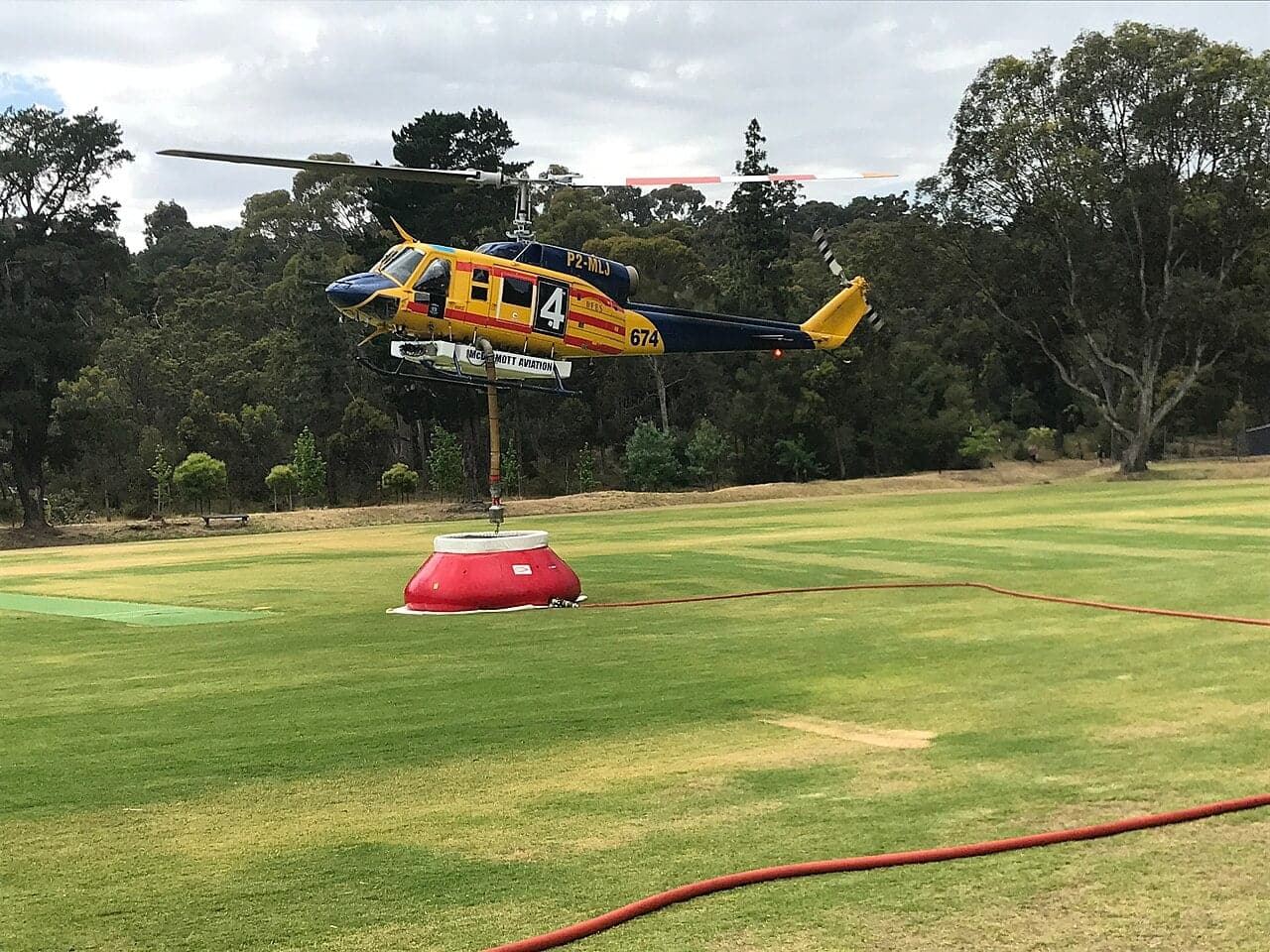
They had done it hundreds of times. Dip the snorkel, scoop a tonne of water, climb, run in low over the burning ridge, release, and turn back for more. On Sunday afternoon, over a wind-whipped fire front west of Athens, two firefighting helicopters flew that same choreography one time too close together.
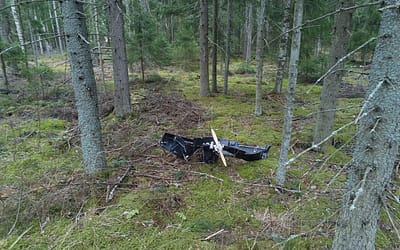
The two aircraft converged in the smoke near Psatha, roughly 70 kilometres west of Athens. Bystander video shows them closing, touching, and one machine shedding its main rotor before dropping into the forest below. Two of the four crew members were killed. It is the kind of accident that haunts everyone who flies fire.
The dead were a Danish pilot and a Greek air coordinator. The crew of the second helicopter — a British pilot and another Greek coordinator — were pulled from the wreckage alive but injured. All four had taken off from Elefsina air base to fight fires that had been burning since Friday.
Datos rápidos
- Qué: mid-air collision of two firefighting helicopters
- Cuando: Sunday 2 August 2026
- Dónde: near Psatha, about 70 km west of Athens (Porto Germeno wildfire front)
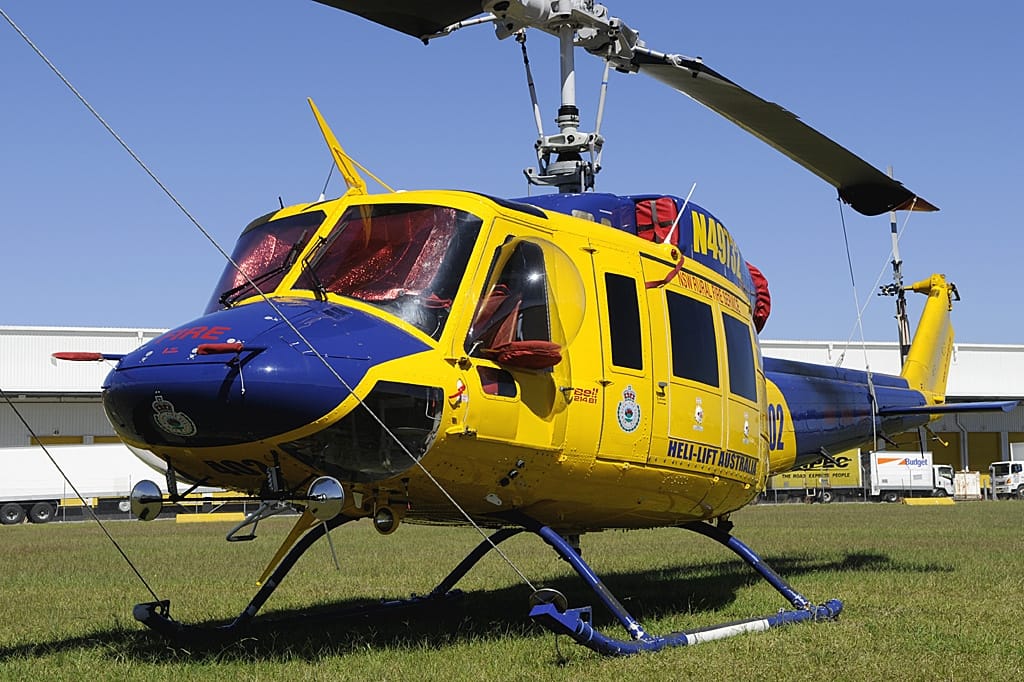
- Aeronave: two Bell 214-series helitankers operated by McDermott Aviation (Australia)
- Multitud: four aboard the two helicopters — two pilots and two Greek coordinators
- Delicado: a Danish pilot and a Greek coordinator
- Survived: a British pilot and a Greek coordinator, both injured
- Secuelas: Bell helicopters in the area grounded pending investigation; the week’s Greek wildfire death toll rose to five
The aircraft: McDermott’s Bell 214 fleet
Both helicopters were Bell 214-series machines operated by McDermott Aviation, an Australian company that runs the world’s largest fleet of the type. For the 2026 fire season — its seventh consecutive year in Greece — McDermott deployed 15 helicopters, a mix of Bell 214ST “Super Transporters” and Bell 214B “Big Lifters,” spread across bases from the mainland to Crete and Rhodes.
These are heavy-lift workhorses, not nimble scout helicopters. A single 214 can haul several tonnes of water per run, which is exactly why fire services lease them — and why they spend their days threading low, hot, turbulent air over active fires, often several aircraft sharing the same narrow corridor to the nearest water source.
McDermott Aviation said it was “deeply saddened” by the loss and was supporting the families and the investigation. The Hellenic Fire Service grounded the remaining Bell helicopters in the area while investigators work to understand how two experienced crews ended up in the same piece of sky.
A continent on fire
The collision happened at the worst possible moment. Greece had logged more than 200 wildfires in a single week, and gale-force winds were driving flames through tinder-dry forest faster than crews could contain them. On the main front west of Athens alone, close to 500 firefighters and more than 20 aircraft were committed, with reinforcements arriving from France and Romania.
The winds that fed the fires also made the flying lethal. Strong gusts complicated every water run and, at times, kept aircraft from safely reaching the sea to refill. The two crew members lost on Sunday brought the death toll from the week’s Greek fires to five, after three firefighters died earlier in Crete and the Peloponnese.
Aerial firefighting is one of the most dangerous flying jobs in the world: low altitude, poor visibility, punishing heat, and crowded airspace, all at once. Sunday was a brutal reminder of the price the people who fly it sometimes pay — and of how much Southern Europe now leans on a handful of leased helicopters and their crews each summer.
Sources: Al Jazeera; ABC News; PBS NewsHour; Euronews; Greek City Times; SBS News; Vertical Aviation International.
Publicaciones relacionadas
El mayor avión de transporte aéreo de Francia se convierte en avión cisterna.
0 Comentarios