
El 3 de agosto de 1945, un piloto de pruebas japonés llamado Masayoshi Tsuruno subió al prototipo de caza más extraño que Japón había construido jamás y aceleró a fondo. El avión rodó lentamente por la pista del aeródromo de Mushiroda de la compañía Kyūshū Aircraft, levantó su alerón delantero y despegó.
Tsuruno aterrizó unos minutos después. Realizó dos vuelos breves más durante los días siguientes. Y entonces, el 15 de agosto, el Emperador anunció la rendición de Japón. El Shinden —"Magnífico Relámpago"— había llegado cinco días tarde para combatir.
Si hubiera llegado un año antes, la historia aérea de la Guerra del Pacífico podría ser muy diferente.
Datos rápidos
Designación: Kyūshū J7W1 Shinden ("Relámpago magnífico")
Configuración: Alas canard hacia adelante, alas principales hacia atrás, hélice propulsora
Motor: Motor radial Mitsubishi MK9D de 2130 hp, ubicado detrás de la cabina, que acciona una hélice de 6 palas.
Armamento: 4 cañones Tipo 5 de 30 mm montados en el morro
Velocidad máxima de diseño: 750 km/h (466 mph)
Diseñado en contra de: Bombardeos de B-29 Superfortress sobre Japón
Primer vuelo: 3 de agosto de 1945
Total de vuelos: 3 (aproximadamente 45 minutos de tiempo total de emisión)
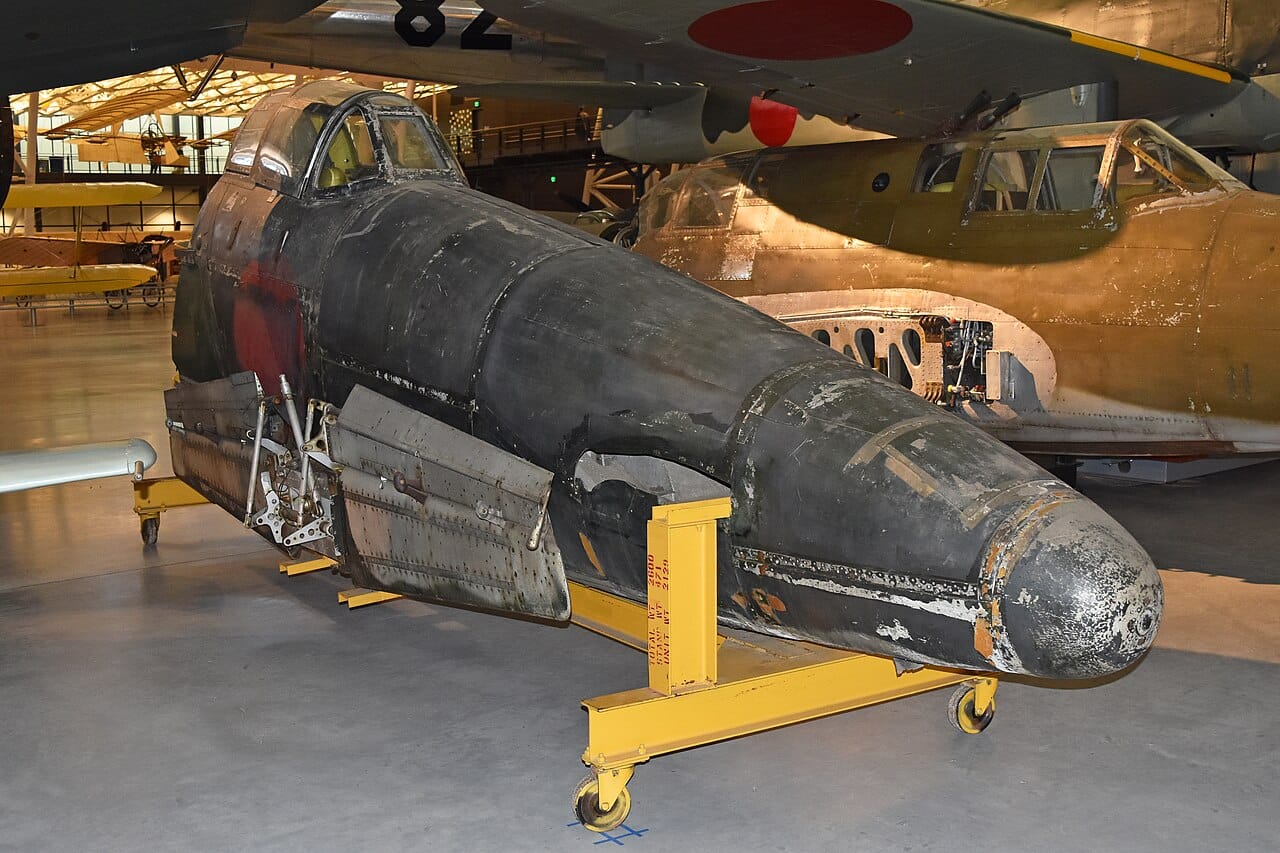
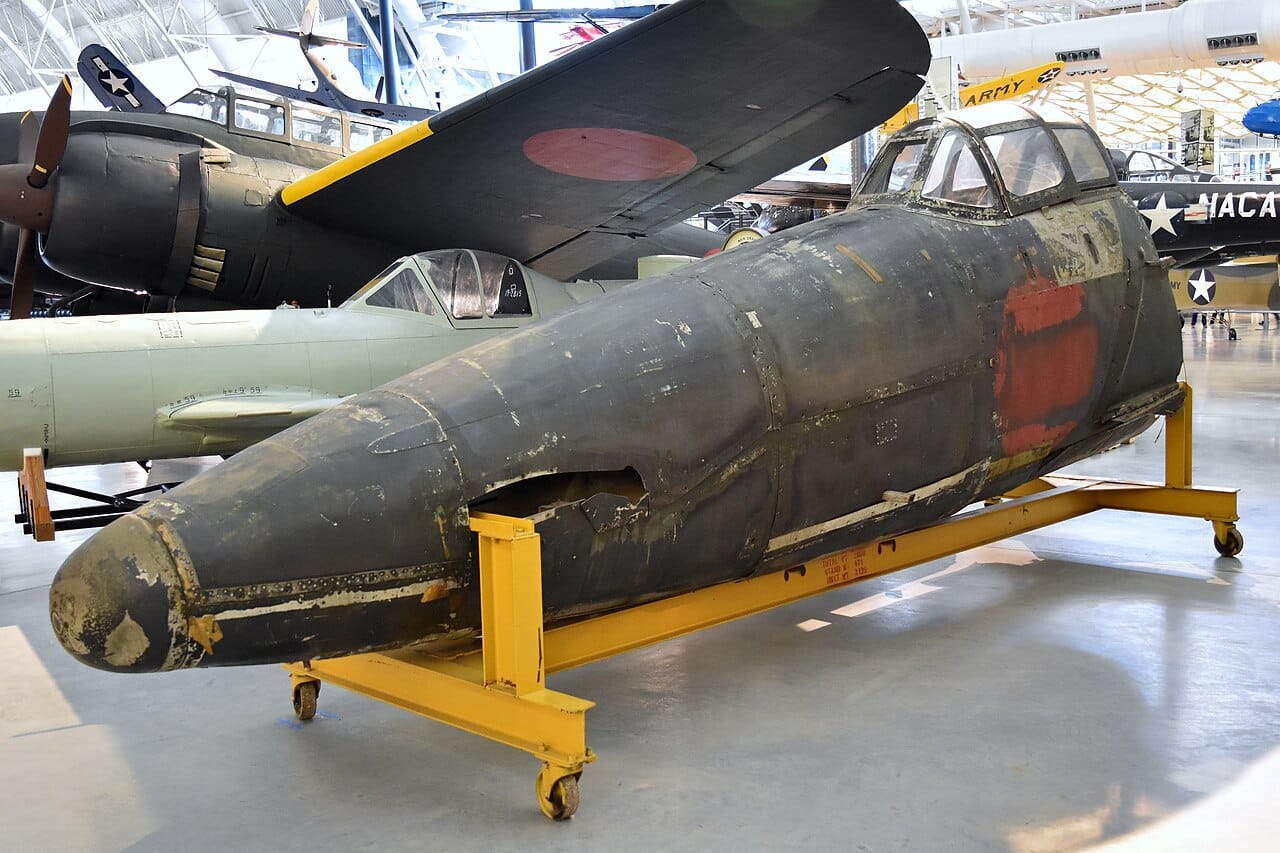
Estructuras de aeronaves supervivientes: 1 (fuselaje delantero en Smithsonian Udvar-Hazy)
Un luchador construido al revés
El Shinden fue el caza de aspecto más extraño que jamás encargó la Armada Imperial Japonesa, y precisamente esa peculiaridad era la clave de su diseño. Para 1943, los diseñadores japoneses habían llegado a la conclusión de que un caza convencional —con el motor en el morro, las alas en el centro y la cola en la parte trasera— ya no era suficiente para alcanzar al B-29 Superfortress a gran altitud.
El B-29 representaba una amenaza existencial. Volaba a 30.000 pies de altitud a velocidades que los aviones japoneses Mitsubishi A6M Zero y Kawanishi N1K1 Shiden no podían igualar. Cualquier interceptor japonés convencional que se acercara a una formación de B-29 era una molestia lenta y de baja potencia. La Armada Imperial Japonesa necesitaba un avión con mayor techo de servicio, mucha más velocidad y un armamento concentrado en el morro lo suficientemente potente como para derribar un bombardero cuatrimotor en una sola pasada.
El teniente comandante Masayoshi Tsuruno, del estado mayor técnico de la Armada Imperial Japonesa, propuso a principios de 1943 una solución poco convencional: colocar el motor detrás del piloto, accionando una hélice propulsora. El ala principal se situaría en la parte trasera. Se utilizaría un pequeño ala canard en la parte delantera para el control de cabeceo. Todo el armamento —cuatro cañones Tipo 5 de 30 mm— se instalaría en el morro, ahora vacío, sin el arco de la hélice que impidiera el disparo.
Parecía el dibujo de un avión de papel hecho por un niño. Tras un análisis minucioso, resultó ser justo lo que Japón necesitaba.
Por qué el diseño Canard era tan ingenioso
Los diseñadores de cazas modernos han redescubierto repetidamente la configuración canard: el Eurofighter Typhoon, el Dassault Rafale, el JAS 39 Gripen, y los chinos J-10 y J-20 Todos utilizan superficies de control tipo canard. Las ventajas son reales: menor resistencia aerodinámica que una cola convencional en vuelo supersónico, mejor maniobrabilidad con ángulos de ataque elevados y la elegancia estructural de distribuir las cargas de control en el punto de referencia natural del ala.
En 1943, los japoneses llevaban, en esencia, cincuenta años de ventaja al resto del mundo en este aspecto. El pequeño alerón delantero del Shinden cumplía tres funciones: control de cabeceo, aumento de sustentación a bajas velocidades y protección de la línea de fuego de los cañones al eliminar por completo la hélice del morro. La configuración de hélice propulsora permitía que la hélice fuera enorme —de seis palas, impulsada por un eje de extensión desde el motor trasero— y que girara a la velocidad óptima para un buen rendimiento a gran altitud.
El primer prototipo realizó tres breves vuelos entre el 3 y el 9 de agosto de 1945, con un tiempo de vuelo total de aproximadamente 45 minutos. Los vuelos fueron exitosos, pero revelaron una fuerte fuerza de torsión hacia estribor, cierta vibración en las palas de la hélice y en el eje de transmisión extendido. Se habían establecido cuotas de producción de 150 aeronaves mensuales en dos fábricas incluso antes del primer vuelo; no se construyó ninguna.
Los cañones que habrían devorado bombarderos
La característica más temible del Shinden era su armamento. Cuatro cañones Tipo 5 de 30 mm montados en el morro, cada uno capaz de disparar proyectiles explosivos de 1,5 kilogramos a una velocidad inicial de 750 metros por segundo. Una sola ráfaga de un segundo de un Shinden habría impactado un objetivo con aproximadamente doce kilogramos de munición de alto explosivo.
A modo de comparación: el caza estadounidense más fuertemente armado de la guerra, el P-47 Thunderbolt, montaba ocho ametralladoras de calibre .50. Un solo disparo del Shinden habría lanzado aproximadamente cinco veces la masa del proyectil de una ráfaga del P-47, con la carga explosiva de cohetes antibombarderos específicos.
Contra los B-29, esto habría sido devastador. Las tripulaciones de bombarderos estadounidenses podrían sobrevivir a un P-51 El Mustang o una pasada de fuego de un Fw 190. El Shinden fue diseñado específicamente para garantizar que no pudieran sobrevivir a una sola pasada japonesa.
Por qué nunca luchó
La producción del Shinden se ordenó incluso antes de que el prototipo realizara su primer vuelo. Se construyeron dos prototipos. El primer vuelo tuvo lugar el 3 de agosto de 1945. El 6 de agosto, Estados Unidos lanzó una bomba atómica sobre Hiroshima. El 9 de agosto, una segunda bomba cayó sobre Nagasaki. El 15 de agosto, el Emperador se rindió. El Shinden había realizado tres vuelos, con un tiempo total de vuelo de aproximadamente 45 minutos.
Se había planeado la producción en serie, con cuotas mensuales de 30 aviones de la fábrica Zasshonokuma en Kyushu y 120 de la planta Handa en Nakajima; se esperaban unos 1086 Shinden para marzo de 1947. No se construyó ninguno. Uno de los dos prototipos fue reclamado por una Unidad de Inteligencia Aérea Técnica de la Armada de los Estados Unidos a finales de 1945, desmantelado y enviado a los Estados Unidos. El avión fue posteriormente reensamblado, pero nunca voló y fue almacenado a largo plazo. El fuselaje delantero se conserva hoy en el Centro Udvar-Hazy del Smithsonian, cerca del aeropuerto de Dulles, la única evidencia física de que el Shinden existió.
¿Qué habría pasado?
La historia contrafactual es una tarea inútil, pero las especificaciones del Shinden son lo suficientemente interesantes como para plantear el siguiente experimento mental: si la Armada Imperial Japonesa hubiera recibido sus primeros 200 Shinden a mediados de 1946 —el objetivo real del programa de producción—, ¿habría sobrevivido la campaña del B-29?
Casi con toda seguridad sí, eventualmente. Los cazas de escolta estadounidenses P-51D Mustang y el Lockheed P-80 Estrella fugaz El avión a reacción, que entró en servicio en la primavera de 1946, habría igualado o superado el rendimiento del Shinden. La producción industrial estadounidense habría superado con creces la japonesa en cuestión de meses. De haber sido necesario, las bombas atómicas se habrían lanzado igualmente.
Pero el Shinden habría hecho que la guerra aérea sobre Japón fuera mucho más peligrosa para las tripulaciones de bombarderos aliados a finales de 1945. El avión era así de bueno. Su configuración era así de ingeniosa. Y llegó, como tantos otros diseños aeronáuticos japoneses de 1945, cinco días demasiado tarde para que su llegada fuera decisiva.
El Magnífico Relámpago se iluminó brevemente. Y luego se apagó.
Fuentes: Wikipedia (Kyushu J7W); notas de la colección del Museo Nacional del Aire y el Espacio Smithsoniano; Old Machine Press; Vintage Aviation News.
Preguntas relacionadas
¿Qué era el Kyushu J7W Shinden?
El Kyūshū J7W Shinden ("Magnífico Relámpago") fue un caza japonés radical de 1945 construido con una configuración canard: pequeñas alas delanteras en la nariz, alas principales en la parte trasera y una hélice propulsora detrás de la cabina. Fue diseñado para interceptar los ataques de los B-29 estadounidenses en los últimos meses de la Segunda Guerra Mundial.
¿Qué es una configuración canard?
Un avión con configuración canard tiene pequeñas alas horizontales en la parte delantera, delante de las alas principales, en lugar de una cola en la parte trasera. Esta disposición puede mejorar el control y la eficiencia. El J7W Shinden utilizaba un canard con una hélice propulsora montada en la parte trasera, lo que le daba una apariencia distintiva de estar montado hacia atrás.
¿Llegaron a luchar alguna vez los J7W Shinden?
No. Su primer vuelo tuvo lugar el 3 de agosto de 1945, pocos días antes de la rendición de Japón, y realizó tan solo tres vuelos cortos, con una duración total de unos 45 minutos. La guerra terminó antes de que pudiera desarrollarse o utilizarse en combate contra los B-29 a los que estaba destinado a detener.
¿Por qué se diseñó el J7W Shinden?
Su función era derribar los bombarderos B-29 Superfortress que volaban a gran altitud y atacaban Japón. Sus cuatro cañones de 30 mm montados en el morro y su velocidad máxima proyectada de 750 km/h estaban diseñados para proporcionarle la potencia de fuego y el rendimiento necesarios para alcanzar y destruir a los bombarderos, pero llegó demasiado tarde.
¿Qué tan rápido era el J7W Shinden?
Tenía una velocidad máxima de diseño de aproximadamente 750 km/h (466 mph), impulsada por un motor radial Mitsubishi de 2130 hp montado detrás de la cabina que hacía girar una hélice propulsora de seis palas. Nunca se pudo determinar si alcanzaría esa velocidad en servicio, ya que solo se realizaron tres breves vuelos de prueba.
Publicaciones relacionadas
La obra maestra secreta de Japón: El Mitsubishi Ki-83
0 Comentarios