

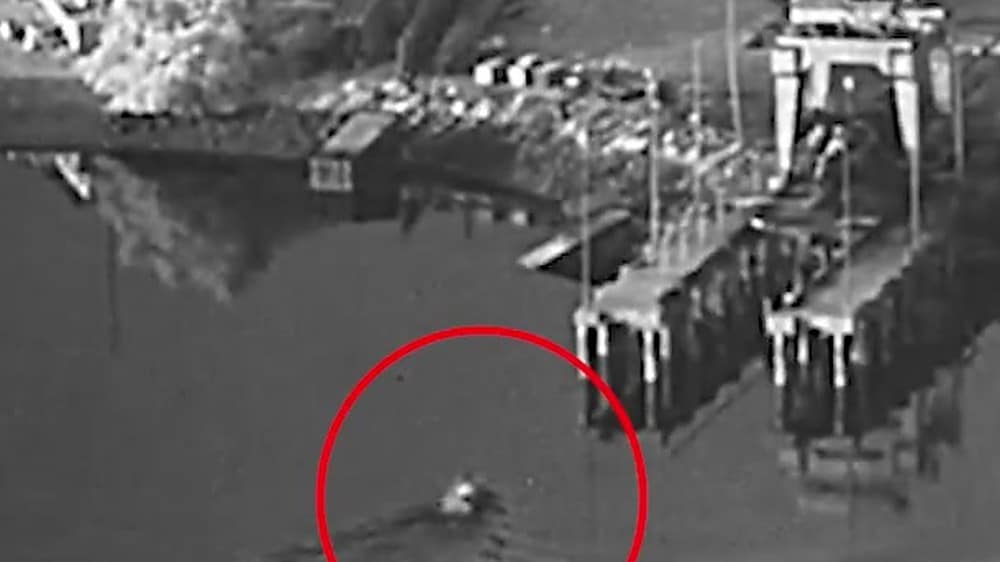
Tres puntos de vídeo granulado en blanco y negro cruzan un puerto, cada uno rodeado de rojo, dejando una estela blanca hacia un muelle. Luego la pantalla se queda en blanco. Ese clip de 25 segundos, publicado por el Comando Central de Estados Unidos el 13 de julio, marca el momento en que el ejército estadounidense cruzó una línea que jamás había cruzado: utilizó drones marítimos para matar.
The target was Bandar Abbas, Iran’s main naval base at the mouth of the Strait of Hormuz. The weapons were three Saronic Corsair unmanned surface vessels — robot speedboats packed with explosives, no crew aboard. It is the first time U.S. forces have taken armed sea drones into combat, and it happened on the cheap.
Datos rápidos
| Qué | Primer uso en combate por parte de Estados Unidos de drones marítimos armados |
| Cuando | Huelga el 12 de julio de 2026; imágenes publicadas el 13 de julio. |
| Dónde | Base naval de Bandar Abbas, estrecho de Ormuz |
| Arma | Tres vehículos de superficie no tripulados (USV) Saronic Corsair de ataque unidireccional |
| Corsario | 24 pies, ~35 nudos, carga útil de 1000 libras, alcance de 1000 millas náuticas |
| Objetivo | Submarino enano clase Ghadir y centro de mantenimiento atracado |
| Operador | Comando Central de EE. UU. / Quinta Flota |
Lo que realmente sucedió
Según el CENTCOM, los tres Corsairs se infiltraron en el puerto y atacaron una instalación de mantenimiento de submarinos y buques, donde, según los analistas, se encontraba un minisubmarino clase Ghadir sobre una grúa, que fue izado fuera del agua. El video publicado combina imágenes aéreas tomadas por un dron con un video a bordo de uno de los Corsairs durante su último tramo hacia el muelle. Luego, detona.
The stated goal was narrow and pointed: degrade Iran’s ability to keep harassing commercial ships in the Gulf. CENTCOM did not mince words about the significance.
El barco barato que cumplió su cometido
The Corsair is not a billion-dollar warship. It is a 24-foot autonomous boat built by Saronic, an Austin start-up, and it is almost defiantly simple: roughly 35 knots, a 1,000-pound payload, and a 1,000-nautical-mile range, with all the computing and autonomy running onboard. Point it at a target, and it drives itself there. One-way. You do not get it back, and that is the idea — it is a fraction of the cost of the cruise missile you would otherwise spend on the same pier.
Ucrania fue la primera en escribir este manual.
If robot boats blowing up warships sounds familiar, it should. Ukraine has spent two years turning the Black Sea into a graveyard for Russia’s fleet using exactly this idea, and the Houthis have lobbed explosive drone boats at shipping in the Red Sea. Washington is, frankly, late to a party it is now crashing with a bigger budget and a Silicon Valley supplier. The manufacturer was quick to take a bow.
De socorrista a asesino en cinco semanas
Here is the twist that says everything about where this technology is going. This same Corsair type made headlines last month for the opposite reason — a Corsair found two U.S. Army Apache aviators floating in the water near the Strait of Hormuz and shepherded them to a rescue helicopter. Five weeks later, the model that played lifeguard is playing kamikaze. Cheap, expendable, and now blooded, the drone boat has arrived as a weapon of war — and Bandar Abbas is only the opening shot.
Fuentes: Comando Central de EE. UU.; Noticias de USNI; Noticias Navales; Military Times; Breaking Defense; Saronic Technologies.
0 Comentarios