
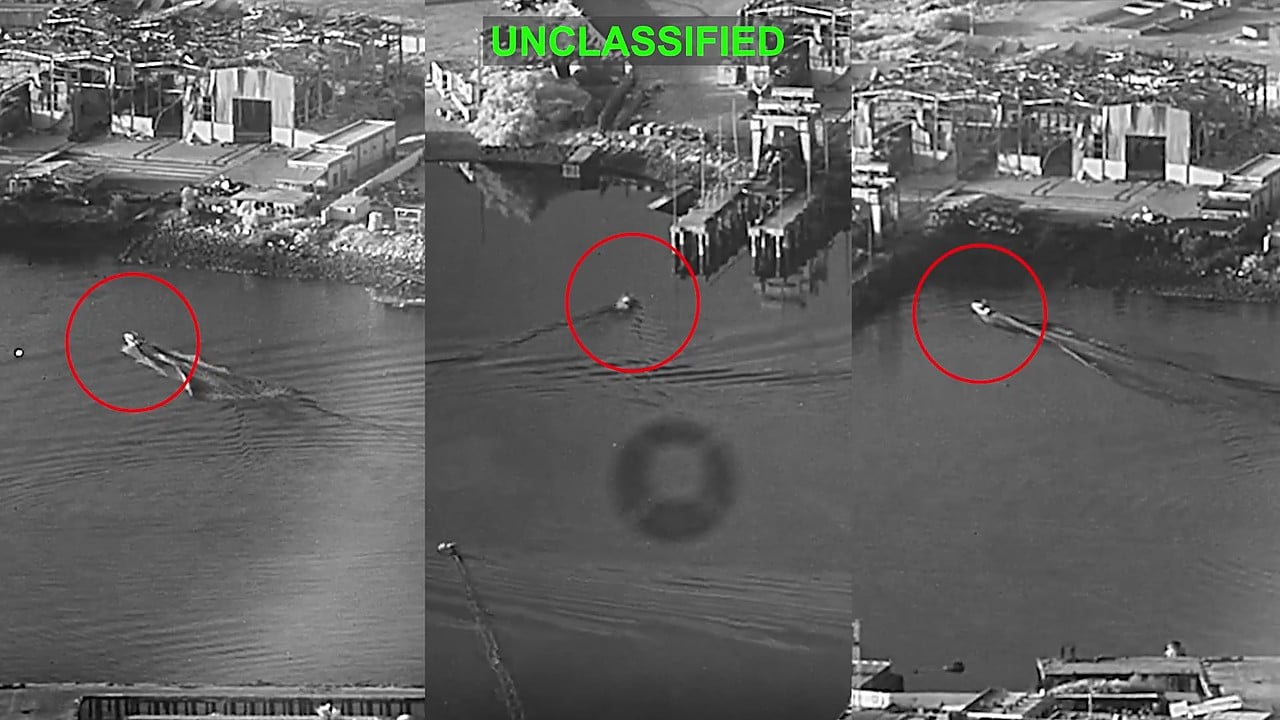
Three specks of grainy black-and-white video streak across a harbour, each ringed in red, each trailing a white wake toward a pier. Then the screen goes white. That 25-second clip, released by U.S. Central Command on 13 July, is the moment the American military crossed a line it had never crossed before: it used sea drones to kill.
The target was Bandar Abbas, Iran’s main naval base at the mouth of the Strait of Hormuz. The weapons were three Saronic Corsair unmanned surface vessels — robot speedboats packed with explosives, no crew aboard. It is the first time U.S. forces have taken armed sea drones into combat, and it happened on the cheap.
Quick Facts
| What | First U.S. combat use of armed sea drones |
| When | Strike 12 July 2026; footage released 13 July |
| Where | Bandar Abbas Naval Base, Strait of Hormuz |
| Weapon | Three Saronic Corsair one-way-attack USVs |
| Corsair | 24 ft, ~35 knots, 1,000 lb payload, 1,000 nm range |
| Target | Docked Ghadir-class midget submarine & maintenance facility |
| Operator | U.S. Central Command / 5th Fleet |
What actually happened
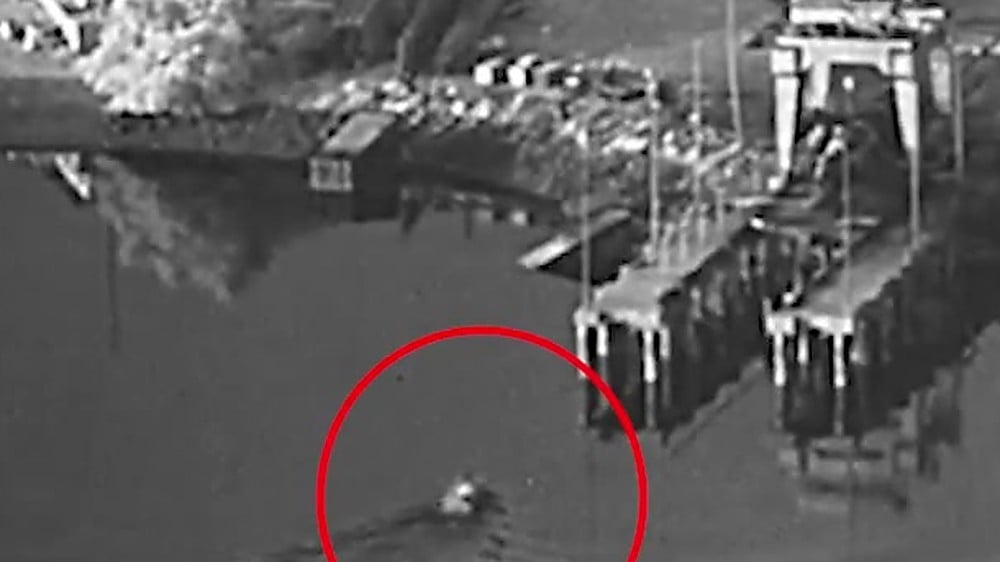
According to CENTCOM, the three Corsairs slipped into the harbour and struck a submarine and ship-maintenance facility, with what analysts identified as a Ghadir-class midget submarine sitting on a gantry, hoisted out of the water. The released footage stitches together overhead imagery from a drone aircraft and onboard video from one of the Corsairs on its final run to the pier. Then it detonates.
The stated goal was narrow and pointed: degrade Iran’s ability to keep harassing commercial ships in the Gulf. CENTCOM did not mince words about the significance.
The cheap boat that did the job
The Corsair is not a billion-dollar warship. It is a 24-foot autonomous boat built by Saronic, an Austin start-up, and it is almost defiantly simple: roughly 35 knots, a 1,000-pound payload, and a 1,000-nautical-mile range, with all the computing and autonomy running onboard. Point it at a target, and it drives itself there. One-way. You do not get it back, and that is the idea — it is a fraction of the cost of the cruise missile you would otherwise spend on the same pier.
Ukraine wrote this playbook first
If robot boats blowing up warships sounds familiar, it should. Ukraine has spent two years turning the Black Sea into a graveyard for Russia’s fleet using exactly this idea, and the Houthis have lobbed explosive drone boats at shipping in the Red Sea. Washington is, frankly, late to a party it is now crashing with a bigger budget and a Silicon Valley supplier. The manufacturer was quick to take a bow.
From lifeguard to assassin in five weeks
Here is the twist that says everything about where this technology is going. This same Corsair type made headlines last month for the opposite reason — a Corsair found two U.S. Army Apache aviators floating in the water near the Strait of Hormuz and shepherded them to a rescue helicopter. Five weeks later, the model that played lifeguard is playing kamikaze. Cheap, expendable, and now blooded, the drone boat has arrived as a weapon of war — and Bandar Abbas is only the opening shot.
Sources: U.S. Central Command; USNI News; Naval News; Military Times; Breaking Defense; Saronic Technologies.

0 Comments