
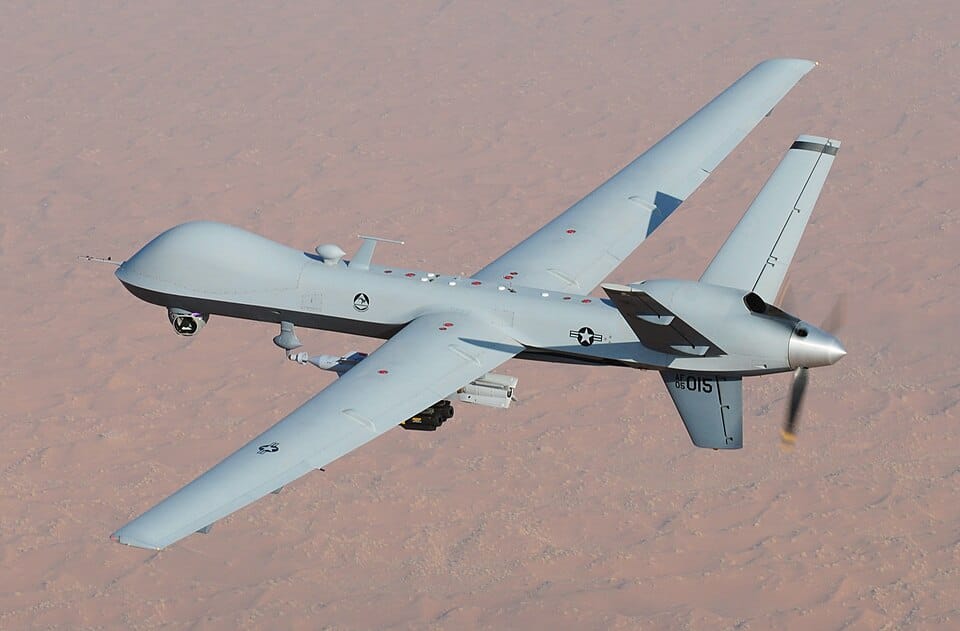
Hay una cifra que quita el sueño a quienes gestionan la flota de drones de Estados Unidos: 189. Se trata del número mínimo de MQ-9 Reaper que, según la Fuerza Aérea, necesita para mantener sus operaciones mundiales de inteligencia, vigilancia, reconocimiento y ataque: la invisible constelación de aeronaves pilotadas a distancia que orbitan sobre zonas de conflicto desde África Occidental hasta el Pacífico Occidental, las veinticuatro horas del día, los siete días de la semana, año tras año. Durante casi una década, la flota se mantuvo cómodamente por encima de esa cifra. Ya no lo está.
Esta semana, el inventario operativo de MQ-9 Reaper se ha reducido a aproximadamente 135 aeronaves. La razón es muy simple: en seis semanas de operaciones sobre Irán durante la Operación Furia Épica, Estados Unidos perdió 24 Reapers. Veinticuatro. Para ponerlo en perspectiva, la Fuerza Aérea perdió más Reapers en un mes y medio que en los veinte años anteriores de operaciones de combate continuas combinados. El costo, estimado de forma conservadora, supera los 14720 millones de dólares, y el costo en capacidad operativa es aún mayor.
🚩 Flota actual: Aproximadamente 135 MQ-9 Reaper (por debajo del mínimo operativo de 189 aeronaves)
💥 Pérdidas: Se perdieron 24 aviones Reaper sobre Irán en seis semanas durante la Operación Furia Épica.
💰 Coste estimado: Más de $720 millones en aviones destruidos
🌎 Operaciones activas: 56 líneas de combate mantenidas en todo el mundo
📄 Reemplazo de próxima generación: Documento de requisitos firmado el 11 de mayo de 2026.
📈 Pico de la flota original: Más de 280 aeronaves
Diseñado para cielos permisivos
Para entender cómo la Fuerza Aérea llegó a esta situación, hay que comprender para qué se diseñó el MQ-9 Reaper y, fundamentalmente, para qué nunca se diseñó para sobrevivir. El Reaper es un producto de la era posterior al 11-S, concebido en un mundo donde la superioridad aérea estadounidense era tan total e indiscutible que el principal desafío de diseño no era sobrevivir a las defensas aéreas enemigas, sino mantenerse en el aire el tiempo suficiente para encontrar una Toyota Hilux llena de insurgentes en el valle del río Helmand. Es una máquina magnífica para esa misión: un avión turbohélice de 20 metros de envergadura que puede permanecer en el aire durante más de 27 horas, equipado con un conjunto de sensores capaces de leer una matrícula desde 7.622 metros y una carga útil de misiles Hellfire y bombas GBU-38 que pueden convertir esa matrícula en un cráter.
También será casi seguro que su pérdida deberá ser menos costosa. Esto suena fríamente actuarial, y lo es. La lógica militar de las aeronaves pilotadas a distancia siempre se ha basado, en parte, en la prescindibilidad: intercambiar silicio y aluminio por el valor insustituible de un piloto humano. Pero a 1,5 millones de dólares por unidad, el MQ-9 había entrado silenciosamente en un terreno donde perder uno ya no era un error de redondeo. La plataforma de próxima generación deberá ser lo suficientemente resistente como para regresar a casa o lo suficientemente barata como para que no importe si no lo hace.
Mientras tanto, la Fuerza Aérea está haciendo lo que los ejércitos siempre hacen cuando los inventarios de equipo son insuficientes: improvisar. Los equipos de mantenimiento trabajan horas extras para mantener operativos todos los Reaper disponibles. Los cronogramas de salidas se optimizan para obtener la máxima cobertura con el mínimo número de aeronaves. Y en algún lugar de un centro de operaciones sin ventanas, los planificadores de misiones toman la incómoda decisión diaria de qué lagunas de inteligencia aceptar y qué amenazas dejar sin vigilancia. Es el tipo de crisis silenciosa y poco llamativa que rara vez llega a los titulares, hasta que, de repente, algo que debería haberse vigilado no lo fue.
Fuentes: Comando de Combate Aéreo de la Fuerza Aérea de EE. UU.; Oficina del Secretario de la Fuerza Aérea para Adquisiciones; General Atomics Aeronautical Systems; Documentos presupuestarios del Departamento de Defensa para el año fiscal 2026; Servicio de Investigación del Congreso, "Sistemas de aeronaves no tripuladas: Estructura de la fuerza actual y futura" (2026).
Preguntas relacionadas
¿Qué es el MQ-9 Reaper?
El MQ-9 Reaper es un gran avión no tripulado utilizado por la Fuerza Aérea de los Estados Unidos para misiones de inteligencia, vigilancia, reconocimiento y ataque. Concebido tras los atentados del 11 de septiembre, fue diseñado para operar durante largos periodos en zonas de conflicto donde Estados Unidos ostentaba la superioridad aérea total, no para sobrevivir a las modernas defensas aéreas enemigas, una limitación que ahora se está haciendo dolorosamente evidente.
¿Cuántos drones MQ-9 Reaper tiene la Fuerza Aérea de los Estados Unidos?
El número de aeronaves operativas MQ-9 Reaper se ha reducido a aproximadamente 135, por debajo de las 189 que la Fuerza Aérea afirma necesitar para mantener las operaciones en todo el mundo y muy por debajo de un máximo de más de 280. Aun así, la flota mantiene alrededor de 56 patrullas aéreas de combate, o líneas, en todo el mundo las 24 horas del día.
¿Cuántos drones perdió Estados Unidos en la guerra contra Irán?
Estados Unidos perdió 24 MQ-9 Reaper en aproximadamente seis semanas de operaciones sobre Irán durante la Operación Furia Épica, lo que representa un valor estimado de más de 1.047.200 millones de aeronaves destruidas. Las pérdidas, frente a un entorno de defensa aérea capaz, redujeron la flota de Reaper por debajo de su mínimo operativo. Anteriormente, un Un dron Predator también fue derribado sobre Irán..
¿Por qué el MQ-9 Reaper es vulnerable en el combate moderno?
El MQ-9 Reaper es vulnerable porque fue diseñado para operar en cielos poco transitados: lento, sin tecnología furtiva y optimizado para la autonomía en lugar de la supervivencia. Frente a misiles tierra-aire y cazas capaces, es relativamente fácil de detectar y derribar, como demostró Irán, lo que ha impulsado a la Fuerza Aérea a buscar un reemplazo de próxima generación con mayor capacidad de supervivencia.
¿Qué modelo sustituirá al MQ-9 Reaper?
La Fuerza Aérea de los Estados Unidos firmó un documento de requisitos el 11 de mayo de 2026 para un dron de próxima generación que reemplace al MQ-9 Reaper, haciendo hincapié en la capacidad de supervivencia en el espacio aéreo disputado. El cambio es visible en toda la flota, ya que los tipos más antiguos en la Linaje MQ-1 Predator Se exploran diseños no tripulados más discretos, sigilosos y fáciles de defender.
Publicaciones relacionadas
El auge de los vehículos aéreos de combate no tripulados
0 Comentarios